Victorian Cancer Agency funding opportunities

vca_logo

The 2016 Victorian Cancer Agency funding round is currently open, with a number of schemes available that may be of interest to palliative care researchers:

  • Translational research projects
  • Clinical research fellowships
  • Mid-career research fellowships
  • Early career seed grants
  • Supportive care scholarships (at the Olivia Newton-John Cancer Wellness and Research Centre)

Most of the applications close in August.


Victorian end of life and palliative care framework

The Victorian government has released the long awaited end of life and palliative care framework. The framework aims to deliver care where and when people require it and ensure people from all walks of life can determine what happens to them at the end of their life. It recognises that palliative care services alone cannot meet the growing demand that our society will require for care in the final stage of life.

Continue reading

Annie’s Story

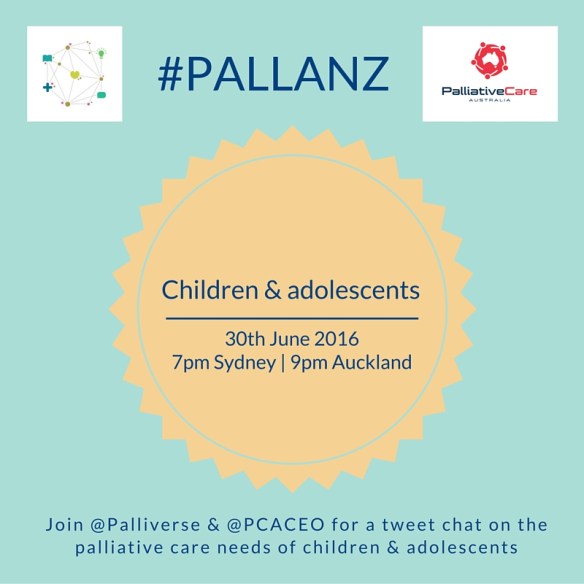
Palliverse is excited to welcome a  Guest Contributor – Molly Williams – who shares with us “Annie’s Story” ahead of our #PALLANZ tweetchat on paedriatic palliative care (#pedpc) this Thursday 30th June at 7pm AEST.

Molly Williams

Pictured: Dr Molly Williams

Molly is a paediatric oncologist now in the last 6 months of training in paediatric palliative care. She has a particular interest in supportive care in cancer – the idea of creating a culture of concurrent curative and palliative cancer management & giving kids the best chance of cure while not sacrificing their quality of life fills her with enthusiasm & glee! She has a personal fascination with positive psychology and creative anachronisms, and makes her own beer, cheese and tonic water!

Hope you can join us at #PALLANZ  on Thursday to chat about many more stories like Annie’s. If you would like to share your story with our community, email us at palliverse@gmail.com

@AnnaLCollins


Annie’s Story, As Told By Her Doctor

By Mollie Williams

This is a story about working in paediatric palliative care. It is all about Annie, which is not her real name actually but it is a perfectly true story apart from that. Continue reading

Upcoming #PEDPC #PallANZ Tweetchat

Palliative Care Needs of Children & Adolescents

This month, we are excited to explore how palliative care can help to support young people in our community living with serious illness! Our upcoming #PALLANZ tweetchat to be held at 7pm (AEST) on Thursday 30th June will discuss topics related to the palliative care needs of children and adolescents and their families. We will also be featuring some guest blogs from new Palliverse Contributors working with young people in Paediatric Palliative Care (#pedpc).

During our #PALLANZ tweetchat, we hope to bring together those interested to talk about how a kid’s #pedpc service can help young people with serious illness to live well; when a young person might meet the #pedpc team; and where they might like to receive care. We’ll also imagine we have a magic wand able to do anything we want to improve the available supports and share these ideas and other helpful resources!

PallANZ 201606

Continue reading

New web resource: End of Life law in Australia

A new website from the Australian Centre for Health Law Research aims to provide practical legal information for consumers, practitioners and the community, in relation to End of Life law in Australia.

End of Life law in Australia covers the key aspects of the law for each Australian jurisdiction, and includes laws relating to advance directives, guardianship, palliative care, withholding and withdrawing life-sustaining treatment, organ donation and euthanasia.

Please contact ACHLR Coordinator Penny Neller for further information and/or contributions.


Control & Decision Making

elizabeth

Taken from my hospital room on a good day

I’ve been in hospital for the last three weeks, and have just returned back home (finally!).  It has been both a very difficult physical experience dealing with pain management and a wound, but also a mental journey for me.


A lot of what I read about palliative care, and my own experiences as well, have been about control; the control that palliation gives you over the time you, as an individual, have left, rather than the often more passive involvement of care when engaging in active treatment.  Throughout my treatment, I’ve been eager – possibly to my own mental and emotional detriment – to remain highly active with what has been going on.  I make guesses as to what might be causing pain or discomfort or other symptoms, explaining to my doctor what it must mean as he compassionately and respectfully listens to my ideas that I’ve gotten from my half-hearted reading of an abstract from a medical journal.  Continue reading

An unexpected journey into aged & palliative care

albany wind farm

Albany wind farm

This post is a year overdue. If I were to have written this in April 2015, the title would have been “The tale of two deaths” where I would have reflected upon the peaceful, managed and expected passing of a 93-year-old aged care patient contrasted with the tragic accidental death of a 19-year-old patient whom I’d seen only a week earlier.

But what I’ve learnt is that tragic accidents are random, unexpected and do not happen often. More importantly I have been involved in the end-of life care of several patients since then, that have taught me a great deal about palliative care medicine, the value of open and frank conversations with family and some of the myths surrounding the management of death.

This is also a story of my maturity through being stretched and learning that the part of medicine that I ran away from the most has ended up becoming my greatest passion and future, aged and palliative care.

Continue reading

a week. hospitals. tiny needles. too many tiny needles.

Hey palliverse peeps, here is another post by the wonderful Elizabeth…. she is having a torrid time with what she creatively called stomarama, which sounds like No Fun and involved painful scary needles and things.
I think she is pretty amazing….
Sonia

elizabeth's avatarsky between branches

i can’t even clearly remember when i last updated.

though firstly welcome to new readers. there are a lot of you.  here are some basic things:

i talk a lot about gross stuff, but try and warn for it.

i do not post comments messaged to  me relating to alternative treatments. i have written in the past about about my reasons, and i respect all cancer patients and their own decisions regarding treatment. in return, i like to be afforded the respect of not being offered treatment options for my cancer that are not being suggested or managed by my carefully chosen multiple disciplinary team who, between all of them, have a tremendous amount of experience.  i follow this path, i am happy with my decision to do so.  i like to make people aware of this so they understand that this is an important thing for me. i appreciate…

View original post 2,136 more words

Planning care for people with dementia

CjRDzR9UUAQ9woR.jpg-large

Two new resources are now available to help with planning care for people with dementia. Palliverse talked to driving force Prof Meera Agar about the ‘whys’, ‘hows’ and ‘whats’.

Q: Why develop care planning resources just for dementia?

A: People with dementia face unique challenges and decisions related to their care and health care needs as their illness progresses; and supporting their choices is made more complex as they become less able to communicate their needs and articulate decisions about what they want from care. While good intentioned, many health professionals in aged care and other settings may not understand the course of dementia, and there may not always be good communication, involving the person with dementia whenever possible and their families,  and also between the different health professional involved in the persons care.

Q: So how do the new resources help?

A: The two new resources are a website offering practical support for family case conferencing and a report providing guidance on critical recommendations to improve advance care planning. Continue reading

Palace of Care – Parallel Lives

image

Cape Reinga the northern-most tip of New Zealand, where the spirits of Maori depart on their final journeys. Photo by Gadfium.

The first time I met the young ladies I had been cross-covering at the hospital, and was taken to see each of them as they both had severe pain and discomfort. They came from completely different backgrounds, had lived completely different lives but somehow ended up on the same journey.

About a week or so later they had both been admitted into our inpatient unit for pain control. Adjustments were made and they became more comfortable, but a few days later pain had returned again, as well as other problems. We had to aim at constantly moving targets, and so it would be over the next three months of their individual roller-coaster rides.

The similarities were startling; the same diagnosis, the same poor response to treatment, and in the end the same prognosis. What was completely different was their individual experiences of the same outcome. Continue reading