I think therefore I am? – If You Had A Choice

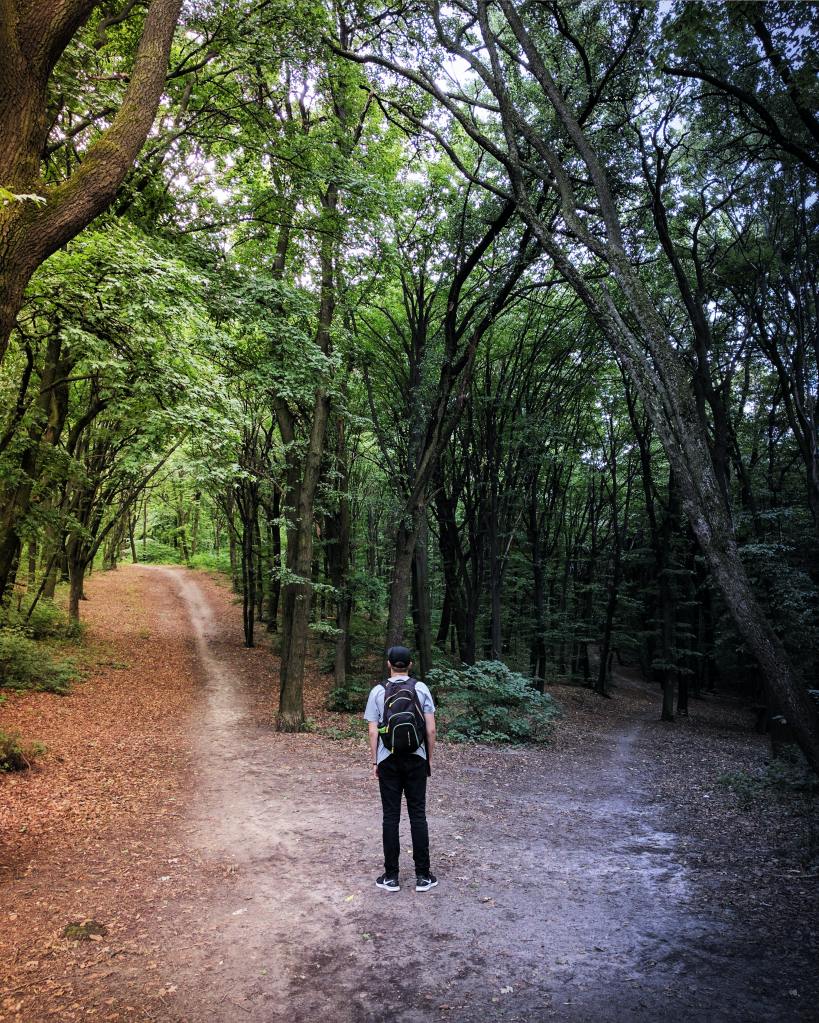
Photo by Vladislav Babienko on Unsplash

At a palliative care conference years ago the audience was asked to choose between two options. Would you rather die instantly without warning or would you rather know about it and die more gradually? We were instructed to think through both options for a few minutes before a show of hands was counted for each option.

Dying instantly, for example from a cardiac arrest, would mean less suffering for the dying person. It’s possible it wouldn’t be so bad for the person going through it. No fear of what was about to happen to them would be generated as they would be taken by surprise.

Ignorance may well be blissful but would have drawbacks as well. Total loss of control, and inability to finish important business. You’d be robbed of the chance to say goodbye to those important to you. You wouldn’t be able to leave your intended legacy. Death is associated with loss and sudden death is associated with its own set of losses. Those left behind would also lose the opportunity to say goodbye to you, to obtain at least some sense of closure. Survivor’s guilt, “If I had known he was about to die I would never have left them alone at home.” There may be more suffering for your loved ones, so many things they will never be able to say to you again.

Continue reading

Assistance for Australians with administrative tasks after someone has died

Honestly, the very last thing you want to do when you are grieving is wade through the piles of administrative work that’s needed after someone you love has died.


I remember after my mum died, doing to the Post Office to request that her mail be diverted to me. Are you the Power of Attorney? Queried a the young Post Office worker. Well, yes I am, but as the person has died, the Powers of Attorney have ended So you need to ask me if I am the Executor of the Estate.
Her: …..

Me:….

Her: Are you the Executor of the Estate?

Me: Why yes, yes I am.

Or CItylink. Would not tell me why my mum’s owing balance was cos of privacy. But I wanted to pay it off and close it. Can we have a certified copy of the death certificate. OMG. If I paid you $50 would that cover it? $100? No, can’t say., privacy. Gah!

I have fortunately not had the need to use this new service https://deathnotification.gov.au/ but it is a fantastic idea and I look forward to hearing how it goes. The Australian Death Notification Service (sorry to our cousins over the ditch) takes on much of the administrative burden after someone dies for you, and it’s free. What a fantastic idea! It’s supported by all the States and various organisations.

Let us know if you use it or hear of anyone who’s used it.

https://deathnotification.gov.au/


Guest Post – Naomi’s Notes – Plumb Job

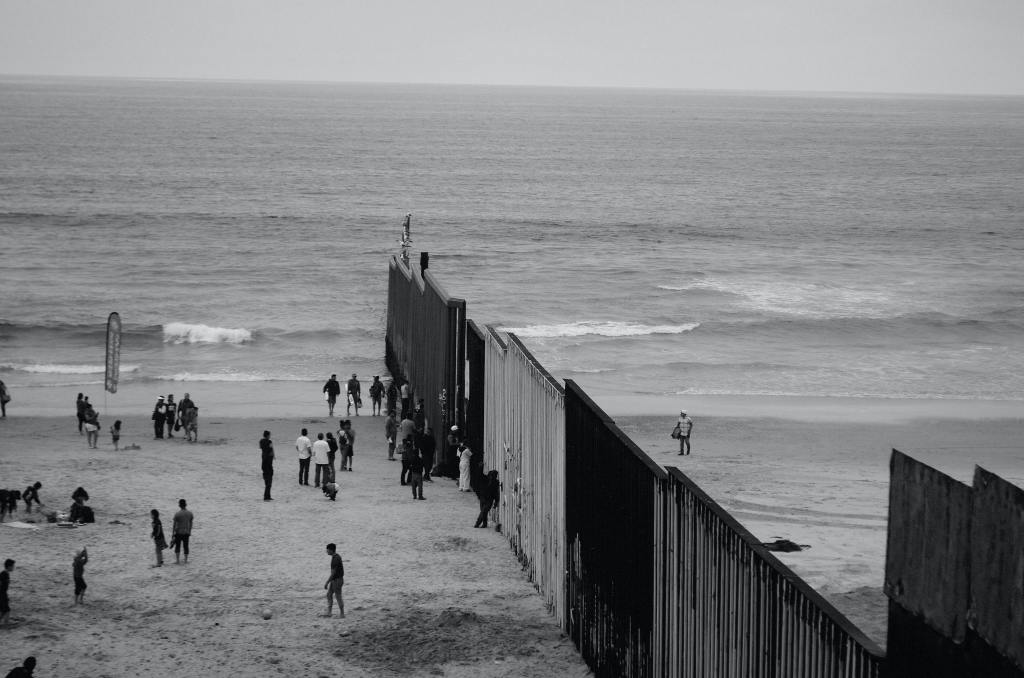
Photo by Ivan Samudra on Unsplash

I had a problem with my hot water cylinder so I phoned a plumber to fix it. In my bathroom were two signs one says, DEATH IS COMING WITH EVERY BREATH and the other, WHAT WOULD I REGRET IF I DIED TODAY?

The plumber was attending to the water cylinder and I was in the kitchen having breakfast. He asked if he could use the bathroom to wash his hands. He went out to his van a couple of times to get some tools and each time, I see him looking at me.  When he finished the job he gave me some instructions and then just stood there looking sheepish.

I drank my tea.

Then he said to me, “that’s very interesting those signs in your bathroom.”  

I  drank my tea

“You know, life is for living, you don’t need to be depressed and think about death all the time,” he said to me. “There is joy out there you just got to go and look for it. If you think about death all the time that’s not good. I am a Christian and we don’t think about death we think about living. Perhaps you should try that.”

Continue reading

Bedside Lessons – 20 – Crossing the Line – Part 1

Photo by Max Böhme on Unsplash

I was working on the liaison psychiatry team in my final year of medical school. I went to meet a patient that had self-referred, which was unusual. Psych liaison provides psychiatric input for patients who also have medical issues that have brought them into hospital. I went with the nurse specialist to see the patient, an Englishman in his mid-thirties.

Work had brought him and his Latin American wife across the world. He was a nature documentary maker and had been based in the lower South Island filming the local wildlife. Just before Christmas he became unwell with a severe nosebleed, which required hospital intervention. Simple blood tests revealed grossly abnormal results. Acute Myelocytic Leukaemia (AM bloody helL) was the shocking diagnosis which destroyed their plans for Christmas and life in general. An urgent admission was arranged to our hospital’s Haematology department, which served the entire region. Harsh chemotherapy needed to be started otherwise our patient would’ve only had days left to live.

Continue reading

A reflection on voluntary assisted dying and conscientious objection

Dying sculture

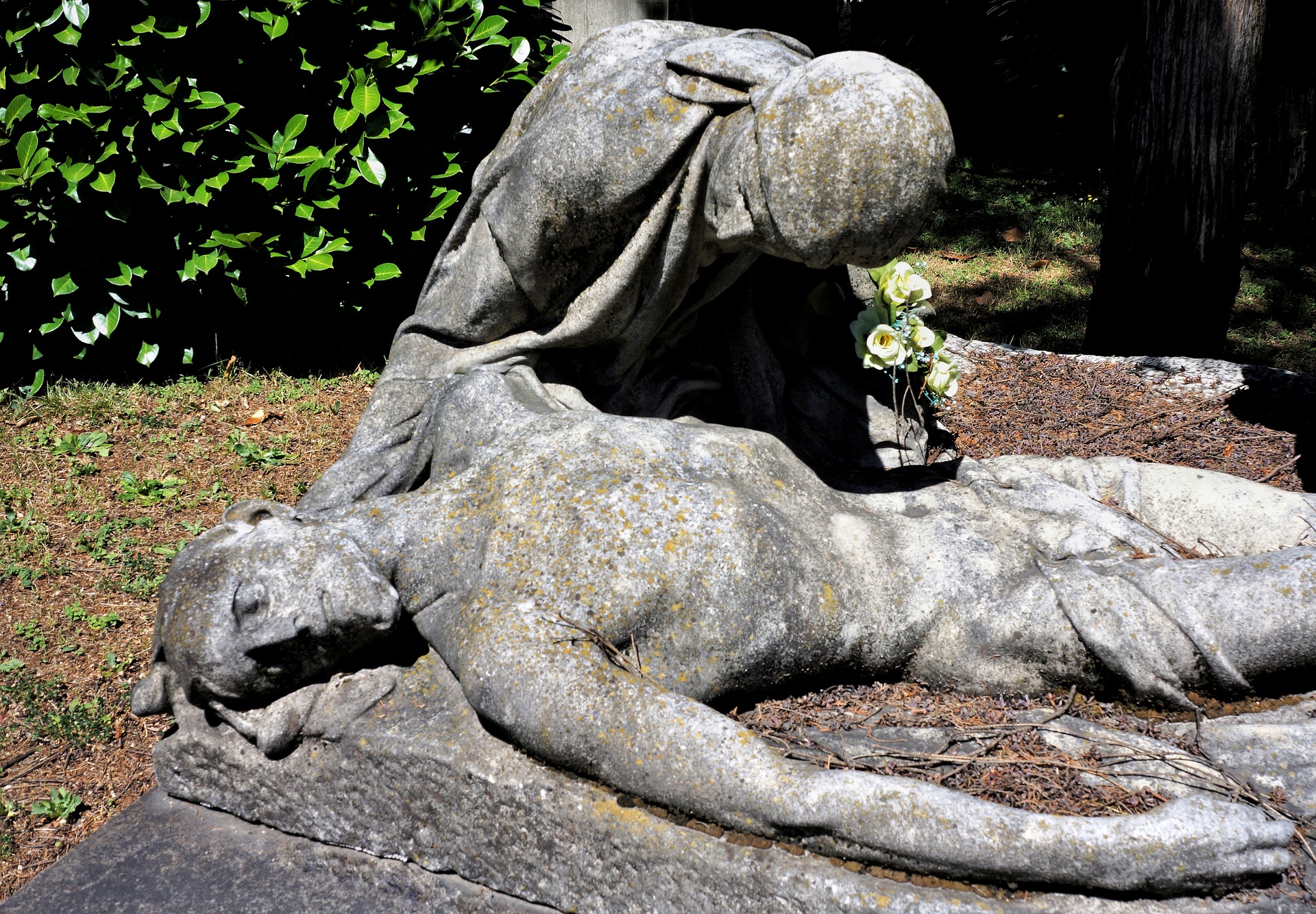
[Image by rmac8oppo from pixabay]

[The following essay by Dr Adrian Dabscheck, an experienced palliative care physician in Melbourne, explores the evolution of our society’s views towards death and reflects on the role of palliative care and voluntary assisted dying in this context – Chi]

During a recent period of enforced rest, I had time to reflect on my attitude to the recently enacted voluntary assisted dying legislation in Victoria and consider my response.I will detail my reaction to the Act and why I have chosen to become a so-called conscientious objector.

In his essay Western Attitudes Toward Death,French historian Philippe Ariès illustrates the evolution of our attitudes to death.

Initially, and for millennia, there had been a general resignation to the destiny of our species for which he used the phrase, Et moriemur, and we shall all die. This was replaced in the twelfth century by the more modern concept of the importance of one’s self, and he used the phrase, la mort de soi, one’s own death.  Continue reading

When life is coming to a close: three common myths about dying


File 20170915 21553 2itf3w
Dying at home isn’t necessarily a good death.
from http://www.shutterstock.com.au

Sarah Winch, The University of Queensland

On average 435 Australians die each day. Most will know they are at the end of their lives. Hopefully they had time to contemplate and achieve the “good death” we all seek. It’s possible to get a good death in Australia thanks to our excellent healthcare system – in 2015, our death-care was ranked second in the world.

We have an excellent but chaotic system. Knowing where to find help, what questions to ask, and deciding what you want to happen at the end of your life is important. But there are some myths about dying that perhaps unexpectedly harm the dying person and deserve scrutiny.


Read more – A real death: what can you expect during a loved one’s final hours?


Myth 1: positive thinking can delay death

Continue reading

Palace of Care / I think therefore I am? #gotjnrbak The final update.

2385062873

What would happen after the joyous reunion of Poppa and Junior? This was a question asked at our multidisciplinary meeting two and a half months ago. From the accumulated experience of our staff members we thought it could go either of two ways:

  1. Poppa might get a “boost” from being reunited with Junior and other family members, and might improve.
  2. Poppa had used what was left of his energy holding on to see Junior and would continue to deteriorate.

Continue reading

A death in the family

It was with great sadness that we learnt that Palliverse contributor Elizabeth Caplice had died.

Screen Shot 2016-07-14 at 22.12.09

Screen Shot 2016-07-14 at 22.12.28

Click here to read Ginger Gorman’s report.

Thank you Elizabeth for your contributions to Palliverse, and for your advocacy for Palliative Care.

Thank you for trying to make the world a better place.

We’d like to extend our deepest condolences to Alex and your loved ones.

Rest in peace Elizabeth.

James Jap on behalf of the Palliverse community.

Palace of Care – Parallel Lives

image

Cape Reinga the northern-most tip of New Zealand, where the spirits of Maori depart on their final journeys. Photo by Gadfium.

The first time I met the young ladies I had been cross-covering at the hospital, and was taken to see each of them as they both had severe pain and discomfort. They came from completely different backgrounds, had lived completely different lives but somehow ended up on the same journey.

About a week or so later they had both been admitted into our inpatient unit for pain control. Adjustments were made and they became more comfortable, but a few days later pain had returned again, as well as other problems. We had to aim at constantly moving targets, and so it would be over the next three months of their individual roller-coaster rides.

The similarities were startling; the same diagnosis, the same poor response to treatment, and in the end the same prognosis. What was completely different was their individual experiences of the same outcome. Continue reading

Santa, death and the Easter Bunny – how to have that hard talk with your kid via @ConversationEDU

download

Santa, death and the Easter Bunny – how to have that hard talk with your kid

Peter Ellerton, The University of Queensland

There’s no way around it: children sometimes have to hear it like it is. Despite our desire to keep their early years carefree, we may not be doing them a favour by keeping some hard truths from them. And for those things that are inescapable, like the death of a family member, glib answers won’t do.

We all learn at some stage that the world is not as we’d like it to be. That is possibly the single most important lesson in life. The big question is how to teach it to our kids, and when.

The “when” is sometimes out of our control, as circumstances can dictate. But there are parts of the “how” that can be more manageable.

Children are not empty vessels

Kids create deep and powerful narratives about the world regardless of what we do or don’t do. They do this for the same reasons we all do – to explain how the world works and to create meaning.

It is a mistake to think this narrative is absent in them until we decide to help create one. The reluctance we sometimes have to involve ourselves can be a result of this naive view.

We imagine they are somehow neutral or unsullied in their views, and that when we talk to them about hard issues we are forcing them to come to grips with an imperfect world.

We don’t always know what they don’t know. We assume they have developed a lot of cultural norms when they haven’t, and we assume they are unaware of things they have really thought a lot about.

One thing is sure: if we don’t help them make their narratives, they will do it themselves anyway, and perhaps not in ways that are healthy or optimal.

There are two important things we can do as parents to prepare our children for some deep and potentially disturbing conversations, and to help them build a more rational picture of the world.

The first is to help them make sense of the world through frequent and long conversations. Making meaning is the prime function of language, after all. This is where an established behaviour of talking is critical.

The only way to know how they currently see things is to talk with your child – a lot. Talk about issues big and small, and give them the chance to ask things that take time to well up in conversation.

The second is to treat them as rational beings capable of making sense of what is going on around them.

Children are far more rational than we give them credit for. And they are far more capable of deep insights than we usually imagine.

I work in the area of teaching children to think. The ability of very young children to do this well is a constant reminder of how our educational system underestimates them.

Two-way exchanges

The thing that makes a rational approach possible is treating conversations as two-way exchanges. We don’t just talk to children to instruct them, and we don’t just talk to understand them – we also talk so we can understand each other.

This is a critical point. By talking to understand each other we give children the opportunity to normalise their thinking, and to help understand the norms of mature social thinking. This in turn is important because it provides the ground for a rationality based in social competence, in which we reason to solve problems through discourse and social interaction.

As the Russian psychologist Vygotsky wrote in Mind and Society, children first learn a competence socially and then internalise it.

Every function in the child’s cultural development appears twice: first on the social level, and later, on the individual level.

To put it simply, if you have not modelled how to talk through difficult issues with a child, that child has not learned to internalise a mechanism for dealing with such issues.

This is a key component of teaching resilience – and is there anything we want for our children more than this?. For without the cognitive tools to manage change and uncertainty, they will be less resilient than they could be.

Whether the issue is the crashing reality of Santa’s state of existence, the death of a family member, or a dramatic change in lifestyle, there will be limited recourse for children to rationally understand the situation, and their role in it, if they have not been taught these skills.

So talk to your children about how they reckon Santa does it. Talk about mortality and what it means for us as humans. Talk about what life was like in the past and could be like in the future. Explore and unpack all the implications of these things with them.

Or just talk with them a lot about anything. Give them opportunities to come up with questions about these things themselves. If you give them the chance, they will not disappoint you. And by doing so, you will make them less disappointed.

The Conversation

Peter Ellerton, Lecturer in Critical Thinking, The University of Queensland

This article was originally published on The Conversation. Read the original article.