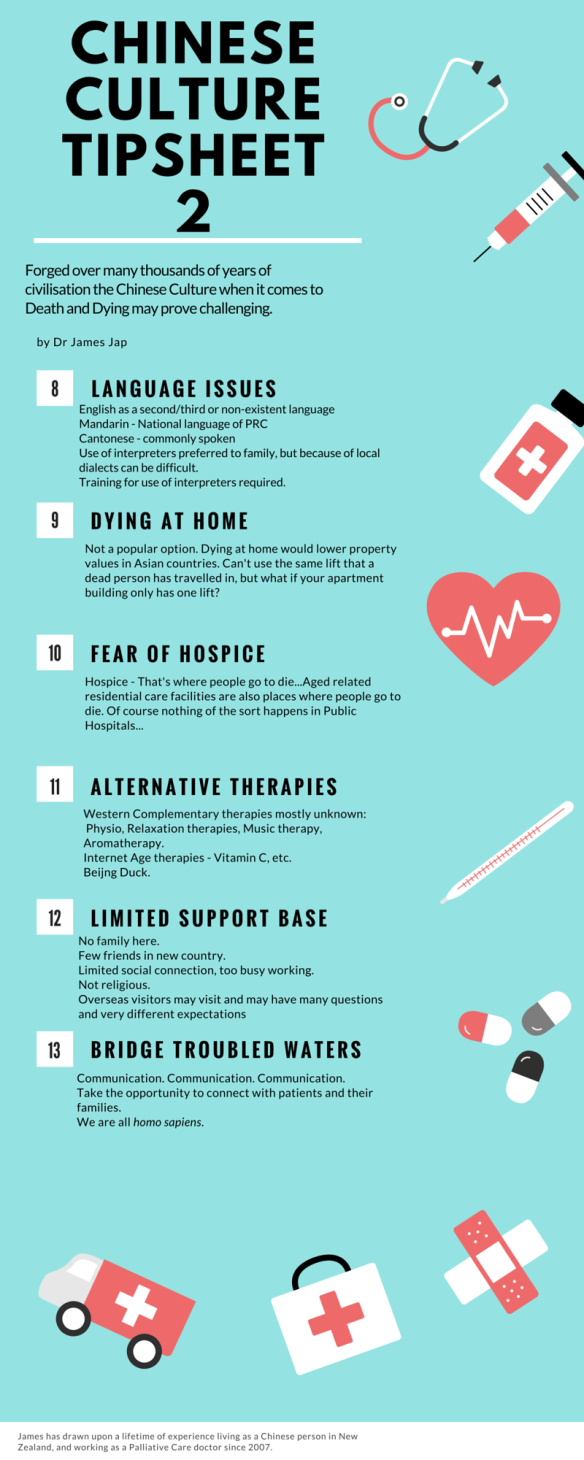
Hiya folks,
I’m presenting at Grand Round tomorrow on the above subject.
Pasted below are the Tipsheets I prepared as a take-away for the presentation.
At the bottom is a link for printable PDF versions.
Enjoy, James.
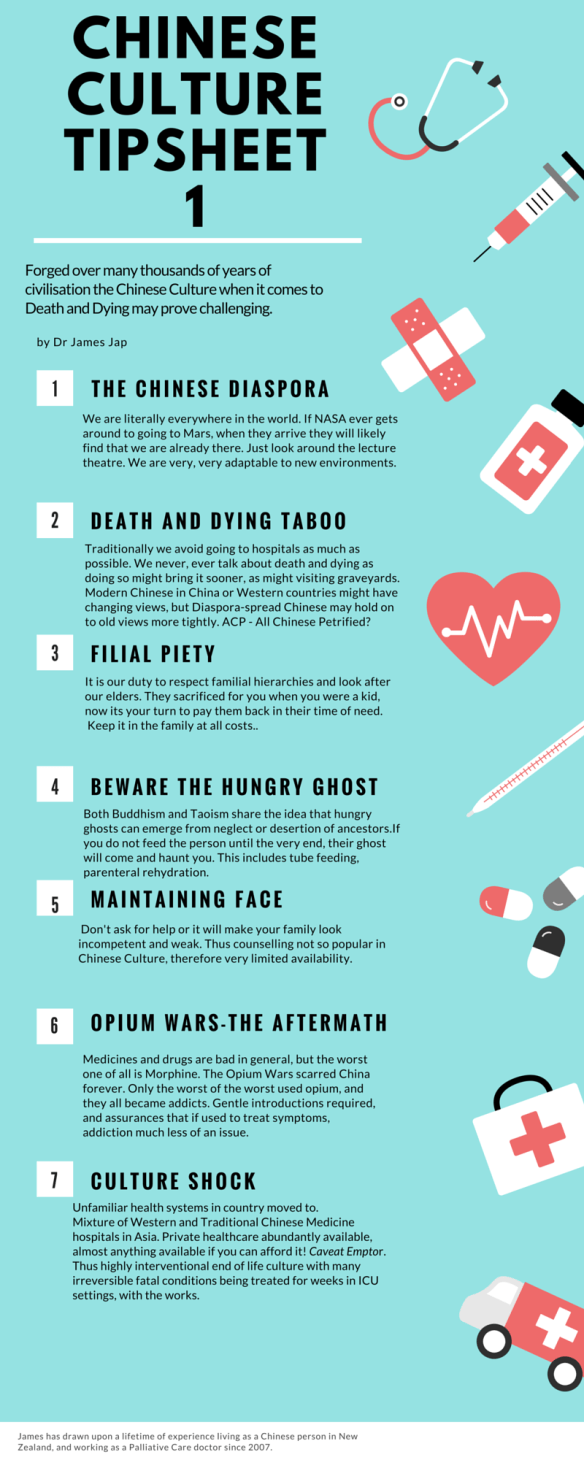

Hiya folks,
I’m presenting at Grand Round tomorrow on the above subject.
Pasted below are the Tipsheets I prepared as a take-away for the presentation.
At the bottom is a link for printable PDF versions.
Enjoy, James.

EXTRA! EXTRA! Read all about it!
Never published or told before, James Jap reveals the secret origin of palliative care virtual community of practice – Palliverse!
Please check out James’s guest blog post on the EAPC blog site where he tells all and also introduces our “hot off the press” European Journal of Palliative Care article.
You heard it here first – Palliverse appears in traditional media!
Please let us know what you think.
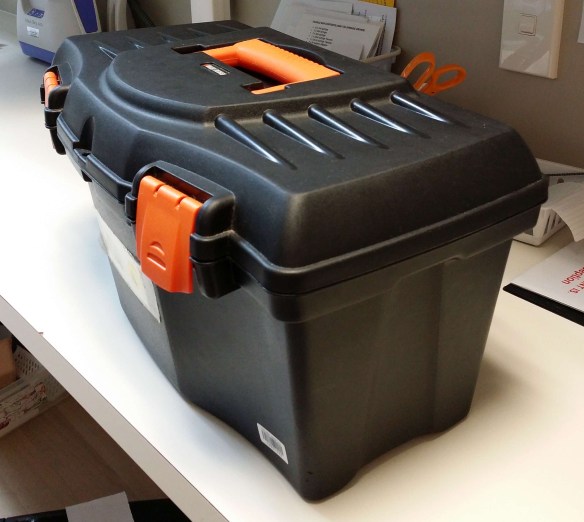 On the desk I was surprised to see the returned tackle box. This usually happens when a patient doesn’t require subcutaneous medications anymore, or else when a death has occurred. There would be a missing name on our “patients to be discussed” list tomorrow, one that had been on the list for most of the past eight months. Continue reading

Photo by Sid Mosdell, taken on March 28, 2012
Over the years I have been privileged to share some meals with a visiting Lama from the Tibetan Buddhist Faith. Rinpoche is based in Scottsdale, Arizona, USA but regularly visits New Zealand. Dinners with Rinpoche are always very interesting and he has many stories to tell. Given my own professional interests, the topic of death and dying often comes up. During one of those conversations Rinpoche shared a related story about one of his late American friends.
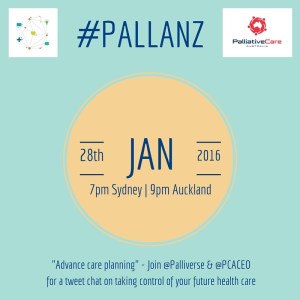
Here at Palliverse, we love online communities of practice. The monthly #PallANZ tweet chat, co-hosted by Palliverse and Palliative Care Australia, is not the only online educational opportunity that may be of interest this week. While we hope you join us for Thursday evening’s #PallANZ discussion of advance care planning, you might also like to check out the following exciting events: Continue reading

Heart Connection by Alisa Looney. Photo by Nancy Regan, taken in Puyallup, Washington, used under Creative Commons licence.
Ed: Thank you David and Caresearch for allowing us to share this post focusing on ways to enhance primary palliative care for general practitioners. We at Palliverse agree that dialogue around the GPs role in palliative care is timely and important. We would welcome further contributions on this topic.
Hi everybody. I am a GP of 25 years’ experience. I deal a lot with aged care and palliative care. I recently completed a Clinical Audit on end-of-life care through Decision Assist. I wrote a short piece for Caresearch about doing the Audit for Decision Assist as I found the process of reflecting on my practice and looking at changes very worthwhile. Here is what I wrote.
It had all happened so fast, much too fast. Unwell on Tuesday, into hospital on Wednesday. It was all bad news, he was told that he had only possibly a week or two to live. Confronted with his imminent mortality he decided to go to Hospice. He was worried about how his family would cope with him at home, he wanted to make sure that they would be looked after.
They had always done everything together as a couple, right from when they were teenagers. They had made all the important decisions together. But when it came to the decision to go to Hospice he had made it on his own.

Stig Nygaard
Pårup
Christmas 2010
A few years ago I had formulated a plan to reunite a patient, who had been in inpatient care for a number of months, with his horse who I had been informed, he missed dearly. Something had been lost during the clinical handover – the patient had actually sold his horse some months prior. Instead I arranged for him to receive the Trackside horse-racing channel, and assured him that he could do phone-betting. I filed the plan away in the recesses of my brain, and looked forward to bringing it out again if the opportunity ever arose again to make use of it.
Mindfulness in recent years has become increasingly fashionable throughout the world and is popping up as part of treatments in Psychiatry, as part of the rehabilitation of prisoners, and even in the Palliative Care world. Is it really all that new or is it the repackaging and re-marketing of what Buddhists have been doing for thousands of years? What follows is my own personal experience of Mindfulness and how I apply it to my practice of Palliative Care.
I had been interested in meditation since the late 1980’s when I read in a Batman comic that when he was completely exhausted, instead of sleeping, Batman would meditate briefly. This would leave him refreshed and able to go out and fight the bad guys again in a few hours’ time. Having never been a fan of sleep in general, the idea of a sleep substitute really appealed to my younger self. Throughout the 1990’s I explored various types of meditation practice, but had largely given up by the 2000’s.
In September 2013 I had signed up, in my usual last-minute fashion, to a pre-conference workshop at the APHC 2013 conference held in Bangkok, Thailand. Having registered for the workshop very late I was left with only one option. The workshop entitled, “Mindfulness in Clinical Practice,” turned out to be the highlight of a very enjoyable conference.
Less than a week later I was in Montreal, Canada for the 1st Whole Person Care Congress in which a number of the sessions and workshops were devoted to Mindfulness. It really had become the flavour of the month on a global scale, but did it spur me into a programme of regular Mindfulness practice? Heck, no!
It wasn’t until October of last year that I decided to give Mindfulness meditation a proper go, via the Headspace app. This easy to use program of guided meditations has led to me doing 236 sessions and has had various benefits. A greater sense of calm, better observation skills, greater ease at falling asleep, and even benefits for my patients.
What is the connection to alcohol hand rub?
As a Medical Registrar the importance of clean hands was drilled into me by an Obsessive/Compulsive trait possessing Physician who went through 500ml of Alcohol hand rub per day in his quest to limit the spread of hand-borne contagion. Apologies for the next sentence…some of it rubbed off on me. As part of my own personal ritual, prior to knocking on the door of patients, I will douse my hands with a good squirt of the alcoholic jello-shot. While I am rubbing my hands together I take a deep breath in, and slowly release it. This brief amount of time allows me to centre myself so that I can be truly present in the clinical moment that follows.
Being in the moment with the patient allows me to “tune in” to what they are going through, and to gift them my full attention. I’m not thinking about what is for dinner, what my plans for the weekend are, what an interesting shadow is being cast on the wall, but instead I am able to focus on what they are saying, verbally and non-verbally. Of course this doesn’t happen with every single patient encounter that I have, but when I am “in the zone,” the patient’s situation becomes much clearer to me. I end up with a much better idea of what they want and need. This fleeting moment full of human mind connection still surprises me at times. It feels like it is a little piece of magic, something to be approached with wonder.
The patients seem to enjoy it too.
At the end of the visit I say my goodbyes and reverse the entry ritual. Another squelch of disinfecting viscous chemical is applied to my hands, another deep breath is taken and released. The ward round continues.