
Enhancing Palliative Care for GPs: Clinical audit on end-of-life care

Ed: Thank you David and Caresearch for allowing us to share this post focusing on ways to enhance primary palliative care for general practitioners.  We at Palliverse agree that dialogue around the GPs role in palliative care is timely and important.  We would welcome further contributions on this topic.

 

Banksy Dr and Heart

Banksy Hits San Fransisco (mod). Thomas Hawk via Flickr. CC BY 4.0


Hi everybody. I am a GP of 25 years’ experience. I deal a lot with aged care and palliative care. I recently completed a Clinical Audit on end-of-life care through Decision Assist. I wrote a short piece for Caresearch about doing the Audit for Decision Assist as I found the process of reflecting on my practice and looking at changes very worthwhile. Here is what I wrote.
Continue reading

Call for Survey Participants in Victoria

Are you currently working in the palliative care sector in Victoria?


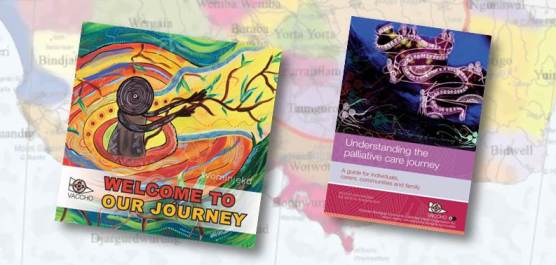
One of colleagues in the Palliverse has been working hard to ensure Aboriginal and Torres Strait Islander people receive quality end of life care. Steve Kirkbright is a Project Officer for The Victorian Aboriginal Palliative Care Collaborative (VAPCC). He’s seeking people working in the palliative care sector in Victoria to participate in a brief, online survey. You’ll find more details and a link below.
 
If you’re also conducting research and would like to share it with us, please get in touch via @palliverse or palliverse@gmail.com.
banner%20graphics2%20VAPCP
Pictured:  Palliative care resources available from VACCHO  

Continue reading

#PallANZ tweet chat: Advance Care Planning

PallANZ 201601

Advance care planning is an important process that is increasingly being taken up by our community. When done well, it can help those with serious illnesses take control of their future health care. However, many people in our community still do not know about advance care planning, which means those who are likely to benefit from the process are missing out.

How can we do better?  Continue reading

Palace of Care – Driving too fast

It had all happened so fast, much too fast. Unwell on Tuesday, into hospital on Wednesday. It was all bad news, he was told that he had only possibly a week or two to live. Confronted with his imminent mortality he decided to go to Hospice. He was worried about how his family would cope with him at home, he wanted to make sure that they would be looked after.

They had always done everything together as a couple, right from when they were teenagers. They had made all the important decisions together. But when it came to the decision to go to Hospice he had made it on his own.

Continue reading

I think therefore I am? – Is healing possible at the end of life?

exit

Photo by Glen Carrie

Since arrival she had been very anxious and spent most of the first few days alone in her room. “I don’t want to interact with anyone, please leave me alone, keep the curtains closed and the lights off” – like a hermit crab withdrawing deeper into her shell.

Worsening pain had brought her to us, severe physical pain, the result of increasingly bad news about the toll her disease was taking on her body over the past six months, and also likely emotional pain as evidenced by worsening anxiety. Despite the team’s best attempts at connecting she remained aloof and guarded, sleep being a source of solace.

Continue reading

guest interview – Soula Ganiatsas, Palliative Care Research Network Victoria

Tell us about your job.

I am the program manager for the Palliative Care Research Network Victoria (PCRNV).

What does PCRNV do?

We try to gain funding to conduct clinical and community intervention research. The PCRNV also  provides an opportunity to network and collaborate with other palliative care researchers through PCRNV forums and workshops.

We also help with access to a variety of PCRNV funding schemes including; PhD scholarship, small project and travel grants. There can be support with developing your research idea into a potential project and grant proposals via the PCRNV Concept Development Workshops and also mentoring.

But, it’s not right to do research on people who are dying, is it? 

Continue reading

#SHCR: An inspiring, free course that will help you change health care for the better

When I first read Sonia’s post about the School for Health and Care Radicals (SHCR) a year ago, little did I know that I would be signing up for one of the most inspiring educational experiences of my ten years as a doctor, resulting in unexpected personal and professional growth.

“Anyone who wants to bring about change has to be ready to break the rules. But in health and social care, that can be really difficult. The art of rocking the boat while staying in it is something it seems no-one is ready to help you learn.” – School for Health and Care Radicals


IMG_6240

Working on my SHCR workbook – over coffee

Continue reading

Family doctor involvement in palliative care: what’s its prognosis?

I feel like such a fraud. What am I doing writing a guest post for Palliverse, when I am a doctor who rarely provides palliative care? My justification for writing here is that it’s this very sense of uncertainty and underqualification that I’m feeling which is the subject of my post.

I’m a “general practitioner” — a “GP” as we’re called here in Australia. If you’re reading this post from North America, think “family physician” — it means much the same thing — but for convenience I’ll use the term “GP” today.

Continue reading

NICE guidelines for end of life care

The National Institute for Health and Care Excellence (NICE) provides national guidance and advice to improve health and social care in the UK.

In response to the Neuberger report and the demise of the Liverpool Care Pathway, new evidence based guidelines have been developed.

This guideline includes recommendations on:

In my state, Victoria Australia, the VEC (Victorian End of life Coordinating Program) is undertaking similar work, and plans to release a Victorian end of life care plan soon.

In Australia, we have not had the negative stories and experiences seen in the UK; because the LCP was implemented in a better way? The stories coming out of the Neuberger report were shocking: I cannot imagine any patient being denied a drink when requested “because she is on the LCP”. However the LCP has also been withdrawn locally in response to the negative findings delivered in the UK.

I will be participating in a pilot of the new end of life care plans which will replace the LCP locally. I am looking forward to seeing the final version.

Thoughts, dear reader, about the terminal care of the LCP?


2015 in the Palliverse – palliative care reading

cropped-cropped-img_4157.jpg

Are you looking for some reading over the summer holidays (or winter if you’re that way inclined)? Over the next fortnight, we’ll be looking back at some of our posts over the past year. We’ve been to conferences, reflected on clinical and research experiences, shared palliative care educational resources (#FOAMPal) and hosted guest contributors.

A good place to start for palliative care reading is our “Elsewhere in the Palliverse” posts, curated lists of palliative care articles, blog posts, educational resources and the occasional video from Australia, New Zealand, and beyond. This year we’ve shared fifteen “Elsewhere in the Palliverse” posts. We’ve had special editions for events like World Hospice and Palliative Care Day, Dying to Know Day, and Halloween.

To be alerted about new Palliverse posts, follow us on Facebook, Twitter or LinkedIn or hit the “Follow” button in the right-hand column to subscribe to email alerts.