Palace of Care – Smiley

Photo by Jacob Vizek on Unsplash

I had finally completed my examinations and could start my specialist training. I had been drawn to both Medical Oncology and Palliative Medicine from a relatively young age and I could try working in each speciality for six months before deciding which one I wanted to pursue in the long-term.

One morning during my six months working in Medical Oncology I was in clinic with an Oncologist who I considered to be my mentor. Standard practice was for me to see the patient first, then present the case to my mentor, who would then come and see the patient.

A big friendly smile in the form of a slim 26 year old man walked in with his pregnant partner of similar age. They were accompanied by his cousin who was in his 40s. Smiley’s story was a sad one and had begun eight weeks prior to his clinic appointment. Life was good, he had a steady income from a job he enjoyed. In the weekends he loved playing rugby in the local team. He and his partner had been together for five years and were going to take the next step. Baby was on the way, and was due in five months’ time. Everything was going well until it wasn’t.

Continue reading

Palace of Care – The T-Shirt

Photo by Toa Heftiba on Unsplash

My consultant asked the young man, “What would you like us to call you?”

He answered, “Your highness.”

“Okay your highness, how have you been?”

That was an entertaining start to the therapeutic relationship which put everyone at ease, and allowed for an air of playfulness to come into the clinical encounter. The patient was in his late thirties and had come into hospital with severe pain. It was likely due to cancer metastases, and he was still recovering from his last cycle of chemotherapy when we visited him.

He talked about what was most important to him, spending time with his young son. This was whilst he was carefully mixing flax seed oil into a serving of yoghurt, as part of a cancer treatment diet that he was trying. He would try anything to keep himself going and wanted to spend as much time with his son as possible.

Despite all the treatments that he had received the cancer continued to progress causing ever more problems. The side-effects of the aggressive treatment were severe and included the loss of his hair. He said that he had always had good hair, and it was one of his personal trademarks since he was a teenager. Now he didn’t mind losing his hair, and he had even designed a t-shirt for the sake of entertaining himself and those who looked after him.

He loosened his dressing gown and revealed his creation. In bold font it simply said, “Hair by Chemo.”

Palace of Care – The End of the Race

Photo by Cedrik Wesche on Unsplash

She had always been a strong lady, throughout her whole life. She may have done things slowly but always in a methodical fashion, and if it was done by her, it was done well. As it was in life, so it was in death.

Anyone else would likely have died a week ago, but she was holding on as she had too much to live for. She worried about her husband, physically he still looked like he had for the past twenty years but his ability to think and remember had started fading years ago. She had looked after him well, and had to increase her efforts since the dementia started to steal him away from her. He was still polite and kindly, but at times he would forget who she was, and would forget who he was too.

She had been told that the grandchildren were on their way back from overseas, she wasn’t able to acknowledge this. She was mostly unconscious, but would occasionally stir when being turned or when fed small spoonfuls of water. This was done with a special teaspoon which had a hollow mesh structure and the handle served as a straw.

The middle grandchild would arrive that evening, and she would do her best to hold on despite apnoeas of up to 15 seconds. The grandchild arrived and required Rapid Antigen Testing before we would let them in, a negative test would mean it was okay. The swab was taken and processed, the timer was set, 15 minutes before the test could be verified. Time drags on when you are waiting for something.

Tick, tock, tick tock.

A negative RAT test allowed the grandchild to reunite with their grandmother.

Phew….

Our patient died six hours after her reunion with her grandchild.

The eldest grandchild was still making their way back from half the world away and arrived 14 hours after our patient’s death.

RIP Strong Little Queen

Palace of Care – Race Against Time

Photo by Shirly Niv Marton on Unsplash

I gently knocked on the door and then poked my head around the corner. I paused briefly before walking in and saw him sitting there holding his wife’s hand. He bent down and talked gently into her ear. They had only been married for 62 years, and had been together as a couple much longer. She had looked after him well according to his daughter, he had always been treated like a king. In recent years Dementia had meant that he had needed more care than ever. His queen kept him in line but as her health deteriorated she could not keep up with him.

She had lived with her daughter, son-in-law and had practically raised their children. The grandchildren were emotionally close to her and had spent six to eight weeks with her over the Christmas break before heading back to their overseas-based lives. Since her cancer diagnosis seven months ago, she had been cared for by her youngest daughter. She had to keep a close eye on her husband, as he was a flight risk. At times he didn’t even recognise her as she had recently lost a lot of weight. He would ask, “Who is the nice old lady?” With a few prompts he could be reorientated to the love of his life.

Continue reading

Guest Post – Naomi’s Notes – Contribution

Photo by Jarritos Mexican Soda on Unsplash

When we are born we come with nothing and we go with nothing. In between we try to make a contribution to our family, community and the world around us.

The transition to becoming a caregiver is difficult, the biggest challenge is going from having lots of time for yourself and an ability to make plans, to having no time.  Much like a mother I guess. I was given a ringside seat into old age and death.  Watching the decline, you are forced to confront the mortality of your loved one as well as your own.

High dependency needs mean that no matter how much you love the one you are caring for you get very tired.  The forced isolation can be lonely for a lot of people. My experience wasn’t so much the loneliness but more the loss of “me” time.  Early in the caregiving role when I was able to go out for a couple of hours I would joke with my friends that my visa was up and I had to get home before my visa was cancelled.

Continue reading

Palace of Care – See the difference Mum?

Photo by Amir Esrafili on Unsplash

The other doctor was Asian too, but he had such sad eyes.

I said to him, don’t look at me with your sad eyes.

See mum, he just told me really bad news, but he did it in a gentle fashion.

That’s the difference compared to the hospital doctors.

He sat down, talked to me, we had some laughs.

He prepared me for the bad news and then delivered it, and didn’t run away.

Sat right in front of me, asked me if I had any questions.

The others sort of threw the bad news at me, and then ran out of the room as if they’ve just thrown in a grenade.

Danger, danger, gotta get out before it explodes.

Hot potato, pass it on, quickly or you’ll burn your hands.

I can handle the bad news, I’ve had plenty of it. Where’s the respect, you just tell me the worst thing in the world, and then you run off as if you are the one who is hurting?

Continue reading

Pause Program for Carers – Matisse Alive

Matisse Alive

This program has been developed specifically for those who are supporting a person receiving palliative care.

You’re invited to take some time out for a mindful journey through the Matisse Alive exhibition, where you can explore guided slow-looking techniques and discuss observations and insights in a paced experience.

It’s an opportunity to engage with art and with your own feelings in a supported environment; share experiences with like-minded people; acknowledge your identity apart from your caring role; and enjoy ‘in-the-moment’ pleasure. You’ll also discover how mindful activities can support self-care, and learn skills and strategies that can be transferred to the care environment.

The experience is facilitated by artist and researcher Dr Gail Kenning and Danielle Gullotta, senior access programs producer at the Art Gallery of New South Wales.

The program is a partnership between the Art Gallery, Palliative Care NSW and the University of the University of Technology Sydney.

Saturday 12 March 2022, 9.30am – 11:00am

Art Gallery of NSW, Art Gallery Road, Sydney NSW 2000

Entry is free, bookings required

Palace of Care – Two of a kind

Photo by Fallon Michael on Unsplash

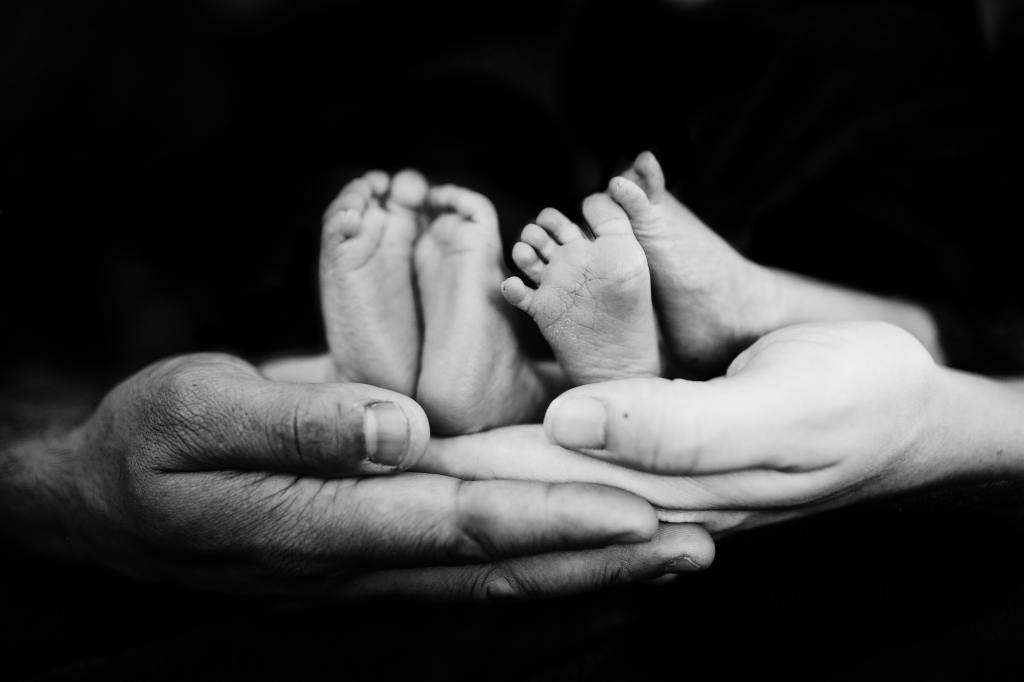
He was never alone when he was young, his sister would always be with him. They started off their friendship in the womb but didn’t really see each other for the first time until they came out into the light. Ah, that’s what you look like, quite similar to me, but different. I’m the oldest out of us two, even if it is only five minutes between us. The eldest is entitled to greater respect. Their siblings suddenly had two more siblings to make up the family, a little boy and a little girl.

They went to the same schools all the way through primary, intermediate and high schools, and it was only in university that their paths diverged. Ending up in different careers and then meeting their partners, always maintaining the bond of their twin-ship even across thousands of miles of ocean. The next generation would also have multiple births, he and his wife had a set of twins but unfortunately their little youngest did not survive. One of their biggest tragedies, the death of a child, so against the natural order of life. Life had to move on, they had the rest of their children to bring up. Life was busy with work, family was always emphasised as being the most important.

Children grow up so fast, and theirs became useful additions to society, good people that he had guided to adulthood. He was proud of them all, and then the grandchildren arrived to make a good life even better. Lovely young kids that enjoyed hanging out with Grandpa and Grandma, also lovely that at the end of the day they could be given back to their parents. Grandparents are there to provide good fun, but not to be the unpaid caregivers was their policy. It had worked so far. Their overseas daughter video-called them, they hadn’t seen her in person due to the effects of Covid over the past two years. She couldn’t contain her smile, she glowed when they talked to her. “Mum, dad I’m pregnant, it’s going to be twins!” Continuing the family tradition into the next generation. Things were really good.

Continue reading

Guest Post – Naomi’s Notes – Precious

Part 1

Photo by charlesdeluvio on Unsplash

At school two little six year olds had an argument.  They were both very upset when I called them over to talk to me.

I asked the first one what the problem was.

Pointing at the other girl with a quivering finger she said, amongst sobs, “she called me a F F F FAT BANANA. Why are you laughing?”

“Well,” I said, “are you a banana?”

“No.”

“Are you fat?”

“No.”

“Is it true?”

“No?”

Softly I said to her, “so darling if it were true it would be serious, but it’s not true so it’s funny isn’t it?”

I asked the other girl, “why did you say that?”

“I wanted her to be my friend but she didn’t want to,  so I called her a FAT BANANA…  Naomi,  I really love bananas.”

I smiled and said to her, “darling if you want someone to be your friend, that’s not the way to do it. First you  have to  help them if they need help, be kind to them and laugh at their jokes.   Then they will want to be your friend because they can see that you are a kind and caring  person.” 

Continue reading

Palace of Care – Opportunity Cost

Photo by James Bold on Unsplash

In my misspent youth I studied Economics during high school and into my first year of university. Opportunity Cost is the cost that you incur when you make a choice. Because you have chosen A, you miss out on B, or vice versa.

The New Zealand school ball is an important event in a young lady’s life it is a coming of age event. The proud parents will see their daughter off for her first school ball. This can be a big deal especially for the father. The ball was scheduled to take place in a week’s time. Our patient had his blood tests done as he was looking pale, was fatigued, and slightly short of breath. Symptoms and signs of anaemia, low red blood cells in his body. His counts were dangerously low, and if we didn’t do something about it, he was at risk of dying before the day of the school ball. He really wanted to be there for his daughter, it was his only chance at providing the whole family with this milestone memory. He agreed to our plan of transfusion, a top up to give him the best chance of being there for his daughter.

In the days after the transfusion he was able to walk further without losing his breath, his thinking had sharpened, almost as good as normal. Looking in the mirror his skin tone no longer reminded him of the vampires from the Twilight series that his daughter and her friends all loved. He would make it to the ball, and the whole family was excited about it again. They could proceed with the pre-ball party at home, he would go home for a few hours of leave. A nice dose of normal family life to break up his cancer story if only for a brief respite.

After the weekend the pre-ball photos were shared with us, and they were lovely. The only clue to his illness was that Dad was thin, and looked tired in the photos, otherwise a beautiful New Zealand family celebrating a special night together at home. A snapshot frozen in time, if only the image would stay like that, no changes occurring, no one deteriorating, no brightness fading from their eyes. But that is still life, real life is about the changes that occur with each passing minute, hour, day, week.

Continue reading