Palace of Care – PI – Palliative Investigator

Photo by N. on Unsplash

She was one of our community patients, a lady in her early forties who had been deteriorating over the past week. We were able to control her physical symptoms well but there was a deep underlying sadness deep inside. She was able to accept that she was dying, that she would be leaving behind her 18 year old daughter and her husband. That was not the cause of her upset, our counsellor went to see her at home to see if she could find out what was going on.

What was causing our patient so much anguish? She was well supported by her husband and daughter, and other family members were helping too but as our patient became less conscious her agitation and distress worsened. Was it an end of life delirium or was there something more going on? Her husband said that she was still looking for Mary.

Mary? Who is Mary?

Our daughter.

But your daughter is not called Mary.

Our older daughter.

Oh we didn’t know you had another daughter.

She was stillborn when we had her 20 years ago. We were young and didn’t have enough money to properly bury her. We only had a few hours with her before they took her away. We never found out where she was buried. We looked for the first two years but our English wasn’t as good back then, we had just moved over from the Islands. We never found her, but we’ve always missed her. Especially my wife.

There was a mystery to be solved, I had to find out where baby Mary was buried, with only her full name and date of death. I had no idea how to start the search, so I asked around my colleagues. Thanks to everyone who suggested that I contact the local council. A quick search of their website found a section where you can search for burial locations online yourself. This did not yield any results, but led me to another section of the website that allowed me to send a query email.

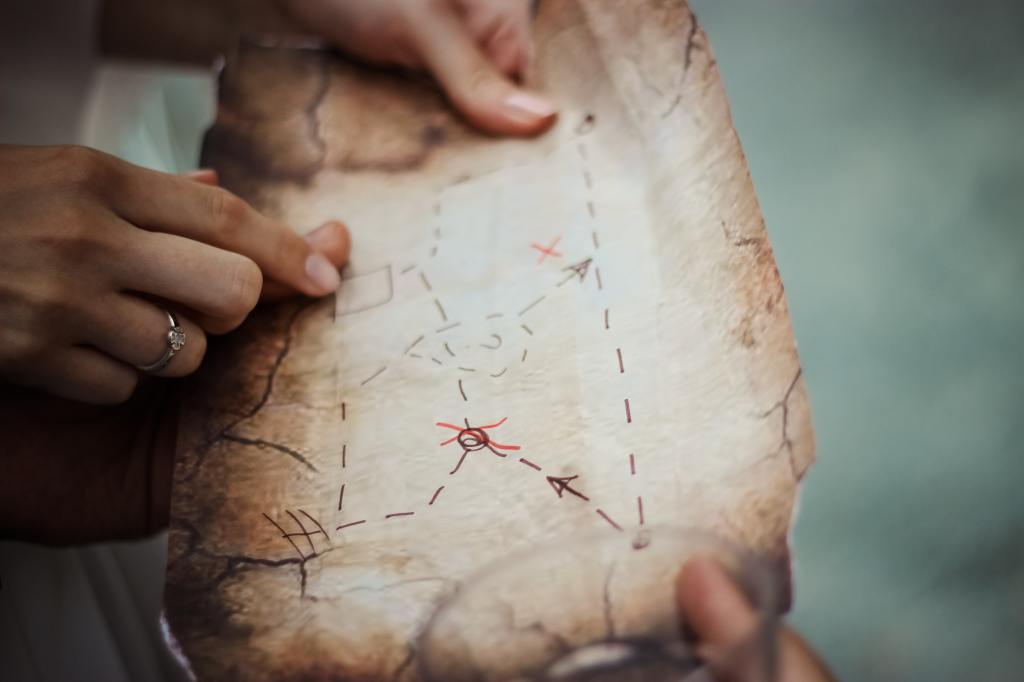
A few days later a real human answered, and suggested that I email someone else. Two days later I was sent a reply with a picture of a map of the cemetery with a highlighted area within which the baby had been buried. I printed out the map and our counsellor rushed out to deliver the information package to the couple. Time was of the essence as our patient was deteriorating rapidly and was in danger of losing consciousness and clarity.

Two days later our patient died peacefully at home with her gathered family, her distress had settled down once she was told that Mary had been found. The bereaved husband’s were red and swollen, but he smiled when he told us that his wife knew where to find their long-lost baby and could pick her up on their way to heaven.
Guest Post – Naomi’s Notes – Petticoat

Photo by Nick Fewings on Unsplash

It was my mother’s birthday.  It was a cold, bleak winter’s day.   I had put on a nice warm woolen skirt that my friend had given me which belonged to her mother.  It was a bit big on the waist but was okay.  I wore it to work.  After school I rushed to buy some flowers  to take to the cemetery before it closed.  

When I arrived I was the only person there, and I quickly arranged the flowers on my parents’ grave.  I stood back to admire the flowers and my thoughts turned toward my precious mother. It was starting to get dark, I felt sad as I walked back to my car. I remembered happier times on my mother’s birthday.  

Suddenly I felt very cold, I thought to myself  the temperature had plummeted.  Then I looked down and saw that actually it was my skirt that had fallen down and I was standing in the cemetery in just my stockings with my skirt on the ground.   

I started to laugh and laugh and laugh. Then I suddenly realised if anyone saw me in my stockings  laughing so loud in the cemetery they would think I was having an ‘episode’ so I quickly put my skirt on and walked slowly to my car.  

Then I noticed the security cameras.   I raised my handbag to my face to save myself some embarrassment  and walked faster to the car.   I smiled to myself as I drove home as I remembered what my mother  had said to me when I was young ….”Always wear a petticoat.”

I think therefore I am? – Holding Hands

Photo by National Cancer Institute on Unsplash

There is nothing wrong with holding hands in hospice. The problem is when that is the only treatment that you have to offer.

When modern hospice started there may have been less that could be done for patients thus holding hands may have had to be one of the only treatments available. If they couldn’t control your symptoms then at least you didn’t have to die alone and having someone hold your hand might provide some comfort.

Hospices may have started off as places where semi-retired doctors, nurses and others might go to work when they were wanting an easy job at the end of their careers but modern day hospice requires staff who are willing to continue learning, to grow their skills and knowledge as palliative care situations have become increasingly complex situations. Due to advances in medical treatments people are living longer than they ever have before. The silver tsunami is the greatest achievement of modern medicine, people are able to live to old ages.

Continue reading

Guest Post – Naomi’s Notes – Appreciation

Photo by Aude-Andre Saturnio on Unsplash

They were a big Samoan family who supported their mother’s decision to not undergo dialysis for her kidneys. She had no appetite for her favourite foods and the level of care was entering into an unknown realm.   In the distant past the caregiver had done some volunteer work for Hospice and thought this might be the answer to the problem.  

A family meeting was called and Hospice intervention was discussed.  The siblings were unanimous in their decision.  No Hospice, they viewed it as a betrayal and a failure on their part that their mother would be under the care of strangers instead of within her own family.  The siblings were having difficulty accepting the stage that their mother was at.   

Christmas came and she was very ill, she tried to make an effort to enjoy the day for her children.  Her grandchildren carried her outside into the Marquee for Christmas dinner. 

She didn’t want to spoil the day for her children.  They took her back to bed after a couple of hours.   She was too exhausted to sit up any longer.

Two days later she was in hospital, unable to communicate.  She sat and stared into space.  In the morning she woke up and pleaded to go home.  

Without consulting anyone her caregiver made the decision to request palliative care through Hospice.  By the time the discharge from hospital was completed, the hospital bed had already been delivered to her home.  Pain relief had been organised to ensure there was no breakthrough pain.

The family  had been standing alone with care of their mother and initially viewed Hospice as a  “us or them” situation. The siblings  quickly realised it was more  of a “we are on the same team” situation with a wonderful wrap around service.

The experienced nurses provided kind compassionate loving care. The family wanted  the best care for their mother and thanks to Hospice they got it.

I think therefore I am? – Hearts and Minds

Photo by Jon Tyson on Unsplash

To do palliative care and hospice well your heart does need to be in it. People can easily tell if you are not really there. It doesn’t have to be as obvious as someone who won’t sit down, or who constantly checks the time on their watch. Do you have somewhere more important to be at the moment, than in my room? Something more important that needs to be done than listening to me?

If someone’s heart isn’t really in it people can tell right away. The lack of attention that is paid to simple things. So we do want people to be engaged to actually care for people. It does need to be done professionally, with kindness and respect. People need to have firm boundaries that they do not cross. It’s about protecting yourself and also the person that you are working with. You can be friendly but cannot be their friend. You can be caring but it must be in a professional manner. We are guests in their lives, and we do not want to disrupt pre-existing relationships.

We are involved possibly in the final chapter of someone’s book of life. It is not about us, but about them. They are the stars of their own show, of their own movie, of their own stories. We are only extras, or play a tiny bit part. We may have only a few lines to say, and we will try to say them well. The direction of the story needs to be guided by the person going through it all. We would not be in the same room as them if they were not sick, if they did not need the care that we can provide. We must never forget that, that they are not here because of us, but that we are all here because of them. The patient needs to be at the centre of everything that we do, not their family members or friends but the actual person themselves.

Continue reading

PIANO lessons

Realisation

Photo by Anastasia Kalinkina on Unsplash

I arrived around the same time as the Eat My Lunch delivery arrived. This was a local social enterprise which had been set up and the concept was that if you bought a lunch, the company would provide a lunch to a student in need. The company had delivered some school lunches to be distributed to the students. From one of the other network attendees I learnt that the school also provided breakfast for the kids as well as lunch. The lady said that she helped with the breakfast serving at least once a week. She admitted to initially being against the idea, that she had believed that children’s nutrition was supposed to be under the remit of their parents. Over time she came to the realisation that due to personal circumstances this was not always possible, and that providing children with one or two meals a day really enhanced their health, and their learning ability. Since then she happily reported to duty each week, and sometimes even filled in shifts for other people.

Disconnection

Photo by Erik Mclean on Unsplash

A family had come back recently from the Islands, the husband was unwell with metastatic cancer. The teacher asked if the patient was under hospice. I thought that service was only for Palagi – The foreigner – the white people. Despite us having been the hospice for the local area for the past 35+ years local people still did not know that we were available to help our local community members regardless of who they are. A gap that we still haven’t been able to bridge despite many years of trying to connect. What we had done over the past three decades just wasn’t working. We need to try something different. The same old, same old just doesn’t cut it any more. What else can we do to make the connection? That we are here for people just like you. We have been trying to recruit to reflect our local demographic. For our staff to look like our community, and we are hiring for inclusion to encourage diversity of thought at all levels of our organisation. People like us look after people like you, we are one and the same.

Traumatisation

Photo by Andre Benz on Unsplash

The family had lost their father and husband due to a brutal act of violence at the local train station. His life was cruelly stolen from them, and the grief was too much for them to handle. They were lost, set adrift in a cruel sea of grief, with no land in sight, no hope of rescue. Every week they would visit the site of his death, the mother and the children, would weep and could not move on with their lives. This important local community hub held onto their agony with an iron grip. A local amenity that could not be avoided, became not just a place to catch a bus or a train, but a deva-station. Transporting them to a painful past, a tormented present and an uncertain future.

Advance care planning week – webinar for consumers

Come along to talk to Dr Sonia and consumer Holli about advance care planning during Advance Care Planning week 2022. 11:00 24th March online

Palace of Care – Accelerating towards the finish line

Photo by Daniel Lloyd Blunk-Fernández on Unsplash

The poor old lady had been through a lot in recent years. Cancer had treated her harshly, and had spread through major organ systems, her liver, lung, and most of the bones in her body. A cruel disease that robbed her of her independence, and dignity. The years that she had the cancer had been relentless, multiple lines of treatment including chemotherapy, radiotherapy, targeted therapy. Despite all of them the cancer continued to progress, to cause havoc, and to ravage her body, and eventually her mind.

The past month had been the worst time of all. Her final decline started with a fall, it was not clear why she fell but she ended up fracturing her wrist. A painful injury that caused her to cry in agony. Her lower arm was placed in a cast for comfort and to give it the best chance to heal. Three days later she fell again, with her other hand outstretched, causing another wrist fracture. Two forearms were now encased by fibre-glass casts. This rendered her unable to wipe her bottom or wash herself. Increasingly dependent she had trouble feeding herself, the casts were of the light weight sort, but when your illness has stolen away precious muscle, the additional weight made brushing her teeth impossible.

Continue reading

Guest Post – Naomi’s Notes – Grelly

Photo by Jana Sabeth on Unsplash

She called him Grelly when she was young because she couldn’t say Grandad.

He used to pick her up every day from Kindy.  Always the same routine when she got to her Mama’s house. She would sit next to Grelly and he would let her dunk her biscuits into his cup of tea.  He didn’t mind if her biscuit fell in.

She entertained them by reciting the poems and songs she had learned.  She loved it when they joined in and sang with her.  Grelly would let her be the boss of the TV remote and watch her programmes with her.   She didn’t mind that he didn’t know the words to Spongebob Squarepants because he made up for it by dancing with her when Bananas in Pyjamas came on.   When she was sick he would phone her and tell her he and Mama were missing her. 

When he became sick, she would rush in to see to see him. She would kiss them both and show them her drawings and tell him what she had done at Kindy.

Continue reading

I think therefore I am? – Yearning for connection

Photo by Toa Heftiba on Unsplash

What this palliative care doctor thinks:

It’s not just about language, that’s why Google translate can’t replace human interpreters at the moment. It might be able to translate the words literally from one language to another but it doesn’t yet have the cultural context of where the words came from. The history of the language has not been programmed into it. Take English for example a lot of the words we use are derived from French and other Latin-based languages. You don’t ask for sheep meat, you ask for mutton from the French mouton. Similarly beef, not cow meat, from the French boeuf. A translator program is not the same as an interpreter program. Google Interpret would have to be much more sophisticated and would need cultural programming as well as linguistic programming.

A person may be speaking Chinese, but they are also living Chinese. The food that they eat, the clothes that they wear. Rituals that they follow to celebrate life, and how they deal with death and dying are the missing parts of a person’s identity that cannot be easily translated.
The most important tool I have as a palliative care doctor is my ability to communicate. I make a point of greeting my patients in their native language as much as possible. My accented version of their language is my attempt at providing them with a hint of familiarity. In the area I work in people come from all over the world, from lots of different cultures, with over 200 different languages spoken in our area. I certainly do not know all the greetings that are available but a quick Google search can provide me with at least a few words of greeting. A little demonstration of respect that I have made the effort to try to connect with another human being. It may have taken me ten seconds to type in my query but it can often bring a smile to a weary sufferer, whose illness has taken over their body. Someone for whom English may be a second or third language. A little snippet of home, can make a real difference.

Continue reading