#SHCR: An inspiring, free course that will help you change health care for the better

When I first read Sonia’s post about the School for Health and Care Radicals (SHCR) a year ago, little did I know that I would be signing up for one of the most inspiring educational experiences of my ten years as a doctor, resulting in unexpected personal and professional growth.

“Anyone who wants to bring about change has to be ready to break the rules. But in health and social care, that can be really difficult. The art of rocking the boat while staying in it is something it seems no-one is ready to help you learn.” – School for Health and Care Radicals


IMG_6240

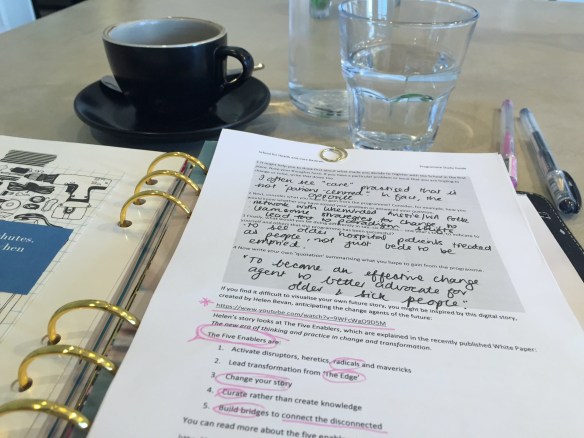
Working on my SHCR workbook – over coffee

Continue reading

2015 in the Palliverse – conferences

cropped-cropped-img_4157.jpg

As we adjust to the New Year (hello 2016), Palliverse is looking back at some of our posts over the past year. Being palliative care nerds, Team Palliverse have been lucky to attend numerous Australian, New Zealand and international conferences over the past year. Click the links below to attend vicariously or relive some of them:


Stay tuned in 2016 for more conference updates – Team Palliverse are already begging for leave and furiously submitting abstracts. And if you are attending a conference that would be of interest to Palliverse readers, and would like to share a summary, please contact us!

To be alerted about new Palliverse posts, follow us on Facebook, Twitter or LinkedIn or hit the “Follow” button in the right-hand column to subscribe to email alerts.


2015 in the Palliverse – palliative care reading

cropped-cropped-img_4157.jpg

Are you looking for some reading over the summer holidays (or winter if you’re that way inclined)? Over the next fortnight, we’ll be looking back at some of our posts over the past year. We’ve been to conferences, reflected on clinical and research experiences, shared palliative care educational resources (#FOAMPal) and hosted guest contributors.

A good place to start for palliative care reading is our “Elsewhere in the Palliverse” posts, curated lists of palliative care articles, blog posts, educational resources and the occasional video from Australia, New Zealand, and beyond. This year we’ve shared fifteen “Elsewhere in the Palliverse” posts. We’ve had special editions for events like World Hospice and Palliative Care Day, Dying to Know Day, and Halloween.

To be alerted about new Palliverse posts, follow us on Facebook, Twitter or LinkedIn or hit the “Follow” button in the right-hand column to subscribe to email alerts.


A Christmas wish…

A Christmas wish from Kate Swaffer

Kate Swaffer (she/her) Kaurna Country's avatar

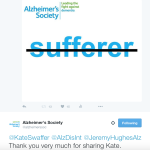
Screen Shot 2015-12-11 at 9.59.54 am

Yes, I am suffering…
but only some of the time
not every moment of every day

And, importantly…
not always from dementia
more often from the language of dementia

The symptoms of dementia
do not consume me
one hundred percent of the time

Only some moments
of some days
and definitely not all days

So why then must others
with and without dementia
exacerbate the suffering and stigma

by labelling me
a sufferer
ALL of the time?

Please do not label me a sufferer
This is my one and only
Christmas wish

View original post

The right words matter when talking about pain

Michael Vagg, Barwon Health

It is no coincidence that we describe the “pain” of loneliness or the “agony” of rejected romantic feelings. Paper cuts can be “excruciatingly painful”, but so can watching the social mishaps of Basil Fawlty or David Brent. Personal criticism can be “stinging”.

The book The Patient’s Brain outlines the evidence that later evolutionary traits such as social cognition and language appear to have grafted themselves onto the ancient brain functions that alerted us to external threats or bodily damage.

Words are neurological events. They are meaning-laden puffs of air that our brain transforms into knowledge, opinions, emotions or danger signals.

Shakespeare, perhaps the greatest wordsmith of all time, frequently used bodily sensations including sensitivity to pain as metaphors. If you’ve ever complained about the “bitter cold”, called an ugly sight an “eyesore” or felt it “sharper than a serpent’s tooth … to have a thankless child” you might know what I mean.

Words affect pain

Continue reading

First Person: The therapeutic value of touch

photo by Jonas Vincent via unsplash.comThe first time one of my medical professionals touched me for comfort rather than during a physical exam, it was during my liver biopsy.  I was extremely frightened of the procedure, due to how painful I’d been warned the procedure was, and I was, and still am, slightly uncomfortable with needles (though daily Clexane shots sure sorts that out fast).  The medical team at the imaging clinic I attended had gotten in a second nurse, just to hold my hand during the procedure.  It was her 60th birthday, and she had been called in, literally, just to hold my hand.  I was incredibly moved by this, and incredibly comforted to have someone gently talk me through what was going on – to warn me to look away when the giant liver biopsy needle was brought out, helping me count holding my breath as the needle drew up the cancerous cells, and gently walking me to the recovery room after the procedure finished. It was one of the kindest things I have experienced with my medical professionals – and I have experienced more kindness than I can even recognise. Continue reading

Palliverse takes over @WePublicHealth – for one week only!

FullSizeRenderThis week, Palliverse will be hosting the @WePublicHealth rocur (“rotating curation”) Twitter account. You can read more about @WePublicHealth, “an experiment in citizen journalism meets public health”, over at Croakey blog.

This week, Palliverse will discuss a number of public health palliative care topics such as equitable access to palliative care in Australia/New Zealand and globally, access to essential pain medicines, Compassionate Communities, advance care planning, and more. Continue reading

How does it feel to be young and dying?

ElizabethCAplice

Palliverse welcomes a new contributor today. Elizabeth Caplice is an archivist on hiatus. She has Stage IV colorectal cancer, and writes about cancer, and how it intersects with life, particularly in younger adults. Elizabeth has shared a recent photo, to show that “stage IV cancer looks far broader than just some elderly hands with a cannula in them.” (Try doing a Google image search for “palliative care”.)

We recommend Elizabeth’s excellent blog  Sky Between Branches and her Twitter feed. As always please leave responses in the “Comments” box below.


Today, I saw my oncologist, and got dealt more bad news.  Stage IV cancer life is mostly bad news, and you come to expect it.  The cancer has spread, again, after only two weeks off chemotherapy – which I needed to take due to my blood count consistently dropping to dangerous levels.  He gently told me that if it was in my bones now, it wouldn’t be shocking, because I was diagnosed with Stage IV rectal cancer a year and a half ago.  I have done remarkably well.  Continue reading

To die at home or in hospital? Aussies want one but we fund the other via @ConversationEDU

Nikki McCaffrey, Flinders University

Where do you want to die? Provided symptoms can be controlled, most people at the end of life prefer to die at home. However, just over half of Australians who died in 2011-12 died in hospital.

In the same year, about A$2.4 billion was spent on hospital care for people aged 65 or older in their last year of life. But only a small fraction of that amount is spent supporting people to die at home.

Public money is being wasted on ineffective and inefficient treatments and health services which do not meet patients’ and families’ needs and wishes at the end of life.

This money would be better spent on palliative care services. Among other benefits, these more than double the chance of dying at home through the provision of home-based support services such as nursing.

Health funds spent on treatments and health services of negligible and questionable value, such as chemotherapy at the end of life, should be reallocated to palliative care services. This would improve our chances of dying well and in accordance with our wishes.

Palliative care is care provided to people living with a terminal illness where a cure is no longer possible. The aim of palliative care is to achieve the best quality of life possible for patients and their families during the illness and after death by relieving symptoms, addressing emotional, social and spiritual needs and reducing suffering.

This type of care is provided by teams of assorted professionals such as chaplains, doctors, nurses, pharmacists, physiotherapists and social workers. It is provided across all types of settings, including hospitals, hospices, residential care facilities and at home.

A recent report suggested investing A$237 million in providing palliative care services at home rather than in hospital wouldn’t raise the total health care spend but would increase the proportion of Australians dying at home from 14% to 30%.

High-quality palliative care is person-centred and compassionate. Emerging evidence suggests this type of care could even lower health costs, mainly by reducing hospitalisations at the end of life.

Palliative care in hospital

Inevitably, and appropriately, some people will need or desire hospital care at the end of life. The Australian Institute of Health and Welfare’s recent update on palliative care services in Australia showed that over the past ten years there has been a 52% increase in hospitalisations for which the main purpose of care is palliation.

https://datawrapper.dwcdn.net/nxLVD/1/

This trend will continue rising due to our increasing, ageing population and earlier warning of death.

In 2012-13, 42% of people who died in hospital were receiving palliative care. Providing specialised palliative care in hospitals, particularly early on, can reduce hospitalisation costs by shortening the hospital stay and reducing intensive care and laboratory costs, as well as improving quality of life.

What about informal care?

In 2011-12, Australia spent A$140.2 billion on health. Roughly a third of total health costs is associated with people in the last year of life.

But this estimate does not include costs to the individual or their family. Recent research suggests as much as a third of total spending on caring for people at the end of life falls on family and friends.

Without the support of informal carers, home-based care at the end of life would often be unachievable. Smaller, more geographically spread out families, higher divorce rates and changing communities mean these support networks are likely to shrink at a time when the need for them is growing.

When planning health-care services in this setting, it is essential we also think about informal care costs. We need to make sure we avoid over-burdening families who are a vital part of end-of-life care.

Achieving a better death

Without adequate palliative and end-of-life care, people will continue to be cared for and to die in hospitals despite most Australians wishing otherwise. Patients will have a poorer quality of life at the end of life. Families will suffer unnecessarily. Care will not be provided efficiently.

We are all going to die, but how will we die? Investing in palliative care services will improve our chances of dying well and in accordance with our wishes.

The Conversation

Nikki McCaffrey, Health Economist with Palliative Care Clinical Studies Collaborative (PaCCSC), Dept Palliative & Supportive Services & Flinders Health Economics Group (FHEG), Flinders University

This article was originally published on The Conversation. Read the original article.

Denton lacks understanding of dying process – a social worker’s perspective

Euthanasia machine, displayed in Science Museum, London

Euthanasia machine, displayed in Science Museum, London

There has been much discussion about physician assisted death in the Australian media in recent weeks. Most of the voices have belonged to doctors (eg this one, this one, this one or this one) or Andrew Denton, with little airtime given to people with life-limiting illness, their family members, bereaved carers, or other professionals who care for the dying. We are sharing an opinion from an invaluable member of the palliative care interdisciplinary team, the social worker.

Below, palliative care Social Worker Zoe Mitchell responds to Andrew Denton’s recent article in The Age (“Doctors shouldn’t look away when dying patients are suffering“). Denton claims that according to palliative care philosophy, “while it is ethically unacceptable for a patient to choose a death that is quick and painless, it is ethically acceptable for them to choose a slow, painful death by dehydration and starvation.”

Zoe says, “I had so much respect for Andrew Denton until now. His article is full of false information about palliative care and shows a lack of understanding of the dying process.

I am no doctor, but I have spent over 4 years working with people who were dying, and while to us it may feel like we are ‘starving’ someone…we are not. When someone is dying and the body begins to shut down, it does not need food or fluids. If we force feed someone it can cause more discomfort and possible nausea and vomiting. If we force fluids into someone and their kidneys are shutting down, it just adds to their fluid overload – again causing discomfort, with fluid in the lungs and swollen limbs. Instead of forcing fluids and food on people with no appetite or thirst, we should be providing quality mouth care to ensure they do not have a dry or sore mouth.

The focus needs to be on good care, this is why we have palliative care. To provide holistic support to the dying person, the important people in their lives and the medical teams looking after them, but also to educate them on what a “good death” can look like.

Before we can even discuss the debate of voluntary euthanasia we need to bring the conversation back to how we can support people to not just die well, but live well until death. In order to do this we need more funding and resources to ensure good palliative care is accessible no matter where you live or your socioeconomic status.”

What are your views about Denton’s article, and nutrition and hydration at end of life? Regardless of your personal views on physician-assisted death, do you think he offers a fair depiction of palliative care? Please share below.

Many thanks to Zoe for contributing to the discussion.