Guest Post – Naomi’s Notes – Mamma Mia

Photo by Dominik Lange on Unsplash

It was getting harder to manage working full time during the day and caring for my mother.  The routine was I would wash her in the morning and give her breakfast and her medication then leave her a drink in a thermos cup with something for morning tea.  

My sister would call in to see her before she went to work at 10 am. My other brothers and sisters were supposed to phone her during the day when I was at work.   I would come home for lunch, give her lunch I prepared the night before, give her medication and a drink and leave something for afternoon tea before heading back to work.  I finished at 5pm but sometimes couldn’t get away till 5.30pm as I worked at the District Court and sometimes the Court sat late.

The routine worked for a while but as she started to decline I noticed little things.   I would come home for lunch and her morning tea hadn’t been touched.  When I asked her why she hadn’t eaten the orange I left her, she was embarrassed and replied, “I tried and tried but I couldn’t peel it” and she couldn’t unscrew the lid of the drink.  I felt terrible that she wasn’t able to access it.  It coincided with her telling me she was lonely when I went to work, it was a long day for her.   I looked at her beautiful face and I knew she was not one to complain but this was important to her.    Something had to change. 

Continue reading

Palliverse’s Greatest Hits from Oct 2014 – #getjakbak revisited – Part 6

Photo by Ave Calvar on Unsplash

Over the years I have noticed that when it comes to reunions of significant others that there can be a number of different outcomes. If someone has had to hang on, having reached the reunion might be akin to mission accomplished, and the person can deteriorate quickly after the meeting. Or else the person may receive a boost from the reunion and somehow it provides energy for them to carry on living, much longer than is to be expected.

The latter was the case with our patient, I knew that he was a strong man, with an unshakeable faith and strong willpower. I was surprised to learn from my Island contact that after the arduous journey our patient only stayed one night at the hospital, and was discharged the next day to his family’s home. What is it about the human spirit that can make it so resilient? The science can’t explain it, it is one of the mysteries of life. The importance of human connection, can keep you going, or bring you to a complete stop.

His prognosis had always been limited as he was very unwell throughout. The joy of reuniting with his siblings and their children really gave him a boost. 27 days he lasted before he died, which was impressive, and also fortunate as we could only provide him with 30 days’ worth of medications. He died just before he would’ve run out of his crucial medications.

Continue reading

Bedside Lessons – 13. Waddya waiting for?

Photo by Vadim Bogulov on Unsplash

He was well respected and had many visitors. He had sponsored most of his family to come over to New Zealand. He had enabled his brothers and parents to come over in order for them to have a better life. He was the reason that the children’s generation grew up speaking English and Chinese. He ran his businesses successfully with the help of his siblings.

It was unfortunate that he became unwell with cancer, but he was well-supported by his family. He had always been there for them so when he was unwell they were there for him. He was able to purchase the best care that money could buy, and his Private Oncologist tried everything that was available, but it did not work.

He went back to China in order to access other treatments but they did not work either and meant that he had to spend time away form his family which he did not like. Family was the most important thing to him in the world. That was the whole reason that he had worked so hard in order to make things better for his family, so that they could enjoy their time together.

He started to deteriorate more quickly and he was admitted for symptom control but ended up requiring end of life care. There was always a family member present. When he started having trouble swallowing, the family asked about tube feeding. We knew that back in China if you could afford to pay for it you could access almost any treatment you wanted. It was explained that we did not think that artificial feeding and hydration would be beneficial. He became sleepier and less clear in his thinking. Eventually he became comatose.

His family continued their vigil, even though he was unresponsive. They asked how long he had left, and we couldn’t give them a adequate answer. They rightfully pointed out to us that he had not had anything to eat or drink food about two weeks. How could he keep on staying alive? I had trouble explaining it with all of my medical training, our science could not explain what was going on.

Continue reading

Palace of Care – In his arms

mayur-gala-487-unsplash

Photo by Mayur Gala on Unsplash

It had been a great game of football, they had managed to successfully complete a number of moves that they had been practising for weeks. He was proud of the fact that the ball was always safe, in his arms.

The post-match party was a happy and raucous affair, a swirl of colours and noise, but everything seemed to stop, when she walked into the room.

Their eyes met across the crowded space, everyone else became invisible and they instantly fell in love. Soon she was, in his arms.

Fast-forward 23 years to an admission into our family room. Again a swirl of colours and noise as they settled into the room with their seven children, and their children’s children.

Early on in their relationship they had reflected on their own upbringing, having being raised by their grandparents, they made a pact that they would raise their own kids themselves.

And they did so over the next 22 years which were filled with joy.

She had become unwell over the past year, needing many trips to clinics and hospital for many treatments and even more disappointments. Always supported by their family  who stayed strong around them.

It had taken a lot of convincing to allow Hospice into their lives – he was scared of them – but the fears were soon allayed by the visiting staff.

Barely three weeks ago she had organised a family trip up North, just them and their four youngest children. “She knew that her time was short, and that was her preparing me.”

During the weekend, he had shared, “Thank you for providing this large room for us, it has allowed me to be the husband again, and the father to my kids, we can be ourselves again.”

There were many visitors over the weekend and into the new week.

On the very last night the couple were together, peacefully in bed, surrounded by the love from all their kids sleeping on the floor around them.

Coming back from the bathroom on the final morning, held up in his arms, “I think it’s my time to go.”

Gently back to bed, still in his arms.

Feeling safe, surrounded by the best things in the world, their kids and grand-kids.

She leaned back, in his arms, and then quietly left the room.

“She was looking after us all, right until the very end, giving us the strength to carry on walking tall.”

I think therefore I am? – A definition of Grace

30117339256_85f66c74fa_b

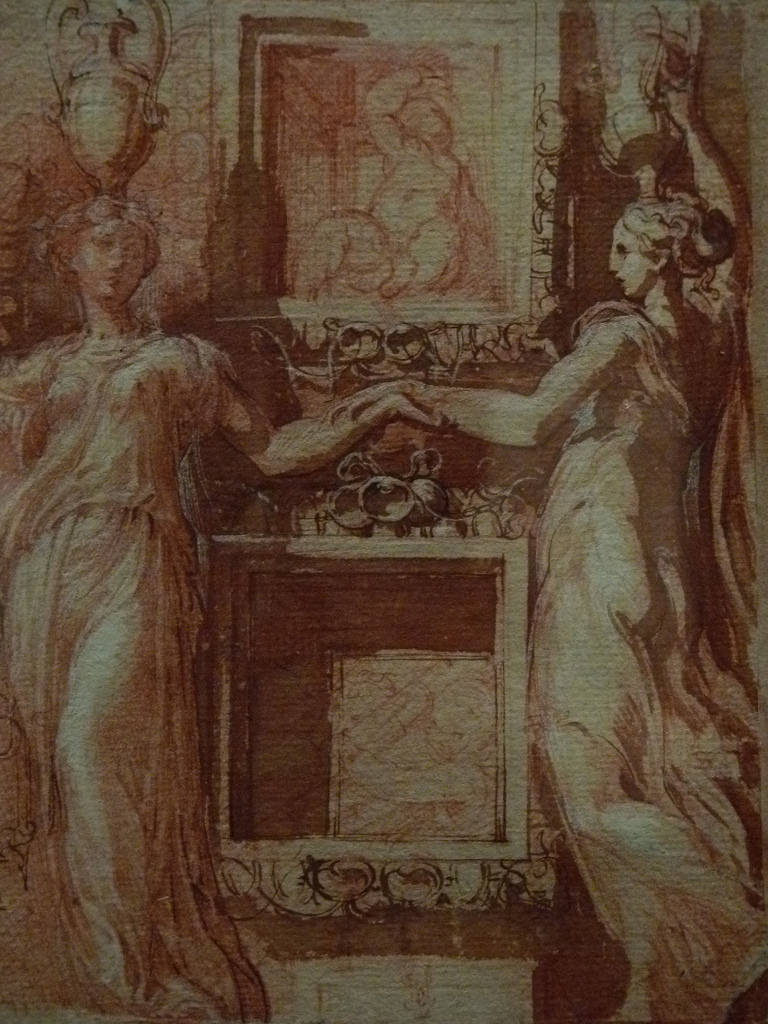
http://www.flickr.com/photos/144232185@N03/30117339256″>PARMIGIANINO,1534-35 – Deux Canéphores se donnant la Main (Louvre INV6466)

In healthcare it is important to set clear boundaries in order to care for yourself and your patients in a sustainable fashion. In the practice of palliative care, boundary setting is even more important, as the therapeutic relationship can be very intense and intimate at times. We have to keep in mind that this relationship will likely end soon, with the death of our patient. It can be a difficult balancing act; using your humanity to make important connections with another human being; while at the same time keeping professional distance to protect the both of you.

That being said, it is inevitable that there will be some cases which will hit you harder than others. When a deeper connection has been made, you will feel the loss and grief much more strongly. Informal reflection with your team members and professional supervision have an important role to play in keeping us palliative care providers safe to continue doing the important job that we have to do. We need to remind ourselves that this is a job that not everyone in healthcare can handle. That those of us who chose to work in palliative care, owe it to ourselves and our patients to look after ourselves. We are a precious resource and if we do not take care of ourselves, we will deny our patients and their families the difference that we can make in their lives, and deaths.

After almost ten years of working exclusively in full-time palliative care practice I would like to share a case that reminded me of just how human I am, and how much value I obtain from professional supervision and from sharing with my team members.

Continue reading

Palace of Care – Living every moment

Living every moment when you’re dying

cms_show_image

In New Zealand last week we celebrated Hospice Awareness Weak and to tell you the truth I’m not sure how impactful the week actually was. Continue reading

Palace of Care – Que sera, sera

Whatever will be, will be.

He tells me, with a tear in his eye, “She’s my sweetheart.”

She smiles weakly, and her eyes brighten.

He gently kisses her hand in a loving manner.

“No, I am ready.”

“Are you scared?”

“I think I’m dying.”

Continue reading

Palace of Care/I think therefore I am? – #getjnrbak – Time is of the essence


Since the last update a lot has happened.

The local branch of shipping company Maersk reached out to Palliverse after reading the NZ Herald article from Sunday. Their can do attitude was much appreciated by us all. Thank you very much.

Thanks also to everyone who has made suggestions, offered advice and wished us well for this mission. It is heartening that people are taking time out of their busy lives to try to help their fellow man. Be proud of yourselves.

Poppa has become extremely fatigued over the past three days which is a big concern to the hospice team and the family. There’s a possibility that time may be shortening, as Poppa’s condition continues to deteriorate.

There has been some good news – Junior has been improving everyday and has been in touch with his specialist again. His risk of further eye injury is now estimated to be low, and because of the uncertain situation that Poppa is in the decision has been made for Junior and other family members to board the earliest flight to Auckland tomorrow.

Poppa has been informed of the travel plans and is looking forward to seeing Junior tomorrow. Poppa is trying his best to hold on.

Fingers and everything else remain crossed. Prayers are being said by many people on both sides of the Tasman.

Good luck Poppa and Junior – I sincerely hope that you can have your reunion.

*Updated* 18/05/16 – Palace of Care/I think therefore I am? -#getjnrbak – Extra, extra read all about it! #pallanz

Hi everyone,

Apologies for the late update, I’ve been clinically busy while working the weekend.

We – Palliverse and the family of “Poppa” and “Junior” are still trying to find a way to make their reunion happen.

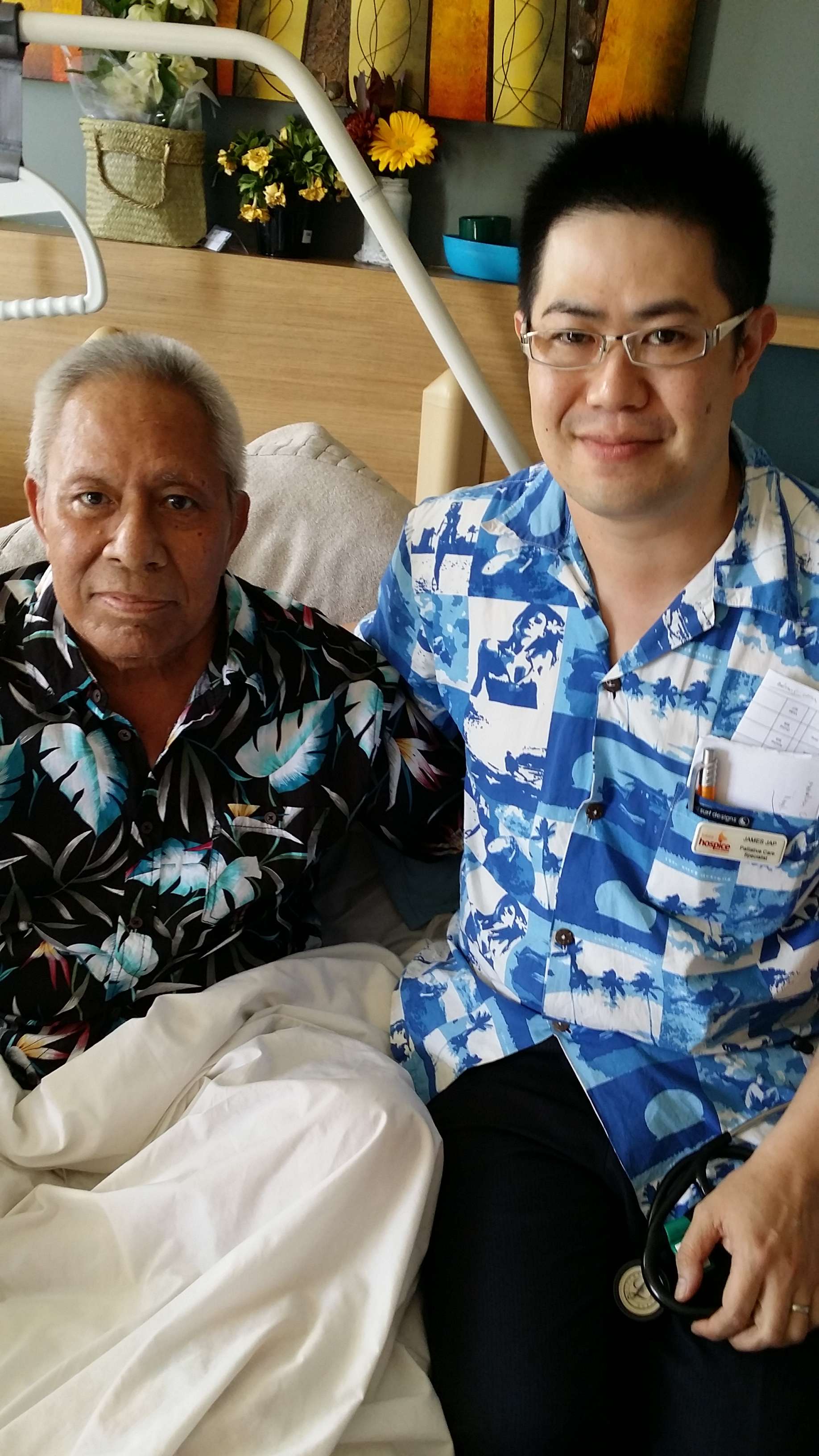
With the family’s permission here is a photo from yesterday morning’s ward round:

Shirts

“Aloha” from Saturday morning from two guys who are fashion-forward? Poppa is trying to hold on for Junior.

The link to Poppa and Junior’s Story was shared through the social media by myself, the Palliverse community and the family.

I was pleasantly surprised that the link to the post appeared as a headline on Friday 13th May’s edition of the #hpmglobal paper.li – Thank you very much Jim Cleary!

I was informed by the family that one of NZ’s national papers had contact them and they were interviewed last night.

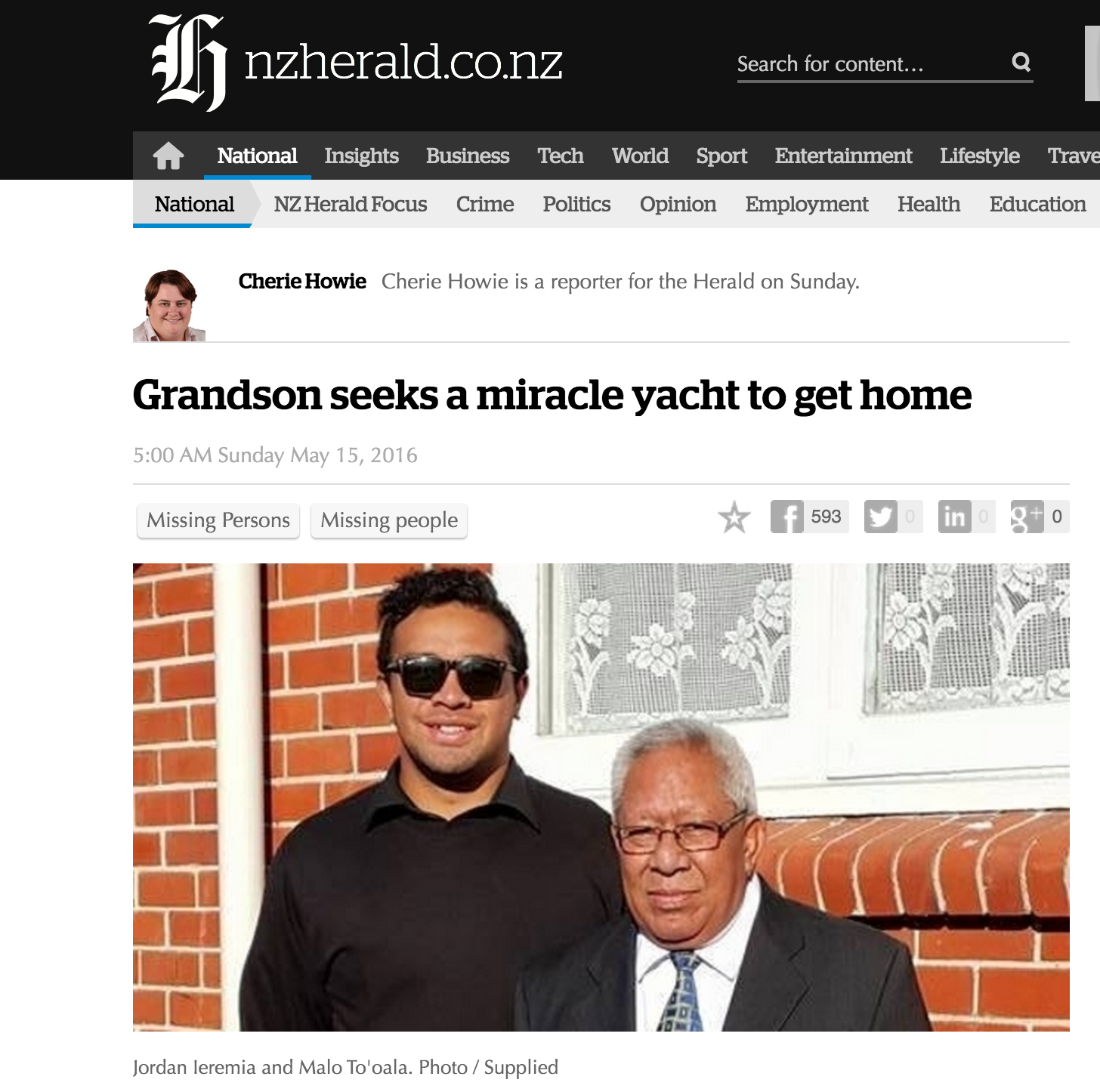
This resulted in the following story appearing this morning:

Screen Shot 2016-05-15 at 22.20.18

Snapshot of from the New Zealand Herald website – Click here to read the full story.

I’m checking out a few more traditional media leads in order to spread the word further.

I’m also trying to contact sailing clubs as suggested by others’ helpful comments.

Fingers are still crossed.


Update 18/05/16 1700 NZT:

Poppa is still holding on, but is getting mighty fatigued.

Junior is on the mend which is good to hear.

Since the NZ Herald on Sunday story we have received a number of helpful emails.

Apparently another NZ newspaper has shown interest in running our story.

I’ve emailed a number of NZ radio shows, an Australian newspaper, and whatever else that myself and other people can think of. I’ve started writing a letter to Santa Claus, the tooth fairy and others in the Pantheon.

Received by Palliverse today was an email from one of the major shipping companies with a desire to “try to make it happen.” I have passed on the details to the family to make direct contact.

This is the most promising lead so far.

Fingers crossed to the power of 10! Say your prayers folks.

Palace of Care – Driving too fast

https://www.youtube.com/watch?v=9OXqBQIA99c

It had all happened so fast, much too fast. Unwell on Tuesday, into hospital on Wednesday. It was all bad news, he was told that he had only possibly a week or two to live. Confronted with his imminent mortality he decided to go to Hospice. He was worried about how his family would cope with him at home, he wanted to make sure that they would be looked after.

They had always done everything together as a couple, right from when they were teenagers. They had made all the important decisions together. But when it came to the decision to go to Hospice he had made it on his own.

Continue reading