Palace of Care – Fathers and Sons 2

Photo by Ante Hamersmit on Unsplash

It had been almost two months since the treatments had stopped. It was the right thing to do as the treatments could not be given in a safe manner. It was deemed too dangerous to continue, thus they were finished. The blood test results were all highlighted in the abnormal hue of red. The organs had stopped working long ago, the treatment had been trying to replace the organ function. It had worked until other more important organs started to dysfunction. The family was informed of this change, his son knew exactly what this would mean. Time was going to be short, no one could say exactly how short, but he expected his father would die soon.

Almost two months later and Dad was still doing okay. He had continued to live his life the way he wanted to, as always on his own terms. He had worked almost twenty years longer than most people would have. A physical job that exhausted men decades younger than him, but one he had done until less than two years ago. He’d beaten the odds once again. How long could he go on like this? In the past few days, it seemed like life had caught up with Dad. It was subtle to start with, with more fatigue than usual, and a smaller appetite. At times Dad didn’t know where he was, but he could soon be reorientated. Then he almost fell over a few times. It was more of a slow-motion slide to the ground. Gravity had seemed to slow down around him, and he slid joint by joint to the floor. Although he had lost a lot of weight he was too heavy for his partner to lift off the floor. This had started happening more and more times. A call for help was made, and a team came to see him at home.

I was told that apart from the near falls, the nurse couldn’t find anything else needing attention. They thought he might only have weeks left to live. They recommended that he go into residential care as he would be harder to look after as he became more unwell. I had a different opinion. I had seen this play out too many times before. When people start falling it is a sign that the end is drawing closer. I thought further deteriorations were about to occur, that there would soon be a crisis. I arranged an admission into our inpatient unit.

On arrival, he was still pretty good. Able to walk in and converse with our staff. There was no discomfort, he was relaxed and happy. He and his partner settled in quickly. Over the weekend the family arrived and spent time with him. His son was glad that Dad had been admitted, and that the family’s distress had been relieved. The doctors said they’d see what happened over the next few days.

Two days later and Dad needed help to get out of bed. His arms and legs had lost their strength overnight. A further deterioration on top of those that had occurred already. Dad was starting to slip off the edge of the cliff. If he continued to descend at that rate, he might only have days left to live. The son came in again to have an important conversation with him. To find out what he knew about his condition.

“It’s pretty shit. I don’t have much time left.”

“Is there anything you still need to do, to sort out?”

“No. I’d like to see my siblings and our family.”

“Okay Dad, I’ll make some arrangements.”

A steady stream of visitors came over the course of the next week. Every day his son would check in with him. Every day Dad looked a tad smaller. His happy smile was still there but he became less able to follow conversations. Every day he slipped a bit more cognitively.

A steady stream of visitors came over the course of the next week. Every day his son would check in with him. Every day Dad looked a tad smaller. His happy smile was still there but he became less able to follow conversations. Every day he slipped a bit more cognitively.

I think therefore I am? – Speaking from the gut

Photo by Towfiqu barbhuiya on Unsplash

I often joke about my increased use of gut instinct over the last ten years as my gut has gotten bigger. The truth is I have been using more intuition. Sometimes ideas just feel right. I need to tune into the person that I am assessing. I need to use empathy to try and discover what makes them tick. What drives them? What is important to them? What keeps them going despite insurmountable odds? Who are they? What goals do they still have, even at the end of their life?

The practice of mindfulness meditation has helped me to answer some of the questions. It has helped me in trying to obtain a ‘read’ of the people I am interacting with. It allows me to meet them as they want to be met. On their terms, using language and concepts they can understand. I will listen to you. I will be guided by you. I am here to help, in a way that you want to be helped. I am here to learn from you because you are the expert when it comes to yourself, not me.

I know my place. I am not your boss. I am not your parent. I may be friendly but I am not your friend. I need to maintain my professional distance in order to remain objective in the care I provide. I need to be able to connect with you in order for us to understand and work with each other. We will come up with a bespoke plan together. Any decisions made will be shared between us. A true therapeutic partnership is what I am trying to grow between us. It will take work on both sides in order to make it happen.

I promise you that I will try my best to do right by you. I wish I could do more. Together we can work together to try to improve your quality of life. I will try to look after you as a whole person. You are so much more than just a physical body. There is a story about you and I am here to hear you tell your story. I will listen actively and allow you to talk without interruption. I’ll be your guide for what may be your final journey.

Any questions?

Palace of Care – Checking In

Photo by Sangharsh Lohakare on Unsplash

“I’m just checking in with you. How are you today?”

“I’m too tired to fight today.”

“Me too, you really made me work hard yesterday.”

“I would really like a massage. Healthcare has under-utilised the benefits of therapeutic massage.”

“I’d agree with that. It is one of the alternative therapies that has been proven to make people feel better. A lot of the Pasifika cultures use massage as part of their healthcare systems.”

Nod.

“Us humans require physical contact. We don’t hug each other enough.”

His long arms tried to stretch outwards, but they could only move centimetres towards me due to weakness.

My arms went around what felt like a skeleton’s back. Sarcopenia is the medical term for the muscle wasting I felt.

A gentle embrace was shared. He was too weak to hug me tighter. I didn’t want to hurt him.

Followed by a firm handshake, our left hands surrounding each others’ right hands. All four hands shaking together.

The smiles in our eyes met each other. Retinae looked directly at retinae. A human connection was maintained but it was destined to be disconnected soon.

Our kindred bedside manner DNA started to unwind. One strand would come to an end soon, whilst the other would continue on.

He thanked me for the care provided.

I thanked him for his time and for the fun memories of our playing and joking together.

We shared a smile before we waved ‘see you later’ to each other.

Would we ever meet again?

Palace of Care – Come Fly With Me

Photo by Max Bender on Unsplash

Monday

You are still the pilot Captain.

I will listen to what you want and don’t want.

I’m your navigation system.

I’m here to guide you on your journey.

I’ll point out any areas of turbulence up ahead.

I’m here to identify any dangers in your way.

I’ve guided many people.

I want to make your journey as smooth as possible.

I will deal with any baggage issues you may have.

Wednesday

Captain, you are approaching your final destination.

You have started your descent.

Your fuel tanks are running low.

You went through some turbulence overnight and I am going to make some changes in order to avoid further problems.

I know you are tired so you can keep your seat in the reclined position.

Keep your seatbelt on as the landing might be rough.

We’ll be arriving very soon.

Sit back and relax. If you need anything please let us know.

Thank you for flying with Hospice Airways.

Palace of Care – En Garde!

Photo by Elliot Wilkinson on Unsplash

I hadn’t seen the pirate for two days. What would he be like now? Would he be more unwell? Would he still be able to talk to me? Would we get another chance to share a few laughs?

I knocked on the door and loudly said, “Good morning.”

I peered around the corner and he did look different.

Covering his left eye was a piece of gauze and covering the gauze was a black pirate-style eyepatch which his family had brought him. He looked to have lost weight, it had only been 48 hours since I had last seen him. What was that in his hand?

He was holding onto something with a shiny handle. It had grooves in it to make it more ergonomic and so it would fit in the hand well. The hilt piece was curved both upwards and downwards. A skull and crossbones adorned the hilt. My eyes followed the curve of the blade upwards. He beckoned me towards him with his cutlass, he wanted to fight.

He instructed me to prepare my weapon.

I motioned to one of my trusty assistants who rushed out of the room to bring me my weapon of choice.

Within seconds my bright yellow electric bug zapping tennis racquet was in my hand.

En Garde!

We slashed at each other, in slow motion.

I tried to hit him, he parried my blows.

He tried to hit me, and I dove out of the way.

We kept fighting, neither of us wanting to give in.

Seconds felt like minutes, the minutes felt like hours.

Finally, he feinted left and with a deft flick of his wrist, I was disarmed.

My yellow racquet clattered on the floor. Useless. I was done for.

His sword sliced upwards towards my head, and I was given my second haircut of the New Year.

Following our mighty battle he complained of a sore throat.

My differential diagnosis – sore throat caused by too much laughing.

I wanted to confirm my suspicions and examined his throat.

I asked him to open his mouth.

“Can you say, Ar, Ar, Ar please?”

Palace of Care – Second Languages

Photo by Tim Mossholder on Unsplash

They had lived in New Zealand for many years and could speak English as their third language. Their English was pretty good but they did not feel confident when discussing medical issues with healthcare staff. Their children had grown up here but were busy with work. One child worked in NZ, the other child was overseas. Thanks to time zone differences, their overseas child would sometimes be available to help with translation during our patient’s clinic appointments. The patient and their spouse didn’t want to risk any misunderstandings when it came to discussing medications and treatment plans.

We had offered them a virtual appointment but they wanted to come in person. Face to face it was easier to communicate even with masks on. I greeted them in our shared second language, Mandarin Chinese. This made them feel at ease right away. They felt they would be able to communicate better with me. They had come for a pain review and I was able to quickly assess our patient. Our patient would be seeing their Oncologist the next day. I provided them with written instructions and also wrote a note to the Oncologist asking them for advice about another problem they had mentioned to me.

The communication was by no means perfect as my Mandarin is not 100% fluent, especially when talking about medical issues. I had to use occasional English words interspersed between paragraphs of Mandarin but we were able to understand each other well in terms of language and also cultural expectations. They were pleased to meet our pharmacist who could also speak Mandarin.

It felt good that our diversity and inclusion recruitment programme was making a difference. Our effort to reflect our demographic continues to be beneficial and is another patient-centric point of difference in the services we provide. We are doing better than before and will continue to keep trying to make our ability to connect better.

I think therefore I am? – Masks

Photo by Khashayar Kouchpeydeh on Unsplash

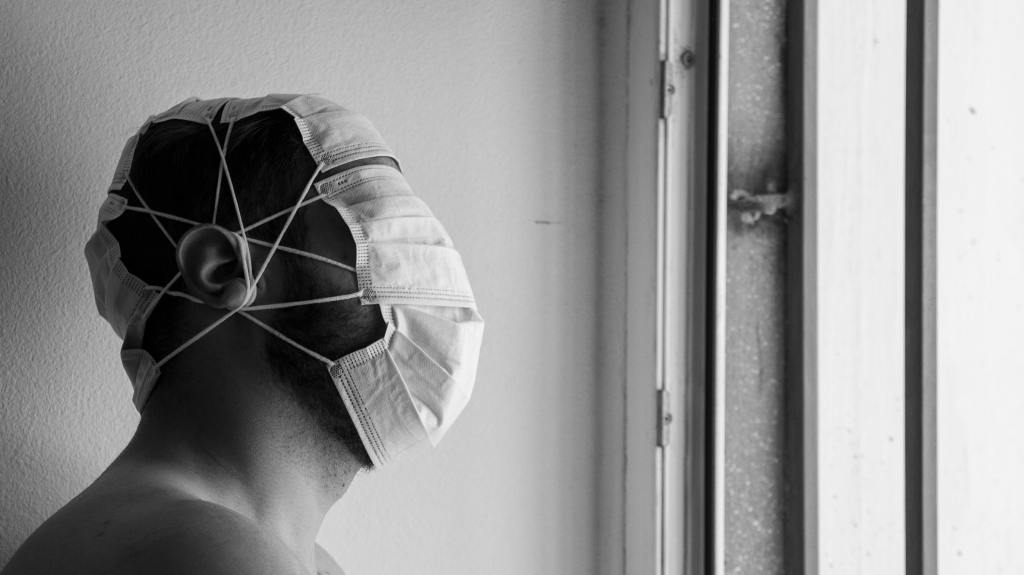
Medical masks have become part of daily life in hospice and palliative care units all over the world over the past three years. We have had to get used to having important conversations with most of our faces covered. Compassionate expressions have had to be conveyed with the aid of eyebrows and hands. Smiles have been with eyes only rather than with the full face.

There are a number of workmates I have worked with for two years or more, with which we have never seen each other’s faces. I removed my mask in order to be heard more clearly during a family meeting the other day and my patient who had known me for eight months saw my whole face for the first time. There are young children who have only known people outside of their own families to wear masks most of the time. Things are changing with the easing of COVID restrictions but for the healthcare workforce, it will be a while yet until we can take off our masks for good.

A barrier to viruses can also serve as a barrier to communication. People who have hearing impairments cannot lip-read if other people’s mouths are completely covered. There has been less transmission of yawns. Apparently, if you are more empathetic and you see someone else yawn, it can trigger a yawn of your own.

On the other side of the mask is that there are many choices of masks that people can choose to wear. Maybe it has allowed people to show more clearly what fashions they want to show off. People can show their membership in groups with the type of mask they wear. They don’t just have to be the same old boring surgical light blue but can be any colour of the rainbow.

Has it become easier for people to mask their intentions? What else is being hidden? What else is being left unshared? Kisses are left unblown. We are now more familiar with the smell of our own breath than ever before. What else has been lost since we have been wearing masks? Will we ever get those things back?

Palace of Care – Whoa Part 2

Photo by Jr Korpa on Unsplash

I was surprised that a benzodiazepine subcutaneous infusion had not been started. Despite three anti-seizure medications being used, the seizures continued.

I was surprised to receive the referral for a hospice inpatient admission as I thought the patient would’ve died a week ago.

My team was surprised that the patient could be easily roused. He had been talking to his wife and had been eating small amounts of food.

The admitting doctor was surprised when the patient said, “I see another man in the room.”

“Is it someone you know?”

“Yes, it’s Robert.”

The doctor had to pick his jaw off the floor.

Someone named Robert had died in the same room, on the same bed, only days ago.

We were even more surprised when the patient’s wife said that the late Robert had been her husband’s good friend. They had worked together for many years and had spent a lot of time with each other. When we heard this chills ran down our spines.

The idea that Robert had visited brought comfort to the patient and his wife.

Our patient joined his friend Robert on the other side only days later.

Palace of Care – Struggle

Photo by Logan Fisher on Unsplash

“You’re really breathless.”

“Yeah. I’m. Trying. To. Calm. Down.”

“Hard to swallow too?”

Nod.

“You’re working hard to breathe. You’re having to shrug your shoulders up.”

“Yeah, Mum’s like that in the morning. She’s better in the afternoon.”

“I’m seeing quite a difference in Mum since I last saw you both a few days ago. I’m worried about her. I think we need to put a hold on the discharge plan. We need to calm things down first.”

“Okay.”

“Are you okay staying with us a bit longer?”

Nod. “I. Love. This. Place.”

“We’ll see how you go, one day at a time. If things become stable then we can talk about going home again. If things get worse, it might be better to stay here.”

Nod.

“No matter what happens we want to get you more comfortable, and let your daughter have a bit more rest.”

“Thanks. Mike.”

“You’re welcome.”

Palace of Care – ZZZZZ

Photo by David Clode on Unsplash

“How was your sleep last night?”

“It’s the best sleep I’ve had for ten years.”

“Really? Even better than before you became sick?”

“Yeah, I’ve had trouble sleeping for a long time. It got much worse since I became sick.”

“You’ve had trouble falling asleep?”

“Yeah, that’s when I panic, at bedtime. I worry about not being able to fall asleep. Then my breathing gets worse too.”

“Your breathing wakes you up?”

“Yeah, I only sleep for ten minutes to an hour. I wake up thinking it is already 5.30 a.m. Then I see it is only 1.30 a.m.”

“The nights must be long.”

“Yeah, but the last few nights have been better.”

“Since you started the medications?”

“Yeah, I think it is helping.”

“How about the panic attacks?”

“I still have some, but not as many, and not as bad as before.”

“That’s good, I’m going to adjust the medication a bit higher.”

“Okay, I am feeling much better than when I came in. Thanks, Doctor.”

“I’m glad you are more comfortable. We’ll take things one day at a time.”

“That’s good, I feel safe here in the hospice.”