
Palace of Care – Two of a kind

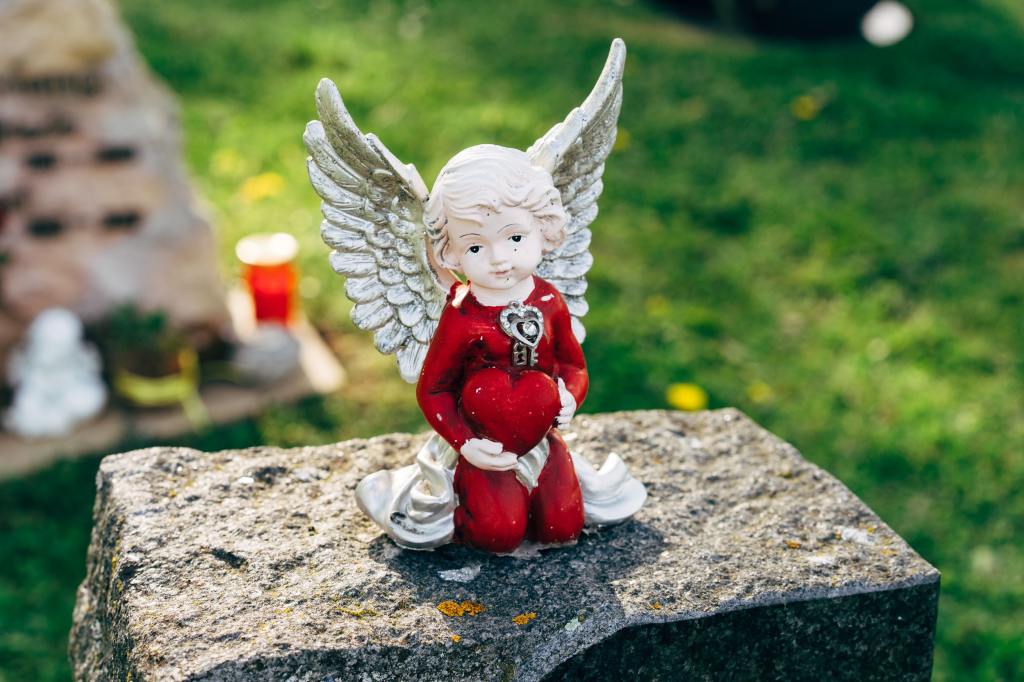
Photo by Fallon Michael on Unsplash

He was never alone when he was young, his sister would always be with him. They started off their friendship in the womb but didn’t really see each other for the first time until they came out into the light. Ah, that’s what you look like, quite similar to me, but different. I’m the oldest out of us two, even if it is only five minutes between us. The eldest is entitled to greater respect. Their siblings suddenly had two more siblings to make up the family, a little boy and a little girl.

They went to the same schools all the way through primary, intermediate and high schools, and it was only in university that their paths diverged. Ending up in different careers and then meeting their partners, always maintaining the bond of their twin-ship even across thousands of miles of ocean. The next generation would also have multiple births, he and his wife had a set of twins but unfortunately their little youngest did not survive. One of their biggest tragedies, the death of a child, so against the natural order of life. Life had to move on, they had the rest of their children to bring up. Life was busy with work, family was always emphasised as being the most important.

Children grow up so fast, and theirs became useful additions to society, good people that he had guided to adulthood. He was proud of them all, and then the grandchildren arrived to make a good life even better. Lovely young kids that enjoyed hanging out with Grandpa and Grandma, also lovely that at the end of the day they could be given back to their parents. Grandparents are there to provide good fun, but not to be the unpaid caregivers was their policy. It had worked so far. Their overseas daughter video-called them, they hadn’t seen her in person due to the effects of Covid over the past two years. She couldn’t contain her smile, she glowed when they talked to her. “Mum, dad I’m pregnant, it’s going to be twins!” Continuing the family tradition into the next generation. Things were really good.

Continue reading

Guest Post – Naomi’s Notes – Precious

Part 1

Photo by charlesdeluvio on Unsplash

At school two little six year olds had an argument.  They were both very upset when I called them over to talk to me.

I asked the first one what the problem was.

Pointing at the other girl with a quivering finger she said, amongst sobs, “she called me a F F F FAT BANANA. Why are you laughing?”

“Well,” I said, “are you a banana?”

“No.”

“Are you fat?”

“No.”

“Is it true?”

“No?”

Softly I said to her, “so darling if it were true it would be serious, but it’s not true so it’s funny isn’t it?”

I asked the other girl, “why did you say that?”

“I wanted her to be my friend but she didn’t want to,  so I called her a FAT BANANA…  Naomi,  I really love bananas.”

I smiled and said to her, “darling if you want someone to be your friend, that’s not the way to do it. First you  have to  help them if they need help, be kind to them and laugh at their jokes.   Then they will want to be your friend because they can see that you are a kind and caring  person.” 

Continue reading

Palace of Care – Opportunity Cost

Photo by James Bold on Unsplash

In my misspent youth I studied Economics during high school and into my first year of university. Opportunity Cost is the cost that you incur when you make a choice. Because you have chosen A, you miss out on B, or vice versa.

The New Zealand school ball is an important event in a young lady’s life it is a coming of age event. The proud parents will see their daughter off for her first school ball. This can be a big deal especially for the father. The ball was scheduled to take place in a week’s time. Our patient had his blood tests done as he was looking pale, was fatigued, and slightly short of breath. Symptoms and signs of anaemia, low red blood cells in his body. His counts were dangerously low, and if we didn’t do something about it, he was at risk of dying before the day of the school ball. He really wanted to be there for his daughter, it was his only chance at providing the whole family with this milestone memory. He agreed to our plan of transfusion, a top up to give him the best chance of being there for his daughter.

In the days after the transfusion he was able to walk further without losing his breath, his thinking had sharpened, almost as good as normal. Looking in the mirror his skin tone no longer reminded him of the vampires from the Twilight series that his daughter and her friends all loved. He would make it to the ball, and the whole family was excited about it again. They could proceed with the pre-ball party at home, he would go home for a few hours of leave. A nice dose of normal family life to break up his cancer story if only for a brief respite.

After the weekend the pre-ball photos were shared with us, and they were lovely. The only clue to his illness was that Dad was thin, and looked tired in the photos, otherwise a beautiful New Zealand family celebrating a special night together at home. A snapshot frozen in time, if only the image would stay like that, no changes occurring, no one deteriorating, no brightness fading from their eyes. But that is still life, real life is about the changes that occur with each passing minute, hour, day, week.

Continue reading

Palace of Care – Hold On

Photo by Hu Chen on Unsplash

We’d been trying to admit her for weeks, but she had not been keen. We had her on the admission list for a whole week but she said that she had to sort out something for her children and couldn’t come in. I thought that it might be an excuse, as a lot of people are still scared of hospice. Most people have not had anything to do with hospice but they may have some pre-conceived idea of what hospice might be. Often this is inaccurate, and can generate a lot of fear.

It took some convincing by the hospital palliative care team before she would finally agree to coming in to hospice. She was still nervous but her favourite cousin had promised that she would go in with her. They had grown up together and they were best friends, but this had been taken to a completely different level once the cancer diagnosis had been made five months ago. Something was wrong as she had lost a lot of weight, without trying to. Life had been busy for many years with her five children, and her partner could not always be counted upon. It was her cousin who had attended all the Oncology appointments with her. Her cousin had been there for all the chemotherapy sessions. Having her cousin accompany her to hospice was comforting and if there was anything scary, she would be there for her.

Continue reading

Bedside Lessons – 21 – Overcast Sky

Photo by Malte Schmidt on Unsplash

100 years ago, when I was still a trainee registrar, I asked myself, “what were we going to do?” I was about to admit the kind of patient that hospital doctors would be eager to transfer to the local hospice. I’d done exactly that in my previous hospital role, but I was then working in the local hospice and would have to deal with the situation myself.

She’d been nauseated for two weeks in hospital. They had tried everything and nothing had worked. The last weeks had been rough for her, and even in that short amount of time she had lost weight. Her appetite was suppressed to nothingness, as she felt too sick to eat anything. The mere sight of food put her off completely.

After I finished the admission I felt miserable myself, some of her misery had rubbed off on me. Was this transference, or counter-transference? Something about the situation that she was in made me feel similar to what she was going through herself. What to do? One option was to stop all treatments and start all over again. That’s what I did.

The next day I found myself leaving the miserable lady until the end of the ward round. I did not want to catch her misery again in the fear that I would spread it throughout our inpatient unit. I was trying to avoid her as yesterday’s experience had made me feel worse for wear. She had made my heart sink and so I put her off for as long as I could. Things hadn’t really changed much, and I had another dose of misery before lunch time.

By day three I felt bad for being unsupportive of the patient and I promised to myself that I would try harder to connect with her and decided to see her earlier in the ward round. It wasn’t her fault that she was so miserable, it was the illness making her so, and we hadn’t been able to control her symptoms. Walking into her room I braced myself for the tidal wave of negativity. I held onto the door jamb as I entered her room, expecting to be sucked into the black hole of her misery.

Continue reading

Palace of Care – No Surprises

Photo by Raychan on Unsplash

Is it the medication making him drowsy, there’s been a big increase in the medications since yesterday, I want them cut back down again.

I’m really worried about your Dad. I don’t think it’s just the medications changes causing him to change. His pain and nausea have worsened a lot over the past three days. It’s a shame as he was doing so well the other day.

It’s not right, he should be getting better, not going backwards. You know he was an alcoholic, I’m worried that he’s become addicted to the pain killers. He hates being confused, that’s what he was like when he drank, he really doesn’t want to go there.

I don’t think that addiction is the problem here, his pain and nausea are worse, I think it’s the cancer causing this. If I decreased his medications now, he would become much more uncomfortable. I don’t want him to suffer.

What about his radiotherapy appointment, that will give him a boost right?

He’ll get the side effect right away, but the benefit might not occur for some weeks. I’m really not sure if he has weeks left to live. I’m worried that if he keeps on deteriorating at the same rate, that he might only have days left to live. We usually say if you are changing over months, you might have months left, same applies to weeks and days.

Really, you think he might only have days left?

Yeah, so I’m not sure that he will be well enough for radiotherapy. I know he wanted it and so do all of you, but I’m not sure that he will be well enough to make the appointment.

Continue reading

Guest Post – Naomi’s Notes – Acceptance

Photo by Markus Winkler on Unsplash

It had been one week since her husband passed away when she went to the cemetery to visit him. She wanted to go earlier but she had been too unwell.  She was tired from the effort of walking and was grateful she could rest on the seat of her walker.  She made her way slowly to her husband’s grave.  In the distance, she could hear the sound of someone sobbing.

She sat looking at the headstone and replayed in her mind memories of when they were together.  It was not her first experience of death, having lost her two year old daughter many years ago.

She recalled many weeks spent at the cemetery mourning her loss.   But then one night she had a dream of angels in a line descending from the sky, each one bearing a candle in their hand.   Then she saw her daughter but her candle was not alight. She rushed towards her daughter when she heard a voice telling her that it was her tears that kept her daughter’s candle from burning.

Continue reading

I think therefore I am? – Eat to Live vs. Live to Eat

Photo by Edgar Castrejon on Unsplash

I love my food, and some (mainly my wife, staff members, and the World Health Organisation) would say I love my food too much. So when I hear about crimes committed against food it really annoys me. Hospital food usually has a bad reputation. Mass produced food in general is usually not as good. The recent trend in New Zealand hospitals is for food to be manufactured in a central location and then for all the food to be transported to all of the hospitals. Though this may make economic sense, it is makes no gastronomic sense at all.

This goes against treatment of patients as human beings. Patients are served unappealing material that may have had a natural origin at some point in its life time. It takes a lot of skill to transform random bits of plants and animals into things that resemble plastic in the way it looks and tastes. Patients are in hospitals because they are unwell, and it does no-one any favours when the food they are served makes them feel even sicker.

A plate of fish and mashed potatoes was an example that my cousin told me about. The fish was dry and rubbery, with all nutritional content having been consigned to the pages of history long ago. The mashed potato had given up its moral integrity. Having once lived in a hole in the ground, the potato had been harshly dragged into the light. Flayed whilst still alive, and then subjected to a death by a thousand cuts. Turned into tiny molecules of potato, smashed into uniform shapes. Then dried out along with billions of similarly shaped friends, and repackaged. Add water to make instant mash potato. Instant it may have become, but potato it was in name only.

Continue reading

Palace of Care – Father and Son

Photo by Vinicius “amnx” Amano on Unsplash

Covid 19 the gift that keeps on giving. Why does it have to be so generous? It has affected everyone and everything in the world, and the hospice is no different. We have had to impose visiting restrictions on our patients and their families in order to limit spread of the virus. Covid restrictions and quarantine requirements have led to some of the most upsetting situations that I have witnessed during my career.

When someone is dying, it is natural to want to be with them, to support them in their moment of need. They were there for you when you needed them the most, and you want to reciprocate if you can. Even before Covid it could be difficult to travel back home thousands of miles, trying your best to make it before your loved one dies. During Covid it has been that much worse.

My patient came in because of severe pain, a common reason for admission for many of my patients. His wife accompanied him, and they both looked exhausted. His pain had been poorly controlled over the weekend, and the nights had been especially long. The medications did not seem to work for long, they gave him a brief period of respite before the pain would come right back. It was almost cruel to be granted that small packet of relief, and then it would be roughly dragged out of his grasp again. This cycle repeated itself over what felt like a long two days. By Monday they needed help and he was admitted into hospice.

Continue reading

Advance Care Planning International 2022 Webinar Series – “Advance care planning – what’s in the pill?”

Photo by Christin Hume on Unsplash

Following on from a successful digital conference in 2021, the Advance Care Planning International (ACP-i) Committee is excited to announce a series of webinars in 2022, focusing on how different healthcare systems are implementing advance care planning.

Each of these webinars will put a spotlight on one country, with invited speakers giving presentations which will investigate the different components and ingredients that go into successful ACP programs in their country or region. In other words, exploring “what’s in the ACP pill?” Webinars will be one hour in duration, with one or two expert presenters and time for panel discussion and Q&A.

The first of these webinars will go down under, with presentations from Australia (Tuesday March 22nd 10pm-11pm AEDT) and Aotearoa/New Zealand (Wednesday March 23rd 10am-11am). The webinars are free to attend, but registration is required through the ACP-i website.

The Australian webinar on Tuesday March 22nd will feature Jill Mann (Barwon Health ACP Program Manager) and Dr Leyton Miller (Queensland Health Palliative Care Consultant), with the session facilitated by Dr Craig Sinclair (University of New South Wales). For more details and to register, visit https://www.acp-i.org/

In a stroke of good planning (or was that good fortune?), the Australian webinar will also occur during National Advance Care Planning Week 2022. Advance Care Planning Australia coordinates this annual awareness-raising week, with a series of events being held around Australia, in person and online. The key message is ‘Your Choice. Now and Always.’ To find out more about events in your area, visit the Advance Care Planning Australia website.

As part of 2022 National Advance Care Planning Week, we hope you can attend and participate in this global conversation.