I think therefore I am? – Cheese, Quackers and Other Oily Things

Photo by angela pham on Unsplash

I’ve looked after thousands of patients over my 14 years of working full-time in Palliative Care settings. The patients that I see have tried all the standard treatments and their illnesses have not been controlled. Out of desperation, some may search for complementary (hardly ever complimentary) and alternative treatments. My standard policy is if something helps them to feel better then who am I to judge what is right for them? I support patient choice, even if people do not follow my recommendations or advice. But if a treatment causes them harm, then I may have to intervene.

I have often been asked by patients and their families whether or not alternative/complementary therapies are any good. Mostly, I don’t know enough about them, but from my training, the evidence does not support their efficacy. It’s not my job to extinguish all hope in their situations, and no one would be happier than me if miracles did occur. The harsh reality I have witnessed from caring for thousands of patients is that out of the hundreds who have sought non-mainstream treatments, very few are still alive.

If it sounds too good to be true, it probably is.

Oil from snakes makes many palms greasy.

The cure-all panacea that has been hidden from you by the Illuminati and other conspiracies makes for a good story, but the patient thought they were buying non-fiction.

The false hope market is bullish and continues to make strong returns for a few people.

If it looks like a duck, sounds like a duck, smells like a duck. It probably is a duck.

The Carbon Almanac

A palliative care post of a different kind.

If we don’t do something about climate change the planet Earth will soon need palliative care.

Tomorrow afternoon 16/07/22 from 12pm NZ time I will be taking part in a global book signing event to promote the release of The Carbon Almanac. This will be at Time Out Bookstore in Mt Eden, Auckland. If you are in the neighbourhood come and say “Hi” and sign the copy of the book I’ll have there.

16/07/22 – I managed to collect a few autographs during the two hours I was there and I had to use my communication skills to calm down a climate change denier.

Palace of Care – Slump

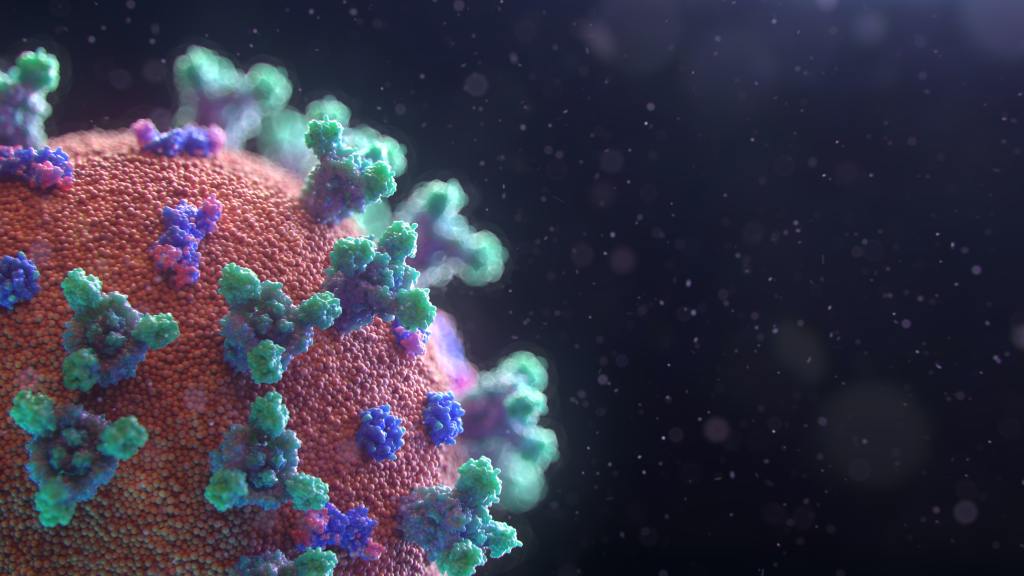
Photo by Aleksandr Barsukov on Unsplash

I thought I was invulnerable. I was wrong.

I tried to continue writing daily posts even during my COVID infection. I failed.

I wanted to think my way through brain fog. It didn’t work.

After three days of being unwell, I thought the fourth day would be better. It wasn’t.

Being sick sucks. How do my patients cope with it?

I found myself unable to do anything on day 4 of my COVID experience. My brain had slowed down and it felt like I was swimming through treacle the whole day. I stopped writing and didn’t do any reading. I didn’t watch anything, my head was too full of mist. My mind was clouded and refused to compute.

The treacle started to dissolve and I found my way to the keyboard again. I haven’t felt like myself for over a week.

At least it stopped raining today. Sunshine returned to evaporate the vapours in my head.

Sneak Preview from Bedside Lessons – Chapter 54 – Always in Between

Photo by Tien Vu Ngoc on Unsplash

I have lived in-between for most of my life. I grew up between two cultures; the Chinese at home and the Eurocentric outside of my home. Later in University, I was part of the local Chinese Group but felt more comfortable as part of the newer Asian immigrant group.
I have a lot of experience in bridging between two different cultures which are different in many ways and may think they have little in common. Palliative Care lies in between the usual medical culture of active treatment and the culture of death and dying. Was that what attracted me to Palliative Care? Are we there to bridge the gap between cultures?

Continue reading

The health and moral landscape of detaining asylum seekers: an Australian perspective

REGISTER  
Palliative Nexus, led by Professor Jennifer Philip, brings together clinicians, researchers and allied health professionals with a mission to improve equity, access, and quality of care in serious illness.

WEBINAR EVENT: Wednesday 27 July 4pm (AEST)
REGISTER  

Guest Speaker   Prof Suresh Sundram
Head of the Department of Psychiatry, Prof Suresh Sundram heads the Translational Molecular Psychiatry and the Asylum Seeker and Refugee Mental Health research.

The health and moral landscape detaining asylum seekers: An Australian perspective


Prof Sundram is an expert consultant on asylum seeker and refugee mental health to the United Nations High Commissioner for Refugees (UNHCR) and has advised the: UN; UN Human Rights Council; Australian Human Rights Commission; national governments including Australia, the US, Canada, New Zealand, Nauru and Papua New Guinea; and numerous non-government organisations (NGOs).  

To access recordings of previous events, please visit https://www.palliativenexus.org/recordings-of-events

Sneak Preview from Bedside Lessons – Chapter 77 – Freedom to Choose

Photo by Dessidre Fleming on Unsplash

Working in the community palliative care team I don’t meet in person most of the patients that are under our team’s care. I often have to provide advice to people that I have never met and have to count on my staff members’ assessments as the basis of knowledge of each patient. This is how our specialist support is provided from a distance, this allows me to have about 350-380 patients under my consultant remote control supervision at any time. Often I will provide advice that will be conveyed to the patient and their family doctor to be actioned.

This is the story of someone I never actually met but whom I provided advice on, an elderly Jewish lady who was a Holocaust survivor. I never found out which concentration camp she had lived through but somehow she had stayed alive when many had not. Separated from her family whom she never saw again, made to endure hellish conditions, tattooed and emotionally scarred for life, she somehow made it through. She moved to New Zealand, married a local man, had children, and grandchildren and lived a rich and rewarding family life.

Continue reading

Palace of Care – The Band Plays On

Photo by Matthew Kalapuch on Unsplash

My little coronavirus rock band continue their tour of my body. They wrapped up their sold-out concert in my throat and the music was so loud my ears are still stinging. Today’s destination was my lumbar spine and they played their achy breaky music with gusto. No matter how often I stretched throughout the day the music of the band drowned out all other signals.

I have to be honest I am sick of all the merchandise the band brings along to each venue they play at. The congested stands of my nasal sinuses couldn’t stand the pressure any longer. The burning man set up in my throat yesterday is still smouldering and ready to reignite at a moment’s notice. The worn-out muscle fibres evidence that this band of players have worn out their welcome.

The uncertainty of each day of illness. Will I feel better when I wake up again? Will I be in less pain than yesterday? These are questions I am considering each day and are they similar to what my patients must ask themselves? I’ve only been unwell for a few days but my compassion for those who suffer from chronic illnesses is growing.

Maybe tomorrow the band will head down to my feet and then it will be my pleasure to kick them out of my body. There will be no request for an encore.

Palace of Care – Omicron BA.5 variant Top 10 lessons

Photo by Rodrigo Curi on Unsplash
  1. Writing is difficult when you have brain fog.
  2. Pain does override everything else going on.
  3. End-of-dose pain return is a thing.
  4. Oral medications take a while to kick in.
  5. Nerve-related pain sucks.
  6. I am not alone, many others are going through the same symptoms as me.
  7. Friends have been kind and have offered to drop stuff off.
  8. Being sick for even two days feels awful, I can’t imagine what it feels like for my patients.
  9. It is demoralising when you’ve taken all your medications and you are still in bad pain.
  10. Writing is difficult when you have brain fog.

Palace of Care – A Painful Day

Photo by Fusion Medical Animation on Unsplash

Two stripes on the RAT test confirmed my suspicions, after a night of fevers and body aches. COVID positive. Painful muscles and joints, headache and some hyperalgesia.

I make it a habit to expose myself to some suffering daily with 30 seconds of a cold shower each morning to wake me up. Twice a week I go and train Brazilian Jiu Jitsu. Through this sport, I have learnt to keep calm in uncomfortable situations. Fighting against painful joint locks and against choking attempts has built my resilience.

Today I feel that I have overdosed on pain, which has persisted despite my taking Paracetamol and Ibuprofen. Putting up with pain is exhausting which I had some inkling of from the many patients I have cared for. A doctor needs to have some suffering experience to understand what their patients are going through, but today’s lesson has been a bit too long and unending.

I am hoping for a better tomorrow.

Palace of Care – Heart Follows Mind

Photo by Kelly Sikkema on Unsplash

Her brain had no trouble accepting what was happening but her emotional heart took longer. The love of her life for over 45 years of marriage was dying. The doctors had warned that he might become confused and agitated as his condition deteriorated. He was comfortable and the pain relief had taken a few days to optimise. He was more relaxed and then deteriorated. He became less lucid as we neared the end of the week.

A clash of cultures became evident thanks to some of the visiting friends of the family. “You have to ask your doctors if they will give infusions to your husband. In China, he would be having lots of intravenous fluids, and other treatments such as tube feeding.”

We had to explain that artificial hydration would be too much for the dying person to handle, and would worsen skin swelling and likely worsen his breathing. We did not want to add to his already heavy burden of symptoms. His wife indicated she understood our rationale. We explained he could die at any time.

Intellectually his family could accept the ongoing bad news, but when it came to emotions it would take much more time. Their loved one was dying and all they wanted to do was to help but didn’t know how to. Mouth care was a task that we delegated to them. Our counsellor was asked to talk to the family.

Their brains understood the words we shared, but their emotional hearts couldn’t understand the language and operated on feelings instead.