
Palace of Care – Maturity Crash Course

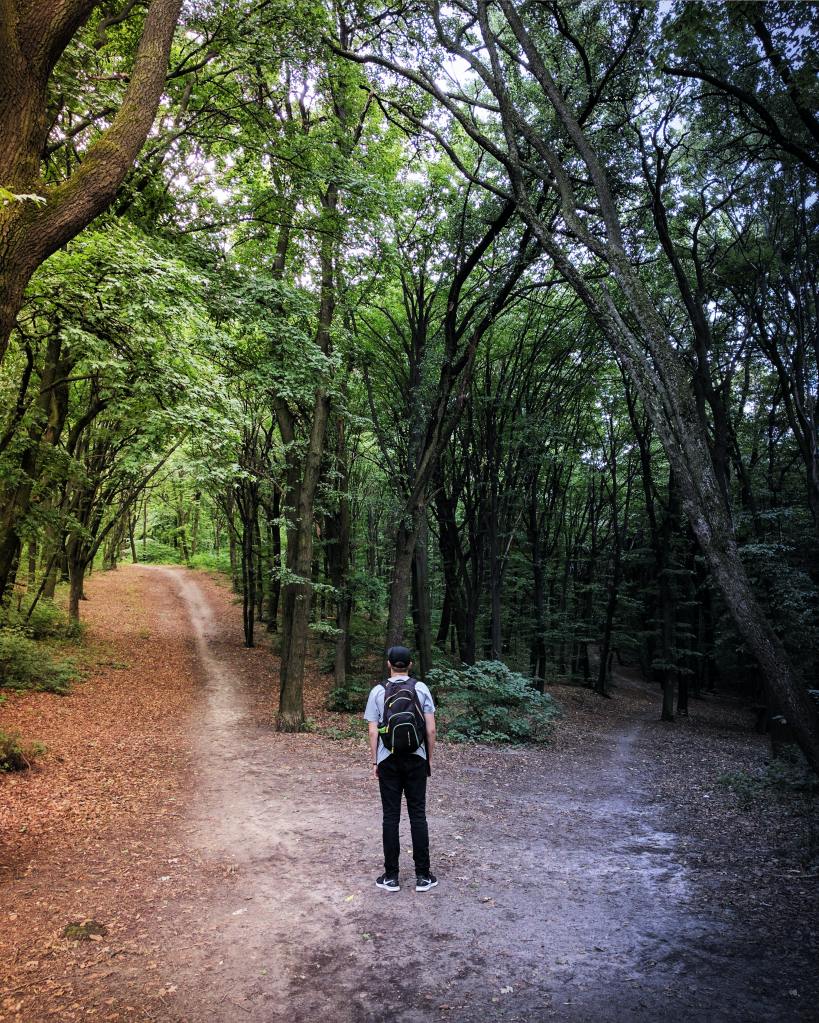
Photo by Kyle Glenn on Unsplash

She was still a child when we admitted her to our inpatient unit. 21 years old but she acted more like a teenager. She had been unwell for five years with bone cancer and had undergone many treatments. She had spent a lot of time in hospitals and had moved from her hometown to be closer to live in the same city as the treatment centre. In her last hospital admission, she had been troubled by a racing heartbeat and had been reviewed by heart specialists.

She was nervous on arrival at the hospice, and she wanted us to discuss any changes with her Oncologist. She had been under his care since her first treatment and she wanted him involved in any treatment decisions. We were happy to involve him and discussed our proposed changes with him. He said that he would defer to us when it came to palliative care issues as he felt we had more experience. Over the next week we built up trust with our young patient, and we were able to control her pain well enough that she could go home.

After two weeks she had become unwell with worsened breathing and ended up in the hospital. They scanned her and found cancer in her lungs had worsened. She asked if she could be readmitted to hospice and a transfer was arranged for the same evening. Medications to ease her breathing was started.

She was reviewed on the ward round the following day and was started on high-dose corticosteroids which initially helped her breathing. A few days later she asked to speak to the doctors. She said that she understood that her lungs were in bad condition, and without medication, she would die. She asked if she could stop her medications. She had discussed this with her family and they wanted to support her decisions.

She chose to stop her treatments and wanted nature to take its course. We provided symptom control medications to keep her comfortable. She died a week later.

Between the first and second admissions, she had grown up a lot. A young girl had grown up into a young woman over a few weeks. A brave young woman who took control of her situation and chose to stop active treatments, opting for comfort care only. She went out on her terms and did it her way.


Palace of Care – RIP Technoblade

Photo by 卡晨 on Unsplash

Today tragedy leaked from the internet and into my home and many millions of homes all over the world. 23-year-old Minecraft YouTuber Technoblade has died. He had written the last message to his fans only eight hours before he died. He had asked his dad to read out his message on this video. If you watch the video make sure you have some tissues at hand.

Technoblade was diagnosed with cancer in August 2021 and continued to post his popular videos even whilst undergoing various cancer treatments. With his usual generosity, he continued to share his entertaining insights with his 10 million followers.

Millions of ‘kids’ all over the world have learnt about the reality of life with cancer. Today they have experienced the death of someone who they may have gotten to know over many years of watching his videos. Grief has appeared on their drop-down menus, and they may not know how to deal with these unknown feelings. A huge reality check has occurred and the stark difference in real life is there is no respawning.

An online companion can no longer keep them company. Loss of life has led to a loss of childhood innocence. Please take care of your kids as they mourn during this sad day on the internet.

Palace of Care – Upgrade to a Combo Deal

Photo by Masaaki Komori on Unsplash

Almost a year ago I visited a local Rongoā Clinic as I was interested in learning more about traditional Māori medicine which is comprised of diverse practices with an emphasis on the spiritual dimension of health. Rongoā includes herbal remedies, physical therapies such as massage and manipulation, and spiritual healing.

During my visit, I met a Rongoā clinic patient who had recently become one of my hospice patients. She was well at the time but over the course of the past 11 months her condition worsened. Pain developed and initially had been controlled by the herbal remedies applied. In recent months the pain had become intolerable and she had become bed-bound. Too sore to leave her bed let alone leave the house. Everyone involved in her care were worried and wanted to ease her suffering. She initially refused to take the strong pain relief agents that we had suggested, and preferred to continue with only her Rongoā treatments.

I asked for a joint assessment to be arranged with myself and the Rongoā practitioner both seeing the patient at the same time. I went to the clinic this morning and was joined by the nurse assigned to our shared patient. We were ready to show our patient that we were happy to work together in a fusion of traditional Māori medicine and modern Palliative Medicine. We were hoping that together we could convince our patient to have both traditional treatments and strong pain relief agents. We wanted her to have the best of both worlds of care.

That was the plan, but someone had already beaten us to it. The patient had recently been seen by her new general practitioner and he had already convinced her to take pain relief along with her traditional treatments. The combination worked and at the clinic this morning a smiling patient greeted us. Her beaming smile told us exactly how she felt. Her husband was happy that his wife had improved with the combination of treatments. She felt better and was now able to check up on his housework, to make sure that he was meeting her high standards. She was back, after having felt trapped in a dark place. Both of our organisations made plans to follow her up in the near future, and we pledged to each other that we would like to work together more in the future. In the meantime, the formerly bed-bound patient was being taken into town to have lunch with her husband.

Palace of Care – Palliative Plumbing

Photo by Paolo Chiabrando on Unsplash

Our patient was dying of end-stage cancer, it had spread throughout his body causing significant pain. He had been having trouble passing urine, over the last two days. This had worsened and our ultrasound bladder scan showed urinary retention with a collection of 1.5L. One of the more painful conditions that people can have. The bladder’s walls are elastic but are not meant to stretch that far. Many nerve endings were firing off pain signals, our patient writhed in his bed. His wife and daughter were distressed seeing their lovely man in such discomfort.

The doctor on call was called in at 1 am after the nurse had tried twice to catheterise our patient without success. The urinary catheter could not pass through a blockage despite the nurse trying all the usual tricks. The doctor attempted catheterisation three times before calling me in. I arrived just after 2 am and decided that I would have to perform a more invasive procedure. The patient was too distressed, he was too unwell to be transferred to the hospital. I would have to drain his bladder using a needle, something I had never done before in my 20 years of medical practice.

Continue reading

Palace of Care – A Self-Sufficient Family

Photo by Jay Wennington on Unsplash

One of the cruellest consequences of COVID lockdowns was the restriction that we had to place on visitor numbers. We were generous in that we would allow each of our patients up to four named visitors, but this still fell short when it came to families with more than four members. We acted with humanity and compassion, thinking to ourselves how would we feel if it was us in their situation? But what do you do when someone has 15 children? It is difficult for a family to choose who gets to come in, and who has to stay out. Video chat technology allowed for virtual visits but they were no replacement for in-person visits.

Our patient was a man in his 50s who had six children, the two eldest lived out of town. The four younger children were keen to spend time with their Dad, and their Mum struggled to choose who would be the nominated ones for any given day. The family had always been close and the parents had home-schooled their children. They had always done things in their way. Having Dad critically unwell and away from home added to the overall disruption of their family life. Our team’s opinion was that our patient only had limited time left to live. Given the circumstances, we flexed our approach and allowed the four younger children to visit alongside their mother.

Continue reading

Palace of Care – Ripples

Photo by David Becker on Unsplash

Please.

Remember that.

Death.

Of one.

Affects their partner.

Affects children.

Affects their siblings.

Affects their extended family.

Affects the community belonged to.

Nothing is ever.

The same.

Again.

Palace of Care – Nerve Block

Photo by Manuel Chinchilla on Unsplash

I don’t think of myself as a proceduralist. I don’t like performing invasive procedures as I don’t like to cause pain if I can avoid it. I will do them when they are necessary but it is not a natural fit for me.

The patient was a 39-year-old mother of a 7-year-old son. She was admitted for pain control and I thought she would not have much time left to live. She had known this herself for the past six months. In preparation, she had purposefully reconnected with her ex-husband the father of her child. She wanted to make sure that they would have a loving relationship after she had died. She had been reluctant to come into hospice as she had wanted to spend as much time as possible with her son and other family members at home.

We wanted to sort out her pain as quickly as possible to get her back home. We managed to sort it out within the first three days. This was good as she had met with our social worker and the final adjustments to her will were being made. Her lawyer had been engaged and would be arriving in three days for her to sign the final papers. It was important to have this sorted out as she wanted her house to be transferred to her ex-husband for him to have a house to raise their son in. She had worked hard to buy her house, it was her pride and joy. She wanted her son to have a stable home environment.

Overnight she went to the toilet but on the way back to her room she heard a loud crack from her right hip, followed by overwhelming pain. She could no longer support her weight and managed to call out for help. The nurses needed to use the lifting hoist to get her back in bed, which made her scream.

I reviewed her the following morning and I recognised a familiar pattern. Shortened leg, twisted at a non-anatomical angle, tender to touch and excruciating pain with the slightest of movements. Fractured hip, likely broken through a metastatic deposit. We talked about going to the hospital but she did not want to go anywhere. She said that she had already been to the hospital too many times in the past. She thought her time was limited and she wanted to spend it in hospice.

We gave her stronger pain relief which relieved her pain but because of her poor overall condition, it made her sleepier. She didn’t want to be sleepy, as she still needed to sign her new will. Her son’s future welfare needed to be sorted out before she died.

Continue reading

I think therefore I am? – If You Had A Choice

Photo by Vladislav Babienko on Unsplash

At a palliative care conference years ago the audience was asked to choose between two options. Would you rather die instantly without warning or would you rather know about it and die more gradually? We were instructed to think through both options for a few minutes before a show of hands was counted for each option.

Dying instantly, for example from a cardiac arrest, would mean less suffering for the dying person. It’s possible it wouldn’t be so bad for the person going through it. No fear of what was about to happen to them would be generated as they would be taken by surprise.

Ignorance may well be blissful but would have drawbacks as well. Total loss of control, and inability to finish important business. You’d be robbed of the chance to say goodbye to those important to you. You wouldn’t be able to leave your intended legacy. Death is associated with loss and sudden death is associated with its own set of losses. Those left behind would also lose the opportunity to say goodbye to you, to obtain at least some sense of closure. Survivor’s guilt, “If I had known he was about to die I would never have left them alone at home.” There may be more suffering for your loved ones, so many things they will never be able to say to you again.

Continue reading

I think therefore I am? – Starts with P and ends with O

Photo by Ray Harrington on Unsplash

It’s important to celebrate the small victories we achieve in palliative care, as they are often hard-won. When the natural history of illness is one of disappointment and loss, it is important to mark the times of success. Our patient had not passed bowel motions for 11 days. With each passing day, she had felt less and less normal. She wondered if she would ever Poo again. When constipation has taken its toll for such a long time the treatments will be accompanied by pain. Not having the treatment will lead to more pain. We had tried the standard treatments of pills, soluble powders, and various products to be squirted in private, all with no success. We readied the special injection. If it worked it work quickly. The injection was provided and we all held our bated breath in concert. Within 20 minutes we had achieved a result. The cheering was heard from the doctors’ office, at the nursing station. Yahoos echoed down our corridor. I felt the urge to perform a cartwheel. Smiles all around at the arrival of the VIP – Vast Incredible Poo – time to celebrate. Fireworks were lit and the Poo party began.

“Ahhhhh. You’d better call the water department, because their pipes may be blocked as I just passed a two-metre-long Grogan!”
This story soon spread throughout our hospice.
The next day I met the patient for the first time, “Ah, you must be Mr Grogan?”

Continue reading

I think therefore I am? – Scarce Energy

Photo by John Cameron on Unsplash

I encourage patients to blame me for shortening visit times, “the doctor said my visitors could only stay for 15 minutes as he wanted me to rest more.” I don’t mind being the bad guy, it is difficult for people to turn visitors away but at times they need to do it. Most people understand and will self-limit visits. Others are not so insightful and will outstay their welcome.

“They have come all that way to see me,” which is nice but some of the visits might be driven by guilt. Guilt from not having seen the patient for a long time. Whose needs are being met by the visit, the patient’s or the visitor’s?

Like petrol prices currently, energy is at a premium and people have to be careful how they spend their energy. Their battery continues to flatten and cannot be recharged again. The principles of energy conservation need to be applied to everything they do. Opportunity cost has never been more costly. Spending energy on one thing means something else cannot be done. This is a tough concept to understand unless you have experienced an illness that results in chronic fatigue, such as cancer, organ failure, and old age.

Life is not normal anymore. Life becomes full of trade-offs. The cruelty of life-limiting illnesses is they steal energy away but lead to appetite loss. Just when people need nutrition the most they lose the ability to derive the benefits of eating. Good symptom control can help a person feel more like their usual self, but cannot turn back time.
Simple activities of daily living become anything but simple for unwell people.

Losses accumulate day by day and each one is grieved. An ever-changing situation. It can be hard to catch up with, to know where you are, as things continue to change. Nothing stays the same for long. “Just let me have a small pause, a chance to find my bearings, please, just for a short time let me stop this rollercoaster ride. It’s going too fast and I feel dizzy. Please don’t waste my time or energy.”