Modern dying from a doctor’s perspective


A thoughtful article regarding our modern attitudes to dying by Dr Craig Bowron, an internist (i.e. physician in internal medicine for us Down Under, or general medicine consultant)

Opting to try all forms of medical treatment and procedures to assuage this guilt is also emotional life insurance: When their loved one does die, family members can tell themselves, “We did everything we could for Mom.”

In my experience, this is a stronger inclination than the equally valid (and perhaps more honest) admission that “we sure put Dad through the wringer those last few months.”

I agree with Dr Bowron, that sometimes we may not consider the cost to the person (not the financial cost, other costs) of being able to say, “We did everything we could.”

What do you think? Does this apply where you are?

Regards, Sonia

PS Thanks to Tegan, a social worker I work with, for pointing me to this article.

A woman’s world?: Palliative care from a gendered perspective

Ed: As many of you will know #pledgeforparity was the theme for this year’s International Women’s Day on the 8th of March.  But to be able to make such a pledge meaningful first we we need to understand where inequality resides.  This important work from Tessa Morgan, Merryn Gott, and Lisa Williams begins to explore how questions of gender equity relate to palliative care.  

Do we understand culture's effect on care roles?

Do we understand culture’s effect on care roles?

Dying at home is widely celebrated as the pinnacle of a ‘good death’. It is therefore unsurprising that governments internationally are framing current moves to increase the numbers of people dying at home as a ‘win-win’ situation. People get what they want at the end of their lives and the health system saves money. Result! However, is it really that straightforward? Increasingly, our research group has been thinking about the unpaid workforce we rely on to enact home dying. Who are they? How does this caring work impact upon them physically, psychologically, socially and financially? Why are they so invisible?

Continue reading

I think therefore I am? – Its a small world after all.


7026077961

Photo by Sid Mosdell, taken on March 28, 2012

Over the years I have been privileged to share some meals with a visiting Lama from the Tibetan Buddhist Faith. Rinpoche is based in Scottsdale, Arizona, USA but regularly visits New Zealand. Dinners with Rinpoche are always very interesting and he has many stories to tell. Given my own professional interests, the topic of death and dying often comes up. During one of those conversations Rinpoche shared a related story about one of his late American friends.

Continue reading

I think therefore I am? – Is healing possible at the end of life?

exit

Photo by Glen Carrie

Since arrival she had been very anxious and spent most of the first few days alone in her room. “I don’t want to interact with anyone, please leave me alone, keep the curtains closed and the lights off” – like a hermit crab withdrawing deeper into her shell.

Worsening pain had brought her to us, severe physical pain, the result of increasingly bad news about the toll her disease was taking on her body over the past six months, and also likely emotional pain as evidenced by worsening anxiety. Despite the team’s best attempts at connecting she remained aloof and guarded, sleep being a source of solace.

Continue reading

Death and dying in the media

coming up

Q&A. Love it or loath it, or maybe a bit of both. But there is no denying that it strikes a chord with a sizable portion of the Australian population who would perhaps rather not be watching A Current AffairToday Tonight or their new lovechild: The Verdict. Continue reading

3rd Australian Palliative Care Research Colloquium

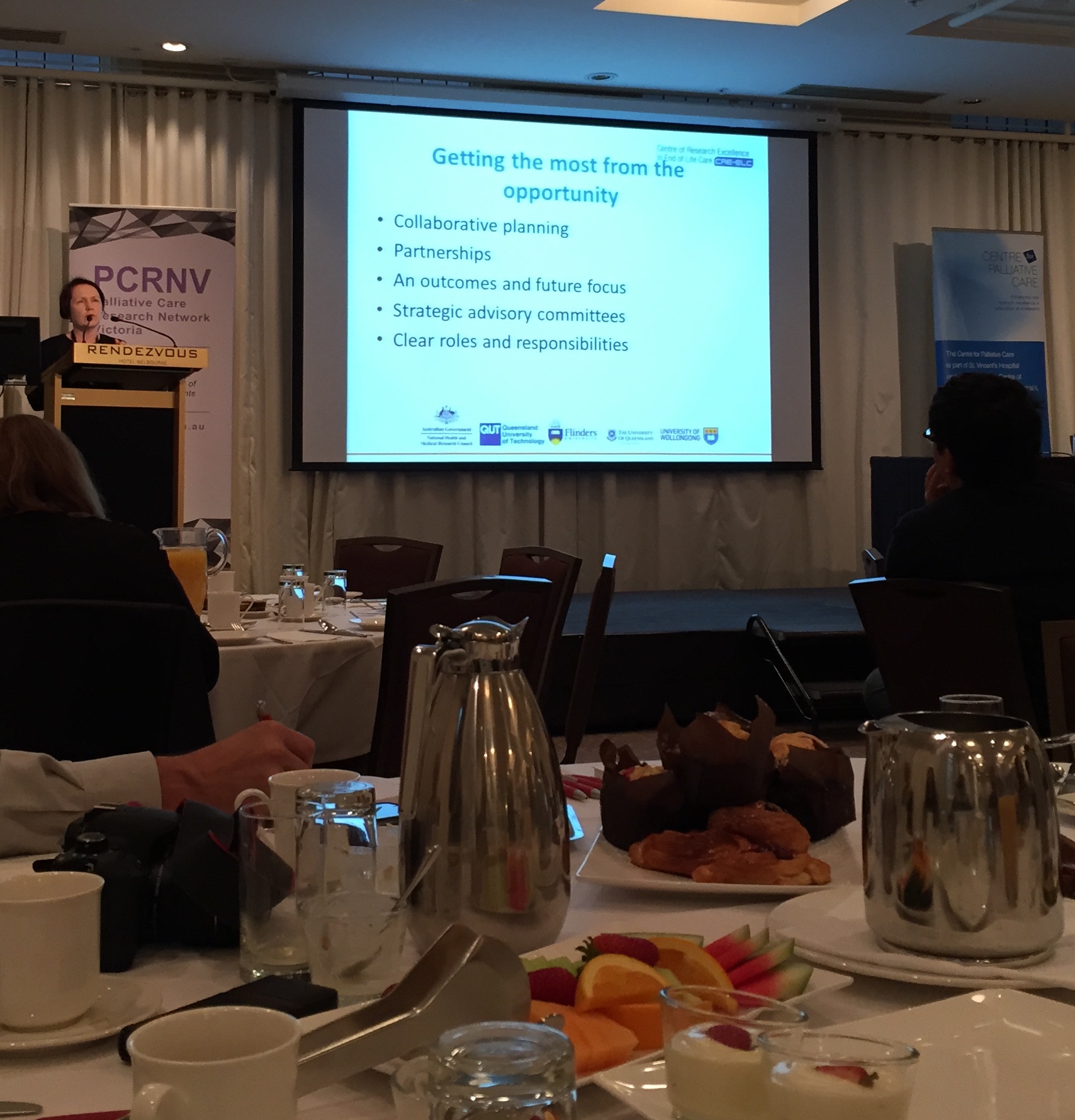
Prof Patsy Yates sharing her reflections on setting up a NHMRC Centre of Research Excellence in end-of-life care at the PCRNV Breakfast Forum

Prof Patsy Yates sharing her reflections on setting up a NHMRC Centre of Research Excellence in End of Life Care at the PCRNV Breakfast Forum

For the third year in a row, the Australian Palliative Care Research Colloquium was held at the Rendezvous Grand Hotel in Melbourne on October 22-23. The meeting was once again preceded by a breakfast forum hosted by Palliative Care Research Network Victoria (PCRNV), which served as a tempting entrée to the two-day main course of fantastic presentations and workshops exploring a diverse range of topics pertaining to palliative care research. Conversations about research continued over tea and meal breaks, next to quality poster presentations, and during the convivial conference dinner on the banks of the Yarra.  Continue reading

beautiful essay on a doctor’s perspective on end of life care

This really resonated with me… well worth a read.

A young doctor describing her developing perspective on a “good death”; on dying and end of life care in our healthcare system.

http://www.vox.com/2015/10/19/9554583/doctor-good-death

Sonia

Elsewhere in the Palliverse – Weekend Reads

Botanic Gardens 3

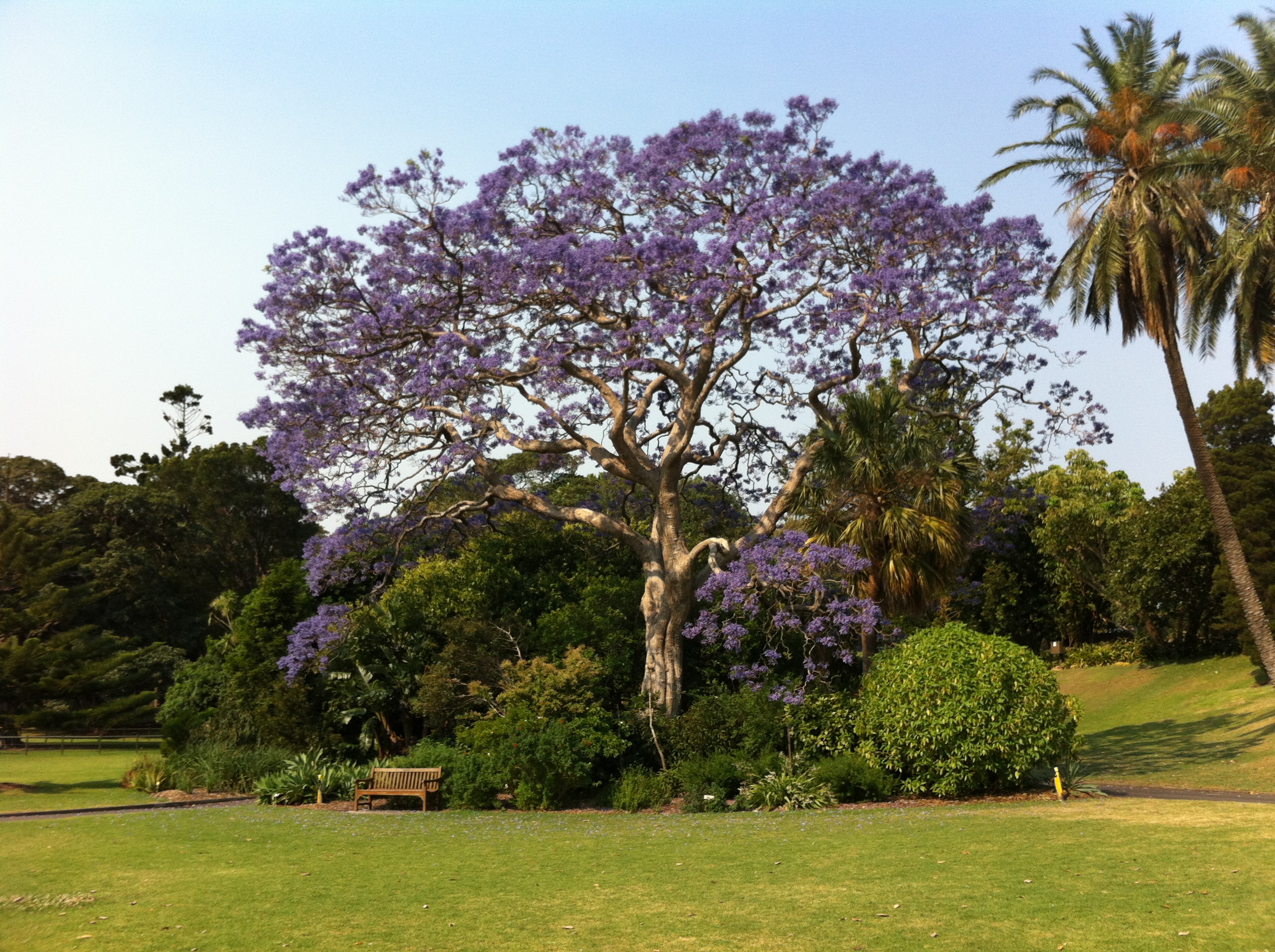
(Jacaranda tree in the Royal Botanic Gardens, Sydney)

comprehensive review of Medicare was announced this week, which has the potential to significantly impact how healthcare is delivered in Australia. Opinions abound (a small sample here, herehere, and here) but details are scarce. This announcement is timely, with the release of Australian Medical Association’s annual report card on public hospital services last week (reactions here and here) and the upcoming launch of Choosing Wisely Australia on April 29th (more on this herehere and here).

Also this week, Queensland and Victoria joined New South Wales in conducting clinical trials on the use medicinal cannabis (other reports herehere and here). Information about the trial and law reform process can be found here, here and here. Palliative Care Australia has also provided a submission.

Other reads:

  • Physician suicide, burnout and self-care
  • How to answer the question: “Am I dying?”
  • Book of abstracts for the 14th World Congress of the European Association for Palliative Care

Finally, it’s ANZAC Day: Lest we forget.

Centre for Palliative Care – lecture on palliative sedation by A. Prof Jenny Philip

The Centre for Palliative Care in Melbourne runs a series of Hot Topics lectures for the field. They have kindly published videos of their recent talks, which we would like to share with you.

The Palliverse team are going to start a collection of resources in free open access medical and nursing education (#FOAMed and #FOANed) relative to Palliative Care, and here’s the first addition to the collection.

A.Prof Jenny Philip is a wonderful speaker and takes us on a journey through the controversial issue of palliative sedation. Starting with definition (variable) and incidence (also variable), she describes for us some European guidelines on palliative sedation and then guides a panel of experienced palliative care professionals through three cases exploring issues in palliative sedation.

goo.gl/pAm3Y2

Uncovering ethics: To stay or to go (Bob’s story)

“I am done. I am over,” says Bob before failing back to the pillow with quiet momentum.

“It’s like he is rushing down a river, and we have nothing we can do to slow him down,” says his daughter. Her voice is strong and carries the pain of her words in a no nonsense way, like it is not a burden at all. They are both strong like this, a family trait, and their strength fills the room. It almost vibrates with the effort.

tractor-167075_640

Continue reading