Palace of Care – Hospice Garden Centre

Photo by Tim Cooper on Unsplash

“Doctor, I’ve got a fundraising idea for the hospice.”

“Aha?”

“I’ve been going for walks around the garden and there are a lot of nice plants. Some of them you can’t find in garden centres. Has the hospice ever thought about selling plants?”

“No, we haven’t.”

“Here’s a photo of some plants I noticed. They have self-propagated themselves and are growing well. Do you think I could make a donation in exchange for two of the plants?”

“I’ll check with the gardening team, but I think that will be fine if there are a lot of the plants. What are you thinking of doing with the plants?”

“I’d like to plant them in my garden. You’ve all looked after me so well during my admission. I’d like to maintain some connection to hospice even after I am gone. So later on when my children see the plants in our garden they will remember my time in hospice as a good time.”

“That sounds nice. I’ll get our team onto it and we’ll make it happen. Don’t worry about the donation.”

“No Doctor, I must insist. I know my donation will benefit other patients.”

“Okay, Deal made.”

I think therefore I am? – Dis/Connect

Photo by John Barkiple on Unsplash

One of the impacts of COVID I have noticed in the past two years is the increase in late diagnoses and subsequent late referrals to palliative care. Access to medical care shifted towards virtual means around the world and people may have put off visits to the doctor as for a while it was not easy to be seen in person.

There have been many late and in some cases too late referrals to palliative care. This creates a scramble situation as our services try to respond to the urgent need. Often in the last two years, we have received patients transferred for end-of-life care who may only have been diagnosed mere weeks before death.

We do the best we can to help them but it can feel rushed. A connection needs to be made to help the patient and their family. Rapport needs to be built and in an ideal world, we would like to have more time to build a therapeutic relationship before the patient becomes too unwell to engage with us fully. We don’t always have this luxury and have to make the connection faster. This is not a smooth process, the stakes are higher, emotions are rawer, and stress levels increased.

A short therapeutic relationship also means disconnection needs to occur in a faster manner as well. We are involved in some cases only for short days or hours in some cases. The ability to connect and disconnect without losing your humanity is an art to be developed. Strong boundary perception is important otherwise we couldn’t continue doing this job day in and day out. A delicate balance is required between connection and disconnection. Attachment and detachment. Involvement but not enmeshment. Empathy and compassion without entanglement. Human commonality and professionalism. We try our best to do enough.

Sneak Preview from Bedside Lessons – Chapter 54 – Always in Between

Photo by Tien Vu Ngoc on Unsplash

I have lived in-between for most of my life. I grew up between two cultures; the Chinese at home and the Eurocentric outside of my home. Later in University, I was part of the local Chinese Group but felt more comfortable as part of the newer Asian immigrant group.
I have a lot of experience in bridging between two different cultures which are different in many ways and may think they have little in common. Palliative Care lies in between the usual medical culture of active treatment and the culture of death and dying. Was that what attracted me to Palliative Care? Are we there to bridge the gap between cultures?

Continue reading

Palace of Care – Upgrade to a Combo Deal

Photo by Masaaki Komori on Unsplash

Almost a year ago I visited a local Rongoā Clinic as I was interested in learning more about traditional Māori medicine which is comprised of diverse practices with an emphasis on the spiritual dimension of health. Rongoā includes herbal remedies, physical therapies such as massage and manipulation, and spiritual healing.

During my visit, I met a Rongoā clinic patient who had recently become one of my hospice patients. She was well at the time but over the course of the past 11 months her condition worsened. Pain developed and initially had been controlled by the herbal remedies applied. In recent months the pain had become intolerable and she had become bed-bound. Too sore to leave her bed let alone leave the house. Everyone involved in her care were worried and wanted to ease her suffering. She initially refused to take the strong pain relief agents that we had suggested, and preferred to continue with only her Rongoā treatments.

I asked for a joint assessment to be arranged with myself and the Rongoā practitioner both seeing the patient at the same time. I went to the clinic this morning and was joined by the nurse assigned to our shared patient. We were ready to show our patient that we were happy to work together in a fusion of traditional Māori medicine and modern Palliative Medicine. We were hoping that together we could convince our patient to have both traditional treatments and strong pain relief agents. We wanted her to have the best of both worlds of care.

That was the plan, but someone had already beaten us to it. The patient had recently been seen by her new general practitioner and he had already convinced her to take pain relief along with her traditional treatments. The combination worked and at the clinic this morning a smiling patient greeted us. Her beaming smile told us exactly how she felt. Her husband was happy that his wife had improved with the combination of treatments. She felt better and was now able to check up on his housework, to make sure that he was meeting her high standards. She was back, after having felt trapped in a dark place. Both of our organisations made plans to follow her up in the near future, and we pledged to each other that we would like to work together more in the future. In the meantime, the formerly bed-bound patient was being taken into town to have lunch with her husband.

Sneak Preview from Bedside Lessons – Chapter 65 – Please Take A Seat

Photo by Stephen Audu on Unsplash

Family meetings are common in healthcare settings and are organised to convey a point of view or to try to bring together disparate points of view. These events may be the first chance that some of the key stakeholders, i.e. the family and the healthcare team, have to meet each other. First impressions, as within any first meeting, are important. As you can only meet for the first time once, you’d better do your best to make sure it goes well. To establish a trusting therapeutic relationship between the patient, their family and the healthcare team, rapport must be established quickly. Every encounter can count, but not everything can be planned for.
“Come in, please take a seat.” Oops not enough seats, I didn’t think there would be so many people joining us. “I’ll get some more chairs.”

“No doctor, it’s okay, we’re Islanders, we’re used to sitting on the floor.” He sat down on the floor in a cross-legged position and the rest of his family followed.
While dropping to the floor and re-arranging my legs into a well-versed pose, “I’m an Islander too, and I’m used to sitting on the floor too.” I was joined by my cross-legged team member. Eyes were in contact and were levelled, as were some of the power differentials. Serious issues were discussed in a different but more trusting fashion.

Continue reading

I think therefore I am? – What Did You Do?

Photo by Felicia Buitenwerf on Unsplash

Any medical history is incomplete if the social history is not assessed. An important part of the social history is occupational history. What line of work a person did can tell you a lot about them. What jobs they held and for how long can provide a clearer image of who the person is. It can indicate what level of education they have had. Also, it can provide clues as to how they have done financially. Where did they work, locally or overseas? How important was their job for them? What level of loss has occurred as they are no longer able to work? Is there any unfinished business? Is there anything that needs to be sorted out in relation to work? What has been important to them up until now? Was there a work-life balance or otherwise?

The above information gives you a better idea of the human being that is in front of you and their place in society and the world. What is the best way to communicate with them, and how can you discuss things in terms that they will be able to follow? Talking to an engineer is different to talking to a chef. Talking to someone who has devoted many years to home-schooling their children is different to the conversation you’d have with a truck driver. The conversations are aimed at finding clues about who the person actually is. What analogies would help improve understanding? What kind of language to use or what level of detail to share? What is important to them at this stage of their life? What do they still have to sort out? How can you best build rapport?

How can we connect with them? What do we need to know about them in order to take better care of them? What did they spend a big chunk of their adult life doing? Also what hobbies do they have and how passionate have they been in pursuing those activities. One human trying to get to know another human, trying to connect with them to help them out. Striving to make a connection.

Any medical history is incomplete if the social history is not assessed. An important part of the social history is occupational history. What line of work a person did can tell you a lot about them. What jobs they held and for how long can provide a clearer image of who the person is. It can indicate what level of education they have had. Also it can provide clues as to how they have done financially. Where did they work, locally or overseas? How important was their job for them. What level of loss has occurred as they are no longer able to work? Is there any unfinished business? Is there anything that needs to be sorted out in relation to work? What has been important to them up until now. Was there work-life balance or otherwise?

The above information gives you a better idea of the human being that is in front of you and their place in society and the world. What is the best way to communicate with them, how can you discuss things in terms that they will be able to follow. Talking to an engineer is different to talking to a chef. Talking to someone who has devoted many years to home-schooling their children is different to the conversation you’d have with a truck driver. The conversations are aimed at finding clues of who the person actually is. What analogies would help improve understanding. What kind of language or what level of detail to share? What is important to them at this stage of their life? What do they still have to sort out? How can you best build rapport?

How can we connect with them? What do we need to know about them in order to take better care of them? What did they spend a big chunk of their adult life doing? Also what hobbies do they have and how passionate have they been in pursuing those activities. One human trying to get to know another human, trying to connect with them to help them out. Striving to make a connection.

I think therefore I am? – The journey begins

The largest health and disability system reforms for a generation will start in Aotearoa New Zealand (ANZ) starting in July of this year. One of the major changes is the creation of an independent Māori Health Authority. Its important task is to address the health inequities and disparities which lead to Māori people dying seven years earlier than other residents of ANZ. It has taken us 182 years to reach this sorrowful state and a real change of mindset is required if anything is to change at all. It can feel almost too big. What can I do to make things better? What difference can I make as an individual when the system has been designed to continue producing the same results? Nothing changes if nothing changes.

During a visit to one of the local marae/meeting place years ago my hospice staff were asked, “What do you have at your hospice that would make Māori feel welcome?” We struggled to answer the question. “Well here is your wero/challenge. How can you make us feel more welcome? Show us some evidence, don’t just talk.”

Thus began our journey of discovery, we needed to be educated. Bi-cultural competency training was arranged for all staff members throughout all levels of our organisation. For both clinical and non-clinical staff. We learnt about the adverse effects of colonisation, and the poison of institutional racism. We are encouraging each other to use more Te Reo Māori words in day to day hospice life. Bilingual signage has been placed as we seek a more open cultural direction.

We are singing Māori waiata/songs together every Wednesday morning. Today we were graced by a special impromptu guest. One of our tangata whenua/Māori inpatients walked into the room where we were singing. She had a big smile on her face as she joined her voice with ours. It was a privilege to be able to sing alongside her for those few minutes.

We have only just begun our journey of discovery but it is making a difference already. Another tangata whenua patient we cared for recently told me, “I started laughing as soon as I walked in. The wairua/spirit of your place felt good. I feel comfortable here. I trust you guys.”

It’s a small step in the right direction. Are you going to join us on the hīkoi/walk?

Guest Post – Naomi’s Notes – Waiting for an Invitation

Photo by Joshua Lanzarini on Unsplash

Two things are certain in this life,  we are born and we will one day die.   The time of death is uncertain, and in our life between these two we try and be of benefit to our families, community, country and the world at large.

We are all part of the same human family; we are all interconnected.  This has been highlighted  over the past two years with the pandemic.  News bulletins brought us graphic images of family and friends mourning because they were not able to be with their loved ones before death and for the funeral.  Harrowing images of countries being in lockdown showed us so many people dying daily and corpses being loaded into trucks heading to the cemetery for mass graves.   

For a while the world went quiet as we all felt the sorrow of people who were unknown to us, as well as the fear of what lay ahead.  We each dealt with it differently according to our cultural background and conditional on whether we are able to face our own mortality.

Fear is a feeling that comes usually because we don’t know about the issue that is confronting us, we have no experience with it, and we can’t predict what is going to happen.  We don’t know what to do.  Losing confidence in ourselves, we get shaky.

It is an indictment on us all that we can talk to someone on the other side of the world and even in space through technology, but because of fear avoid face-to-face communication with a work-mate or someone we see every day, or people within our own family… but especially someone who is dying.

Continue reading

Guest Post – Naomi’s Notes – Cushion

Photo by Wonderlane on Unsplash

They met at a seven-year meditation/philosophy course, which required participants to travel to India each year for the 1st week in April for instruction. It was taught by  H E Tai Situ Rinpoche one of the great Meditation Masters.

The seating was cushioning on the floor, he sat in front of her.  He was from Germany with limited English and she was from New Zealand (NZ) with limited German but they were able to communicate.   They formed a group with the Spanish man that sat next to him and the Taiwanese woman that sat next to her.  The group exchanged email addresses and from time to time corresponded. When in India they would all have breakfast together.

After year three of the course, he wrote to say he had to drop out of the course as his 88-year-old mother was sick and he needed to care for her.  He wrote about his newly acquired knowledge in gynaecology, breast cancer, podiatry, and dentistry gained from having accompanied his mother to all of her appointments.

She wrote back and gave him some moral support.   She also sent a gift from the NZ sheep, woollen socks for both his mother and him. 

Continue reading

Palace of Care – The Ties That Bind

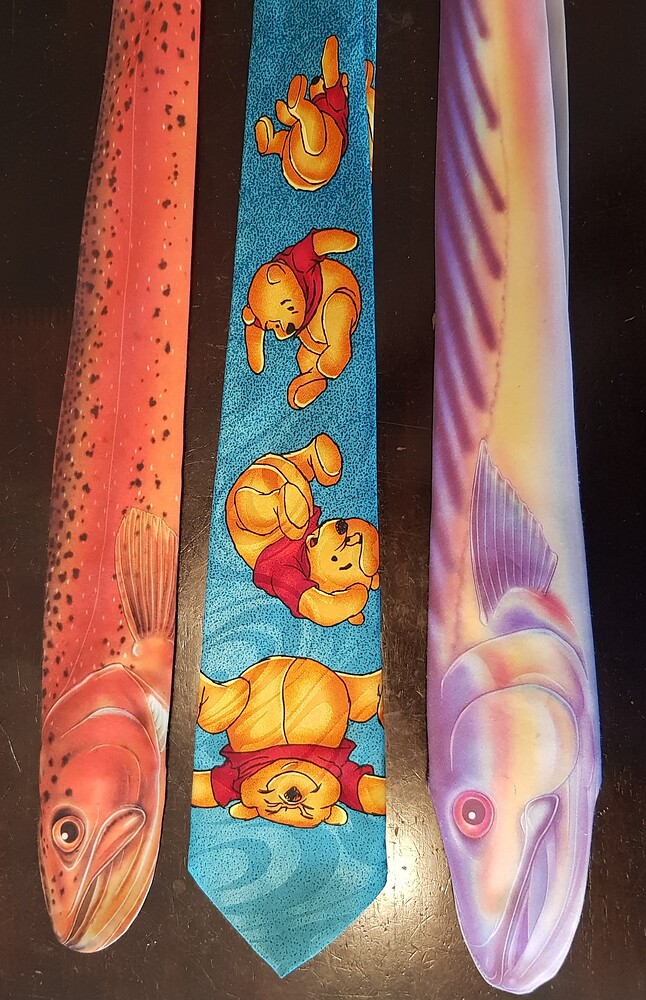
Covid summer time and I’ve been wearing boring grey coloured scrubs for months now. As it became hotter I must admit that it has been good to not have to wear neckties – my usual trademark item.

My patients and their families usually enjoy them, so I will continue wearing them. They can be a good icebreaker, in that a doctor who wears cartoon ties probably isn’t so far up himself, chances are he’s approachable.

One Friday whilst wearing a rainbow trout on my neck I had asked my patient what tie she wanted me to wear on Monday. She said to wear a favourite one, and so I would.

I walked in and noticed that we had something in common. This had not been arranged and had happened purely by chance. Turquoise was the colour of my tie and the colour of her night dress, exactly the same colour.

Hey great minds think alike.

Yeah we both have great taste in colour.

I love Winnie the Pooh.

Heh, I’m the only doctor who doesn’t mind a bit of Pooh on his tie.

Haha, you know we have something else in common too.

Oh really, what’s that?

She took the turquoise short sleeve off her left shoulder revealing a Winnie the Pooh tattoo.

SNAP.

I was uncharacteristically speechless for a few seconds. Wow, synchronicity.

Tie requests were entertained over the next week, but then she became too unwell to choose.

When she was actively dying and unable to talk her family members presented me with something that she had wanted me to have.

Thank you, that’s really nice, I promise that I will wear it well.

Since then, on alternate Fridays, I wear a purple tuna fish around my neck.

3/80 of the ties in my collection