Bedside Lessons – 16. Summer Flies By

Photo by Max Griss on Unsplash

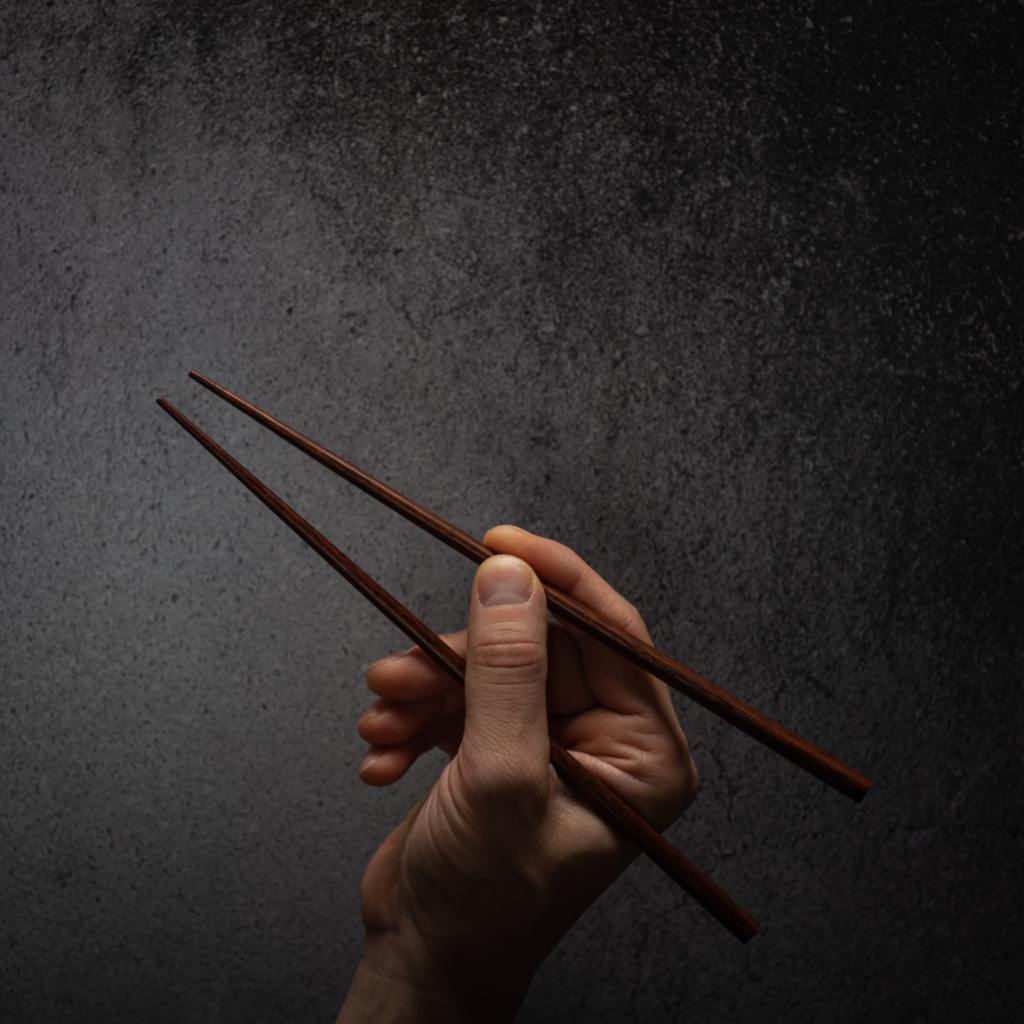
I opened the curtains this morning and there was a little fly. These have become ubiquitous in the past weeks as we have entered New Zealand’s summer. This fly was doing it’s thing near my bedroom windows and despite still being bleary eyed I tried to catch it with my bare hands. Using my whole hand did not work, the fly was able to weave it’s way between my fingers. After a few flailed attempts, I decided to change my strategy. I would try and catch it between the index finger and thumb of my preferred right hand. I went to grab it, and made contact. The fly was stunned and landed on the window sill, I promptly threw it out the window. Little did I know that this series of events would lead to a communications breakthrough later in the morning.

There was a tension in the room as we walked in. The patient was having suctioning done, but from the sounds of her breathing the fluid that needed to be cleared was deep in her main airways. As people near the end of their lives they are less able to cough, and so a tiny amount of fluid can pool, and these can result in a rattley sounds produced on breathing out. Just like when you are drinking something through a straw, at the end of a drink, a tiny bit of fluid can make a lot noise. The same occurs at the end of a life, a bit of fluid vibrating in a deep airway can be noisy, it probably doesn’t bother the patient so much but can be a source of distress to their family members, and even clinical staff.

The adult children, all of whom were parents themselves, were attentive but all looked scared with deep concern etched on their faces. Their beloved mother had been well up until only three weeks ago. Then a large brain bleed had come out of nowhere, rendering mother unconscious. Off to hospital, with many invasive procedures completed but no significant improvement obtained. The doctors and nurses had tried everything they could, but the patient remained unresponsive.

The family were told that their mother/grandmother was dying, but it took a while to sink in. It is usually hard enough to visit sick loved ones in the hospital, let alone during strict Covid-19 lockdown conditions. A very distressing time for the patient and her family. Their mother who had brought them up well, who was the beloved grandmother to their collected 7 children, was not going to be alive much longer. They hated to see her in such extreme distress, and were trying to help, but really did not know what to do.

Communication was crucial but to begin with the emotional temperature in the room was icy cold. An icebreaker was required as it was difficult to establish any rapport with the patient’s children. The patient herself had not been able to speak or respond for some weeks. Even using our mutual second-language, Mandarin Chinese, I had trouble connecting with the distressed family.

Something must have noticed and sent along a little helper, through the window. A fly was flitting around the patient and we tried to swot it away, but it was persistently dodging all attempts. I readied my special index finger and thumb technique that had served me well this morning, I was primed and ready to strike when the air in the room was disturbed by a whooshing sound.

Continue reading

Bedside Lessons – 15. The Elite Soldier Part 1

Photo by Rob Pumphrey on Unsplash

If he had been a veteran of another war he probably would’ve received The Commonwealth countries’ highest military honour for bravery – The Victoria Cross. He had carried his severely injured comrade over his shoulders and had run at double pace in order to ensure that “no man was left behind.” Any other war he would’ve come home a hero, but on his return he was called many names; murderer, child-killer, Imperialist Puppet. He hadn’t served for fame or glory, he had done his job, he had served his country, and had followed orders. He and his fellow soldiers were shunned and he had to hide the specialness of his training, and he learnt how not to talk about sensitive subjects.

It was difficult fitting into a peace-loving society when you had been trained to channel your propensity for violence into your bread and butter work. The aggression still needed an outlet and society was not too receptive of this. He rediscovered football and was able to divert his rage into victorious feats of gallantry. He became a trusted team-mate and was able to translate this into a successful coaching career, allowing his leadership skills to flourish.

His teams did well, and he won many accolades, but the hurt inside continued to need suppressing. He swallowed it deeper and deeper, until he had almost forgotten it, almost. Life had its ups and downs, success on the field, was not always reflected in his significant relationships off the field.

He had received the worst news just prior to being admitted into hospice. As with all the other bad news, he took it like a man. Face to face, without flinching or reacting, there would be time for that later in private. In public he had to represent his team, his unit, he had to be the hardest of weapons. They had told him that he only had three days left to live.

Continue reading

Palace of Care – Flirting at the end of life

Photo by Jackson David on Unsplash

Good morning we’re two of the hospice doctors, the pharmacist and of course you know your nurse.

I can tell that you are very clever people.

You are a very charming lady to be able to tell that, as your eyes are closed and you can’t hear us apart from when we shout in your ear.

My hearing aid is broken, I close my eyes so that I can listen more intently.

That’s what I’m doing too.

I felt more comfortable and at peace as soon as I arrived in this room. So I’m not sure if I have any pain or discomfort.

The male doctor looked puzzled as the patient moved her hands, grabbing onto his shoulders.

Continue reading

Bedside Lessons – 14. Stuck in a moment

Photo by Karsten Winegeart on Unsplash

By the time of his admission he’d been on the steroids for six months, to counter swelling caused by brain metastases. His wife had stopped nursing at the GP practice in order to care for him.

He had been deteriorating in recent weeks and could no longer be reasoned with.

We couldn’t talk to him, he just stared at us blankly when we asked him questions, his wife had to answer for him.

She described him sitting on the bed eating mandarins spitting the seeds out onto the carpet.
She said that he would be horrified if he knew what he had been doing, as he was the tidiest person she knew and he had always been house proud.

The worst thing that had happened was after he had urinated on the bedroom floor having mistaken it for the toilet. He then slipped on his own urine and fell to the floor, luckily he did not hurt himself badly.

I asked if he had any seizures. She said that at times she had seen his arm going rigid, and then he seemed to be even less responsive. She had thought of seizures, but there was no jerking. She had mentioned it to the Oncologists but they had not looked into it any further.

I was intrigued by this. Could it be non-convulsive status epilepticus – repeated ongoing seizures without convulsions leading to decreased consciousness? His wife agreed to a trial of anti-seizure medication. If the medication didn’t make any difference we would stop it.

Continue reading

Partnering with consumers to improve palliative care

The video for the November PCRN Forum on “Partnering with consumers to improve palliative care” is now available!

https://pcrnv.com.au/events/past-events

This discussion with Stacey Panozzo, Joanne Britto, Christine Hofmeyer and Avi Paluch reflect on opportunities for consumer and community involvement (CCI) in palliative care and share a new program of work that seeks to explore, develop and implement a program to enhance CCI in palliative care in Australia.

The purpose of the Palliative Care Research Network (PCRN) is to foster the evolution of collaborative scholarly inquiry in #palliativecare in Australia. The PCRN is leading a program of research that focuses on consumer engagement, which seeks to enhance consumer and community involvement in palliative care. Learn more about the PCRN here: https://pcrnv.com.au/

Bedside Lessons – 13. Waddya waiting for?

Photo by Vadim Bogulov on Unsplash

He was well respected and had many visitors. He had sponsored most of his family to come over to New Zealand. He had enabled his brothers and parents to come over in order for them to have a better life. He was the reason that the children’s generation grew up speaking English and Chinese. He ran his businesses successfully with the help of his siblings.

It was unfortunate that he became unwell with cancer, but he was well-supported by his family. He had always been there for them so when he was unwell they were there for him. He was able to purchase the best care that money could buy, and his Private Oncologist tried everything that was available, but it did not work.

He went back to China in order to access other treatments but they did not work either and meant that he had to spend time away form his family which he did not like. Family was the most important thing to him in the world. That was the whole reason that he had worked so hard in order to make things better for his family, so that they could enjoy their time together.

He started to deteriorate more quickly and he was admitted for symptom control but ended up requiring end of life care. There was always a family member present. When he started having trouble swallowing, the family asked about tube feeding. We knew that back in China if you could afford to pay for it you could access almost any treatment you wanted. It was explained that we did not think that artificial feeding and hydration would be beneficial. He became sleepier and less clear in his thinking. Eventually he became comatose.

His family continued their vigil, even though he was unresponsive. They asked how long he had left, and we couldn’t give them a adequate answer. They rightfully pointed out to us that he had not had anything to eat or drink food about two weeks. How could he keep on staying alive? I had trouble explaining it with all of my medical training, our science could not explain what was going on.

Continue reading

Palace of Care – It ain’t easy being green

Photo by Georgia de Lotz on Unsplash

She had been told that she would die soon, twice before, but she continued to outlive her prognosis. Stress levels were high, as this time she felt more unwell. Pain was worse and even her lifesaver wasn’t covering her symptoms.

She had complete faith in it, and often credited it as having saved her life. Before she had discovered it she had tried many legal medications but none of them had worked, or had produced intolerable side effects. She had never liked going to the doctor and preferred to have plant-based treatments from her naturopath. The green stuff had calmed her down, with minimal side effects. It had allowed her to go back to work, and she was able to be a mother again.

Being diagnosed with metastatic cancer had really been challenging, but extra doses of the natural product had helped to keep things calm. In recent weeks she had been admitted to hospital twice and was told that she was about to die twice of something called DIC (Disseminated Intravascular Coagulation.) The doctors had explained this as her clotting system going crazy, causing blood clots in her blood vessels, which were painful as blood supply was cut off to affected areas. A dangerous situation as clotting factors ran out, it meant that she was at great risk of bleeding. Caused by her cancer, and with no cure, hence she had been written off by her doctors twice before, and now it was third time lucky.

Continue reading

I think therefore I am? – Can social media help palliative care?

Photo by Matt Collamer on Unsplash

Hi folks,

You might have already come across Hospice Nurse Julie on TikTok.

In her short videos she explains things that we commonly see in end of life care.

Julie McFadden’s engaging videos have gone viral. Awesome!

How else could social media help us in terms of palliative care promotion?

How can we use these platforms for good?

How can we extend our reach further?

Who else can we help to extend their reach?

How can we help our friends and colleagues in other less developed places provide palliative care better?

Many of us around the world, myself included, did not feel at all prepared by health care school curricula which continue to lack palliative care education.

Personally, in my spare time, I am working on a freely downloadable “Dummies Guide to Palliative Care” book aimed at newbie health care practitioners. Contents to include: Did you know there are five main symptoms when people are dying? Here’s how to identify them, and treat them…

Please let me know if you are keen to contribute, as doing it by myself might take longer than if I had some helpers.

James

I think therefore I am? – In-between

Photo by Rohan Reddy on Unsplash

Palliative Care lies in between the usual medical culture of active treatment and the culture of death and dying. Was that what attracted me to Palliative Care, having lived as an in-betweener for most of my life? Growing up between two cultures; Chinese at home and mostly Eurocentric outside of home. This continued for me in University being part of the local Chinese Group but also being part of the newer Asian immigrant group. A bridge is needed between the two groups as the two different cultures can be different in many ways, and may think that they have little in common.

Standard healthcare is directed at saving life, curing disease, fixing things which are broken. Death is looked upon as the great enemy, something to be fought against, railed against until the dying of the light. People have to go to battle against their diseases, go to war, but when it comes to your own bodies the collateral damage may be too much too handle.

Continue reading

Bedside Lessons – 12. Zero Degrees Kelvin

Photo by Long Ma on Unsplash

Times of crisis can bring out the best or the worst in people. This is a tale from the dark side.

Before she became ill everything seemed to be perfect. Happily married to the love of her life, they were proud of their three adult children. The eldest already married and had produced the perfect grandchild. Second child a beautiful daughter who was talented, and about to enter the workforce. Youngest son, mummy’s boy, had started university and was on his way to doing something useful with his life. The family portrait was beautiful, three generations of the family all dressed in white shirts and blue denim jeans. What a beautiful family, united in their faith and religion. Stalwarts of the church, the example that the congregation all worked towards becoming. The golden family.

Illness arrived and caused major distress. The mother had always had alternative views to healthcare, had wanted naturally based treatments or no treatments at all. Unfortunately due to metastatic cancer she had to consider many different treatments, and many different medications to treat her symptoms. This soon became a torment for her, challenging her core beliefs. She tried to handle her pain as much as she could but it was so deep, so pervasive, so severe that even her iron will started to rust, to bend beyond it’s inherent structural integrity.

She was admitted in a pain crisis, having not slept for 10 days, woken by pain, exhausted with her family at their wit’s end as well. A highly distressing situation for them all. The facade of perfection had also started to crumble.

Continue reading