Elsewhere in the Palliverse – Weekend Reads (featuring zombies)

Here’s some palliative care and research related links to peruse in the week ahead (most found via Twitter):

ABC News interviews Atul Gawande about “modern medicine’s treatment of dying patients.” Dr Gawande is all over social media and the news, even in Australia (and in Legoland)!

Current and former Chairs of the Australian and New Zealand College of Anaesthetists Mortality Sub-Committee write in The Age about the challenges that not for resuscitation orders can pose for anaesthetists.

The ASCO Post reviews a review article from JAMA Internal Medicine, about end-of-life discussions and advanced care planning. In summary, it’s all good.

In Canada’s Globe & Mail, “End-of-life patients aren’t being heard“.

Geriatrician Louise Aronson writes in The Lancet about ageism in medicine, and ageing as “the human life-cycle’s neglected step-child.”

Presenting at a conference? Improve your presentation with zombie apocalypse principles.

Meanwhile, on October 31st, GeriPal explored the unmet palliative care needs of zombies. And check out the zombie pain scale!

Finally, join the weekly (zombie-free) #hpmglobal tweetchat on Monday (17/11/14 at 11pm AEDT) to discuss an article from BMJ Supportive & Palliative Care about support networks of end-of-life carers. #hpmglobal chat is hosted by Aussie ex-pat Dr Jim Cleary (@jfclearywisc), with participants from several continents. For instruction in how to participate in a tweetchat, see Sonia’s post Twitter 102.

I hope you enjoy these and stay safe from zombies!


Elissa


updated palliative blogs list from Christian Sinclair at Pallimed

The fabulous Pallimed have updated their list of palliative blogs. Featuring Palliverse!

Or at least, mentioning Palliverse.

Some great blogs here!

http://bit.ly/1EsTeWG

The Palliverse Team

Palace of Care – Musical Interlude

After a tough fortnight at work I decided to change things up a bit at our Multi-disciplinary team meeting this morning.

We’ve been using an iPad to take notes from the meeting for a while now, and today I tried to make it a more multi-media affair.

As well as recording the patients’ stories I also tried to match each of them to an appropriate piece of music.

The rather diverse playlist and patient list eventually became:

Tammy Wynette – Stand by your man – after discussing a man whose ex-wife had returned to look after him.

Imagine Dragons – Radioactive – the correct pronunciation of a patient’s surname.

Avril Lavigne – Complicated – a patient’s complex family dynamic.

The Black Eyed Peas – Where Is The Love – a patient’s long-term relationship with their spouse.

Alicia Keys – Falling – a patient who had repeatedly been falling…over.

Bob Dylan – Blowin’ in the Wind – a patient with malignant bowel obstruction who had started passing flatus.

Cheers,

James

How to draw the line between “good” and “bad” reasons to die (from @ConversationEDU)

By Sascha Callaghan, University of Sydney

A Senate inquiry into legalising voluntary euthanasia for terminally ill people has recommended a conscience vote on the proposed bill after technical matters, such as what constitutes a “terminal illness”, are clarified.

While this is an important step forward in grappling with the idea of the “right to die”, drawing a line at terminal illness for this purpose will be difficult. What’s more, restricting the right to die to people who are terminally ill is very different to what most of us think of as justifiable euthanasia.

Research shows more than 82% of Australians support voluntary euthanasia where “a hopelessly ill patient, experiencing unrelievable suffering, with absolutely no chance of recovering” asks for help to end their life. This description covers terminal illnesses as well as other incurable conditions causing great suffering in which death may not be imminent.

Refusing treatment

As the law stands, mentally competent people can reject medical treatment that will keep them alive. This is the case even when a person is not actually terminally ill. As suicide itself is not unlawful, it remains an option even when the person states their sole motivation for refusing treatment is to end their life.

Courts have confirmed that life-support machines can be turned off, feeding tubes can be removed and hunger strikes in hospital may not be forcibly interfered with by hospital staff. These cases involved people suffering extensive paralysis and chronic debilitating illnesses, all of which caused pain and suffering but were not, strictly speaking, terminal conditions.

Indeed, that was part of the problem the people in these cases faced: in their own estimation, their suffering was great but their lives might go on for a very long time. Still, while all competent patients may refuse medical treatment in order to end their lives, they may not be entitled to active euthanasia under a restricted law.

If it’s not exactly terminal illness that Australians have in mind when they think of who might legitimately seek euthanasia, and if we can tolerate and even condone the suicidal wishes of some people, it is perhaps a particular kind of suffering that we wish to restrict euthanasia to.

Perhaps we feel physical suffering is a better reason for ending one’s life than, say, suffering caused by grief, or shame, or hopelessness. Or perhaps it is the quality of “incurability” that we demand; we are more willing to accept physical illness may be beyond help, than psychiatric illness or emotional pain.

The problem is that while many of us may hold these views, they aren’t empirically true, and opinions differ.

In some jurisdictions where euthanasia is legal, it is also legal to be helped to die because of psychiatric illness when there is “unbearable emotional suffering”. While this has been controversial, groping for objective reasons why only some forms of death decision are all right is doomed to fail because the lines we draw between acceptable and unacceptable death decisions are cultural and arbitrary.

But that doesn’t make such line-drawing invalid.

The right line

To achieve defensible policy, we need to understand what’s really going on when we struggle with legalising assisted suicide. And it is simply this: the decision to die is not an ordinary choice.

Deciding to end one’s life has the quality of tragedy – and not only for people who love you, as not everyone has loved ones. Rather, all our deaths are important because, as the English poet and cleric John Donne wrote, we are all “involved in mankind”.

Death remains tragic no matter how inevitable it is or what causes it. And in a very deep place, human societies have always considered death itself to be bad, in a moral sense.

Death is punishment; in many cultures, it is what separates us from ancient gods. The inevitability of death is the ultimate source of existential suffering because all of us know we will die, as will everyone we love.

So even if we can bring ourselves to accept that a life can be so full of suffering that death is preferable, we still remain deeply anguished about it.

If society is going to be involved in death decisions by giving legal permission for doctors to bring about death, it is important to specify some conditions. But there will be few bright lines to discern between “good” and “bad” reasons for choosing death.

We do need to decide which deaths we are prepared to countenance. We may each decide quite differently. But all of us must think long and hard about where and why we draw those lines.


Editor’s note: Sascha will be on hand to answer questions at 12:30 tomorrow afternoon (November 12). Post any questions about “good” and “bad” reasons to die in the comments below.

The Conversation

Sascha Callaghan received a PhD scholarship from the NHMRC.

This article was originally published on The Conversation.
Read the original article.

Atul Gawande’s Pain Control and Palliative Care

A thought provoking article by Torrey Ah-Tye about one of my personal heroes, Atul Gawande’s new book “Being Mortal, and what really matters in the end”. Have you read it? I need to get my hands on a copy…
sonia

Torrey Ah-Tye's avatarThe Vishuddha Journal ☼ 维苏达日记

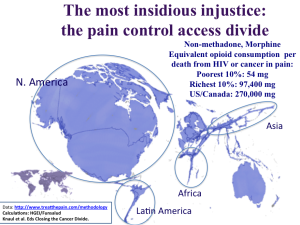
pain_divide_cartogramThe ever affable author, doctor, and notable writer of “The Cost Conundrum,” article in the New Yorker back in 2009 (available here), instigating a movement posing serious questions and critiques of the U.S. healthcare system, has now endorsed Pain Control and Palliative Care.

Topically related to his new book, Being Mortal, and what really matters in the end, in honor of World Hospice and Palliative Care Day, which takes place tomorrow, on October 11, he released the following statement:

Dying and death confront every new doctor and nurse. The first times, some cry. Some shut down. Some hardly notice. When I saw my first deaths, I was too guarded to weep. But I had recurring nightmares in which I’d find my patients’ corpses in my house—even in my bed.
I felt as if I’d failed. But death, of course, is not a failure. Death is normal. Death…

View original post 539 more words

Palace of Care/I think therefore I am Special Edition: #getjakbak became #gotjakbak

More later…currently too tired

Thanks again for all the help.

Cheers,

James

Palace of Care/I think therefore I am Special Edition: We will #getjakbak !

Thank you again for all of your pledges and donations. A special note of thanks to Sean Coleman and his team at Air Ambulance New Zealand who will be transporting us to the airport tomorrow morning. He has donated his services which would usually have incurred a very competitive fee  of NZ $595.00 Thank you Sean for your time and sage advice. Cheers, James

Palace of Care/I think therefore I am? – Special Edition: Palliative Care Mission of Mercy – #getjakbak

Hi everyone this is a last minute fundraising plea to everyone as private citizens.

I am organising for our non-resident patient “Jak” to return back to the Islands. (Real name changed.)

Jak is a 44 year old man with a large abdominal mass found to be cancer with spinal cord compression + lung mets, intra-abdominal abscess resistant to IV Ertapenem – causing fluctuating levels of sepsis.

Has been trying to get back to the Islands for the past month, but hampered by critical illness.

He has stabilized at present and we have one shot at getting him back tomorrow morning at 0915. He can travel if escorted by a doctor. The most discounted fee for a doctor I could negotiate was $3800, which the family could not afford.

I have volunteered my services to look after him on the flight to help Jak get back.

The family with the help of the local Pasifika Community, have fundraised $7400 of the required $10720. They need $NZ3320 by 5pm today in order for Jak to get back home. i.e. in 1.5 hours have received pledges of $720 so far. 1536hrs

So close but yet so far…

Please forward this email on to your own teams and networks.

Every bit pledged will count. I will consider all pledges of assistance.

For those interested in following the journey I will attempt to live tweet/blog it through Twitter:  @palliverse #getjakbak and www.palliverse.com

Thank you for your consideration,

James

1550hrs – $1320
1557hrs – $1520
1611hrs – $1790
1613hrs – $1990

Just need $1330 to grant this young man his dying wish of going home to his family. We can do this team!

1617hrs – $2190
1620hrs – $2210

Only $1110 to go to #getjakbak

1629hrs – $2260
1630hrs – $2425
1631hrs – $2475
1630hrs – $2775
1634hrs – $2925

Only need another $395. Well done team!

1640hrs – $3005
1642hrs – $3085
1642hrs – $3150
1655hrs – $3350
1700hrs – $3400

Thank you everyone we have done it! Any extra funds raised will go towards payment of hospital fees.

Thank you for helping your fellow man. I am proud of you all!

James

legal aspects of end of life care

This helpful MJA article by an Lindy Willmott et al, describes several relevant Supreme Court cases concerning end of life decisions.

It gives us some themes found in the various decisions made:

-Futile medical treatment is not in a patient’s best interests.

-Treatment that is overly burdensome is not in a patient’s best interests, even if the patient is unconscious or unaware of treatment burdens.

-Courts have generally not engaged expressly in quality-of-life assessments, but they remain relevant for determining best interests when considering the patient’s medical condition and prognosis.

-A patient’s wishes and values (gleaned when the patient was competent) are relevant to, but do not determine, his or her best interests. Family members’ views may also be relevant where they are reflecting a patient’s wishes, and perhaps also when reflecting their own wishes, but these views are not conclusive in determining a patient’s best interests.

-The interests of other people and organisations (including the wider health system) are generally not relevant when determining a patient’s best interests.

-Courts have generally deferred to medical practitioners’ opinions about treatment decisions, even when the patient’s family has strongly opposed them.

Have you had any sticky end of life issues recently and crossed paths with our legal brethren?

Sonia

Uncovering ethics: The first steps

Professionally when “Ethics” is mentioned it is usually in fairly specific ways.  In a health care context Ethics is often associated with particular areas of question or conflict.  Ethics is the process that we have to satisfy to be able to do the research that we think is indicated.  My decision about whether Mr Smith has the “right” and the “capacity” to be able to make a particular decision is an ethical one.  I use words like “autonomy” and “justice” to explain the reason why Mrs Tran should be offered a treatment.  Our clinical teams have policies about our duty to provide ethical care for violently confused patients. We debate about issues like euthanasia on grounds that we describe as ethics focused on the rights and wrongs of changing our current clinical approach. Each of these are complex questions and the fact that they are so divisive demonstrates to us the difficulty (or even impossibility) of determining a path forward that satisfies everyone.  Sometimes I wonder if it is for this reason that Ethics seems like such a frustrating topic.  Why spend time thinking and talking about Ethics when the only thing we can be confident about is that someone’s answer is always going to be, “I disagree”?
Now, which way to I go today?

Now, which way to choose?

Continue reading