We knew he would die soon and we asked him if he wanted us to contact anyone. He told us he would like his son to know, but he didn’t have his phone number. By this time he was too unwell and needed help with communication via social media. Our nurses helped him to send a message via his accounts. He died before he received any replies.
As per his wishes, we had arranged for a funeral director to uplift his body as he had wanted a simple cremation. He had limited savings and arrangements had been made with social welfare for a funeral grant to pay for his cremation. Our nurses again checked his social media accounts and found a reply from his son, including a phone number. A phone call was made overseas and was answered by the young man’s foster mother. She was told of our patient’s death, and said that his son wanted to come over to see him, and would arrive in town in three days’ time.
Today tragedy leaked from the internet and into my home and many millions of homes all over the world. 23-year-old Minecraft YouTuber Technoblade has died. He had written the last message to his fans only eight hours before he died. He had asked his dad to read out his message on this video. If you watch the video make sure you have some tissues at hand.
Technoblade was diagnosed with cancer in August 2021 and continued to post his popular videos even whilst undergoing various cancer treatments. With his usual generosity, he continued to share his entertaining insights with his 10 million followers.
Millions of ‘kids’ all over the world have learnt about the reality of life with cancer. Today they have experienced the death of someone who they may have gotten to know over many years of watching his videos. Grief has appeared on their drop-down menus, and they may not know how to deal with these unknown feelings. A huge reality check has occurred and the stark difference in real life is there is no respawning.
An online companion can no longer keep them company. Loss of life has led to a loss of childhood innocence. Please take care of your kids as they mourn during this sad day on the internet.
My patient arrived in 1970s New Zealand (NZ) a refugee. One of the millions of innocent victims of a proxy war. She and her husband had worked hard, and raised their family well. Their children had grown up and had made good lives for themselves and their own families. She was the proud grandmother of six, with ages ranging between 2 to 18 years old. She was admitted for end of life care and had been comfortable. Her family attributed this to her Buddhist beliefs. She had always been the calm one in their family. “Dad was the fiery one, and he had died about seven years ago.” She had carried on with life, taking even the death of her partner with calm. She her family that she would see him in the next life. She wasn’t sure in what form he would be reincarnated, but she was sure they would meet him again.
She had lived a calm life and her family were not surprised that her dying process was also calm. She didn’t need much in the way of medications as she was mostly comfortable. She lost consciousness and we warned the family that death was likely imminent, that she would be dying soon. Two weeks passed and she was still alive. She remained comatose and non-responsive. She had not been alert enough to have any oral intake. The family made sure her mouth was kept moist.
Her family asked us how long she had left to live. We explained that from our experience that other patients in similar situation likely would have died two weeks ago. Our science could not explain why she was still alive. We asked if she had any unfinished business, was there anyone that she had not seen yet? The family gave us a puzzled look, she had seen everyone that she needed to see. Or so they thought. As clinicians we all wondered, what she was waiting for?
We found our answer a few days later. As I was heading upstairs for lunch, three men walked into the hospice. One of them walked ahead, followed by two others. The two men wore green uniforms and looked as if they could handle themselves. The man in front was a short, Asian man in his forties. His hands were cuffed together. He was led to his mother’s room and spent some time saying goodbye to her. He cried as he had not seen her for two years he had served in prison.
She may have been comatose and thought to be insensate, but she knew her son had come to say goodbye.
I went to see the new patient who had just arrived by ambulance. A Chinese man in his 30s who was drowsy and confused. He wasn’t able to move out of bed, and needed full assistance with all cares. He was accompanied by his wife and his father. Our patient’s English was reported as good but he wasn’t alert enough to answer many questions.
“Where are you sore?”
Hands pointed to his abdomen as he grimaced.
His father said, “He’s always considered other people before himself. That’s how he’s been since he was a young boy.”
I made some adjustments to the patient’s medication to try to ease the suffering.
His father came to speak to me, and I ushered him into a small meeting room.
He was angry and devastated. He spoke to me in Cantonese which I have some understanding of, thanks to a childhood of watching Hong Kong TV series on VHS video tapes. My usual slow process with Cantonese, is to convert it into Mandarin and then into English. I have trouble when trying to go back the other way, so don’t speak Cantonese.
He recounted the clinic appointment they had attended yesterday. They had driven from home to the Oncology Centre. His son required a wheelchair as he could not walk the long distances. The Oncology registrar that met them was Chinese and spoke Cantonese. He asked if his son could lie on the bed as he was tired from sitting up for hours to get to clinic. The registrar answered no, that the clinic was too busy today. This surprised the father who said, “Couldn’t they see how unwell he was? Then they told us bluntly, there was nothing they could do for my son. That he was dying. I was so angry that I wanted to complain, but my son wouldn’t let me, he told me to leave it, and that he wanted to go home.” I listened to him for 45 minutes and talked to him in Mandarin which was our shared second language. He had calmed down and was able to head back into his son’s room.
Honestly, the very last thing you want to do when you are grieving is wade through the piles of administrative work that’s needed after someone you love has died.
I remember after my mum died, doing to the Post Office to request that her mail be diverted to me. Are you the Power of Attorney? Queried a the young Post Office worker. Well, yes I am, but as the person has died, the Powers of Attorney have ended So you need to ask me if I am the Executor of the Estate. Her: …..
Me:….
Her: Are you the Executor of the Estate?
Me: Why yes, yes I am.
Or CItylink. Would not tell me why my mum’s owing balance was cos of privacy. But I wanted to pay it off and close it. Can we have a certified copy of the death certificate. OMG. If I paid you $50 would that cover it? $100? No, can’t say., privacy. Gah!
I have fortunately not had the need to use this new service https://deathnotification.gov.au/ but it is a fantastic idea and I look forward to hearing how it goes. The Australian Death Notification Service (sorry to our cousins over the ditch) takes on much of the administrative burden after someone dies for you, and it’s free. What a fantastic idea! It’s supported by all the States and various organisations.
Let us know if you use it or hear of anyone who’s used it.
This workshop is for General Practitioners based in Victoria (Australia) who care for people with a life-limiting illness. Practice Nurses are also welcome to attend.
Topics
• Recognising patients who need palliative care
• Communicating about end of life issues
• Voluntary assisted dying in Victoria
• Assessing and managing common symptoms
• Advance care planning
Facilitators:
Dr Rowan Hearn – Clinical Director Palliative Medicine, Calvary Health Care Bethlehem
Dr Rupert Strasser is a palliative care specialist and geriatrician, with Calvary Health Care Bethlehem. He is passionate about providing excellent clinical care for all. Rupert’s clinical interest includes palliative care for neurodegenerative disease.
PEPA is an accredited educator with RACGP (workshops are eligible for category 2 CPD points)
Date: Saturday 23rd July 2022
Time: 10am – 12pm
Online – a WebEx link and guidelines to access will be provided prior to the workshop date.
Workshop Pre-requisite:
To maximise learning PEPA offers 6 online GP learning modules. These modules have been developed by palliative care experts and reviewed by clinicians with extensive palliative care experience. They can be accessed by setting up an account at the PEPA Palliative Care Education and Training Collaborative: https://palliativecareeducation.com.au/
PEPA is an accredited educator with RACGP. Workshops are eligible for Category 2 CPD points
Inquiries:
PEPA Administration – E: pepa@svha.org.au
Margarita Makoutonina, Calvary Health Care Bethlehem
Rudyard Kipling’s poem “If” has helped me through many difficult situations over the years, especially the first two lines of it:
“If you can keep your head when all about you Are losing theirs and blaming it on you,“
I need to be the calm one, the calming influence within chaotic situations.
I have to be prepared to arrive and take command of the situation. To try to slow things down and soothe any suffering that may be occurring.
Treating everyone in a polite and friendly manner no matter how extreme their situations may be.
Keeping a cool and focused head, when everyone else is flailing away. To be a calmness hotspot, broadcasting it around myself.
They can blame me for shortening the visit times, “the doctor said my visitors could only stay for 15 minutes as he wanted me to rest more.”
I am a product of my training; medical, physical, mindfulness, including daily suffering doses from cold water exposure, fasting, Brazilian Jiu Jitsu and much more.
Maintaining my own sense of humour whilst being able to coax out laughter from the most unwell people in the world.
I studied in order to be able to find myself a job. I started working, found my calling and I now am a passionate member of a cause.
I continue to learn each day and am privileged to be able to learn from the patients and families that I deal with.
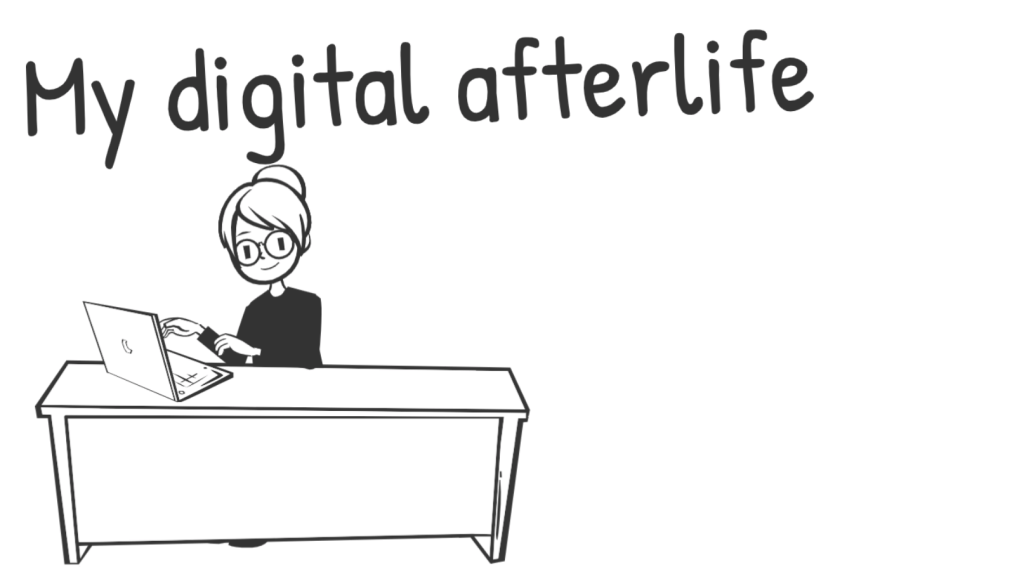
Our lives are increasingly digitised. I remember when my grandparents died, we went through their paper phone contact book to find out who we had to call. Now, with everything from banking to social media taking place online, things have changed.
How can we prepare for our #digitaldeath, after our bodies have died? What will your #digitalafterlife look like? #EOLC #pallanz
The following are my own personal professional views and do not represent those of my employer or of Palliverse in general.
I’m not interested in debating the pros and cons of assisted dying, everyone is entitled to their own opinions. In Nov 2020, 82% of eligible voters voted in the referendum, 65% of the voters supported the End Of Life Choice Act 2019. Aotearoa/NZ clearly stated it’s opinion last year, and in two days’ time it will become law.
I do not want my patients to be caught in the middle of two warring ideologies.
I am not here to argue, I am here to listen to my patient, I am here to learn from them. They are the expert when it comes to what they are going through and their suffering is defined by them, not by me.
I think that we in Hospice/Palliative Care need to build a bridge and get over ourselves. Our focus should be on our patients, not on ourselves.
Please treat patients with respect, they weren’t born yesterday, but they might die tomorrow.






 palliverse.com