Compassionate Communities: Another Perspective

In the lead up to this week’s #PallANZ Tweet Chat with @PCACEO
and @Palliverse, we are once again very fortunate to feature the
contribution of an international guest – with Dr. Emilio Herrera (@emiliohm)
President of NewHealth Foundation, sharing with us insights from his experience
in developing compassionate communities across Spain and Latin America.

emilio

Dr Emilio Herrera

Dr. Herrera is President of NewHealth Foundation (NHF), a non-profit Spanish institution which seeks to promote new models of health and social care integration; in particular, in the areas of advanced chronic illness and palliative care. He is an expert in palliative care, with long-standing experience in planning and implementing palliative care and integrated health and social care programmes in Spain and Latin America. In recognition of this work, he has received various national and international awards, including the 2015 international “Palliative Care Policy Development Award” from the European Journal of Palliative Care.
* Full Bio follows below


Currently in Australia to present a Keynote Address at the 2016 Palliative Care Victoria Conference (if you haven’t already – you should register now!), Dr Herrera very kindly gave his time to speak with us about our #PallANZ discussion this week on Compassionate Communities.


What is a compassionate community – and how is it relevant to hospice and palliative care?

It is a group of people who are able to mobilize to help others in their community who are facing a life-limiting illness, in order to promote well-being and alleviate their suffering.

This requires a cultural evolution and a return to moral principles and values:

It requires the understanding that the care of the people around us is everyone’s responsibility – beyond mere provision of public or private services. It requires continuing work in social awareness to promote general knowledge of how to act in these situations, and preferably, public and corporate policies that could facilitate all of this.

Initially the Hospice movement was closely linked to the community:

The Hospice itself represented a place where people received the necessary care in their last days of life, but also a place of participation for the patient´s families, friends and/or neighbours. Over the years, palliative care has often been medicalised and has lost much of its social character. However, as advocated by Dr. Libby Snallow, the interaction between Hospice and volunteer communities has been as long as its history.

In the years to come, the prevalence of chronic disease and disabilities will increase.  Almost 70% of the world population die after a period of chronic illness. Likewise, the number of family caregivers is declining. With these solid facts, neither the end of life or death can be understood as a failure of medicine—nor can high quality palliative care be offered without the active participation of the community.

What challenges must we overcome to promote compassionate communities?

  1. We have to be more humble. Our two principal barriers are inside ourselves: fear and ego. We must recognize that, as health care professionals, our training does not prepare us to help a community find its own solutions and shape its own future.

  2. We have to change our approach as a health system. In general, it is not easy to focus on the needs of individual people.  As Dr. Julian Abel stated in his “Circles of care”, the person at the centre should be supported by their more intimate community, and around both the patient and his/her inner community, the health and social care services should work like an integrated care system to offer the best of care.

  3. Society must return to recover the dignity of care:  the privilege of caring as opposed to the burden of caring.

  4. We have to design and implement methodologies to interact with the community that will require us to devote considerable time and resources. Implementation of the Compassionate Cities Charter developed by Professor Allan Kellehear and Dr. Julian Abel are a good starting point.

  5. The first challenge is to understand the paradigm of integrating health care, social care and direct participation of the community.

  6. We need to invest in order to achieve efficiency.   We need specific budgets to generate the necessary resources to stimulate the community. An important part of those budgets should come from the community itself and the private sector, not only the government.

  7. We need motivation from our best professionals. They are often tired after so much effort and many years of hard work without getting the expected results.

  8. We need first class social marketing.

  9. We need to align the active participation of different social stakeholders.

  10. We need to understand that empowering a community goes way beyond promoting volunteer organisations.  It involves a change of attitude in the society. This also needs to involve working from and with schools. 

In what ways can we build meaningful and effective partnerships between palliative care professionals and the broader community?

In general, we need to create a common social mission. This is much more than a recipe.

This involves working hard to create a different and involved society; to imagine a sustainable social model and restore the value of caring; to implement an enduring story, to create together a legacy that can grow, and to believe in our shared meaning as human beings.

Some tools and specific actions that can help to achieve these aims include:

  • Identifying and promoting good leadership among our experts and the public.
  • Making local maps of aligned initiatives and identifying stakeholders.
  • Networking.
  • Establishing commitments from and with organizations and institutions involved.
  • Recruiting collaborating centres.
  • Raising local financing.
  • Establishing agreements.
  • Designing local projects.
  • Raising awareness campaigns and offering training activities.
  • Designing and using agreed tools.
  • Evaluating the Project by sharing results and outcomes.

As part of Emilio’s work, the City of Seville is set to be recognised as one of the first ‘Compassionate Cities’ in the world, by Public Health Palliative Care International. You can read more about this achievement here. You might also be interested in reading ‘Compassion is the Key’ – where Emilio highlights ‘Compassion’ as the value that should be promoted to transform the healthcare model.

@Palliverse and @PCACEO are extremely grateful for the generosity of Dr Emilio Herrera in sharing his valuable insights with us. You can see Emilio present the Keynote Address at the Palliative Care Victoria Conference on Friday 29th July; Bayview Eden Hotel, Melbourne Australia. Register now!

* Dr Herrera’s background is in medicine, holding a Bachelor of Medicine and Bachelor of Surgery and he is also a specialist in Family and Community Medicine. He continued specialising in palliative care and completed an internship in palliative care at the MD Anderson Cancer Centre Houston (USA), and at Edmonton (Canada). He also holds Master’s degrees in both Health Services Organization and Management, and Senior Management.

At present, the NHF is heavily involved in the development of palliative care programmes in Colombia. In Spain, it has also set up the Observatory of Integrated Care Models (OMIS) in order to identify and make visible, current experiences of health and social care coordination and integration, and to translate knowledge and create synergies. Finally, the NHF is developing the social movement Compassionate Communities and Cities through the setting up of the project “Todos Contigo” in several cities of Spain and Latin America.
Control & Decision Making

elizabeth

Taken from my hospital room on a good day

I’ve been in hospital for the last three weeks, and have just returned back home (finally!).  It has been both a very difficult physical experience dealing with pain management and a wound, but also a mental journey for me.


A lot of what I read about palliative care, and my own experiences as well, have been about control; the control that palliation gives you over the time you, as an individual, have left, rather than the often more passive involvement of care when engaging in active treatment.  Throughout my treatment, I’ve been eager – possibly to my own mental and emotional detriment – to remain highly active with what has been going on.  I make guesses as to what might be causing pain or discomfort or other symptoms, explaining to my doctor what it must mean as he compassionately and respectfully listens to my ideas that I’ve gotten from my half-hearted reading of an abstract from a medical journal.  Continue reading

An unexpected journey into aged & palliative care

albany wind farm

Albany wind farm

This post is a year overdue. If I were to have written this in April 2015, the title would have been “The tale of two deaths” where I would have reflected upon the peaceful, managed and expected passing of a 93-year-old aged care patient contrasted with the tragic accidental death of a 19-year-old patient whom I’d seen only a week earlier.

But what I’ve learnt is that tragic accidents are random, unexpected and do not happen often. More importantly I have been involved in the end-of life care of several patients since then, that have taught me a great deal about palliative care medicine, the value of open and frank conversations with family and some of the myths surrounding the management of death.

This is also a story of my maturity through being stretched and learning that the part of medicine that I ran away from the most has ended up becoming my greatest passion and future, aged and palliative care.

Continue reading

I think therefore I am? – A thought provoking interview with Cory Taylor

listen

Photo by Britt Reints, used via creative commons

Driving to work on Saturday morning I listened to RNZ National’s Kim Hill interviewing celebrated Australian novelist Cory Taylor. Cory talked about the experiences that led to her writing her last book, Dying: a Memoir (Text Publishing), while dying of metastatic melanoma with brain metastases. Topics discussed include Euthanasia, Palliative Care, and writing about dying.

You can listen to the RNZ National interview here.

The Hairy End: or, the bad shit.

download

Palliverse contributor Elizabeth Caplice shares this candid post with us. Thank you, Elizabeth.

elizabeth's avatarsky between branches

i’m sorry for all the people in my life i haven’t had a chance to already talk to this about in person, and this is sort of why i’ve been quieter on social media.

but my treatment, and treatment aims have started to move into the next phase of stage IV cancer, and we’re at a point where we can start talking a timeline.  i am now, without question, terminally ill – which means, my  life expectancy is under 12 months.  for the first time, i asked my oncologist straight out for numbers, because he said that a point would come where he could start estimating. that point is now.  his ‘worst case’ estimate (all treatment failing now) is 3 months, and his ‘best case’ estimate (all treatment working for as long as would be expected) is 12 months. the reality will lie somewhere between those two figures.
it’s my…

View original post 878 more words

I think therefore I am? – Connecting?

Heart Connection (by Alisa Looney)

Heart Connection by Alisa Looney. Photo by Nancy Regan, taken in Puyallup, Washington, used under Creative Commons licence.

Talking to patients can be challenging, and it can be a struggle to make a connection sometimes. You need to have a plan as to how you are going to play the interaction game, and  it can feel like a particularly demanding game of chess at times. You may have to pick your words carefully, as not everyone is naturally trusting, especially towards someone that they have never met before i.e. a total stranger. What worked on patient A in room 2 may fail dismally with patient C in room 5. Everyone is different as are their responses to your attempts to make a connection. That is what it is all about, through use of all the communication skills that you have learnt, you try to make a connection with another person. How can I ‘click’ with the other person in order for us to have important conversations?

Continue reading

guest interview – Soula Ganiatsas, Palliative Care Research Network Victoria

Tell us about your job.

I am the program manager for the Palliative Care Research Network Victoria (PCRNV).

What does PCRNV do?

We try to gain funding to conduct clinical and community intervention research. The PCRNV also  provides an opportunity to network and collaborate with other palliative care researchers through PCRNV forums and workshops.

We also help with access to a variety of PCRNV funding schemes including; PhD scholarship, small project and travel grants. There can be support with developing your research idea into a potential project and grant proposals via the PCRNV Concept Development Workshops and also mentoring.

But, it’s not right to do research on people who are dying, is it? 

Continue reading

Family doctor involvement in palliative care: what’s its prognosis?

I feel like such a fraud. What am I doing writing a guest post for Palliverse, when I am a doctor who rarely provides palliative care? My justification for writing here is that it’s this very sense of uncertainty and underqualification that I’m feeling which is the subject of my post.

I’m a “general practitioner” — a “GP” as we’re called here in Australia. If you’re reading this post from North America, think “family physician” — it means much the same thing — but for convenience I’ll use the term “GP” today.

Continue reading

How does it feel to be young and dying?

ElizabethCAplice

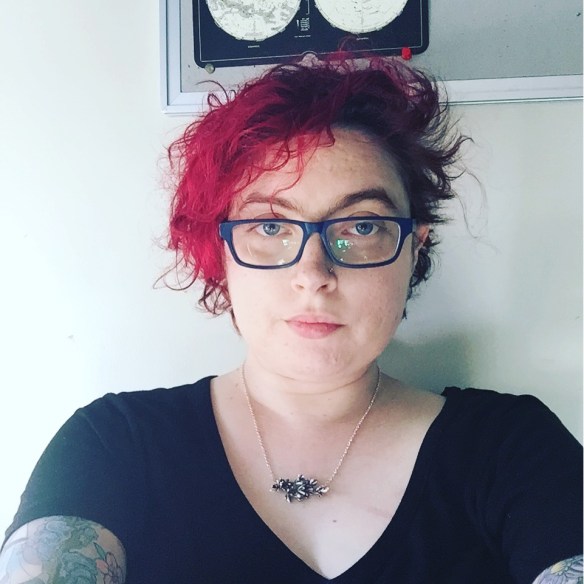
Palliverse welcomes a new contributor today. Elizabeth Caplice is an archivist on hiatus. She has Stage IV colorectal cancer, and writes about cancer, and how it intersects with life, particularly in younger adults. Elizabeth has shared a recent photo, to show that “stage IV cancer looks far broader than just some elderly hands with a cannula in them.” (Try doing a Google image search for “palliative care”.)

We recommend Elizabeth’s excellent blog  Sky Between Branches and her Twitter feed. As always please leave responses in the “Comments” box below.


Today, I saw my oncologist, and got dealt more bad news.  Stage IV cancer life is mostly bad news, and you come to expect it.  The cancer has spread, again, after only two weeks off chemotherapy – which I needed to take due to my blood count consistently dropping to dangerous levels.  He gently told me that if it was in my bones now, it wouldn’t be shocking, because I was diagnosed with Stage IV rectal cancer a year and a half ago.  I have done remarkably well.  Continue reading

To die at home or in hospital? Aussies want one but we fund the other via @ConversationEDU

Nikki McCaffrey, Flinders University

Where do you want to die? Provided symptoms can be controlled, most people at the end of life prefer to die at home. However, just over half of Australians who died in 2011-12 died in hospital.

In the same year, about A$2.4 billion was spent on hospital care for people aged 65 or older in their last year of life. But only a small fraction of that amount is spent supporting people to die at home.

Public money is being wasted on ineffective and inefficient treatments and health services which do not meet patients’ and families’ needs and wishes at the end of life.

This money would be better spent on palliative care services. Among other benefits, these more than double the chance of dying at home through the provision of home-based support services such as nursing.

Health funds spent on treatments and health services of negligible and questionable value, such as chemotherapy at the end of life, should be reallocated to palliative care services. This would improve our chances of dying well and in accordance with our wishes.

Palliative care is care provided to people living with a terminal illness where a cure is no longer possible. The aim of palliative care is to achieve the best quality of life possible for patients and their families during the illness and after death by relieving symptoms, addressing emotional, social and spiritual needs and reducing suffering.

This type of care is provided by teams of assorted professionals such as chaplains, doctors, nurses, pharmacists, physiotherapists and social workers. It is provided across all types of settings, including hospitals, hospices, residential care facilities and at home.

A recent report suggested investing A$237 million in providing palliative care services at home rather than in hospital wouldn’t raise the total health care spend but would increase the proportion of Australians dying at home from 14% to 30%.

High-quality palliative care is person-centred and compassionate. Emerging evidence suggests this type of care could even lower health costs, mainly by reducing hospitalisations at the end of life.

Palliative care in hospital

Inevitably, and appropriately, some people will need or desire hospital care at the end of life. The Australian Institute of Health and Welfare’s recent update on palliative care services in Australia showed that over the past ten years there has been a 52% increase in hospitalisations for which the main purpose of care is palliation.

https://datawrapper.dwcdn.net/nxLVD/1/

This trend will continue rising due to our increasing, ageing population and earlier warning of death.

In 2012-13, 42% of people who died in hospital were receiving palliative care. Providing specialised palliative care in hospitals, particularly early on, can reduce hospitalisation costs by shortening the hospital stay and reducing intensive care and laboratory costs, as well as improving quality of life.

What about informal care?

In 2011-12, Australia spent A$140.2 billion on health. Roughly a third of total health costs is associated with people in the last year of life.

But this estimate does not include costs to the individual or their family. Recent research suggests as much as a third of total spending on caring for people at the end of life falls on family and friends.

Without the support of informal carers, home-based care at the end of life would often be unachievable. Smaller, more geographically spread out families, higher divorce rates and changing communities mean these support networks are likely to shrink at a time when the need for them is growing.

When planning health-care services in this setting, it is essential we also think about informal care costs. We need to make sure we avoid over-burdening families who are a vital part of end-of-life care.

Achieving a better death

Without adequate palliative and end-of-life care, people will continue to be cared for and to die in hospitals despite most Australians wishing otherwise. Patients will have a poorer quality of life at the end of life. Families will suffer unnecessarily. Care will not be provided efficiently.

We are all going to die, but how will we die? Investing in palliative care services will improve our chances of dying well and in accordance with our wishes.

The Conversation

Nikki McCaffrey, Health Economist with Palliative Care Clinical Studies Collaborative (PaCCSC), Dept Palliative & Supportive Services & Flinders Health Economics Group (FHEG), Flinders University

This article was originally published on The Conversation. Read the original article.