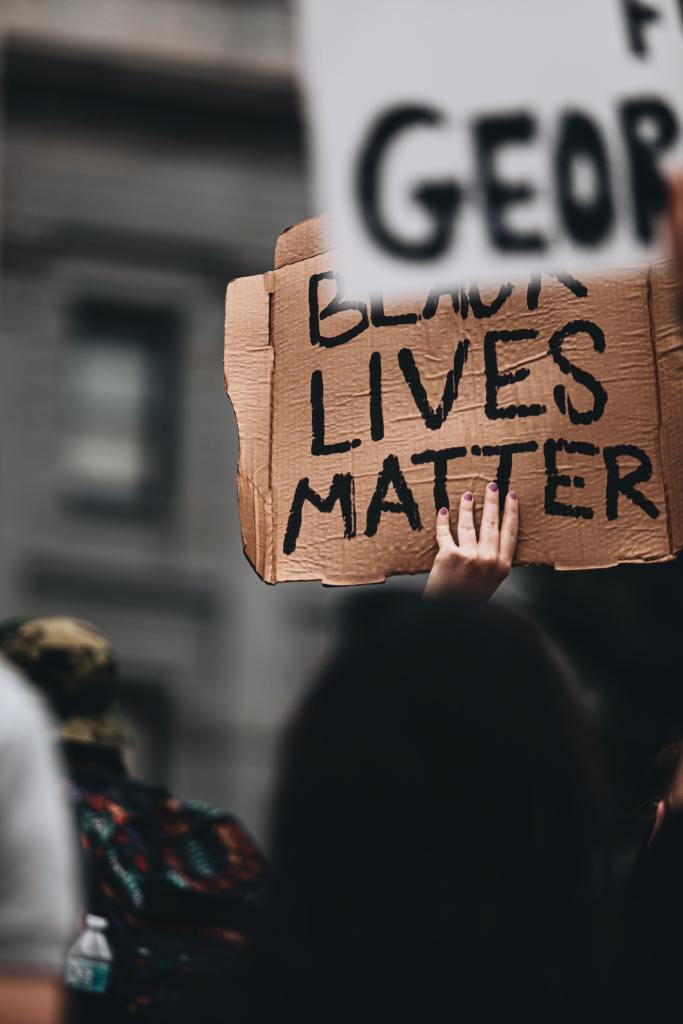
Bedside Lessons – 2b. What Daisy saw.

Photo by Alejandro Ortiz on Unsplash

Hi everyone,

This was the result of a writing experiment in which I re-examined the case discussed in https://palliverse.com/2021/10/25/bedside-lessons-2-the-grandma/ from the point of view of a fictional 7 year old grand-daughter:

Grandma is my BFF by Daisy

My grandma taught me to read when I was only 4 years old.

She told me about alot of cool worlds.

We visit them in some of the games we play.

My grandma is my bestest friend fourever.

In the picture I drew of her she is wearing a cape.

That was when we played supa-heros together.

We had the funnest time ever.

I laughed so much I almost wet my pants.

You want to know a secret?

Grandma is my fave.

It was scary when Grandma got sick.
She had bad pain in her tummy, and was shivering then mum called 111.
I visited Grandma in hospital.
It’s a ginormous place.
The nurses were nice to me.
That doctor is a meanie.
She made mum and Grandma cry.
Something is wrong.
Was it me?

Continue reading

I think therefore I am? – Clarification

Photo by Jeremy Bezanger on Unsplash

The following are my own personal professional views and do not represent those of my employer or of Palliverse in general.

I’m not interested in debating the pros and cons of assisted dying, everyone is entitled to their own opinions. In Nov 2020, 82% of eligible voters voted in the referendum, 65% of the voters supported the End Of Life Choice Act 2019. Aotearoa/NZ clearly stated it’s opinion last year, and in two days’ time it will become law.

I do not want my patients to be caught in the middle of two warring ideologies.

I am not here to argue, I am here to listen to my patient, I am here to learn from them. They are the expert when it comes to what they are going through and their suffering is defined by them, not by me.

I think that we in Hospice/Palliative Care need to build a bridge and get over ourselves. Our focus should be on our patients, not on ourselves.

Please treat patients with respect, they weren’t born yesterday, but they might die tomorrow.

Continue reading

Introducing Bedside Lessons – What isn’t done, isn’t done.

Photo by noosha ghodsizad on Unsplash

It’s ironic that I am writing on a daily basis now when I barely paid attention in English classes and did not even do English in my last year at high school. I had a bad attitude back then and scoffed at having to read Hamlet, 1984 and Brave New World, choosing instead to read Alan Moore and Dave Gibbons’ Watchmen. Interesting that I can still remember all four books 31 years later.

The same applies to behavioural science lectures during medical school, I didn’t realise that upon graduation that a lot of the psycho-social-spiritual-cultural stuff covered in those lectures would be much more important in my day to day work life than the physical stuff. My training was in the traditional biomedical reductionist style. Medical school takes a young tree hungry for growth and knowledge and whittles it down to a sharp but prickly toothpick, with an ego the size of a man-made forest developed along the way.

Continue reading

I think therefore I am? – It’s down to you now, you wanna be free?*

*From Cliff Richard’s We don’t talk anymore: https://www.musixmatch.com/lyrics/Cliff-Richard/We-Don-t-Talk-Anymore-1987-Digital-Remaster

Photo by billow926 on Unsplash

In Aotearoa/New Zealand the End of Life Choice Act 2019 will be enacted into law on Sunday 7th November 2021. Written in the voice of someone who is considering accessing assisted dying is a further conversation that they might have with NZ Hospice/Palliative Care, if only they would deign to listen.

The last time we talked I was not at my best, I was angry, upset and scared. I’ve had time to reflect and have looked at things from some other viewpoints. This is not an apology because I need you to see me as I am, I don’t want to have to pretend in front of you. I need you to understand how I feel, and what I am going through.

Thank you for not running away, like the others did. You said that you have similarly emotionally intense conversations all of the time, and that you have been trained to be able to handle them. You certainly used it to take the opportunity to get to know me better, and to explore my fears.

That being said,  I shouldn’t have sworn at you, that is not me. I am usually much better at controlling myself. My anger was not just directed at you, I’ve  been through many frustrating interactions during this illness journey, and it all just exploded the last time we met.

Continue reading

I think therefore I am? – It’s so funny how we don’t talk anymore

St Joseph’s Hospice was founded in 1967 by Cicely Saunders in order to help cancer patients for whom medicine had nothing else to offer. Often these patients would suffer from the effects of their illnesses and died in miserable circumstances which were distressing to both patients and their families. Over the next decades hospice/palliative care services developed all over the world, and practitioners pride themselves on being patient-centric. Hospice/palliative care staff value their communication skills, and listen actively in order to find out what their patients need.  They try to offer bespoke care customised to the individual patient and their family.

In New Zealand on 07 November 2021 the End of Life Choice Act 2019 will be enacted which will mean that people with less than six months to live who have intolerable suffering and fulfil the criteria can legally access assisted dying services. New Zealand Hospice and Palliative Care organisations around the country have put forward a viewpoint that they are not supportive of assisted dying, and have largely not engaged with the subject at all despite it becoming legal and available in five days’ time.

What if NZ Hospice/Palliative Care was to try to empathise with someone with the opposing point of view. What if it was to put itself into the shoes of a person considering accessing assisted dying services? What might such a person have to say to them?

Continue reading

Bedside Lessons – 6. Week Two – A hard promise to keep

Photo by Oliver Roos on Unsplash

A week later and I had to keep my promise, to prove that they were not just empty words.

Thursday

Im sorry that things are changing so quickly, that you are losing even more control.

Groan.

The reason that you have been vomiting is that the cancer has caused a blockage in your guts, it’s really bad.

Is it going to get better?

We can try a medication which might dry up the vomiting, but I don’t think the blockage will clear. This is a dangerous situation, you probably won’t recover from this.

Could you decrease the pain relief? It’s making me too sleepy. I want to be awake for my son.

Okay, but if your pain gets bad, we might have to go up again.

Continue reading

Bedside Lessons – 5. Week One – Here’s the deal

Photo by David Cain on Unsplash

Thursday

I want you to be really honest with me, has the pain relief worked?

Yeah, I think it has, I’m moving better. I had four hours of sleep last night which is pretty good for me.

I’d like to increase your pain relief from 25 to 35.

Could we make it 30? I don’t want to be too sleepy.

Okay sure. If you disagree with my plan you let me know and we’ll change it. I will be guided by what you want or don’t want. That’s a sweet tattoo on your arm, is that your son?

Yeah, he was a cute baby. I became a dad when I was 20. My son will be five in two months, I hope that I’ll be able to see him start school.

Friday

Hey I saw you walking around before, how you doing?

Good man. I had the best sleep in the last two years. No pain.

Really?

Yeah, I feel good.

That’s great, if this keeps up we can start talking about going home soon.

It’s Fathers’ Day on Sunday.

Yeah, that’s right, we’ll see how you go, if you are still good, we’ll aim for home Sunday.

Monday

I just wanted to say see ya later.

Thanks man, for everything.

My pleasure bro, I wish you well.

[Fist Bump] [Smile with eyes, with mask on emoji]

Lessons learnt:

It is important to be honest with your patients, as you need to build their trust in you.

Allowing patients to share in decision making helps to empower them. Give them back some control, in an illness situation in which so much control has been stolen from them.

Make it clear that they can disagree with any of your treatment plans, and that you will listen to them and that within reason you will adjust appropriately according to their wishes.

Say what you mean, then do what you say.

Bedside Lessons – 4. The Father

Photo by Tim Mossholder on Unsplash

The old Chinese man was admitted with uncontrolled pain and breathing distress. His wife and son doted upon him and were worried about him as he had been rapidly worsening over the past weeks. He had previously had fluid from around his lung drained in hospital the other month, which had helped his breathing. His symptoms were controlled quickly but he still felt exhausted.

Even speaking to him in his native Mandarin Chinese it was difficult to tell what he really wanted. He appeared to know that things were worsening. It was just before New Zealand’s general election, and the End of Life Choice Act 2019 was being considered for enactment via National Referendum. He told me that he had already cast his vote and was in support of having the option of assisted dying. His son quickly told him that even if it was voted in that it could not be accessed until another 12 months.

Continue reading

Bedside Lessons – 3. The Distrusting Maori Fella

Photo by LOGAN WEAVER on Unsplash

“Why do you ask that?”
“Why are you all staring at me?”
“What do you want me to say?”
“Are you trying to team up against me?”
“Are you here to interrogate me?”

He did not know us, did not trust us, he looked at us suspiciously. He had been fobbed off by the other doctors, over months. He had presented to hospital a  number of times with back pain but had left each time feeling totally disregarded. Institutional racism and inequity led to unfortunately common inaction. He felt treated as if he was, “a lazy Maori trying to skive off work.” He had always worked hard, his whole life. He was proud of having always supported his family well. Just as he had experienced his entire life, they didn’t try to know him at all and made the usual assumptions. Research tells of differential treatment that is still leading to Maori people in general dying seven years earlier than the rest of Aotearoa/New Zealand’s population.

Continue reading

Bedside Lessons – 2a. The Grandma

Photo by Rommel Davila on Unsplash

“Are you going to help me, or are you going to keep blocking me?”

She had spent weeks on our ward with pain in her upper right abdomen. This was caused by metastatic cancer deposits in her liver. Previously the metastases had caused blockage of bile ducts leading to painful jaundice, this had been treated with insertion of drains.
She talked with fondness about her children, but when it came to discussing her grandchildren that was when her eyes sparkled. It was good to see her comfortable and talking in a happy fashion. A pleasing contrast to when she had first been admitted, doubled over and grimacing in pain, despite having taken maximal pain relief at home. It had been good to ease her suffering with the care that we provided.

Continue reading