J: Hey man, I’m sorry for your loss. Do you have a few minutes brother?
X: Yeah.
J: Let’s go in there again. [Points to the right] You asked me why your Dad would only talk about it in your presence. I think he knew you would be able to handle it.
X: [Nod]
J: The family meeting the other afternoon was tough. Your Dad told everyone how he felt and what he wanted but the family weren’t able to listen, especially Aunty.
X: [Nod]
J: Even with all the voices raised, I heard what you said, how you advocated strongly on your Dad’s behalf. He heard it as well. You had his back, that’s why he said it in front of you first. You were really there for your him when he needed support the most, that’s something to be proud of. That impressed me, you’re a good man.
X: Thanks Doc.
J: Dad didn’t get exactly what he wanted but the gods heard his cry for help and responded.
Happy Mother’s Day to all mothers out there. A day when we celebrate one who may be one of the most important people in our world. This can be a happy occasion but it can also bring sad memories to those who no longer have a mother. A time when the grief is stirred up a bit more than usual. Memories of the loss of a parent churn from deep inside us. For some, the loss is all too recent, all too raw. You didn’t want her to suffer one minute more but you missed her even before she had died.
She wasn’t her usual self any more. She couldn’t be there as she always had been countless times before. It was hard to see someone so strong become so frail. She had always been of slim build but the weight loss was too difficult to bear witness to. Her severe fatigue made you wish you could gift her some of your energy, but you knew she would never take it. She had trouble being the one who needed care.
She always served her customers well. Put them at ease with her gentle words and friendly smile. She enjoyed seeing the children grow up, just like her children had. From needing everything done to full independence. They had all become adults and parents themselves but she couldn’t help still wanting to take care of them. Nothing changed at the end of her life, she took care of her children and her grandchildren. She wanted to do her best for them, as she always had.
Even after I am gone. I will still be with you. A tiny bit of me will live on. Inside of you my child. Know that you are loved.
He had always been active. Busy at work, busy at home. He and his brother had emigrated from Europe over 50 years ago. They came to seek a new life in New Zealand. They both married local women and raised families. Both of them had remained active in their elderly years, especially our patient. He spent a lot of time in his garden when he wasn’t playing soccer with his grandchildren. He did not handle being sick well.
The constant fatigue troubled him the most. Not being able to do what he loved. It was as if the weeds could tell they were safer with him less active. They quickly took over the garden. His lawn had dandelions growing in it for the first time, they usually did not survive long enough to flower. The lawn was where he would play soccer with the grandkids. He wasn’t able to play any more and the ball would’ve been slowed down by the wild chaotic weeds. He could not get used to his new situation – inactivity.
He hated being unable to do what he wanted. Being forced to sit down after the shortest of walks made him feel useless. The indignity of having to be pushed around in a wheelchair was the worst. He thought everyone was staring at the old man in the wheelchair. Old and frail was how he felt, words he thought would never be associated with him. He didn’t want to live if he couldn’t be independent. Back in Europe, he would not have to go through this torment. If he was a citizen there he could request assisted dying, but New Zealand’s law change was still many years away.
The hospice staff had given him more bad news. They thought he was too frail to live at home. It was recommended that he be admitted into residential care. Away from his wife and his house. Living with a whole bunch of elderly strangers to him meant a severe loss of privacy. It would also cost a lot of his hard-earned money. All the sacrifices he had made to save money, buy his house, raise his children, and spoil his grandchildren. Cheese and onion sandwiches for lunch every day at work for forty years. He could not take it any longer. He had always been what he called determined, and what his wife and brother called stubborn. He knew what he had to do before things got even worse. His family would understand. Eventually.
In a conversation with a grief counselling provider the other week we talked about the grief process not just occurring after a person has died but occurring during their final illness. The person themselves will grieve over the losses they experience as they become sicker. The parts of their self that die as worsening health takes its toll on a person and their loved ones. This may include loss of the many roles that people have in life. A big one is the loss of employment, not being able to work can affect people deeply, especially if work plays a big part in who they are or represents why they are. Not being able to contribute to society can be a huge loss and a damaging blow to a person’s sense of wholeness.
Loss of roles in a family can have a huge impact. If the main carer becomes unwell it can put a great strain on the other family members. Who can be called in to help with Grandma, now that Mum is unwell? The other members of the household might need to learn how to cook and clean amongst family tasks that seemed to be taken care of as if by magic. The clothes don’t jump into the laundry basket by themselves. They pour themselves into the washing machine with just the right amount of washing powder and water. The teleporter doesn’t work any more, the smelly socks that are thrown at the laundry basket go for a swim in the washing machine. Then they grow legs and somehow jump onto the washing line to work on their tan. Once all traces of liquid have been removed the items of clothing practice yoga, contorting themselves into origami configurations all the better to line drawers with. This whole process may become much less reliable when a family member is unable to help out with house hold chores.
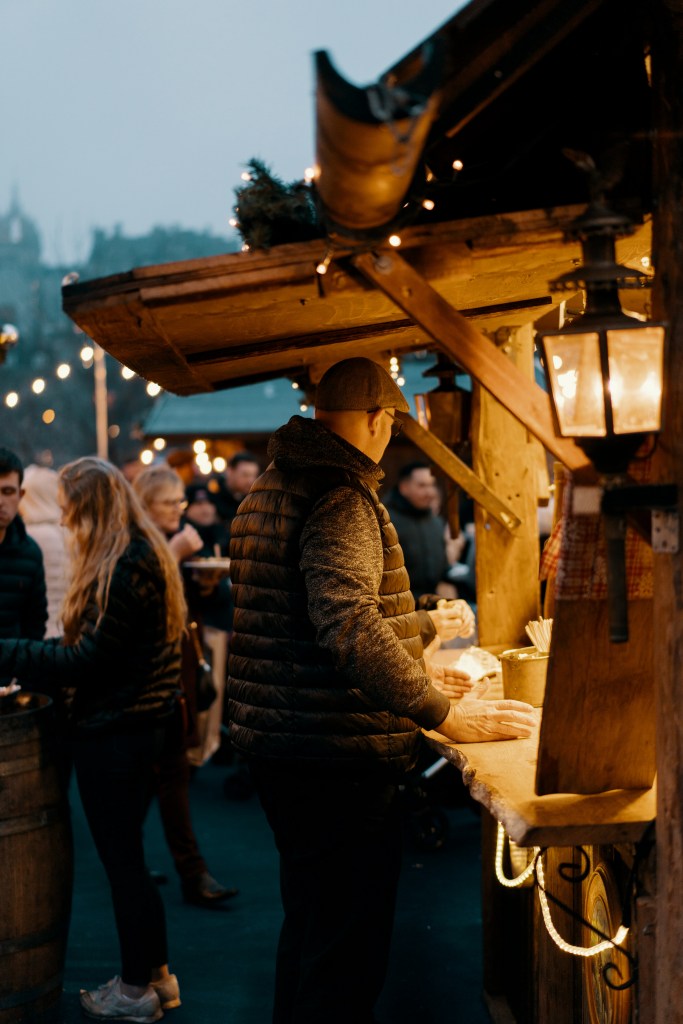
The Christmas Night Markets brought thousands of people to our hospice grounds and stallholders to our basement car park. There was live music courtesy of a guitar-strumming singer who sang Christmas carols that we all knew the words for. It was a family event with many generations represented. I usually only go shopping once a decade, but tonight my inner Ebenezer was silenced and money flew out of my wallet like butterflies searching for sweet nectar.
I usually go with my family but this year my wife was busy, instead my daughter and her friend came along. They were both looking for presents to buy for their mothers. This event was the latest edition of a community engagement project. The aim was to invite people into our hospice grounds, to get to know us a bit better.
Lots of families attended and shared food. Some of our patients from our inpatient unit came down with their family members. I caught up with three families who had come back. All of them were different in many ways but they all shared something in common. Each of the mothers of the families had died in our care.
A little boy lined up to buy churros with his father who reminded me of Hercule Poirot. The boy’s primary school school had visited a local amusement park the other day. He looked well, had grown a little bit since I’d last seen him and he was as smiley as usual.
A young lady had finished high school for the year. Her father was still as friendly as ever and shared a laugh with us. He’d met my daughter before when he had last visited the hospice. She had introduced herself as the new Director of Nursing.
A local politician introduced me to his friends. He told me that his mother had died almost three years ago. This made his eyes glimmer briefly and he had to blink fast before the surface tension of his tears broke. I realised it had almost been four years for me, which made me gulp down my own emotional response.
Time can fly and life goes on, but it sometimes feels too strange. We all missed our mothers in different ways. After Mum’s death, things had never been the same again for any of us.
We had to remind ourselves every day when driving down the hospice driveway to be careful when entering the car park. The pickup truck was always parked in the first parking space. A long vehicle anyway but the driver would always have it parked so the back part of the truck would be sticking out into the main thoroughfare. Everyone else who wanted to park in the hospice car park would have to make sure that they didn’t hit the back of the pickup truck. It had gotten to the point that local authorities were considering installing a specific traffic light to warn other drivers of the potential danger. No matter what time of the day or night it was the pickup truck was always there, for months on end. It was an almost constant presence that we could tell time by the shadows cast by the sun shining on it – a Japanese assembly-line manufactured sundial weighing over a tonne. Local mosses tried to grow on it with limited success. If you looked up the hospice campus on Google Maps the truck would appear on the provided image. It was always there, for months.
The truck belonged to the father of one of our younger patients. A shy young man who was very private and did not want anyone but his father to help him with showering. A devoted father who doted on his ailing son. He had attended every specialist appointment with his son. He wanted to be involved in every treatment discussion and decision. He tried to do his best to keep his son alive, and it worked to some extent. He was ever vigilant on behalf of his boy, as at the start of the son’s illness it had taken a while for him to be diagnosed. The son’s plight was reflective of the health disparities that affect some members of our population. The reality of institutional racism throughout our health system meant that the son’s story about abdominal pain and weight loss was discounted for six months. By the time his terminal cancer diagnosis was finally made, the cancer had spread to many parts of his body, causing a lot of pain.
The father and son had both been scared of hospice when they were first referred. Their oncologist had to persuade them to give us a go. Our staff assessed his pain control which was poor and asked him to consider admission into our inpatient unit for pain control. It took many conversations and for the pain to become unbearable before they were admitted. Everything needed to be discussed with the father, he couldn’t trust the healthcare system because of the way they had treated his son in the past. Given New Zealand’s track record, I couldn’t blame him for his lack of trust. On the first admission, we were able to bring the pain under control quickly, and days later he went home.
Over the next months, our patient would be re-admitted several times. His father would be there with him most days, and hence the pickup truck became part of our car park again. Our patient’s health slowly deteriorated over many weeks. The father and son who had been so wary in regards to coming into hospice were now too scared to leave. They felt safer in our place than in their place. In the last weeks of his stay, there were several times when we thought our patient was about to die, that he was parked too close to the edge of the clifftop and was falling over. Somehow he would reverse his way back to the edge again. Less than a week later it looked like this was it, half of the chassis was over the cliff edge. Some incredible inner strength would pull him back again. The doctors stopped trying to prognosticate, we kept getting it wrong. Anyone else would have died weeks or months ago.
It came as a shock to all of us when we didn’t have to take a wider berth when navigating our car park. The pickup truck which had been there for almost half a year was gone. The father did not need to stay in the hospice any more. His son had been taken away in another long vehicle by another exit for his final journey. After many months together with them, most of us didn’t get the chance to say goodbye, to the son or the father. That’s the way it goes sometimes, we don’t always get a chance to partake in the closure that we need. Goodbye. We wish you safe travels, both of you.
We never met the social butterfly of the workplace who made an effort to make everyone feel welcome and included. The young lady who made everyone at work laugh. The person who befriended everyone and even their partners.
Life can be too unfair for some people. A room full of flowers, teddy bears and heartfelt messages. The love in the room was palpable. The care they provided to our patient and to each other was beautiful.
We only met her when she was critically unwell. When the illness and medication side effects had made it too hard for her to be fully herself. In so much pain that she couldn’t do the things she wanted to. Her body too distressed, making everything a struggle. Moving around the room became exhausting for her.
By the time she came to stay with us the talented artist was too fatigued to produce any artwork. The music fan with no favourite genre lacked energy to listen to her favourite songs. Not enough breath to sing along with.
Cancer can be a cruel illness that takes too much away. Potential snuffed out with too much finality. Opportunities taken away much too early. She never had a chance to grow old. She never had a chance to explore the world. Taken away in her prime, she has missed out on too much.
Some cases are just so much sadder than others. We have to look after ourselves just that little bit more. We have to be proactive in looking out for each other even more. The team looks after people well but we need to look after each other as well.
We can hardly imagine what it feels like for the parents to lose their daughter. For the siblings to lose a sister. For the grandparents to lose a grandchild. We try to understand but we don’t really know what it feels like. Taken away too soon. Our patient died and a butterfly was affixed to the door of her room.
For those of us working in Palliative Care, we must remind ourselves that we are only briefly there in our patients’ lives. We might only appear briefly in the final chapters if it was a book. We have a small part to play in a person’s life as a whole. We provide episodes of care which usually end with the death of our patient. Mostly this is also the end of our relationship with the patient’s loved ones. We make our decisions, offer our suggestions and give our advice before leaving for the day. Our involvement may be as short as hours to days, sometimes weeks to months, but it is a small period.
The patient and their loved ones have to live with their decisions for the rest of their lives. In the case of the patient, only a short time. For their family much longer. They have to do what is right for them. To make sure they have no regrets. To make sure that everything has been tried to keep someone alive.
Even after 15 years of full-time Palliative Care work it is still hard to step aside and let someone do something that you disagree with. You are confident you can control their severe symptoms, to provide comfort, but the patient and/or family are not wanting to buy what you are selling.
No one likes being rejected. To have their best attempts at helping not accepted. For alternatives to be chosen instead. It is hard to witness suffering and not do anything about it.
I want something else. I want to follow someone else’s recommendations.
I want to help you. I really want to help you. Please let me help you.
No. Thank you. I need to do this. We need to do this.
Don’t take it personally. You hardly even exist in their lives. It’s not about you. It’s about them, and what they want to do with what little remains of their life. They want to call the shots. To take control. Even if the only control they can take is a refusal of treatment. They are making one of the few choices they have left. It’s not about you. It’s about them. What is important to them? What is right for them?
I’ll get out of your way then.
It’s not like that.
Yes, it is. I’m getting in your way. I’m holding you up from doing what you need to do. You know where to find me if you change your mind.
It was important to keep on side with them, to show that we would listen and allow them to take part in the decision-making. That we meant what we said. You are the driver, not me.
Our patient might’ve suffered more than they had to but it was the right thing to do for them and their loved ones. They did what they needed to do. So they could live with their decisions, for the rest of their lives.






 palliverse.com