It’s not like what you see on TV. In real life, resuscitation doesn’t work so well. I’ve worked on many cardiac arrest calls in the past and almost 100% were not successful. In those few successful resuscitations, the person was left physically and mentally damaged. With your burden of disease, the chances of a successful resuscitation would be close to zero. The first thing they teach us in medical school is, “first do no harm.” If something that we are considering doing has questionable benefits but likely harm, we really need to think about it carefully. You have so much going on already, and the last thing we want to do is to make your situation worse. Some of our treatments could worsen things with little chance of benefit. If your heart or lungs were to stop working, we would not be able to bring you back. We would not perform CPR as it would cause you harm with no benefit at all. I don’t think you are at risk of having your heart or lungs stop just yet, but I have to be clear with you as to what to expect. I don’t want there to be any surprises between us. It’s not over yet. So let’s focus on making the most of your time. Let’s concentrate on something that will help you, treatments that can decrease your suffering, and make you more comfortable. Is there something that you have always wanted to do that you haven’t done yet? Is there something nice that we could help organise?
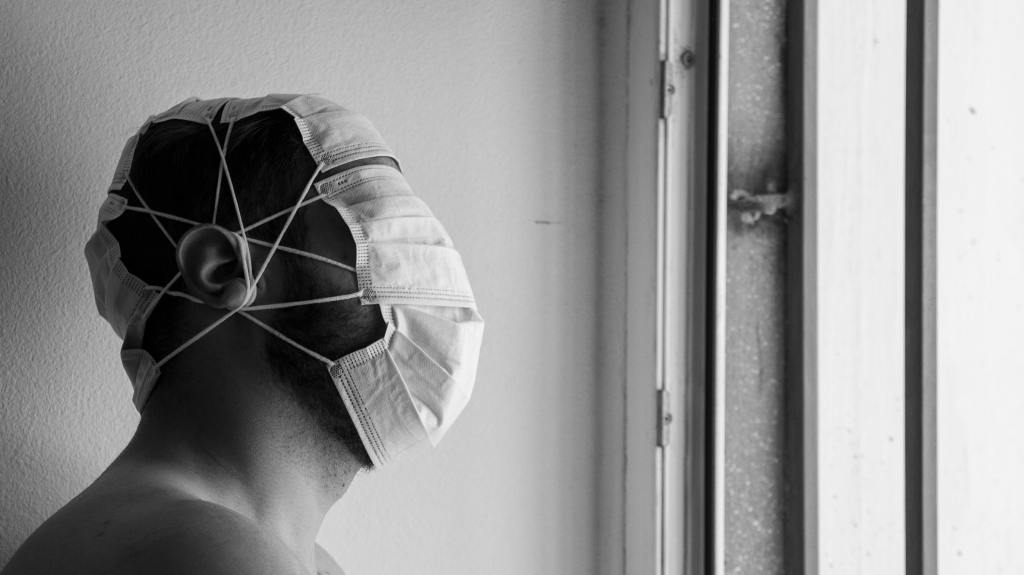
Medical masks have become part of daily life in hospice and palliative care units all over the world over the past three years. We have had to get used to having important conversations with most of our faces covered. Compassionate expressions have had to be conveyed with the aid of eyebrows and hands. Smiles have been with eyes only rather than with the full face.
There are a number of workmates I have worked with for two years or more, with which we have never seen each other’s faces. I removed my mask in order to be heard more clearly during a family meeting the other day and my patient who had known me for eight months saw my whole face for the first time. There are young children who have only known people outside of their own families to wear masks most of the time. Things are changing with the easing of COVID restrictions but for the healthcare workforce, it will be a while yet until we can take off our masks for good.
A barrier to viruses can also serve as a barrier to communication. People who have hearing impairments cannot lip-read if other people’s mouths are completely covered. There has been less transmission of yawns. Apparently, if you are more empathetic and you see someone else yawn, it can trigger a yawn of your own.
On the other side of the mask is that there are many choices of masks that people can choose to wear. Maybe it has allowed people to show more clearly what fashions they want to show off. People can show their membership in groups with the type of mask they wear. They don’t just have to be the same old boring surgical light blue but can be any colour of the rainbow.
Has it become easier for people to mask their intentions? What else is being hidden? What else is being left unshared? Kisses are left unblown. We are now more familiar with the smell of our own breath than ever before. What else has been lost since we have been wearing masks? Will we ever get those things back?
They had been a team for many years. It all started when they married. They raised their children well, and eventually became grandparents. That’s when everything started to change. He started to lose his memory to Alzheimer’s Dementia, his body was still in good working order. She started to lose control of her body to Multiple Sclerosis, her mind was still in good working order. They managed to cope well, making up for the other’s disabilities. She was the brains of the team and he was the brawn. They did well for the first three years and then their illnesses took away the last of their independence.
His cognitive impairment worsened and one day he decided to leave the house by himself. He drove off leaving her and the children to search for him. They called the police to help, but he could not be found until two days later. He was befuddled and unkempt when they found him. His main job before retirement was as a taxi driver. Despite his various impairments, he could still drive safely.
Her physical ailments worsened. She had become doubly incontinent and now needed full assistance with her activities of daily living. She suffered from recurrent urine and chest infections, which required hospital admissions. She had needed to be admitted three times in the past six months. The hospital team had asked her to complete an Advance Care Plan – ACP on the previous admission. This had been a difficult exercise but an important one. She was able to make it clear what she wanted and didn’t want. She had decided that if she developed another life-threatening infection, she would not want anything apart from comfort treatments.
I met her during the current admission. She had become unwell over the past week with aspiration pneumonia due to her poor swallowing. Fevers and shortness of breath were the main symptoms. Though the ACP had been completed and loaded onto the hospital system it was still ignored. IV antibiotics were given as well as fluids. When she woke up she was angry that her treatment wishes had been ignored. She had spent a lot of time preparing her ACP and it gutted her that it seemed to have been a futile exercise. She made it clear what she wanted and did not want. She asked for all treatments to be stopped, she had had enough.
Different healthcare cultures lead to different healthcare and expectations. If you have the money you can buy almost any treatment it depends on what people are willing to sell, and the cost that is being charged. There is a large market that caters to desperation. Nothing else has worked, come and see us, and we will keep you alive. If it doesn’t work it isn’t our fault, you probably didn’t follow the strict protocol correctly. You didn’t try hard enough. Sorry our treatments is so good but we can’t offer a money back guarantee. It’s so good that you won’t need your money back. It also cures…whatever else you have. No what I’m selling is not too good to be true, it is truly good. Those other doctors haven’t had as much training as I have. They were just trained in traditional Western or Eastern medicine. I am an advanced practitioner and I will be able to help you. Join our subscription model and start saving your life now. Just one easy monthly payment via direct debit. Don’t worry about the billing we will just collect the money ourselves as customer satisfaction is our top priority. It’s a real bargain my cold-pressed extra-virgin snake oil…
Drink this potion, apply this lotion, move your body in this motion.
Use this poultice, made without artifice, I have 40 years of practice.
It looks bigger on the scan, that’s just a scam, your disease our treatment will slam.
What else can we do, what do you mean you can’t poo, none of our happy patients would ever sue.
Why would you want a treatment pause, didn’t you read the last clause, it’s all ours now what was yours.
You did it all wrong, you didn’t follow along, our medication is strong.
The price has to increase, the supply of this rare element is about to cease, yes we extract it from fleas.
You can’t get out of bed, that’s all in your head, why don’t you try harder instead.
We will now have to intercede, our service you will always need, otherwise your cancer will grow at speed.
Sorry we can’t answer right now, our attention we cannot allow, we are too busy saving lives to take a bow.
It worked for everyone else, it even cleared up that guy’s welts, it’s your attitude that smells.
What you’ve run out of funds, you can’t afford the frankfurters just the buns, well sorry we have to runs.
He grimaced as he pointed towards the left side of his neck.
“How would you score it out of 10, with zero being no pain and 10 the worst you’ve ever felt?”
Jaw clenched tightly he opened his gritted teeth to tell me, “7 out of 10.”
It looked more like 17.
The pillow seemed to swallow up his head. Loose skin covered his arms and torso, signs of significant weight loss.
“I’m not sure if I’ll make it.”
He was scheduled to be heading home at the end of the month, but I was unsure if he’d still be alive at the end of the week. “I don’t know either, but we’ll take it one day at a time.”
Over the next three days, he worsened each day, heading back home was not going to be an option. The family would have to bring home to him instead. They made urgent plans to travel to visit him. The clock was ticking away his life. Would they make it in time?
Yes.
Their arrival had a surprising effect.
His face brightened when they came to see him. He became more alert and he was able to recognise each of his family members.
The next day he was able to eat more food.
Two days later he walked to the bathroom without assistance.
Five days later he wanted to go to the home of one of his local children.
His family’s arrival from afar had improved his condition in ways that medications could not.
The power of love had provided him and his family with bonus time. It might not last long but they would make the most of it at home together.
He died twenty days later surrounded by his family.
That’s right, anything that you swallow will probably come back up again. It’s a mechanical obstruction and our medications won’t be able to keep it unblocked.
There’s no other treatments?
We could try steroids to see if it could lessen the cancer swelling, to see if it would loosen up the blockage. It may not work, and even if it does work it will only work for a short time. And there can be side effects. Some people become more agitated, it would worsen your immune system so it would be easier for you to get infections.
Hmmm. I need to think about it
That’s fine, I wasn’t expecting an answer right now. We will keep checking in with you, we want to make sure we do right by you. When you are very unwell the body had difficulty keeping things in balance. For example physical balance can be affected and it mean you are at greater risk of falling. That’s why we’ve been nagging you about not walking by yourself.
Nod.
I know you want to stay as independent as possible but we need to keep you safe. I don’t want you breaking a bone, you’ve got enough going on already.
Sigh.
The illness can also affect your mind balance too, you’ve probably had some trouble remembering things.
My memory has been bad for months.
And overnight you were a bit confused.
Yeah, I wasn’t sure where I was.
The strain and drain on your body from the cancer is causing it all. I know you’re trying your best to be yourself, but it’s becoming harder and harder. Things are becoming a struggle for you.
Nod.
I don’t want you to struggle. Please let us help you with some things. To try and free up some energy for you. So you can spend time with your friends and family.
They keep encouraging me to do stuff, but I’m not sure I feel up to it.
Listen to your body, if you feel up to it, go for it. If you don’t it’s okay to have a rest.
Nod.
Okay we’re going to work on your nausea today, and we’ll check in with you again tomorrow morning about the steroids. I just want you to know that no matter what happens we’ll keep on trying to make you more comfortable. There might come a point where you aren’t able to speak for yourself and I just want you to know that we will act in your best interests. We will always try to make you more comfortable.
Thanks Doctor.
You’re welcome. We’ll see you later. Please let us know if you need anything else.
Somehow despite decreased levels of consciousness and clouded thinking patients can still sense what the date is. People may hang on for significant dates such as Christmas and New Year’s Day. These particular days may be times for a traditional family gathering. A chance to catch up with family and friends. To spend time together. FOMO – Fear of missing out may even apply to dying people. They don’t want to miss out on special occasions.
On the other hand, other people may die prior to the significant dates. They don’t want to impact the usual celebrations of birthdays or other events such as wedding anniversaries. Some years I have seen a higher number of deaths prior to Christmas. Others may hold on for Christmas but then let go before the New Year arrives. In the past, I used to work during the New Year’s break and there would often be a high number of deaths during the holiday period. People held on through Christmas, made it into the next year and then let go.
How can people who are dying and have become comatose know what the date is? How can they know when to hold on and when to let go? Does the internal biological clock work well even at the end of life? Are people still aware of their environment and what is happening around them? Studies of people under general anaesthesia in which people have been rendered unconscious have demonstrated that they can still hear and understand what is being said to them despite the brain being put to sleep.
What other mysteries are there at the end of life? We’ll all find out the answers for ourselves at some time in the future. Some people seem to know that something is about to happen. I met a patient the other week who had suddenly felt the urge to prepare their will and their enduring power of attorney. This occurred some weeks prior to them becoming unwell. Somehow they knew that things needed to be sorted out. When they became unwell it meant at least some of the practicalities of dying had already been taken care of which was a great relief to the patient and their family.
Listen to that gut feeling, it may be trying to tell you something. Especially after the festive season when most of our guts have become bigger after feasting.
I hope you had a decent Christmas and I wish you all the best for 2023.
I had been meaning to write the following blogpost for the past weeks and decided to do it today. I was also inspired by a LinkedIn post from a writing community co-member to try out ChatGPT the AI Author bot from https://chat.openai.com/chat. Here’s a comparison of what I wrote in one 25 minute Pomodoro and what ChatGPT wrote in 25 seconds.
A too late early Christmas Present – by James Jap – 25 minutes
Communication had become difficult and was another thing that cancer had robbed her of. She had lost her voice and had to write words down in order to communicate.
She had tried various methods from good old paper and pen, and had settled on a whiteboard and a set of markers.
This worked well enough but due to her condition at times the whiteboard would become wet and then the markers could not write clearly. Waiting for the marker and the board to dry off meant a delay in communication.
Simple gestures could be made in an attempt at impromptu sign language but it could not convey what she wanted to say.
She could mouth words and some people were better than others at reading lips but this was not something that could be counted on.
I had enjoyed getting to know her and we had exchanged witty banter between ourselves.
I would say something.
She would write something funny in response.
She made fun of my hairstyle. She talked about my bathroom habits and my general appearance.
I talked about referring her to our physiotherapist to help with mobility and to help with clearing chest secretions.
She wrote, “I don’t want them thumping me.”
I replied that I would not let our Physio-terrorist do that to her.
She raised her eyebrows in quizzical fashion.
Despite severe pain she never lost her sense of humour.
Christmas was coming up and I wanted to surprise her.
I had seen some electronic notepads in one of those stores that used to sell books, I think people in the past called them bookstores. I made a plan to buy one for my patient.
I thought that having something with an LED screen that could be written onto with a stylus could be handy for her, and it could be erased with the press of a button.
I went out to search for this little notepad but not being an experienced shopper I made a number of mistakes.
I knew there was a bookshop nearby in the local mall, I headed out to the mall, and then could not find the bookshop. In the three years since I had been to the mall, the bookshop had closed down.
I looked for other bookshops but then smartened up and looked up where I could buy the electronic notepad from a local shop.
I found it and proceeded to the shop, I asked three people for their assistance but no-one was able to help me.
The fourth person at the customer service desk confirmed my worst fears, they were out of stock. But I could go across town to their other branch which had stock.
Off I went with my phone’s battery running out, making GPS a soon to be unavailable feature. For some reason traffic is busier in the weeks before Christmas. Shops are also busier and people seem more stressed and less friendly.
I arrived at the other store branch and again asked for assistance showing the store worker a picture of what I wanted to buy. He was helpful and led me right to a shelf which contained non-electronic clipboards.
On his second attempt we found the electronic notepad I had been searching for. Success at last. I tested it out, I could write on it easily with the supplied stylus and it erased with the touch of a button.
I presented the electronic notepad as an early Christmas present to my patient, and showed her how to use it. She thanked me in writing and I said I would catch up with her the next day.
The next morning I went to see the patient but the electronic notepad was not in sight. The old whiteboard was there.
Had my early Christmas present come to late to be of use?
My patient was much slower to respond to any questions, and even had greater difficulty in writing. She had deteriorated overnight and was not her usual self. Her usual quick wit had slowed down markedly and she was not as clear in her mind as she had been just yesterday.
A lot can change in a day in a palliative care setting and here was a clear example of the change, she had changed cognitively overnight and was not longer able to use the electronic notepad.
I worried that this meant that she might only have a short time left to live, and this was conveyed to my patient and her family.
A too late early Christmas present – by ChatGPT Dec 15 Version – 25 seconds
It was the first week of December and Lucy was already feeling the holiday cheer. She had always loved Christmas and the excitement of gift-giving and receiving.
This year, she had decided to surprise her husband with an early Christmas present. She had found the perfect gift, a new set of golf clubs that he had been wanting for a long time. She wrapped it up carefully and placed it under the tree, planning to give it to him on the following Saturday.
However, on Wednesday night, Lucy’s husband came home with a big grin on his face. He had received an early Christmas present from his boss at work – the exact same set of golf clubs that Lucy had bought for him.
Lucy was initially disappointed, but she couldn’t stay mad at her husband’s excitement. They decided to return the duplicate gift and use the money towards a family vacation instead.
In the end, it turned out to be a blessing in disguise. The family enjoyed a wonderful vacation together, creating memories that they would cherish for a lifetime. And when they returned home, Lucy’s husband was still grateful for the thought and effort that she had put into her early Christmas present.
Empathy – to try to imagine what another person feels like, to put yourself in their shoes, and to try to see things from their point of view.
Compassion – To identify another person’s suffering and to want to do something about it.
Autonomy – The right to make your own choices for yourself.
After years of training and more years of clinical practice, I try my best to practise medicine in a compassionate manner. I try to find out who they are, what drives them as a person, how I can help them in the way they want to be helped.
I try to do my best to inform them of their options, of what I think lies ahead for them. I try my best to take as much stress out of their individual and familial situations. I draw upon my years of experience and up-to-date knowledge. I am not afraid of showing that I care for them and I really want to help them out.
On occasion, they will reject my best-laid plans. They will resist my best attempts to sell them my product. They will not want what I have to offer. This is especially difficult when I am sure that my management will likely make them more comfortable, that it will probably lead to alleviation of suffering.
No, thanks.
Inside me a voice starts to talk – “What do you mean no? You can’t be thinking straight. I’m pretty sure I can make you more comfortable. Can you give it at least a try? I just want you to try something which I think has a good chance of helping you.”
Get out of the way son….
It is hard when someone chooses a path that will lead to more suffering, but it is their choice to make. Their right to do what they want at the end of their life. Just as it has been their right to choose what happened during the rest of their life, why does that have to change because they are dying?
It is hard to bear witness to someone else’s suffering when they don’t want to take the treatments we have to offer. I promise people that I will listen to what they want or don’t want and will be guided by them. I have to keep my promise. They have to do what is right for them and their family.
As health care practitioners we are only involved for a brief period of time. Our patients and their families have to live with the decisions they make for the rest of their lives. Generations of a family can be affected by the choices made. They have to do the right thing for themselves and we need to give them the opportunity to do so.
After the emotionally heavy meeting with the doctors, they needed something to balance things out. There had been so much information, so much disappointment. They needed something to take their minds off the grim reality.
Friends visited and brought their little children. “Uncle we want to ride on the train.” The tiny children got on board the footrests of the power chair. “Choo, Choo, Choo, Choo, Choo, Choo, Choo, Choo around the room.” Great big smiles on little faces. He had a few minutes of fun with their friends’ little kids.
A guitar was brought out and the room was filled with music. His favourite song was played and he sang along. Heart-breaking words sung from the soul. Hanging out with their friends was better than any medicines or treatments the doctors provided. A short break, smiles, laughter, and stories shared. Food shared. Love shared.
The smile said it all. Everyone felt better after a dose of normality. Hanging out with their besties and having some fun. Playing together across three generations.





 palliverse.com