Palace of Care – Catching Up

Photo by linda wartenweiler on Unsplash

I had double vision last night. The nurses made me an eyepatch.

Did it help?

Yes, it did.

I know you started off as a builder, then you became a doctor. Now you’re a pirate. I’ll ask them to colour your eyepatch black later.

Thanks.

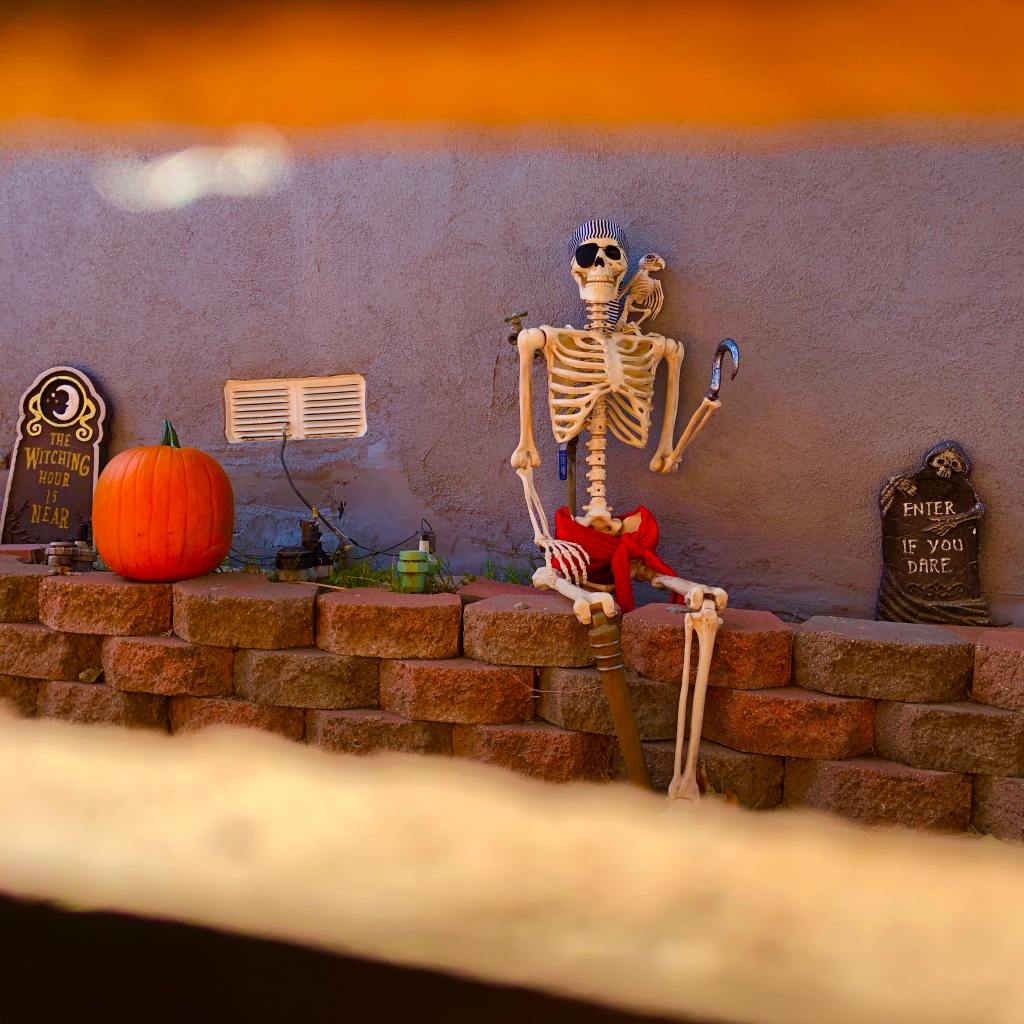
If you wanted, I could prepare a wooden peg leg for you, but I’m not much of a surgeon. I heard on the news that there is a missing parrot flying around, maybe he could help too.

We talked about the surgeon that we both know in common at the last clinic. My son thinks he hasn’t seen him for 51 years.

I last saw him 23 years, four months, 13 days, and four hours ago. He made a strong impression on me.

How was your trip overseas?

It was good until the airline cancelled our return flights. My arms are still tired from swimming home.

Were you affected by the floods?

No, luckily not. I visited a friend of ours and their driveway wall had a brown watermark on it five feet high. They were flooded twice in one week.

I’ve been coughing up mucopurulent sputum. Some antibiotic treatment might be required.

I’m not sure if it would the right thing to do for you. You’ve got a bowel obstruction which is causing bad symptoms, which are likely to get worse. If I successfully treated a possible chest infection I might be prolonging your suffering. That’s something I don’t want to do. But if you really wanted to have antibiotics I would listen to you.

No, I’ll leave it to you to decide. I’m in good hands.

Let me shake your hand. It’s good to see you again.

I enjoyed your visit too.
I think therefore I am? – On Losses

Photo by Matt Seymour on Unsplash

Being able to do whatever you want is something that we take for granted. Even simple things like walking would be greatly missed if we can no longer do them. Taking out the trash can be a burdensome chore, but you’d likely miss doing it if you couldn’t do it anymore. Wanting to go home but not being able to is something I have learned about over the past week. A cancelled flight was the cause of my homesickness. Patients may be too unwell to go home or anywhere else. Staying in hospice for end-of-life care. A trip outside to the garden can be in the too-hard basket. To be able to mow the lawn again would be a luxury for some people. To be able to wash and feed themselves would be a treat.

The loss of independence and assault on a person’s dignity. The heartbreaking moment when they realised that they cannot toilet themselves without assistance. The losses accumulate as the illness worsens. Every loss is grieved for, some for longer than others. Not being able to do what you want to, not being able to be who you want to be. Most of us have no idea of what real loss is. Quality of life is defined by each person themselves. People can get to the point when they no longer wish to live their current life. When they have had enough and are ready to die. This has usually been after a long period of consideration. They desperately wish to escape their current confinement, the prison of their own body. Each person has a limit, a point at which they can no longer tolerate the suffering of their situation. You can always tap out in Brazilian Jiu Jitsu training but in real life, it is not that simple.

I think therefore I am? – On Packing

Photo by Caroline Selfors on Unsplash

There are various methods of packing. Because of a tendency to pack at the last minute, I have mostly used the brute force method. Items fly across the room into my suitcase and start to resemble Smaug’s horde. A small mountain of treasure grows inside the suitcase until the invisible Jenga player makes one false move and causes an avalanche. My real-time 3-D modelling of a landfill is completed by my hands formed into the blade of a bulldozer, smoothing over the lumpy former pile. The lid of the overflowing suitcase is closed and then I take a run-up before launching myself into the air. My version of the people’s elbow rains pure pain down on the hapless plastic container. Gravity comes into play and the suitcase’s clasps are barely forced closed. Queen and David Bowie’s hit “Under Pressure” starts playing in the background. I pity the poor TSA worker who may open my case, as the contents could fly outwards in an explosion rivalling the Big Bang.

The previous method would’ve taken about 15 minutes in total and would’ve expended an impressive 2000 calories. My significant other looks at everything the method represents with utter disdain. The diametrically opposed way to deal with baggage is based on the premise that if you roll clothing up you can fit more into your suitcases and bags. Legends speak of squeezing the air out of things, allowing greater volumes of items to be placed inside. Everything is in its place and a place for everything. Even the deepest darkest secrets?

Are packing styles reflective of personalities? The guy who uses force is a brute? The orderly packer is organised in all facets of life? Not necessarily, we are all mosaics, made up of different personality aspects. What does your own patchwork quilt look like? What are the main features highlighted? What is important to you? How do you deal with life’s events? We all have our own baggage to deal with. Choose your method carefully.

I think therefore I am? – Homonyms and Other Words

Photo by Jackson Simmer on Unsplash

In the Chinese languages the word for the number 4 sounds like the word for death. Thus it is avoided as much as possible. In Chinese-dominated countries, buildings will have missing 4th, 14th, 24th floors, etc. On hotel room floors there will be missing rooms 4, 14, 24, etc. Such is the danger of the word that it must not be mentioned if at all possible. This can also occur in non-Chinese countries where members of the Chinese Diaspora have settled. Through a laborious application through the local city council, the former number 224 is now known as 222a.

To mention death is to welcome it. Don’t talk about it and you can avoid it. Keep away from hospitals if you don’t want to get sick. Don’t go to graveyards or the deadly malaise will be caught. Advance care planning can be a difficult subject to raise for members of such cultural/ethnic groups. Funeral insurance may be a hard sell. Death is not discussed and people become unfamiliar with it. What you don’t know about becomes a scary monster. Something to be feared.

Not many visitors want to take the tour of the local hospice. “What do you do for a job?” “Oh…you must be so…special,” whilst clutching a bulb of garlic in one hand and in the other prayer beads. Holy water, buy now before stocks run out.

The Palliative Care trainee greeted the Renal trainee, “How you doing?”

The Renal trainee replied, “I’m saving lives.”

The Palliative Care trainee thought to himself, “Sure you are, while I am saving quality of life.”

If people have trouble even talking about dying, how will they be when it comes to looking after dying people? How will the dying patient be treated? Will they be treated as a failure in life? Are they worthy of our care and attention? They can wait, they’re dying anyway. As if they had any say in the matter.

As medical technology has improved throughout the world, societies are less accepting that death is a fact of life. Death-denying cultures are on the rise at the detriment of some of the most vulnerable people on Earth, those who are dying. That doesn’t sound right to me. Maybe I’d better be careful in my choice of words.

I think therefore I am? – Waiting

Photo by Johen Redman on Unsplash

Some people feel like they are all packed up and ready to go. They are already at the bus stop waiting for the bus to come and pick them up. They don’t have a guide as to when the bus will be coming. They ask us when the bus is coming, and we say we’re not sure but likely within hours to days. This can be frustrating for the questioner. They want to know how long they have to wait. They would prefer to be gone already. Their current location is no longer joyful, in fact, it may have become a place of suffering. They are ready to move on to the next destination. The preparation for the journey may have been difficult. They have had to pay more than they wanted to for the ticket.

The ones who have been used to being in control the most may be the most frustrated at their lack of control. They feel like they are no longer in the driver’s seat any more. They are at the whim of another force greater than they are. The sense of powerlessness and the inability to choose their own path must be hard to bear. They repeatedly ask when the bus will be coming.

Maybe they are waiting at the bus stop, but it is a train that is actually coming to pick them up. They are at the wrong station.

Palace of Care – The Deluge

Photo by Chris Gallagher on Unsplash

It had already been one of the wettest summers in years. Grey skies outnumbered blue skies by many times. There was no risk of the grass turning yellow this summer. The weeds were having a good time with flowers abundant. Hayfever victims spent a lot of money on tissue paper this season as pollen was often in the air between bouts of rain. Allergic coughs could be heard amongst the populace with many people swearing it wasn’t COVID. “My eyes are itchy as well!”

The forecasts had warned of heavy rainstorms a number of times in the past month. This had led to severe flooding in a lot of areas around the country. Residents hadn’t completed the clean-up from the previous storms before the new ones battered them again. It had gotten so bad that locals stopped wearing business suits and wore wetsuits instead. The gumboot and raincoat store celebrated record sales.

The big city had been prepared for the cyclone to hit, but it had decided to wreak havoc elsewhere. It had gotten off lightly. The sun came out and everyone let their guard down. When the meteorological prophets warned of heavy rainstorms people heard “wolf,” cried too many times and didn’t pay much attention. Though they had been warned to expect the deterioration in the next hours to days. People were still surprised when the downpour started.

Light rain turned to heavy rain within minutes. The noise of the precipitation became louder on the rooftops. Water started to seep in through the gaps under the doors. Water streamed down the walls, and leaked from ceilings. Water, water everywhere but not a drop clean enough to drink. Supermarkets became swimming pools, local parks became lakes and buses became submarines. The power of nature had made its presence felt.

A family farewelled their loved one for the last time.

I think therefore I am? – A Long Time Between Goodbyes

Photo by DDP on Unsplash

Before I left for my holiday I turned on the automatic replies. Correspondents needed to know that I would be away on leave for a fortnight. Not a long break but enough to recharge and unwind. It takes at least a week to really start relaxing. In the past, I had been used to pushing hard and living on adrenaline that if I relaxed too deeply my immune system would crash and I’d catch a cold. These days I make sure I have something to do each day, a task of some sort that needs to be done. Nothing too stressful but something to keep me from relaxing completely. The tightrope balancing act of modern-day life. Rest but not too much too fast.

It had been a while since I’d been on leave. Also been a while since I’ve had to say goodbye to patients that I thought I wouldn’t ever see again. People who I thought would no longer be alive by the time I returned. Some of them I’d only just met in the last few weeks, others I had known for many months. Some of the recipients knew what I meant without me having to say anything more. Others had different ideas about their situation and believed they would still be alive to see in the New Year 2024, let alone the current one. I also said goodbye to the patients’ family members as well.

Goodbyes in palliative care are usually final. Most of the time you will never see the patient or their family members ever again. In fact, each interaction you have with people you deal with may be the very last time you see them. You have to make sure you don’t leave things in a bad way, as you may never get the chance to sort things out. You don’t want what may be one of the final interactions for the other human being to be a poor one.

Palace of Care – True Flies

Photo by Dieter Pelz on Unsplash

Every summer the hospice is visited by thousands of flies.

We are situated next to a big park and flies are a constant presence in the warmer months.

They can be really annoying for our patients who may be too weak and tired to fend them off. Their family members may also have troubled keeping the flies away.

Every summer I have said that I would bring in an electric bug-zapping racquet to deal with the flies.

This summer I finally brought one in.

In recent weeks as well as doing a medical round I also do a fly-catching ward round at least once a day.

I made myself available 24/7 on-call for the purpose of catching pesky flies. I can be called in any time of the day or night.

This has led to great amusement for patients, family and staff members.

Yes, I am probably the most highly qualified pest control worker in the country.

As well as catching flies I practise some medicine as well.

I clear each room of flies and then I head outside to the balcony area and get rid of the ones that are out there as well.

It’s one man against thousands of flies but if it makes my patients’ time slightly more bearable it is worth it.

It is also a good way to add to my daily step counts.

I will continue to catch flies and expand my repertoire of work roles.

This is especially important each and every Flyday.

I think therefore I am? – Chinese New Year Family Photos

Photo by Сергей Wi on Unsplash

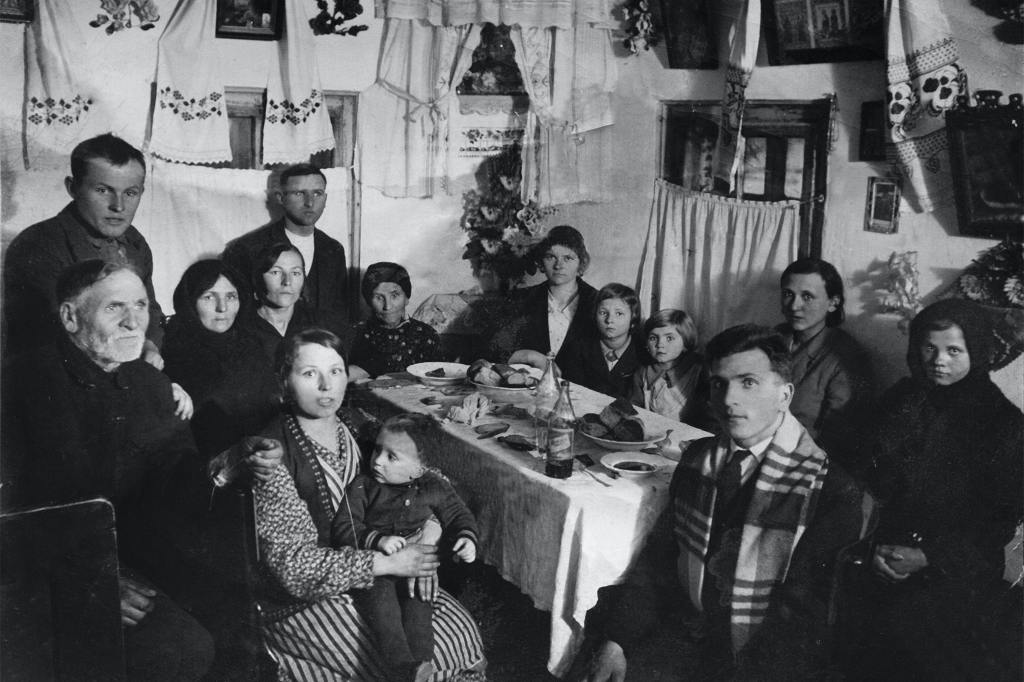
Chinese New Year is a time for family to gather. People make their way home from all over the world for a chance to catch up with each other. It’s a time for the annual family photo, making the most of the opportunity when everyone is there together. A rare occasion these days to have the children and the grandchildren altogether in one place at one time.

Looking back the old photos tell a story of a family’s life together. Over the years the pictures change. The parents get older. The children grow up and become parents themselves. The next generation is welcomed. The family dog looks less and less alert. The first grandchild is joined by another. A few photos later and there are more babies. The family dog disappears from the photos. The children look more tired and world-weary. The grandchildren look taller in each new photo.

The photos of the past three years looked different as many families could not gather for their annual reunion. Replaced by screenshots of virtual gatherings. Better than not seeing each other at all, but not quite the same due to lag and other factors. Not being able to taste Grandmas’s signature dish, her stir-fried rice vermicelli. Not being able to eat New Year Cakes together. No red packets could exchange hands.

As time goes by the photos will change even more. The grandparents start to look elderly. The parents start to have grey hair. The young ones may not be able to make it back due to university or work commitments. The eldest grandson proudly presents his grandparents with the first red packet he earned himself in his first year of working. Pure pride beams in the smile of his grandmother as she receives the auspicious gift.

People start to disappear from the photos as health issues start to wreak their havoc. One of the grandparent’s faces looks different after the stroke. The following year there is a gap in the space where one of the parents always stood. Two of the grandchildren will have to finish growing up without one of their parents.

The family tradition will persist. The gathering, the family meal, followed by the family photo. The life changes will continue to occur and will be writ on the faces of those photographed. The ups and downs of the year. The challenges encountered, the successes and failures. What we have gained and what we have lost all feature in these family photos.

1,2,3 everyone say, “Cheese.”

Palace of Care – Second Languages

Photo by Tim Mossholder on Unsplash

They had lived in New Zealand for many years and could speak English as their third language. Their English was pretty good but they did not feel confident when discussing medical issues with healthcare staff. Their children had grown up here but were busy with work. One child worked in NZ, the other child was overseas. Thanks to time zone differences, their overseas child would sometimes be available to help with translation during our patient’s clinic appointments. The patient and their spouse didn’t want to risk any misunderstandings when it came to discussing medications and treatment plans.

We had offered them a virtual appointment but they wanted to come in person. Face to face it was easier to communicate even with masks on. I greeted them in our shared second language, Mandarin Chinese. This made them feel at ease right away. They felt they would be able to communicate better with me. They had come for a pain review and I was able to quickly assess our patient. Our patient would be seeing their Oncologist the next day. I provided them with written instructions and also wrote a note to the Oncologist asking them for advice about another problem they had mentioned to me.

The communication was by no means perfect as my Mandarin is not 100% fluent, especially when talking about medical issues. I had to use occasional English words interspersed between paragraphs of Mandarin but we were able to understand each other well in terms of language and also cultural expectations. They were pleased to meet our pharmacist who could also speak Mandarin.

It felt good that our diversity and inclusion recruitment programme was making a difference. Our effort to reflect our demographic continues to be beneficial and is another patient-centric point of difference in the services we provide. We are doing better than before and will continue to keep trying to make our ability to connect better.