Bisphosphonates and denosumab good for bone pain…. right?

BCKnMetb40


Wrong!

The folk from Cochrane asked this question. ‘In adult patients with metastatic bone pain, what is the evidence that bisphosphonates and denosumab are effective and safe in controlling pain?’

http://www.ncbi.nlm.nih.gov/pubmed/27006430

They found that evidence to support an analgesic role for bisphosphonates and denosumab is weak. Bisphosphonates and denosumab appear to be beneficial in preventing pain by delaying the onset of bone pain rather than by producing an analgesic effect per se.

Sonia


Do we in palliative care know what a “bad death” is?

Hello all!

Spending my weekend doing some auditing as my life is so exciting. Actually, it is really interesting, I am having a look at how people die with metastatic melanoma, and whether that’s been affected by novel agents.

I have volunteered to make an assessment of whether the deceased patients in our cohort had a “bad death”.

I am thinking of things like chemotherapy in last week/month, or death in ICU , or death in a resuscitation (although if the resuscitation and ICU admission were not futile, then that does not necessarily make them bad, does it….)

Are there proposed criteria for a “bad death” and a “good death”?

Thanks for helping me with my homework!

Sonia

Palace of Care – The returned tackle box

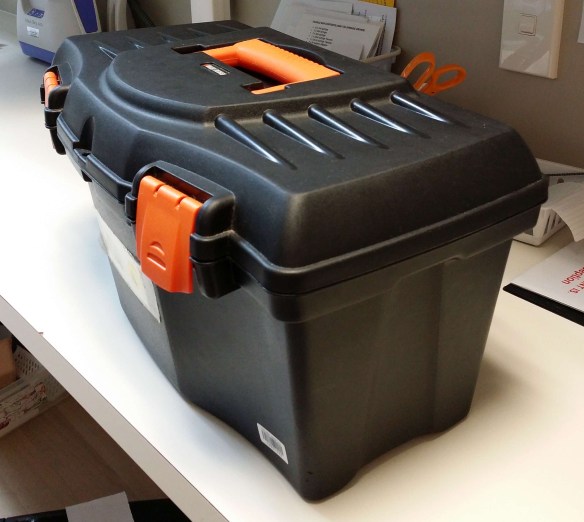
box.jpgOn the desk I was surprised to see the returned tackle box. This usually happens when a patient doesn’t require subcutaneous medications anymore, or else when a death has occurred. There would be a missing name on our “patients to be discussed” list tomorrow, one that had been on the list for most of the past eight months. Continue reading

Speaking words of wisdom, let it be…

‘The wisdom of the dying’ has perhaps become a cliché nowadays. A Google search using those few words returns around 39 million results.

But what I am really curious about, are the few words that really pierced your heart or absorbed your mind; those simple words that affected your spirit in a profound way.

Continue reading

I think therefore I am? – Connecting?

Heart Connection (by Alisa Looney)

Heart Connection by Alisa Looney. Photo by Nancy Regan, taken in Puyallup, Washington, used under Creative Commons licence.

Talking to patients can be challenging, and it can be a struggle to make a connection sometimes. You need to have a plan as to how you are going to play the interaction game, and  it can feel like a particularly demanding game of chess at times. You may have to pick your words carefully, as not everyone is naturally trusting, especially towards someone that they have never met before i.e. a total stranger. What worked on patient A in room 2 may fail dismally with patient C in room 5. Everyone is different as are their responses to your attempts to make a connection. That is what it is all about, through use of all the communication skills that you have learnt, you try to make a connection with another person. How can I ‘click’ with the other person in order for us to have important conversations?

Continue reading

Enhancing Palliative Care for GPs: Clinical audit on end-of-life care

Ed: Thank you David and Caresearch for allowing us to share this post focusing on ways to enhance primary palliative care for general practitioners.  We at Palliverse agree that dialogue around the GPs role in palliative care is timely and important.  We would welcome further contributions on this topic.


Banksy Dr and Heart

Banksy Hits San Fransisco (mod). Thomas Hawk via Flickr. CC BY 4.0


Hi everybody. I am a GP of 25 years’ experience. I deal a lot with aged care and palliative care. I recently completed a Clinical Audit on end-of-life care through Decision Assist. I wrote a short piece for Caresearch about doing the Audit for Decision Assist as I found the process of reflecting on my practice and looking at changes very worthwhile. Here is what I wrote.

Continue reading

#PallANZ tweet chat: Advance Care Planning

PallANZ 201601

Advance care planning is an important process that is increasingly being taken up by our community. When done well, it can help those with serious illnesses take control of their future health care. However, many people in our community still do not know about advance care planning, which means those who are likely to benefit from the process are missing out.

How can we do better?  Continue reading

Palace of Care – Driving too fast

It had all happened so fast, much too fast. Unwell on Tuesday, into hospital on Wednesday. It was all bad news, he was told that he had only possibly a week or two to live. Confronted with his imminent mortality he decided to go to Hospice. He was worried about how his family would cope with him at home, he wanted to make sure that they would be looked after.

They had always done everything together as a couple, right from when they were teenagers. They had made all the important decisions together. But when it came to the decision to go to Hospice he had made it on his own.

Continue reading

I think therefore I am? – Is healing possible at the end of life?

exit

Photo by Glen Carrie

Since arrival she had been very anxious and spent most of the first few days alone in her room. “I don’t want to interact with anyone, please leave me alone, keep the curtains closed and the lights off” – like a hermit crab withdrawing deeper into her shell.

Worsening pain had brought her to us, severe physical pain, the result of increasingly bad news about the toll her disease was taking on her body over the past six months, and also likely emotional pain as evidenced by worsening anxiety. Despite the team’s best attempts at connecting she remained aloof and guarded, sleep being a source of solace.

Continue reading

NICE guidelines for end of life care

The National Institute for Health and Care Excellence (NICE) provides national guidance and advice to improve health and social care in the UK.

In response to the Neuberger report and the demise of the Liverpool Care Pathway, new evidence based guidelines have been developed.

This guideline includes recommendations on:

In my state, Victoria Australia, the VEC (Victorian End of life Coordinating Program) is undertaking similar work, and plans to release a Victorian end of life care plan soon.

In Australia, we have not had the negative stories and experiences seen in the UK; because the LCP was implemented in a better way? The stories coming out of the Neuberger report were shocking: I cannot imagine any patient being denied a drink when requested “because she is on the LCP”. However the LCP has also been withdrawn locally in response to the negative findings delivered in the UK.

I will be participating in a pilot of the new end of life care plans which will replace the LCP locally. I am looking forward to seeing the final version.

Thoughts, dear reader, about the terminal care of the LCP?