He had asked to talk to us away from the hospice room where his wife was sleeping.
The trainee specialist and I led him to the patient lounge room down the corridor.
We all sat down.
We talked about how his wife was dying, how he was actively supporting everyone else in their life. Especially their three teenaged children, who were barely coping with the pending loss of their mother. He said that he had to be strong, that he would get them all through it…
The floodgate of his face broke, he curled up in pain, and the torrent of tears was released. The trainee reached for the box of tissues, and for his shoulder, and started to speak.
I subtly raised my hand to stop her from saying anything.
Metastatic cancer deposits in the abdomen can act like speed bumps on a road, slowing down the traffic of the gut, that’s why there is a greater tendency towards constipation. As these cancer deposits grow they can make things worse and if they are big enough can cause a roadblock, a bowel obstruction. The gut traffic will try to push through the roadblock but cannot do so, this can be painful, and will lead to reversal of the traffic flow, vomiting.
One of our treatments involves loosening up the roadblock with corticosteroids, they sometimes can decrease the swelling and inflammation surrounding the cancer deposits.
We have medications which we use to try to push harder through the roadblock – pro-kinetics which increase gut traffic.
The gut’s job is to digest food, and it produces around 2-3 L of digestive juices every day. We have anti-secretory medications which can reduce this production, helping symptoms by decreasing the volume of gut traffic.
There is a physical treatment which can be considered but which is more uncomfortable and invasive – the nasogastric tube. A tube inserted through the nose, goes down the throat and into the stomach, providing an alternative route for the vomit to leave the stomach – A detour.
Sometimes the roadblock/obstruction can be overcome, but a lot depends on the driving conditions as well, the overall health of the countryside – the person’s general health status.
If only there was a traffic forecasting system or GPS system that could help us to tell how the journey ahead will be. This does not yet exist with the current state of medicine and technology.
Despite the destination being the same, each individual trip may be completely different, and we can still modify try to modify the quality of the experience.
Please drive carefully if you are journeying on the roads during the holiday season.
His blood test results came back and were unusually good, the blast cells were reduced in numbers compared to on admission. Bloods were repeated weekly, and they continued to improve, to the point that there were no longer blast cells present at all. The Haematologist was contacted about this unexpected finding. She was surprised as his blood tests hinted at something that they had never been able to achieve before. Was this a remission?
A bone marrow biopsy was urgently organised, and revealed a pre-Christmas miracle – remission was confirmed. Somehow his disease had been controlled, by what we all did not know. Plans were hastily made for our patient to undergo a bone marrow transplant, with everyone’s hopes raised that it would lead to longer term control.
Our patient had mixed emotions, since he had become sick this was the first time that he had received good news, and he didn’t know how to handle it. He didn’t celebrate his remission as much as his family and clinicians did, as he couldn’t totally believe it. He was discharged home to his family’s rented home for Christmas together, with everyone hoping that a better year lay ahead.
He had moved over to New Zealand because of the Lord of the Rings Trilogy. He had loved the scenery in those movies and had wanted his son to grow up in the country that the films had been made. They’d moved over six years ago, and had worked hard since arrival, building a better life for themselves.
He and his wife were high school sweethearts, they were also University classmates and after graduation they had married. Their son was now 10 years old. They had settled in Auckland and devoted a lot of time into growing their own demolition business.
Their idyll was smashed by the wrecking ball of illness when he suddenly had a seizure. He couldn’t remember what happened but it had been frightening for his wife and son. He regained consciousness in hospital and bad news was related to them. He had a mass in his brain. A scan of his body revealed a lung cancer. He didn’t smoke, and had no family history of cancer. Bad luck had brought cancer into his life, and it had spread aggressively to his liver, to the other lung, and into his brain causing the seizure. It ignored his behest, “You shall not pass!”
He talked about his regrets. He had moved thousands of miles away from his family in Asia, all the way to this country with the beautiful scenery. They had worked so hard that they never had time to leave Auckland, he had barely crossed the Auckland Harbour Bridge. He had never seen in person the spectacular vistas that had drawn him and his family over. He wished he had spent more time with his only son. He knew that he would be leaving his wife soon and she would have to raise their boy alone, that nothing could stop him from dying.
Agonised tears flowed like the waters of the Tawhai Falls, where Gollum was filmed catching a fish, another place he never had a chance to visit. His desolation much worse than any a dragon could’ve wrought.
They told me you had a lot of pain overnight. Pain can make you really tired.
Yeah, I haven’t been the same since I was in hospital.
When did the mouth get bad?
Since hospital.
And your skin, when did it start getting bad?
Hospital too.
Was that when they started the steroids? Have they helped?
I don’t know, I don’t feel any better.
Anything else wrong?
Heh, my arse is really sore too.
What do you think is going on?
Not much, I’m just really tired.
Your lungs haven’t been so good since you were a kid, then they got worse with the COPD. That wasn’t enough for you? Then you got heart failure and then cancer. That’s a bit greedy isn’t it?
Heh, yeah I guess so.
What did the doctors tell you about your cancer?
It started in my lung, has gone to my tummy, here, here and here. Also gone to my back.
That’s pretty serious, it’s made you lose weight eh?
Yeah, heaps, I just don’t feel like eating anymore.
Anyone else got cancer in your family?
Yeah my parents both died of it, and two of my sisters have it too.
That sucks.
Yeah it does.
Could you try using some more pain relief?
Okay, I’ll try.
Are you a spiritual person?
Yeah, nah, not really.
What’s the most important thing to you in the world.
My whanau/family.
What do you like doing, what keeps you going?
I like to draw, and I’m a carver, I carve bone and wood. My son is a carver too.
Heh, I can carve too…Ham on the bone, leg of lamb, roast of beef. I’ll bring my friend’s wood carving over to show you later.
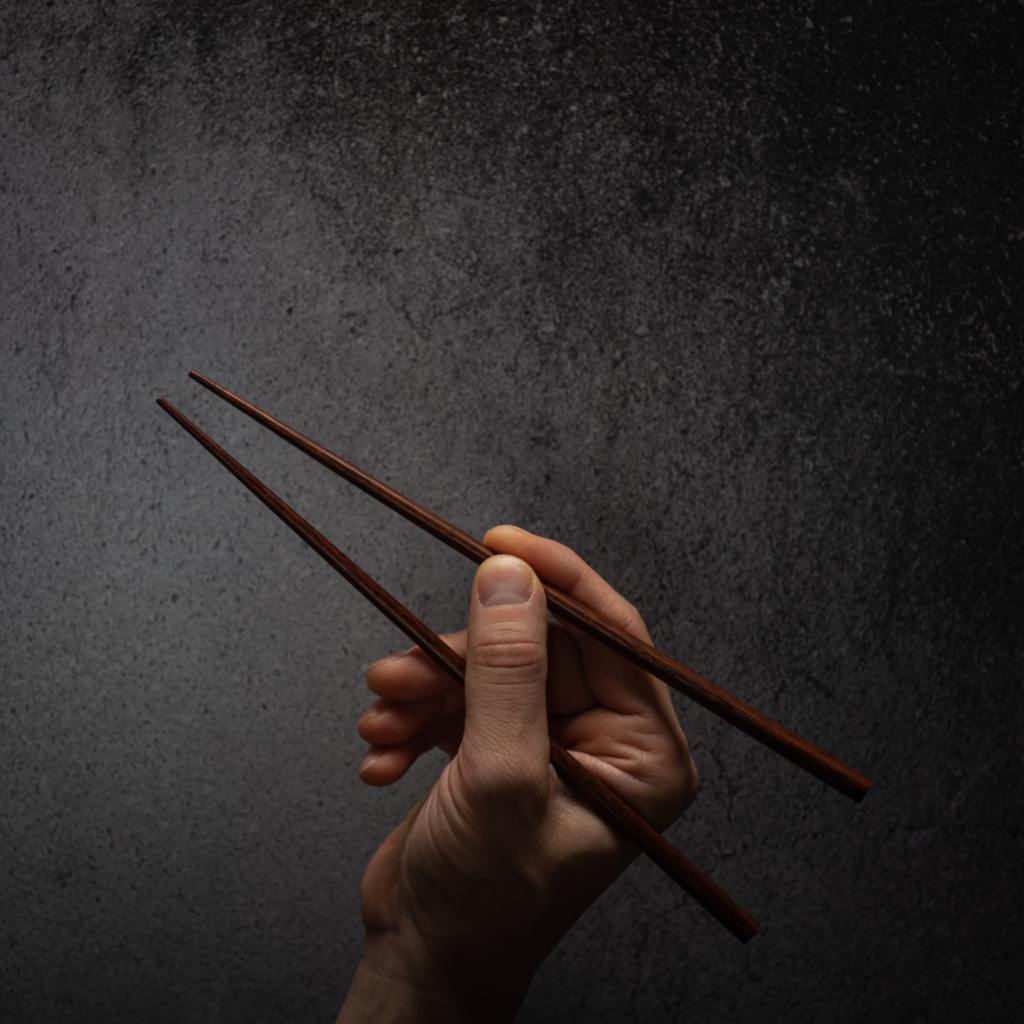
I opened the curtains this morning and there was a little fly. These have become ubiquitous in the past weeks as we have entered New Zealand’s summer. This fly was doing it’s thing near my bedroom windows and despite still being bleary eyed I tried to catch it with my bare hands. Using my whole hand did not work, the fly was able to weave it’s way between my fingers. After a few flailed attempts, I decided to change my strategy. I would try and catch it between the index finger and thumb of my preferred right hand. I went to grab it, and made contact. The fly was stunned and landed on the window sill, I promptly threw it out the window. Little did I know that this series of events would lead to a communications breakthrough later in the morning.
There was a tension in the room as we walked in. The patient was having suctioning done, but from the sounds of her breathing the fluid that needed to be cleared was deep in her main airways. As people near the end of their lives they are less able to cough, and so a tiny amount of fluid can pool, and these can result in a rattley sounds produced on breathing out. Just like when you are drinking something through a straw, at the end of a drink, a tiny bit of fluid can make a lot noise. The same occurs at the end of a life, a bit of fluid vibrating in a deep airway can be noisy, it probably doesn’t bother the patient so much but can be a source of distress to their family members, and even clinical staff.
The adult children, all of whom were parents themselves, were attentive but all looked scared with deep concern etched on their faces. Their beloved mother had been well up until only three weeks ago. Then a large brain bleed had come out of nowhere, rendering mother unconscious. Off to hospital, with many invasive procedures completed but no significant improvement obtained. The doctors and nurses had tried everything they could, but the patient remained unresponsive.
The family were told that their mother/grandmother was dying, but it took a while to sink in. It is usually hard enough to visit sick loved ones in the hospital, let alone during strict Covid-19 lockdown conditions. A very distressing time for the patient and her family. Their mother who had brought them up well, who was the beloved grandmother to their collected 7 children, was not going to be alive much longer. They hated to see her in such extreme distress, and were trying to help, but really did not know what to do.
Communication was crucial but to begin with the emotional temperature in the room was icy cold. An icebreaker was required as it was difficult to establish any rapport with the patient’s children. The patient herself had not been able to speak or respond for some weeks. Even using our mutual second-language, Mandarin Chinese, I had trouble connecting with the distressed family.
Something must have noticed and sent along a little helper, through the window. A fly was flitting around the patient and we tried to swot it away, but it was persistently dodging all attempts. I readied my special index finger and thumb technique that had served me well this morning, I was primed and ready to strike when the air in the room was disturbed by a whooshing sound.
If he had been a veteran of another war he probably would’ve received The Commonwealth countries’ highest military honour for bravery – The Victoria Cross. He had carried his severely injured comrade over his shoulders and had run at double pace in order to ensure that “no man was left behind.” Any other war he would’ve come home a hero, but on his return he was called many names; murderer, child-killer, Imperialist Puppet. He hadn’t served for fame or glory, he had done his job, he had served his country, and had followed orders. He and his fellow soldiers were shunned and he had to hide the specialness of his training, and he learnt how not to talk about sensitive subjects.
It was difficult fitting into a peace-loving society when you had been trained to channel your propensity for violence into your bread and butter work. The aggression still needed an outlet and society was not too receptive of this. He rediscovered football and was able to divert his rage into victorious feats of gallantry. He became a trusted team-mate and was able to translate this into a successful coaching career, allowing his leadership skills to flourish.
His teams did well, and he won many accolades, but the hurt inside continued to need suppressing. He swallowed it deeper and deeper, until he had almost forgotten it, almost. Life had its ups and downs, success on the field, was not always reflected in his significant relationships off the field.
He had received the worst news just prior to being admitted into hospice. As with all the other bad news, he took it like a man. Face to face, without flinching or reacting, there would be time for that later in private. In public he had to represent his team, his unit, he had to be the hardest of weapons. They had told him that he only had three days left to live.
By the time of his admission he’d been on the steroids for six months, to counter swelling caused by brain metastases. His wife had stopped nursing at the GP practice in order to care for him.
He had been deteriorating in recent weeks and could no longer be reasoned with.
We couldn’t talk to him, he just stared at us blankly when we asked him questions, his wife had to answer for him.
She described him sitting on the bed eating mandarins spitting the seeds out onto the carpet. She said that he would be horrified if he knew what he had been doing, as he was the tidiest person she knew and he had always been house proud.
The worst thing that had happened was after he had urinated on the bedroom floor having mistaken it for the toilet. He then slipped on his own urine and fell to the floor, luckily he did not hurt himself badly.
I asked if he had any seizures. She said that at times she had seen his arm going rigid, and then he seemed to be even less responsive. She had thought of seizures, but there was no jerking. She had mentioned it to the Oncologists but they had not looked into it any further.
I was intrigued by this. Could it be non-convulsive status epilepticus – repeated ongoing seizures without convulsions leading to decreased consciousness? His wife agreed to a trial of anti-seizure medication. If the medication didn’t make any difference we would stop it.
He was well respected and had many visitors. He had sponsored most of his family to come over to New Zealand. He had enabled his brothers and parents to come over in order for them to have a better life. He was the reason that the children’s generation grew up speaking English and Chinese. He ran his businesses successfully with the help of his siblings.
It was unfortunate that he became unwell with cancer, but he was well-supported by his family. He had always been there for them so when he was unwell they were there for him. He was able to purchase the best care that money could buy, and his Private Oncologist tried everything that was available, but it did not work.
He went back to China in order to access other treatments but they did not work either and meant that he had to spend time away form his family which he did not like. Family was the most important thing to him in the world. That was the whole reason that he had worked so hard in order to make things better for his family, so that they could enjoy their time together.
He started to deteriorate more quickly and he was admitted for symptom control but ended up requiring end of life care. There was always a family member present. When he started having trouble swallowing, the family asked about tube feeding. We knew that back in China if you could afford to pay for it you could access almost any treatment you wanted. It was explained that we did not think that artificial feeding and hydration would be beneficial. He became sleepier and less clear in his thinking. Eventually he became comatose.
His family continued their vigil, even though he was unresponsive. They asked how long he had left, and we couldn’t give them a adequate answer. They rightfully pointed out to us that he had not had anything to eat or drink food about two weeks. How could he keep on staying alive? I had trouble explaining it with all of my medical training, our science could not explain what was going on.









 palliverse.com