Things hadn’t been going so well in recent weeks. Our patient had needed to come in for treatment which helped one of their issues, but came at a great cost. Pain was made much worse for most of the day after the treatment was given. This was on top of a high background level of pain already. I suspected our patient downplayed their pain. They were well versed in putting up with significant amounts of pain. There was no questioning their toughness and strong determination.
I said to them, “anyone else would not have been able to handle what you had in the past year. Most people would’ve stopped treatments after the first two cycles, but you had more than ten cycles. I think you have stayed alive through sheer will power alone.”
We had come to the point where, “First Do No Harm,” had to be considered. The treatment we had provided had made the symptoms worse, it had increased the suffering experienced. The entire management plan needed to be reassessed, with the patient and their spouse. A meeting was scheduled for the next day.
“What’s going on with the breathing? I counted a five second pause. I thought that was it. Then the breathing started up again. It’s been happening all night.”
“When you are very unwell the breathing control centres don’t work right. The breathing will speed up, then it will slow down. There will be gaps in the breathing, and then it starts up again. As a person becomes more unwell the gaps become longer and longer.”
“Why have the hands become cold?”
“As a person dies their organs don’t function as well. The blood circulation fails, that’s why the hands and feet can become cold. It’s like a light on a dimmer switch, the light of the body becomes dimmer and dimmer as it deteriorates.”
“We talk but we get no response. The last time they responded, it was all confused.”
“As a person dies their thinking becomes less clear, and they become sleepier. Nature or a higher power is trying to protect the person going through the dying process. So they don’t have the full 3D/HD experience, as it might not feel so pleasant. Keep on talking to them, they may not be able to respond, but hearing your voices will provide comfort. Hearing that the family are looking after each other will provide relief.”
“How long have they got left?”
“ I’m not sure, but a rule of thumb we use is, if changes are occurring over months, they might have months left. If changes occur over weeks, it could be weeks left. At the moment changes are occurring over hours, so there might be only hours to short days left. They are so unwell that they could actually die at anytime.”
“Will you let us know if you see signs of death about to happen?”
“We will try our best, but we don’t always get any warnings. I know you are all trying to be here at all times but I want you to know that some people will sneak away when there is no-one in the room. I’ve seen it happen too often to discount it as something that happens. No matter how long they’ve got left we are going to do our best to keep them comfortable. We’re going to get you all through this.”
The patient didn’t want to let go. Their loved ones couldn’t let go either. They all knew what was happening. The patient was dying. The loved ones were crying. The clinicians listened and were guided by what the patient and their family wanted. It was difficult to let them have their way, but it was important for them to exert the only control they had on the situation.
As Palliative Care clinicians we are trained to be compassionate, to want to do something to try to ease another’s suffering. It’s terrible knowing you can make someone more comfortable but you are not allowed to act. It can make you feel powerless and useless. Possibly what the patient and their family have felt throughout their illness experience.
I arrived in the morning and I looked at the little table in our waiting area. I was hoping there would be a candle lit, indicating the death of a patient. There was no candle. The nurses reported that our patient had a rough night. No sleep with lots of distress, the family also distressed and sleepless.
On examination, I saw distress, confusion, discomfort and terror writ large in the patient’s eyes. They seemed to stare through us, into another plane of existence. Concern was etched into the tear-lined faces of the gathered family. They asked to speak to our team in a few minutes time. Their night shift needed to check in with their morning shift.
“I’m sorry but we just wanted to spend as much time as possible with them.”
“There’s no need to apologise, we understand, and you don’t need to explain. You were trying to do your best to hold on to each other. I’m sorry things keep on changing.”
“Please do what you need to. Too much suffering. We can’t bear it.”
“Do you trust us?”
“Yes, please make them comfortable.”
“We’ll start some medications to calm things down, to decrease the distress. We’ll come back in four hours time to check for effect. If it hasn’t worked we will adjust the doses. They’re likely to become sleepy because they are exhausted and haven’t slept for days. They might not be able to wake up again.”
“How much time is left?”
“It might be days at the most, but it is likely much, much shorter. They’re too unwell and could die at anytime. We’re going to get you all through this.”
My team prescribed the medications and I took them for a quick break.
Later in the day, everyone sighed in relief after the last breath was taken.
One of the toughest cases in my fifteen years of full-time Palliative Care.
Despite my best efforts sometimes people just aren’t interested in what I have to sell. I am trying to work in the best interests of the patient. I want to make them as comfortable as possible. If there is pain I want to alleviate it as much as possible. If there is breathlessness I want to do something about it. Untreated distress in a patient will lead to distress in their family members. Similar to the care philosophy in Paediatrics, in Palliative Care practice you need to consider the patient, and their loved ones as the unit of care.
The duty of care is to the patient above all but consideration for their loved ones is essential. They will be the ones who will survive this episode of care. Reduction of their distress needs to be considered secondary to reduction of patient distress. Most of the time we will all be on the same page. The patient wants their distressing symptom relieved, as do their loved ones, as do the clinicians. Everyone is in agreement and things are relatively simple.
This is not always the case though. At times I identify suffering in a patient and I will recommend a course of treatment. All treatments will have side effects, with a lot of the medications we use sleepiness is a common side effect. The patient may not want to feel sleepy and will try to put up with the distressing symptom themselves. Or their family will want them to be as alert as possible, which may come at the cost of comfort.
It’s important to be able to switch off and take a rest. We are human beings and are not robots and though we need time to recharge our batteries. There is only so much time we can work before we need to take a break.
We cannot be on duty 24 hours a day as we need some time out from the grind. A job is a job, it can’t be your life, no matter how much you like or love your job. Are you in your job for the right reasons? Who are you doing your job for? Is it for the money or the prestige? For fame and glory?
What impact do you want to have on this world we all live in? What is your definition of success? What will it mean for you to have achieved your goals? What sort of difference do you want to make on other people?
On your days off try not to check your emails. Leave your calendar alone. They will still be there after your short break. They won’t be pining after you, and probably could do with some time away from you as well. There will always be work to fill up any spaces in your day. Nature abhors a vacuum and will find something to fill in your time.
As children we can’t stand being bored, every waking minute needs to be filled with 60 seconds of stimulation. As an adult I long to have a chance to be bored. Each minute is filled with 120 seconds of tasks to be done. There are too many interesting things to do. Too many distractions in life. Becoming bored will allow for some creativity to sneak back into your life.
Allow yourself some down time. Who knows what will pop up? You are not a robot, and even robots need maintenance time and care to run efficiently. Take it easy on yourself. Show yourself some self-care and self-compassion. You deserve it.
I was asked to speak to the patient’s son. His mother was unwell and deteriorating. Her son was not medically trained but was forthright in his opinions. He thought his mother had simple constipation and all she needed was simple laxatives. He was more than assertive in his requests for treatment, taking a more directional approach.
“Look, I’m not telling you what to do, but…”
“Actually, you are telling me what to do. I need to tell you what I need to do for your mother. She’s very unwell, and is not just constipation going on. I think she has a bowel obstruction caused by the cancer. It is causing severe pain, nausea and vomiting. I am very worried about her. I have seen her condition worsening every day. I don’t think she is going to get better.”
“You mean she won’t recover?”
“She is trying her best to do so, but I think she probably won’t be able to. She’s too unwell.”
“What can you do for her?”
“We can try to make her more comfortable. We’re going to have to use injectable medications as I’m worried she won’t be able to swallow soon. Do you have any questions?”
“No, please do your best for my mother. She raised us all, and she always worked so hard. We wouldn’t be here if it wasn’t for her. Please look after her. “
My patient had been itchy for months. This symptom preceded their cancer diagnosis. Widespread cancer to multiple organs and bones. Normal kidney function, slightly deranged liver function tests. Troubled by pain and nausea but these had been brought under control with medications in a syringe driver. It was the itch which caused the most suffering. Constant irritation of the skin, led to multiple skin wounds. The patient’s finger nails had dried up blood accumulated under each nail. Sleep had been broken by itch. Being in bed under sheets and blankets led to heating up and worsened itch.
On examination the patient’s skin was covered in scratch marks with many healing scabs all over the body. No limb was spared, back and front were no different. Nose was scratched, as was forehead, as was chin. Watching the patient scratching made everyone in the room feel itchy as well. What could we do? In hospital they had already tried many treatments with no success. The patient was exhausted but couldn’t relax to sleep because of the itch.
I ended up throwing the medication book at them Moisturising anti-itch creams with added Menthol were ordered in. I wanted to cover any nerve-related component of itch with increased nerve pain relief medication, Pregabalin. They were already on H1-Histamine blockers. Covering the other H2- Histamine receptor might be helpful. The patient and their family were keen to try anything on offer. Mirtazapine was started to help with the itch and hopefully a better nights sleep as a side-effect.
The next morning my patient was reported to have slept well. The itch was much improved for the first time in months. Which medication had helped? I wasn’t sure but I didn’t want to change anything as something had worked.
A small victory in hospice/palliative care? I’ll take whatever I can get.
The first clinical task of the morning was to take care of the patient who had died overnight. The family had been holding their vigil for the previous days. There had always been someone there at all times. They didn’t want our patient to be alone. Having the family staying had helped to make our patient more comfortable.
The patient had died three hours ago. Their skin was cold to touch. Pulses were absent. There were no heart or breath sounds during one minute of listening. The pupils did not react to light. Confirmation of death would be followed by certification of the death.
Cause of death was recorded on the death certificate, in as simple terms as possible. Our patient had died of metastatic cancer.
A letter was written to the general practitioner as we didn’t want there to be any surprises.
The dead person needed to be treated with as much respect as the living.
Their family needed to finish their vigil, and to move on.
The funeral director was called and they came to collect the body.
In Palliative Care settings you often see many things much worse than death. Death can be a natural release from suffering. Over many years of working in this specialty, I have witnessed many forms of suffering. Most of these situations involve severe pain. Everyone reacts differently to their symptoms. Some people can handle pain, but can’t handle nausea. Others can’t tolerate any loss of their cognitive abilities. Each individual must have a bespoke management plan designed for them.
I knew my patient could handle pain, he had put up with a lot of it over many months. He didn’t complain, he wasn’t angry at God or Jesus. In fact, his faith was stronger than it had ever been. Maybe it was his religion that allowed him to cope with his many pains. We managed to control his back and leg pains well. He was able to sit in his power wheelchair again. Something he had missed doing over the past month due to severe pain. His power chair meant freedom, he could take himself outside to smoke. He was able to go to the local convenience store to buy some sweets and other supplies.
One weekend I had trouble tracking him down. Every time I went to visit him he was out of his room. I finally caught up with him after his return from our hospice shop down the road. He had purchased a hoodie, a small wall hanging, and a little succulent plant to look after. He’d also bought enough instant noodles for midnight snacking over the weekend. He was doing well, and we managed to discharge him back to his residential care facility after the weekend.
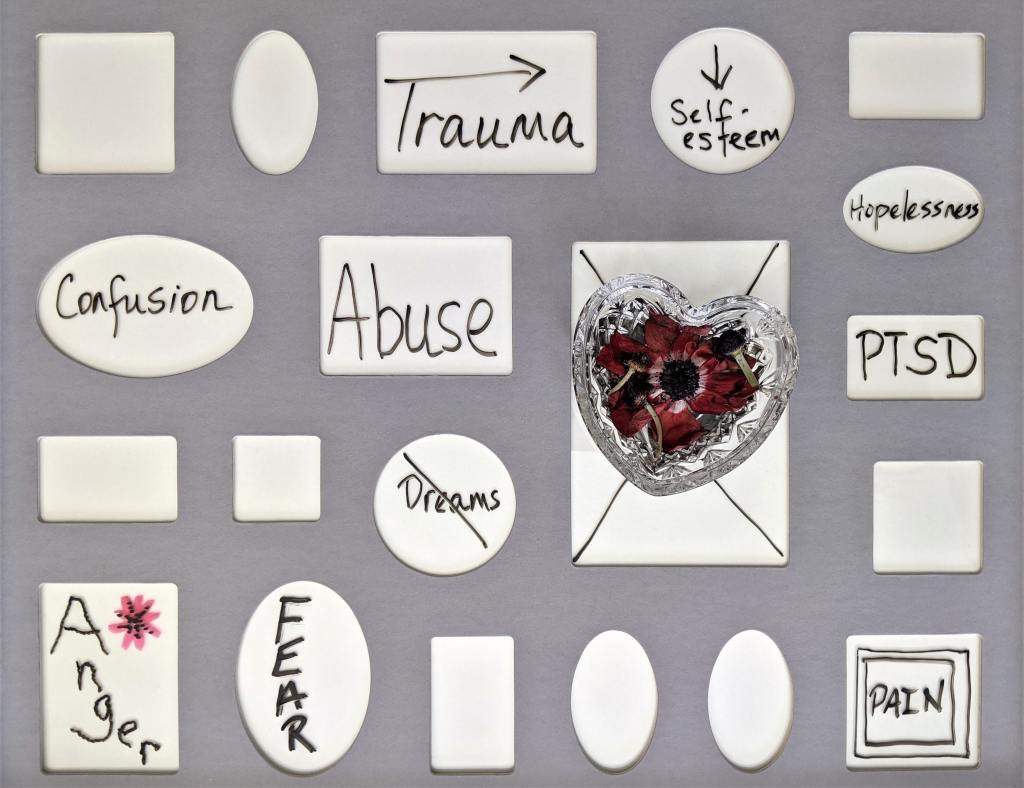
He didn’t hide who he was. He owned the mistakes he had made. He had a rough childhood but didn’t make any excuses. His father had taken him from New Zealand to live in Australia when he was a young child. This took him away from the support of the rest of his family. His father didn’t do a good job of raising him. Violence was part of his young life. Soon he became a ward of his adopted state. A volatile childhood led to an unstable adolescence. Self-medication of his trauma led to involvement in the drug scene.
He met a lady, and they thought it was love. Two babies were born before she left him to look after the children by himself. He didn’t know what to do, with no father figures in his life to base his parenting on. All he knew was he did not want to be like his own father. He tried his best, but raising children is an expensive activity. He needed money but couldn’t work full-time. He turned to dealing drugs to support his children. It worked for a while, he could buy nappies, formula and other stuff his kids needed. Things were going okay until he was caught.
Intergenerational trauma was replayed. His children lost their father to the prison system, and they became wards of the state. The tragic cycle continued again, would there ever be an escape? He was deported back to his childhood home, a place alien to this adult who barely remembered his younger years. Times were hard, he tried to keep in touch with his children but they soon forgot their father.






 palliverse.com