We were confused by the discharge letter. Our patient had been transferred from the hospital after a two-week admission. During the admission, the Oncology treatments had been stopped. On discharge, it appeared that the medications had been restarted. The Oncologist’s plan was unclear. On the second day, the patient developed a new abdominal pain. The pain was so severe that the patient felt they were ready to die. We changed their pain relief and also tried to cover the shortness of breath. By the afternoon the patient was more comfortable and able to sleep. The family had received a phone call asking for the patient to return to the hospital for further treatment. This surprised the family and our hospice team as the patient had barely been in the inpatient unit for 24 hours, and the hospital asked them to return. We called Oncology to find out what was going on. They wanted to give radiotherapy treatment to the patient’s back, for pain relief. We said we would see how the patient was the next morning as we were unsure if they’d be well enough to return to the hospital.
My fitness tracker died on me a few months ago and since then the wear pattern on my shoes has slowed down. The reminders to do at least 250 steps each hour were a good reminder to stay active during the day. I have the luxury of working in a place with a garden surrounding it. A few times a day I can go out for a quick walk around the garden. One orbit is 500 steps, which would add to my daily step count. 10000 steps a day was more than achievable. The fitness tracker wasn’t mine, but one I had inherited from a family member, but I wore it out.
A few minutes of self-care interspersed within busy days. The simple act of walking in some nature. The sunlight on my face, the breezes through my hair. The sounds of the insects and birds doing their thing in the trees. The wind winds its way through many thousands of leaves. Not quite a forest to bathe in but in certain parts of the garden, you can stop under a tree and imagine that you are in much deeper woods. A momentary escape from the hustle and bustle of the workplace, I am briefly transported thousands of kilometres away. The fresh air is scented with the products of the plants themselves. It’s as if I am a time traveller, going back to the wellness retreat I attended three years ago, but I am not the same person anymore. Three years older and hopefully wiser.
I return to my office and the ward feeling refreshed. These micro-breaks throughout the day help to keep things calm.
I virtually attended a self-care workshop in Canberra today. I prioritise and practise self-care daily as outlined here. I still found it good to have a refresher on the importance of self-care for homo sapiens in general, but especially so for us palliative care practitioners.
The presenters pointed out the great resources available from Palliative Care Australia which have been produced by Palliverse’s own Dr Jason Mills. The downloadable PDF can help you design your self-care plan. I think all palliative care practitioners could have this as part of their personal development plans. The work we do is different, we come face to face with other people’s death and dying several times a day in clinical practice.
The session on self-compassion was another useful reminder to me, as I had completed a six-day self-compassion-focused wellness retreat three years ago. During this, I learnt to speak to myself as if I was speaking to a good friend who needed my considerate help. Our inner self-talk can be too harsh and over-critical. We are often too hard on ourselves and this can be self-destructive.
An Aotearoa/New Zealand approach to self-care would need to cover domains of the NZ Maori Health Model – Te Whare Tapa Wha. Wairua – Spiritual, Tinana – Physical, Hinengaro – Emotional, Whanau – Familial/Social. Training in Brazilian Jiu Jitsu (BJJ) has been an addition (some would say addiction) to my self-care practices and it helps me to cover all four health walls. Physical exertion has led to muscle gain and weight loss. BJJ has taught me to be more emotionally resilient and I feel I can handle more of everything. Regular exposure to the painful stimulus of joint locks and choke attempts has provided small doses of suffering. I can control myself in uncomfortable positions and it has helped with ego control. It is okay to tap out when you are beaten. I feel I have joined a family or community of practice and have befriended a culturally and age diverse bunch of people. In terms of spirituality, I feel more connected to my body as during BJJ training you have to be totally present in your body and attuned to what your opponent is doing. It can be a real escape from the daily grind of the rest of your life. If your mind wanders during a rolling session before you know it your joints might be in painful positions or your neck is being choked.
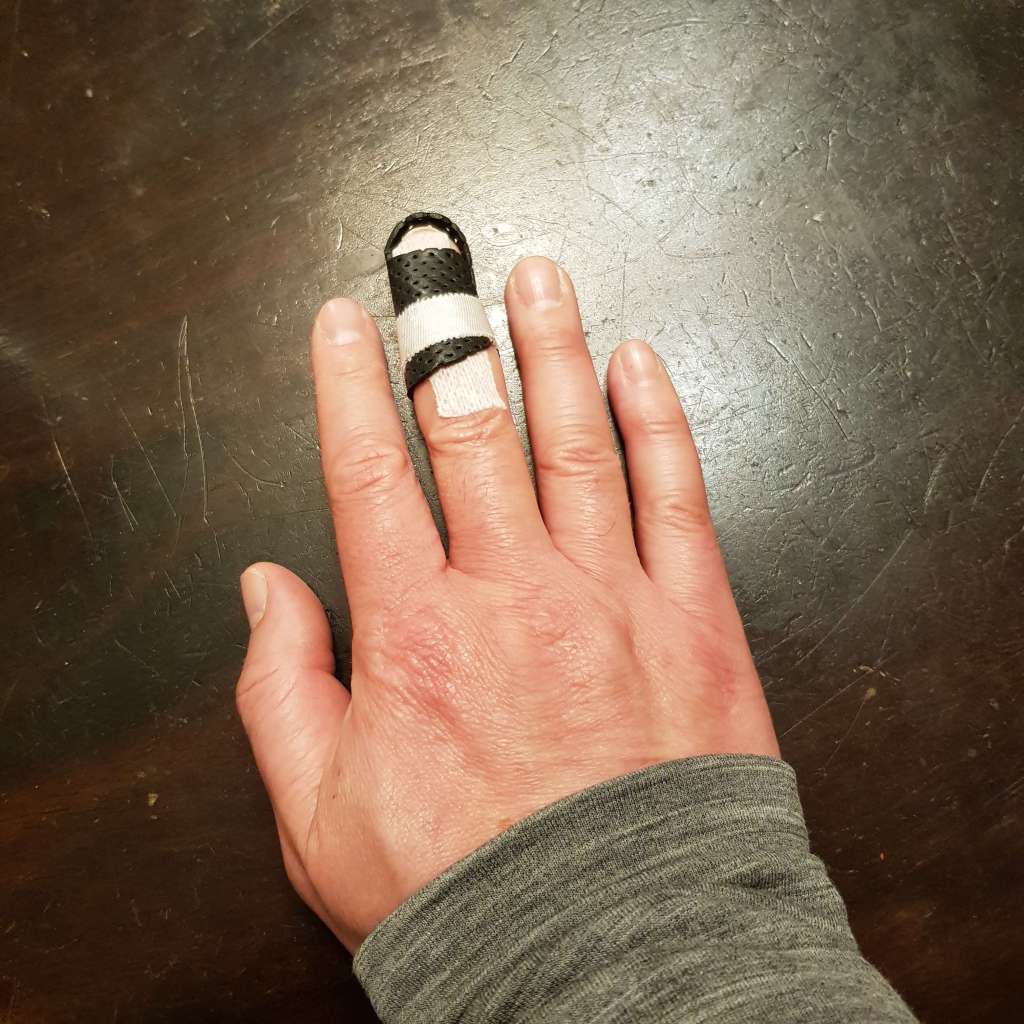
Yes, last week I did break my finger tip extensor tendon and have to wear a finger splint for 12 weeks. I returned to training this week and have been modifying my approach to protect the healing fingertip.
A lot of importance is placed on the first thousand days of life and that is rightly so. The first three years of life are the formative years and can make all the difference in someone’s life. Some of the crucial attachments are formed and if things do not go well, there may be major setbacks which affect the rest of life in many ways.
What about the last thousand days of life? How a person lives in their final days needs to be considered. All of us who are born and live will one day die. Exactly when we do not know. People with life-limiting illnesses will live for much shorter periods than most people of similar ages. Illness has a detrimental effect on a person. Their physiological age no longer matches their chronological age. People with life-limiting illnesses can be thought of as frailer. Their organs are under strain from illness and may not function so well. They need the input of the whole multi-disciplinary team. Occupational Therapy and Physiotherapy input may become essential components in maintaining functional ability and independence.
The New Zealand Health Strategy was published in 2016 and it aspired for all New Zealanders to live well, stay well, and get well. No mention was made of dying well, despite all New Zealanders dying at some stage. Also in 2016 was published the Healthy Ageing Strategy aimed to have, “Older people live well, age well and have a respectful end of life in age-friendly communities.” This was followed in 2017 by the Palliative Care (In)Action Plan, which talked about planning a lot of planning but not much action.
Hey, let’s form some committees to plan for planning to take action. That will only take ten years or so, by that time a miracle would’ve happened and death would’ve been cured. Not quite, but the biggest health sector reforms in a generation started taking place on 1 July 2022, revealing a mystery to be solved. What will happen to us all? What opportunities for long-term palliative care partnerships may become available? What opportunities can we make for ourselves to ensure that palliative care/hospice remains relevant now and into the future? How can we shape the last thousand days of New Zealanders’ lives? Time to be creative and innovative. Time for some alchemy, time to transform talk into action. What do we want palliative care/hospice to be like in five years? Ten years? 25 years?
Hey, wait a minute, we haven’t sorted out the five-year survival of the New Zealand hospice sector yet. Maybe that needs to be the top priority.
I was asked by a friend of our hospice to phone their cousin. This was because the cousin knew their favourite cousin had a long association with my hospice. The cousin’s friend of over five decades had always been unwell. They had inherited a genetic issue which led to lung damage from a young age, which led to chronic lung infection and scarring. A life lived in between many hospital admissions. The lungs had an unwelcome guest in the form of smelly bacteria, which had worsened already impaired breathing. As if there wasn’t enough on their plate along came cancer. The accumulation of all of the above resulted in worsened quality of life and increased struggles with activities of daily living. There was only so much one person could tolerate. A conversation about assisted dying was had with their family doctor as the law had allowed for this as a legal option for end-of-life care. The doctor assessed their patient as eligible. The second assessor had a different opinion. Request denied.
The patient was upset and didn’t know what to do. They phoned a friend to discuss this. The friend didn’t know what to do and phoned their favourite cousin. The cousin didn’t know what to do and phoned a doctor they knew at the hospice that would be willing to discuss assisted dying – still a taboo subject amongst many palliative care people in Aotearoa/New Zealand despite it becoming legal from November 2021.
I listened to the story and without full clinical details, I could only offer general advice for someone from outside of our catchment area. The person sounded unwell to me and might have less than six months left to live. They also sounded as if they needed more input from the local hospice service. The cousin said the hospice had sent a nice volunteer who was of the same ethnic origin to provide some company for the unwell friend. It was a nice thought but the hospice hadn’t checked a crucial detail. The volunteer’s English was limited, but they spoke the language of their ethnicity well. The friend looked similar to the volunteer in terms of ethnic features but had been born in New Zealand, only spoke English, and did not speak the ethnic language at all. Smiles and sign language could only go so far. It’s always better to ask rather than assume. Books and covers.
I suggested the cousin could encourage their friend to ask for more help from the local hospice as people in similar situations were being helped by hospices all around our country. I suggested that the patient could contact the assisted dying service to explain the outcome of the assessments made as the patient sounded as if they might fulfil the eligibility criteria. The cousin thanked me and said they would pass on my suggestions to their unwell friend. I felt it was a shame that their friend did not feel able to talk to their local hospice about their situation and assisted dying directly. I won’t make any assumptions about possible reasons.
Humans are good at maintaining homeostasis and keeping things in balance. This includes the levels of various biochemicals in our bloodstream, blood pressure, body temperature, and sitting/standing/walking balance. The human body has many different organ systems with various functions and constant adjustments are made to keep us all in good running order.
When you are unwell the homeostasis may not work as well. You end up with fevers and may become dizzy and lose physical balance. Emotional balance can also be upset and uncomfortable feelings may be revealed. When things get really out of balance physical falls can occur. A high blood calcium level can be dangerous. Threatening both quantity of life, and quality of life.
The balancing act of life cannot be continued, the tight rope has become too steep to climb, the distance too far. Despite everyone’s best efforts, nothing can stop the fall. The situation’s gravity reminds us that what goes up must come down. How arrogant are we mere humans to think we could control Nature? State-of-the-art treatments may be offered but there aren’t many guarantees in this life. In the end, we all fall and cannot get up again. We can’t stop the fall, but maybe we can soften the impact of it with the care we provide. Let’s keep on trying.
I prepared to see our patient and their spouse. They had been doing well until the past week. Then the weakness and fatigue worsened. They didn’t have the strength to leave the bed. Their spouse looked after them well. Their children were parents too. They were proud of their grandchildren. A close family but COVID-enforced separation had meant they had only seen one of their children once in two years. The same two years that cancer had taken over.
The spouse was worried about sedation from medications. The patient was reported to be in a lot of pain and could use more medication. Breathing was laboured. The patient had not spoken clearly in the 48 hours preceding the admission. As soon as I entered the room I noted the distress on the patient’s face, mirrored by the look of concern worn by their spouse. I needed to establish rapport quickly, as the suffering needed to be attended to urgently. I recognised the traditional turban and greeted them with, “Sat Sri Akal.” A look of surprised appreciation crossed over the spouse’s face. The patient stared blankly at the ceiling in a confused manner.
“They’ve been uncomfortable overnight with pain. I need to do something about it. I’m worried that it isn’t safe to swallow anymore. This is what happens at the end of life when someone is dying.”
“Can I feed them, they haven’t eaten since yesterday.”
“When someone is very unwell they can’t handle the food. They can’t swallow safely and it might end up in the lungs. It might cause vomiting or diarrhoea. I don’t want to make the situation worse or increase the suffering. We need to give medications by injections, under the skin.”
“Subcutaneous?”
“Yes, that’s right. It will be the safest way to give medications, to make sure they go where they are needed.”
“Okay, how much time do we have left?”
“I’m sorry, your spouse is so unwell, they might only have hours to days left to live. They could die at any time. I’m sorry.”
“No, no need to be sorry. It is part of life, it is something that we have to face at some stage.”
“We will do our best to make them comfortable, no matter how much time is left, we will keep on trying. We want to calm down the pain, calm down the breathing, calm down nausea and distress”
“Thank you, doctor.”
“How long have you been together?”
“44 years.”
“I’m going to change the medications now. Please let us know if you or your spouse need anything. Take care.”
Yikes, I injured my dominant hand’s middle finger at Brazilian Jiu Jitsu (BJJ) last night and I need to wear a finger splint for the next 6-8 weeks. Typing has become slightly more difficult. I will need to try some dictation software or apps and any suggestions will be most welcome. I made myself a splint from a used pen part:
The things I have taken for granted include good health and a functional body that does what you want it to. The next six to eight weeks may teach me a few lessons about living with a minor disability. In the paragraph before I typed the numbers 6 and 8. In this paragraph, I have typed the word forms. 8 keystrokes versus only two.
What will be affected?
Changing clothes.
Toileting techniques will have to be adjusted.
Showering.
Hair-washing, styling, drying.
Dishwashing and cooking will be attempted left-handed.
No BJJ – Groan, I am mildly addicted to it and usually go twice a week.
Hand – washing, writing, cleaning.
No high fives!
No finger snapping.
What opportunities may arise?
Getting into fights and arguments as I accidentally Flip the Bird as my right middle finger will be splinted in position.
No handshakes – Thank goodness for COVID!
I can compete in the 100mm Splint Race.
No one will tell me to pull finger anymore.
No more finger-push-ups.
I can try to break the world record for dirtiest finger.
I’ll save on right middle finger cleaning costs and help the environment at the same time.
I get to build up all the muscles on my left hand and arm:
The chronic illness had been there for twenty years and had disrupted every aspect of their life. It had caused a lot of pain. It was finally diagnosed only four years ago. Treatments were started but never made a significant difference. The effects of many long years of untreated illness were permanent. Somehow despite all of their travails sense of humour was maintained and they had even maintained gainful employment. Others would have been changed into photographic negative images of themselves, but not this person.
They prayed to their God for a way out of the seemingly never-ending suffering. Some years later the prayers were answered in the form of inoperable cancer which at the time of diagnosis had already spread throughout their body. Actual relief was the response when they were given the bad news. That’s how bad quality of life had been. They had considered accessing the Assisted Dying service but thought it would be against their religion. Their end was in sight, cancer would provide a natural escape from suffering, but it still felt far too slow…
“You have to be special to work in Hospice/Palliative Care.”
“I’ve developed specialised skills over many years of training and practice.”
“You’re an angel.”
“No, I’m human just like you are. I have feelings and I am affected by what happens to the people I look after. I’ve learnt how to handle it, but it has taken a lot of work to be able to do so.”
“I don’t know how you do what you do. I couldn’t do it.”
“Well some days I can’t do it either, but those days are few and far between. Dealing with death and dying on a daily basis can be stressful. Self-care is essential as is team care. Wellbeing practices have become part of my daily routine.”
“Working in Hospice/Palliative Care must be so depressing.”
“No, it isn’t. Sure we see more than our fair share of tragic situations but we can still make a difference. How would it have been for the patient and their family if we hadn’t been there?”
“What do you enjoy most about your job?
“Seeing patients and their families. Having a laugh with them.”
“What’s the most important thing you can do for your patients?”
“Listen to them. Find out what they need. Find out what goals they are still trying to achieve, even at the end of life.”




 palliverse.com