Art therapy for the palliative care clinician

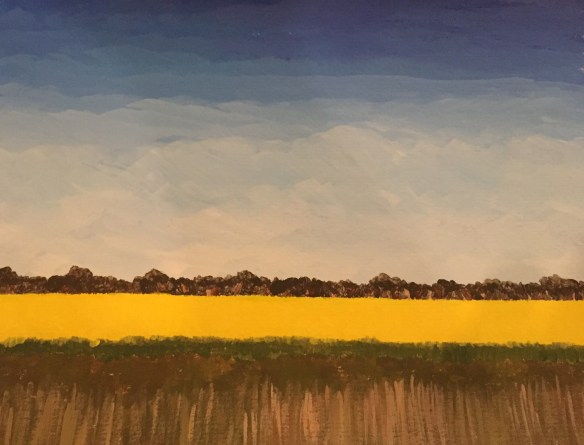
painting-1

I had wanted to learn to paint for many years, and finally found the time to take some classes during my research fellowship year. It was really good fun and I loved it. Unfortunately, my fellowship year soon finished and clinical commitments meant I could no longer attend the classes.

art-therapy-1

Nevertheless, I decided that I would keep painting, once a week (usually on a Wednesday), just for me. At the end of a busy day, it’s often easier to just slump on the couch and watch some TV. I’ll be honest, sometimes the couch wins. However, I do manage to drag myself out of the house again most Wednesdays, get myself down to the studio for a couple of ours of what I fancifully call my ‘art therapy’ before bed. And when I do, I never regret it.

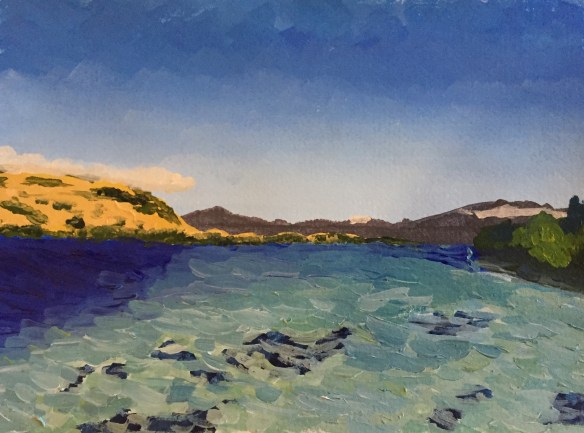
art-therapy-2

As you can see, I’m just a beginner and still have a lot to learn about painting. But I love losing myself in the work, just thinking about form and colour – anything other than patients and families and suffering and medicine, or audits or guidelines or research or presentations. I also love heading out and painting outdoors when I can get away.

img_5035

If you also like painting, or any other form of art – please join us for #PallANZ tweet chat on the 29th, which will be on the topic of “palliative care and the arts”! You can find the details here.

#ANZSPM16 Wrap up

This slideshow requires JavaScript.

Days two and three of the Australian and New Zealand Society of Palliative Medicine (ANZSPM) 2016 Conference: The Changing Landscape of Palliative Care was just as brilliant as the first. The plenary sessions featured:

  • Merryn Gott (@MerrynGott) spoke about the ‘last taboo’ in our community: the invisible and sometimes unexpected costs of providing care at the end of life, which are often not explored in clinical and almost never measured in policymaking and research. She also discussed  the impact of culture, ethnicity and gender on who is bearing these financial and non-financial costs. To find our more, read her open access @PalliativeMedJ article here.
  • Meera Agar (@meera_agar) discussed the growing evidence base around delirium care in the palliative care setting. Management of this complex, distressing, life-threatening, but often reversible syndrome is challenging. Non-pharmacological strategies and a system-wide approach to organizing and delivering care are crucial, as research into various drug treatments continue to demonstrate a lack of clear benefit and the potential for harm. Meera recommends iDelirium for more information about this important area of palliative care.
  • Pippa Hawley reflected on the lack of evidence around the use of medicinal cannabis – despite the immense interest from (and considerable experience of) our communities. How should clinicians respond while the scientific and legal issues are sorted out? Ask questions, keep an open mind & work with our patients!
  • Douglas McGregor explored the interface between heart failure and palliative care. He referenced Sarah Goodlin’s open access article, Merryn Gott’s study while discussing prognostic uncertainty and clinician paralysis; and observed that most guidelines still see palliative care as relevant only at the very end of life, rather than a key component of chronic disease management. Amy Gadaud’s (@agadoudreview was flagged as a good place to start when considering issues around early integration.
  • Sam Bloore stimulated and inspired delegates with his fascinating talk about dying well in a culture of bitcoin and botox. How can palliative care adapt, survive and thrive in this changing cultural landscape characterized by information overload, mindless distraction and incoherence? We must remain a “subversive” counterculture and continue to strive towards caring deeply and meaningfully!

In addition to these amazing plenaries, fully (and at times even over-)subscribed workshops on the overlap between palliative care and addiction medicine / chronic pain, aged care, literature and the arts were held, alongside numerous excellent oral and poster presentations from specialists and trainees. The enthusiastic and well-informed audience present during all of the sessions was another highlight for me (and I’m sure all of the other speakers and delegates)!

It’s been a wonderful few days in Perth. A big thank you to the Conference organizing committee, chaired by Derek Eng (@dr_engd), for inviting team @Palliverse to be part of this great event. Thanks also to all of you for engaging with #ANZSPM16 on social media. Keep an eye out for our upcoming tweet chats, during which we will continue the conversation about the changing landscape of palliative care!


Highlights from #ANZSPM16 pre-conference workshops

The Australian and New Zealand Society of Palliative Medicine (ANZSPM) 2016 Conference opens today. A number of excellent pre-conference workshops were held yesterday, including:

  • A comprehensive trainee day, including a great workshop from Katrina Anderson on self-care and reflection about love, strength, vulnerability and respect; the use of methadone (Pippa Hawley); the challenges of providing palliative care in residential aged care facilities (Douglas McGregor), patients and families with vulnerable personalities (David Kissane), and the neuroanatomy of distress (Lisa Miller)
  • A great presentation on the role of media in palliative care, followed by a hands-on workshop in the afternoon, under the encouraging guidance of Marie Mills; and
  • Supervisor workshop, lead by Michelle Gold and Brian Le

Team Palliverse will be broadcasting from the #ANZSPM16 Conference for the next three days. If you are at the conference, please come and say g’day – and recharge your devices – at the social media hub!

Room for reflection #ANZSPM16

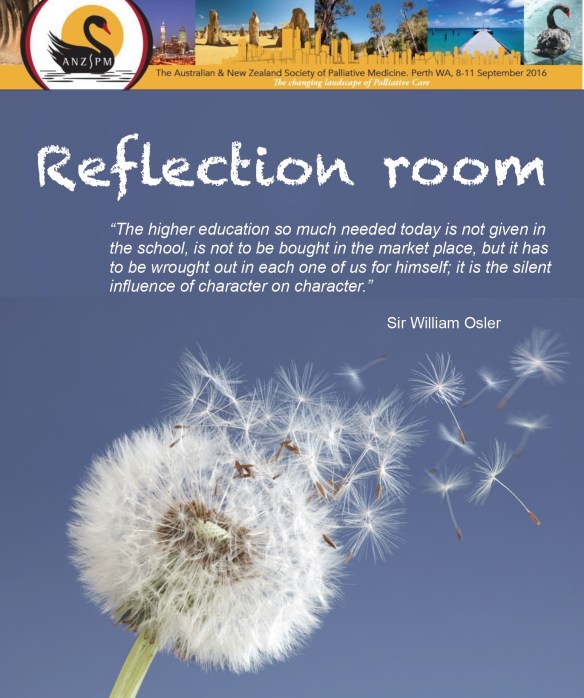
Reflection room

Nothing will sustain you more potently than the power to recognise in your humdrum routine, as perhaps it may be thought, the true poetry of life – the poetry of the commonplace, of the plain, toil-worn woman, with their loves and their joys, their sorrows and their griefs.

– Sir William Osler

In order to enrich the conference theme of honouring the art of palliative medicine, the conference organisers at the upcoming Australian and New Zealand Society of Palliative Medicine (ANSZPM) 2016 Conference in Perth, Western Australia have created a specific room for self reflection.

The Reflection Room will provide a nurturing space for conference participants to consider the human connection that we all experience as palliative care clinicians, and the impact this has on our own personal growth. The room will contain powerful art pieces that depict resilience in the face of dying, which aim to help delegates reflect on their experiences over the course of the conference, undertake guided mindfulness, or most importantly, just be.

Have you been to another conference recently where self-reflection, mindfulness and art featured strongly in the program? Was there space set aside for delegates to practice these activities amidst all the hustle and bustle of the conference program? Was it useful for you?


Victorian Cancer Agency funding opportunities

vca_logo

The 2016 Victorian Cancer Agency funding round is currently open, with a number of schemes available that may be of interest to palliative care researchers:

  • Translational research projects
  • Clinical research fellowships
  • Mid-career research fellowships
  • Early career seed grants
  • Supportive care scholarships (at the Olivia Newton-John Cancer Wellness and Research Centre)

Most of the applications close in August.


Spirituality and self care in palliative care practice

2727202357_15404410d1_z

Photo by Miran Rijavec via flickr

Dr David Brumley is a palliative care specialist with extensive experience working in regional Victoria and across South East Asia. Here he reflects on the importance of spirituality and self care in palliative care practice.

Dr Doug Bridge ran a Spirituality Workshop last September in Melbourne, as part of the 2015 Palliative Care Australia conference. To my knowledge this was the first such workshop associated with a palliative care conference – in Australia, at least. Unsurprisingly, it was very well received. Thanks Doug.

The existence of Spirit and the possibility of spiritual distress and suffering seems unarguable. If spirituality is the ground of our being, spiritual suffering could be seen as our alienation from that.  With variations, many definitions observe the four aspects of spirituality to include relationship with self, others, environment and the transcendent. Such descriptions might allow acceptance by both the religious and atheist. The literature refers to many ways to measure these aspects of spirituality. For example, John Fisher developed SHALOM, a questionnaire that examines these four areas. We applied this questionnaire to members of the Australian and New Zealand Society of Palliative Medicine (ANZSPM) in 2007-8. Many surveyed doctors didn’t feel they had the capacity to help patients in the domains of spirit.

Dying people suffer spiritual distress, and doctors might sometimes be best placed to identify and provide, at the least, initial help. Our own spiritual wellbeing is also needed if we are to care for them and for ourselves and avoid personal distress and injury. The spiritual health of the patients we care for is our responsibility. So is our own. I wonder if they are two sides of the same coin? Ralph Waldo Emerson thought so: “It is one of the most beautiful compensations of this life that no man can sincerely try to help another without helping himself.”

Doctors need to be able to recognise and at least provide initial care of spiritual distress. Do we know what it looks like? Where are the boundaries between psychology and spirituality? How does a doctor approach the question of spiritual assessment of a patient? How would a model of spiritual care be different, for example, from existential psychotherapy? How might it be useful? What are the required skills for such care? What should we take on, and when and to whom should we make referrals? I don’t think we have developed adequate answers to these questions.

Should a structured approach to self-care include a spiritual component? What advantage would that have for us? Should our College have something to say to trainees about spiritual care of others and ourselves? The Royal College of Psychiatrists believes so,  but not everybody. A recent Twitteration on the issue of mindfulness in schools in the USA suggested that many people believed that meditation is inherently a practice of other religions. Don’t look inside, for goodness sake!

As a group we know we must be high-level communicators. Should we also aim for an overt training in talking about what life means, even if it is about to cease, or should we simply follow Osler, and “minister to our patients through warm human contact”? Is that enough? I don’t think so.
#PallANZ tweet chat: Advance Care Planning

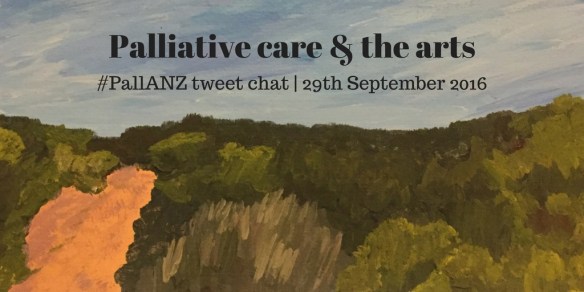
PallANZ 201601

Advance care planning is an important process that is increasingly being taken up by our community. When done well, it can help those with serious illnesses take control of their future health care. However, many people in our community still do not know about advance care planning, which means those who are likely to benefit from the process are missing out.

How can we do better?  Continue reading

#PallANZ tweet chat

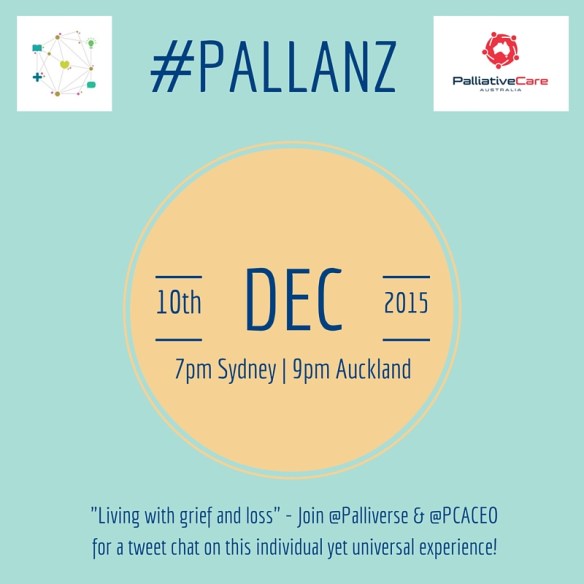
PallANZ 201512

Grief and loss is something we will all face at different times throughout our lives. Whether it is the death of our pets, our friends, our children, siblings or parents; the experience and expression of grief in response to these losses can be a very personal and individual thing. Grief can also arise in anticipation of loss. For those living with life-limiting illness, living with the loss of social role and professional identity can be especially challenging.

Thoughts about old, new and future losses can be particularly common during the festive season. For some of us, it may represent an anniversary of the death of a loved one, and bring with it painful memories of loss. Some might be facing their first Christmas ‘alone’, while others may be grappling with the possibility of celebrating their ‘last Christmas’.

While living with grief and loss is a personal experience, we don’t have to endure it on our own. As a community, there are many ways that we can support each other. Join us to talk openly about living with grief and loss.

TOPIC                    Living with grief and loss

DATE / TIME       10th December, 2015 @ 1900 AEDT

MODERATOR     @Elissa_Campbell

T1 Have you experienced grief and loss? How would you describe it? And what did you need from those around you?

T2 How do children live with grief and loss? How are they different from adults?

T3 What kinds of support are there for people living with grief and loss in your community?

T4 As a community and as individuals, how can we better support those living with grief and loss during the festive season?

Community members wanted

446px-Uncle_Sam_(pointing_finger)

We want you! (By James Montgomery Flagg via Wikipedia)

We are looking for community members to join our team at Palliverse.

If you are interested in palliative care and would like to contribute to our work here at Palliverse, we would love to hear from you! We are seeking individuals who do not directly work in palliative care, and are keen to invite current, past and future consumers (e.g. patients, carers, family or friend) to come on board. Personal experience with palliative care is welcome but not essential. Prior participation in community advocacy or representation is not required – but sharing our goals and values is a must!  Continue reading

Death and dying in the media

coming up

Q&A. Love it or loath it, or maybe a bit of both. But there is no denying that it strikes a chord with a sizable portion of the Australian population who would perhaps rather not be watching A Current AffairToday Tonight or their new lovechild: The Verdict. Continue reading