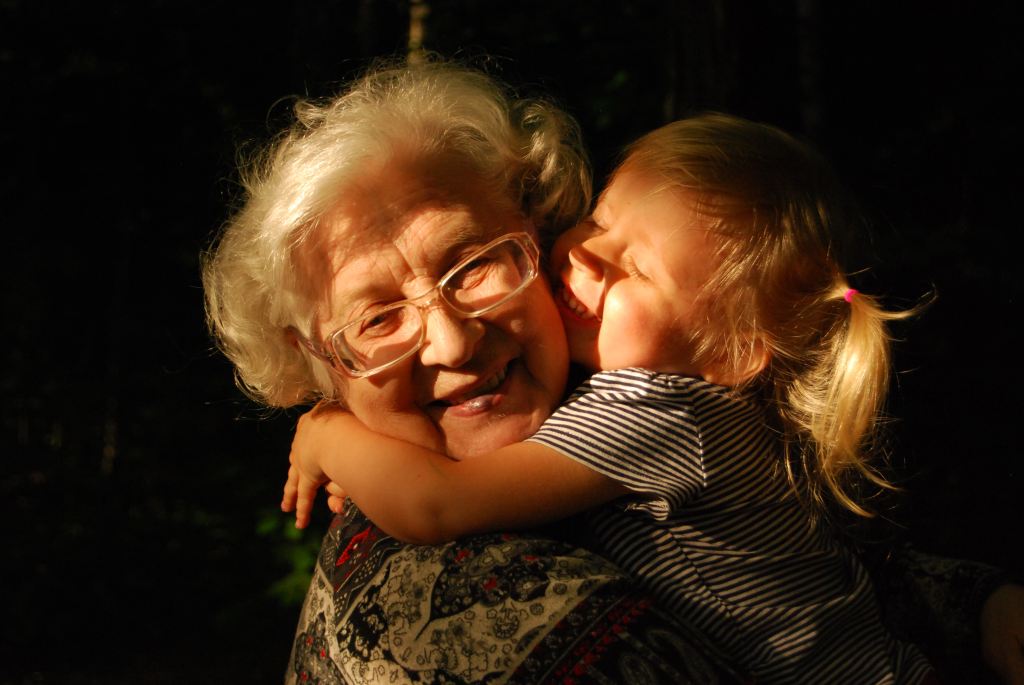

Palace of Care – Familial Protection

Photo by Mark Koch on Unsplash

The family were trying to protect our patient. They knew that his time would be short, that he would die soon. They didn’t want him to know this as the last time he had been given such bad news he had reacted poorly. They said he had been in tears for two days after the hospital doctors had told him bluntly that he could die at any time. They didn’t want a repeat of what had happened. If he only had a short time left they wanted him to enjoy it as much as possible. This was what his life partner wanted, the person who knew him better than anyone else. The love of his life.

Did he know what was going on? Probably. He had said he thought things were bad. We had not denied this. He was the one feeling every single discomfort. He was the one who was exhausted from lying in bed doing nothing. He was the one whose body continued deteriorating on an almost daily basis. He was the one who had asked to be admitted. He was worried about how his family were coping with looking after him at home. He had been told weeks prior to this admission that he possibly only had days left to live. When we asked him if there was anything he still needed to do, any unfinished business, the reply was,” No. I’ve done everything I can. I’ve done well. I have no regrets. I have a good family. We raised our children well.”

Our duty of care is to our patients. “First do no harm“ is the first principle we follow. Would telling him what he probably already knew be of benefit or would it cause harm? It was unclear as we didn’t know him well enough. For some people knowing they might only have a few days left could provide relief. They might be thankful that their suffering would not go on for much longer. For others, the short time left would provoke anxiety and distress. They would be upset by the thought of having to leave their family for the final time. If he were to directly ask us, we could not lie to him. But if he never asked we would not raise the question ourselves. His partner had made the decision. The survivors of his death had to be given the opportunity to do what was right for their family. No matter what would happen, we promised that we would try our best to keep him comfortable in what time remained.

I think therefore I am? – Greetings

Photo by Katie Moum on Unsplash

I work in one of the most ethnically diverse areas in the southern hemisphere, South Auckland. There are people from many different places who now call this area home. English may well be a second, third or even fourth language to many of my patients and their families. Many different native languages are spoken and on any given day our inpatient unit may be full of people representing many different groups.

I make an effort to learn how to say simple common greetings in the native language of my patients. Over many years I have gathered a list of these greetings. If I don’t know the standard greeting I will resort to an internet search for the appropriate greeting before I meet the patient. A simple “hello” in their native language is usually appreciated and is the first step in building rapport. If I know more words in their language I’ll make use of as many as I can during the rest of the consultation. When trying to make a connection you usually only have one shot, make it a good one.

Palace of Care – A Different Question

Photo by Brett Jordan on Unsplash

What do I need to know about you to be able to look after you better?

Nothing much. I just want to be able to go out for a smoke. I asked them about it in the hospital but no one wanted to help. They didn’t want to listen to me. I didn’t even miss the smoking so much. I just wanted to go outside.

It’s important for me to listen to you, isn’t it?

Yeah, it means a lot to me that you guys will listen to me.

I feel more comfortable today. I don’t remember everything about yesterday but I was feeling bad. The pain was bad.

I’d like to work on your pain some more and try to get you comfortable.

Okay Doc, thank you.

I’ll see you later.

Palace of Care – Plot Twist

Photo by Annette Sousa on Unsplash

Some lives are difficult, relationships do not always go smoothly. Every person has problems, every couple has problems. Some couples have more problems than others. People are not always at their best and might have limited support available. Many people cope by self-medicating with drugs and alcohol. The use of substances worsened their relationship over the years. Her family had never approved of him, and let him know it.

Everything changed when she became unwell. When she really needed his support and love he showed up. He stopped using substances, and the large poultry was cooled rapidly. He was there for her at the clinic appointments. He was there during the hospital admissions. He was there for her for her hospice admission. They were surprised, given the circumstances, that they were so happy. They had privacy, they could spend time together, just the two of them.

She told us that their time spent in hospice had been the best weeks of their entire marriage.

Palace of Care – Back to the Whenua

Photo by Casey Horner on Unsplash

Things were changing on an almost daily basis. Worsening fatigue led to less activity and more sleep. His appetite was dwindling away as his pains continued to grow. He told us he wanted to go to where he came from. Back to his ancestral homelands. He wanted to revisit where he had grown up. He wanted to see his extended family again. His window of opportunity was closing. If he didn’t go soon he would not be able to. The clock continued to tick away. Time was running out.

No-one knew how the trip up North would go but he was so keen to try. One last road-trip with all of his children. It would be the first time his youngest had ever been away from home. He wanted to introduce his new baby to the rest of the family. To show her where he came from. She probably wouldn’t remember much as she was too young, but everyone else would. “That photo was taken when Dad took you home for the first time.”

We wished him luck as he gathered himself and left the hospice for the weekend.

Palace of Care – No Surprises

Photo by Taha Raef on Unsplash

The blood tests were all deranged and matched what I had found on examination. She was dying. I maintain a no surprises policy. I don’t want my patient or their loved ones to be surprised by sudden deteriorations which could lead to death. They needed to know. I had to tell my patient and her gathered family what I feared was happening.

“I’m worried that everything is getting worse. If this continues I think there might not be much time left, maybe only days. I’m sorry to have to discuss this. I think you are dying. I’m going to try my best to keep you comfortable. We haven’t tried the steroid treatment before. I’m hoping that it will help you feel more comfortable.”

My patient was too weak to talk, her face was covered by a towel. Her family said they understood and thanked me for telling them what was happening.

“I’m sorry this is happening, I wish I could stop it.”

I was surprised when my patient reached her hand out to grasp mine.

She said, “It’s okay. Thank you for helping me.”

I swallowed hard and promised I would keep on trying to make her comfortable.

As soon as I left the room the family made arrangements for her child to come in from school. They had to prepare him for what would happen.

She died less than 12 hours later.

Palace of Care – Good Enough?

Photo by Nik on Unsplash

We thought she still had weeks left to live. We didn’t know it would only be hours. She died suddenly and the family asked the nurses to perform CPR – cardiopulmonary resuscitation. The nurses calmly and gently refused. They knew it wouldn’t work, she had been too unwell. It would only cause her further harm with no possibility of benefit. Her distraught family’s tears flowed freely.

When we were informed of the sudden death we were surprised but not shocked. We knew she was dying but had not thought it would be so fast. There was nothing more we could do for our patient. She had died. The care package needed to be directed towards the survivors, her family members. We came in to talk to them, to try to explain what we thought had happened. We wanted to try to calm their distress, to try to prevent complicated grief.

We expressed how sorry we were for their loss. We told them we didn’t know exactly what had happened. We thought it was due to overwhelming disease. Nature could not be controlled by us mere humans. It was too much for even the strongest of women to handle, even with the greatest level of loving family support. She had tried her best to hold on to life, but it was not to be. The family accepted our explanations and uncertainty. They did not want her to have any further investigations. There had been too many over the last months.

They said she had loved it in our inpatient unit. She had felt well looked after. She knew we were all trying our best to help her out, and the family too. They laughed when they recounted a story about their loved one’s ultra direct communication style. They hugged us as they thanked us for the care provided. We wished we could’ve done more.

They asked if they could all stay with her overnight. They needed to look after her as per their cultural traditions. They needed to look after each other as a family. It had likely been a long time since the siblings had all stayed the night together with their mother. It was their last chance to all be together as a complete family, as tomorrow she would rest in her final bed. We made a compassionate exception as the family needed to do their duty. They also needed to start their healing process. Bedding and more space were prepared by our staff, as if by magic.

It can never be perfect in palliative care, if it was perfect she wouldn’t have been sick, she wouldn’t have died. Had we done enough? We were trying to do our best to make her comfortable before she died, and we were never going to stop trying. We had listened to her and her family regarding what she wanted and didn’t want. She had died suddenly but peacefully. The family were sad, but they were not destroyed. Life would go on. We had done what we could. We had done good enough.

Palace of Care – Days?!

Photo by Slashio Photography on Unsplash

How much time has she got left doctor?

She likely only has days left to live.

Days?!

Yes, probably just days.

Really?

Yes, it could actually be much shorter if she deteriorates faster.

Thanks. We have things we need to prepare.

No matter how long she has got left we will do our best to keep her comfortable.

Thank you.

She’s been an important part of you and your children’s lives.

Yes. It’s hard, it’s the first time we’ve been through something like this.

We’re going to get your mother through this, we’re going to get you all through this. If you have any worries or concerns please share them with us. Our job is to take as much stress out of this situation as possible. Please let us know if there is anything we can help you with.

Thank you. We brought you some cakes.

You brought three cakes, that’s very generous of you.

Yes, one for each of the nursing shifts.

That’s nice of you to think of each of the shifts.

The staff have looked after us all well. Thank you.

That’s what we are here for. We’ll see you later, try and get some rest when you can. Thanks again for the cakes.

You’re welcome, see you later.

Palace of Care – Before You Go

Photo by Ekaterina Shakharova on Unsplash

Yesterday afternoon she told her story well. She recounted her recent bouts of illness which had culminated in her last hospital admission. She was keen to go home as soon as possible. The way she looked it appeared she had a good chance of making it there. The plan was to optimise her symptom control and then discharge home would be considered. She was in good spirits and was glad to have arrived in our inpatient unit.

The first night was disturbed by worsened pain, agitation and confusion. When we reviewed her the following morning, she was very unwell. This once talkative lady was unable to respond to voice. We diagnosed that she was dying. Generations of the family were asked to gather together to say goodbye to our patient as her time appeared to have shortened. Her medications were adjusted to maintain comfort.

I was surprised when her son told me that his mother had woken up and was talking to her family again. This was in time for the visit by her grandchildren. She enjoyed seeing them, hugging them and talking to them during a nice afternoon. By the evening she was exhausted and drifted off into another restless sleep. She never woke up again.

My science couldn’t explain how this dying lady had gathered what remained of her limited energy in order to be there for her visiting grandchildren. The last hurrah or the final rally is something I have witnessed too many times in palliative care settings. It really is a thing. A person can wake up from a coma to provide a final gift to their loved ones. Yet another mystery we often encounter at the end of life.

Palace of Care – And Then There Was One

Photo by Clay Banks on Unsplash

Sometimes when situations feel stuck a nudge may be required. A change in mindset or plans may be necessary to escape limbo. Patients who may have been in relative stability might be prepared for discharge. Things cannot continue as they are. Normality can only be paused for so long. Children continue to grow up. School holidays start and finish. Jobs have to be worked. Life has to go on.

We had expected her to deteriorate within days. No one could have predicted she would be alive for weeks let alone enjoying some form of quality of life. She had outlived all prognostication attempts by many weeks and almost months. How? Fantastic support from family and friends. Good palliative care was directed by her wishes. We had promised to listen, to allow her to be the driver. We had kept the promise. To continue her steroid medication while she still enjoyed quality of life, as defined by her. We would wean the medication off if it wasn’t working any more if intolerable suffering occurred, if she was dying.

She made the most of each day. Eating food, drinking her husband’s coffee, and having visits from friends. Visits home for family meals and her favourite drinks including world-famous beers and gins. The four-legged family members had missed their mother so much. She enjoyed time in our garden and often caught some rays in the courtyard. Solid plans were being made for longer, overnight leaves at home. Her husband had been trained to deal with problems that might crop up at home. Everything was being prepared for more time at home.

We had stopped being surprised by her long lack of deterioration. When the final deterioration occurred it came as a shock. A slight cough turned into a likely chest infection. Her swallowing ability had fluctuated markedly over the past weeks. A mis-swallow had allowed food or drink to be breathed into her lungs. This aspiration led to pneumonia. We offered antibiotics and hospital admission. They knew she didn’t want to go back to a hospital, a place of great stress for all of them. No antibiotics, thank you.

When it was clear she was dying they wanted to take her home. They were willing to accept the risk of dying en route as they knew she wanted to die at home. Mission accomplished. She spent her final hours with her family, furry ones included. Mixed in with the many tears of sadness were some scant droplets of relief. She was here until she wasn’t.

Rest in peace dear lady.