Not Cap’n Crunch cereal but he ate them like lollies, 5 tablets at a time crunched in his mouth like candies. It was strangely fascinating to watch him do it.
Were they really helping him? We didn’t really know, but that’s what his Cardiologist had recommended at their last appointment, and as a model patient he would follow the instructions carefully.
It hadn’t always been like this, two years before life in his small town was normal. Not much to do in the weekends, so like everybody else his age he dabbled in recreational drugs.
Weeks later and his breathing became worse, he thought it was due to a reactivation of his childhood asthma. He didn’t do anything about it but then things worsened and he went to see his doctor. He was prescribed Asthma inhalers but they were ineffective. Back and forth to the doctor he went, with no improvement. A chest x-ray was ordered and surprisingly showed severe heart failure. Further investigations were performed including an echocardiogram. Working diagnosis was of severe cardiomyopathy secondary to methamphetamine abuse. The drugs he used had left his heart permanently damaged.
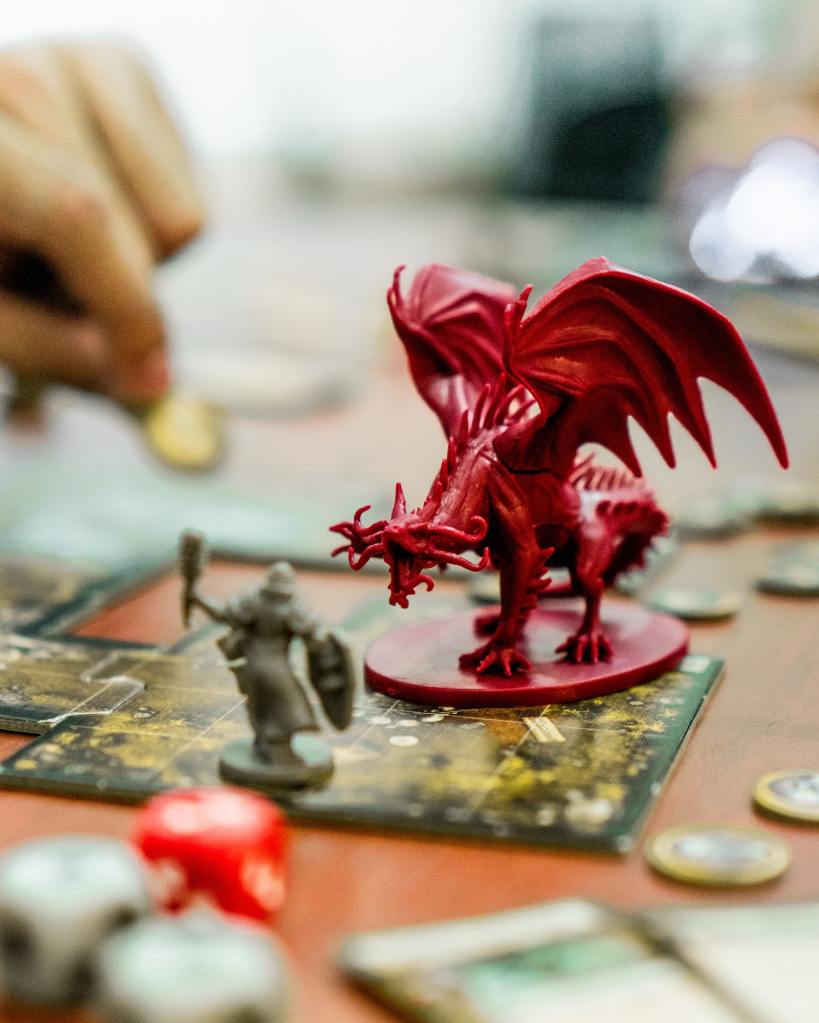
I have only ever played the computerised version of Dungeons and Dragons, the fantasy role-playing game, and the version I played was more of a battle simulator. You went on quests with your band of characters, exploring different places, constantly running into trouble. Fights would involve cold hard steel, and mysterious magical spells. Some spells had obvious intended effects, e.g. Stinking Cloud (now that’s magic that I have understood since I discovered baked beans as a kid,) Hold person. A favourite spell of mine was Charm Person, casting this spell on an enemy could instantly change them into a team-mate.
As I started practising medicine as a junior doctor I often fancifully wished that some of the Dungeons and Dragons spells would work in real life. Over the past 22 years I have searched for Heal Person, Cure wounds, Revivify and have been caught short. If only life was that easy. I often wish that I had a magic wand that could change my patients condition for the better, I really do. Or magic pills or potions that would lead to a cure. Sometimes the best magic I can offer is to soothe suffering, provide comfort, offer support. On occasions I have had to use Charm Person, and sometimes even Charm Monster.
Illness can bring out the worst in people, but some people might not have been all that easy to get along with even when they were physically well. There are no difficult people or patients but at times communicating with humans can prove to be a difficult endeavour.
I had a problem with my hot water cylinder so I phoned a plumber to fix it. In my bathroom were two signs one says, DEATH IS COMING WITH EVERY BREATH and the other, WHAT WOULD I REGRET IF I DIED TODAY?
The plumber was attending to the water cylinder and I was in the kitchen having breakfast. He asked if he could use the bathroom to wash his hands. He went out to his van a couple of times to get some tools and each time, I see him looking at me. When he finished the job he gave me some instructions and then just stood there looking sheepish.
I drank my tea.
Then he said to me, “that’s very interesting those signs in your bathroom.”
I drank my tea
“You know, life is for living, you don’t need to be depressed and think about death all the time,” he said to me. “There is joy out there you just got to go and look for it. If you think about death all the time that’s not good. I am a Christian and we don’t think about death we think about living. Perhaps you should try that.”
The hospital palliative care nurse called me to refer a lady in her late 80s who prior to admission had lived independently until she started falling over. It was minor slips with minor injuries, then moderate trips with moderate injuries. In the past week she had a major fall, resulting in life-threatening injuries. Hospital tests showed that her chemical balances were all out, that a lot of bones and organ tissue had been replaced by cancer. The reason that she had lost her physical balance was that the cancer had invaded her spine, crushing the spinal cord and rendering her lower body weaker and then paralysed. She could no longer move her legs, but unfortunately could feel pain, and in fact her legs had become hypersensitive to pain. The bundle of nerves that make up the spinal cord do not like being pushed on, and scream out in protest.
During her week in hospital she had almost died twice. Each time, somehow she had recovered. Each time she was left devastated that she had recovered. From being fully independent, she had become fully dependent, a situation that she found impossible to tolerate. She had some stern conversations with The Almighty, she was not happy with what he had chosen for her. Her beloved husband had died over 30 years ago and there wasn’t a day that she didn’t think about him. She wished to be at his side again.
She asked the nice hospital palliative care nurse about the assisted dying service that she had heard about. Printed information was provided which was read and digested, with some difficulty as the pain in her legs and bottom still bothered her despite the pain relief she was given. She thought that she would qualify for assisted dying, having met all of the eligibility criteria and still maintaining her decision making capacity. The palliative care nurse said that no-one in the hospital provided the service, but that a referral could be made to the Ministry of Health in order for them to assign a practitioner to her. A process that would usually take two to six weeks to complete. Her ward team made the referral to the national service.
With palliative care/hospice patients and their fragile health status, there is a chance that every time you see them might be the last time they ever have a meaningful connection with a fellow human being. Things can change in an instant, people can lose consciousness or clarity. Keeping this in mind, try to make each interaction as pleasant an encounter as you can for the both of you. The following tells of an unpleasant distressing encounter.
I was asked to see an unwell Oncology patient, who was in a lot of pain, and possibly about to die. There was a language barrier in that he did not speak English, thus an interpreter was organised to facilitate communication. That was the idea anyway, what actually happened was different.
The man in bed looked fragile, he had trouble communicating with his family, as he was lapsing in and out of consciousness. The interpreter arrived, a young man, who looked nervous. He stood at the end of the bed and didn’t greet the patient or his family members. The patient was being prepared for a scan and might need to head downstairs at a moment’s notice, so time was of the essence.
Too young to be dying , only 32, with two toddlers 3 and 1 years old, she hadn’t even been a smoker. She had only had back pain, and on investigation last year, they found that she had metastatic lung cancer.
She came in with terrible pain, hadn’t been able to sleep for most of the week. Her partner, the father of the children, looked just as exhausted. Looking after her and the two tiny children. A tragic situation.
Pain difficult to control, breathing in a distressed fashion. She could barely leave her bed in the last two days.
Usual rule of thumb applied, if changing over months, months left to live, weeks – weeks, days-days, hours-hours.
Over the past four days, a change noted each single day. We estimated that she only had days to short weeks left to live.
We knew that she was supposed to go to Oncology, to have chemotherapy, but we thought she was too unwell.
We rang the Oncologist to discuss this, that we thought that she was dying, with only days to weeks left to live. We recommended that she not have chemotherapy, as we were concerned it would cause her more harm, than any potential benefit.
I had been on call for the hospital when the little old Chinese man had first presented to hospital. They had discussed his situation, a large stomach cancer which kept on bleeding, and that his Hb level was only 41. My opinion was that he was dying from recurrent bleeding that could not be stopped. My advice was that the hospital team have a discussion with the patient and family about the fact that his bleeding would be a life-ending event, that further transfusions would not be able to keep up with the amount of bleeding that was happening.
Some of my advice was taken, but not everything. It was as if the hospital doctors had spoken to me in a second language, one that didn’t lead to mutual understanding. They did end up having a conversation with the patient and his daughter about no further transfusions, but this was after transfusing one more unit of blood. The hospital doctor could speak Mandarin with the patient and family. He told them that the last unit of blood was an, “especially strong unit of blood, and would give him an extra boost.” Following this final transfusion the patient was sent across to the hospice.
The little old Chinese man, looked so pale, he didn’t know what to do with himself. His short-term memory had been impaired for some years but had worsened in recent months as he became more unwell.
We both used our second language to communicate with each other Mandarin. Both speaking with thick accents, but able to understand each other. His supportive daughter had come over from China to look after him and his wife. They had lived in New Zealand for over twenty years.
He had always been terrible at reporting his discomfort. His daughter talked about when he had appendicitis and had not told anyone until he almost died of an intra-abdominal infection after his appendix had burst. His stock answer would be to say, I am fine, but his body language was a give away for his wife and daughter. He didn’t let anyone know that he had painful shingles until he was found writhing in bed, crying because of pain, telling his family that the pain was so bad that he wanted to die.
Reincarnation was one of the topics of conversation in the first room this morning. Our patient was a believer and had told his wife that she would come back as a dog. Unfortunately one of their daughters had died only a few years ago. It is always difficult for parents to deal with, as it goes against nature’s order to have a child die before a parent. One of the tragedies in life that elderly people would like to avoid if at all possible. Their daughter had died but had left her traces everywhere.
She had always loved butterflies, and had grown lots of swan plants in order to provide food for her favourite Monarch butterflies. She had a keen eye for their caterpillars and could see them from a distance, their yellow, black and white lines indicating their presence. She especially loved the pupae/cocoons that would form as the caterpillars went through the biggest changes in their lives, metamorphosis. Coming out the other side of the process transformed, with a new outlook on life and the ability to fly. Looking so different in colour scheme and features. She had always loved to have butterflies around. In some cultures it is believed that butterflies are visiting dead friends and family members who have come to see you from the other side of the grave. This is a comforting thing to have your ancestors come to see how you are.
Our patient had been steadily deteriorating over the past week, and he and the family had derived some comfort in being visited by Monarch butterflies. It was thought that their late daughter/sister was visiting their father as he entered his final cocoon state, just before dying. I told them that when people die in our hospice we would affix a butterfly to the door.
I have often drawn cocoons on our patient list board to indicate that people are undergoing the final transformation in their life, the dying process. One in which everything starts to wind down, the heart, lungs and other organ functions change. A person becomes sleepier, and less clear in their mind, Nature or a higher power’s way of protecting the dying person from the full experience of dying.
“Please keep on talking to him, he can hear you, but might not be able to respond to you.” Family members were considering leaving for home to come back again soon, but I advised that he could die at anytime, and that traveling under lockdown restrictions was not as easy as usual. Probably better to hang around and support each other for a few more days.







 palliverse.com