I think therefore I am? – We told you so

Photo by Alex Shute on Unsplash

Too young to be dying , only 32, with two toddlers 3 and 1 years old, she hadn’t even been a smoker. She had only had back pain, and on investigation last year, they found that she had metastatic lung cancer.

She came in with terrible pain, hadn’t been able to sleep for most of the week. Her partner, the father of the children, looked just as exhausted. Looking after her and the two tiny children. A tragic situation.

Pain difficult to control, breathing in a distressed fashion. She could barely leave her bed in the last two days.

Usual rule of thumb applied, if changing over months, months left to live, weeks – weeks, days-days, hours-hours.

Over the past four days, a change noted each single day. We estimated that she only had days to short weeks left to live.

We knew that she was supposed to go to Oncology, to have chemotherapy, but we thought she was too unwell.

We rang the Oncologist to discuss this, that we thought that she was dying, with only days to weeks left to live. We recommended that she not have chemotherapy, as we were concerned it would cause her more harm, than any potential benefit.

Continue reading
Palace of Care – The Ties That Bind

Covid summer time and I’ve been wearing boring grey coloured scrubs for months now. As it became hotter I must admit that it has been good to not have to wear neckties – my usual trademark item.

My patients and their families usually enjoy them, so I will continue wearing them. They can be a good icebreaker, in that a doctor who wears cartoon ties probably isn’t so far up himself, chances are he’s approachable.

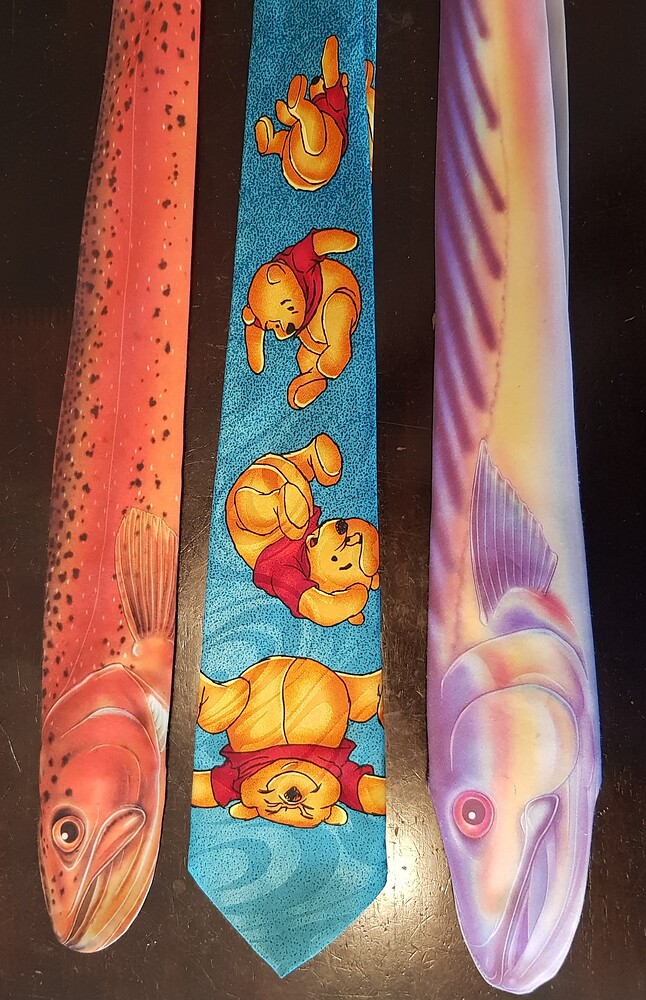
One Friday whilst wearing a rainbow trout on my neck I had asked my patient what tie she wanted me to wear on Monday. She said to wear a favourite one, and so I would.

I walked in and noticed that we had something in common. This had not been arranged and had happened purely by chance. Turquoise was the colour of my tie and the colour of her night dress, exactly the same colour.

Hey great minds think alike.

Yeah we both have great taste in colour.

I love Winnie the Pooh.

Heh, I’m the only doctor who doesn’t mind a bit of Pooh on his tie.

Haha, you know we have something else in common too.

Oh really, what’s that?

She took the turquoise short sleeve off her left shoulder revealing a Winnie the Pooh tattoo.

SNAP.

I was uncharacteristically speechless for a few seconds. Wow, synchronicity.

Tie requests were entertained over the next week, but then she became too unwell to choose.

When she was actively dying and unable to talk her family members presented me with something that she had wanted me to have.

Thank you, that’s really nice, I promise that I will wear it well.

Since then, on alternate Fridays, I wear a purple tuna fish around my neck.

3/80 of the ties in my collection

Palace of Care – Best Laid Plans

Photo by Pedro Miranda on Unsplash

Advance Care Planning (ACP) is recommended for everyone. It allows people to convey what is important to them. It can guide loved ones and health professionals as to what your wishes are in the case of you becoming incapable of expressing yourself. Such a situation is possible for anyone and thus it is recommended to be completed whilst you are well. Although it can be hard to imagine how you would feel or act in the event of severe illness or disability. ACP allows people to take some control of the end of their lives. This is what I want, this is want I don’t want. This is who I want around me. This is how I define what is quality of life for me. This is where I draw the line. It can be a confronting and difficult exercise to complete with your loved ones but it maybe a crucial method to communicate what you really want.

My patient had been diagnosed with MND (Motor Neurone Disease) over a year ago, and after attending the second clinic appointment they had introduced him to ACP. He read through the booklet with his wife, and it appealed to his organised nature. He always had a monthly, yearly and five-yearly plan in action. The doctor had said that most people would die of MND 18 months after diagnosis. This can mean time is running out, and this is not aided by diagnostic delay. All other illness have to be excluded before the diagnosis of MND is confirmed, for most people it is still a death sentence.

Continue reading

Palace of Care – Second Languages Part 2

Photo by Jaddy Liu on Unsplash

I had been on call for the hospital when the little old Chinese man had first presented to hospital. They had discussed his situation, a large stomach cancer which kept on bleeding, and that his Hb level was only 41. My opinion was that he was dying from recurrent bleeding that could not be stopped. My advice was that the hospital team have a discussion with the patient and family about the fact that his bleeding would be a life-ending event, that further transfusions would not be able to keep up with the amount of bleeding that was happening.

Some of my advice was taken, but not everything. It was as if the hospital doctors had spoken to me in a second language, one that didn’t lead to mutual understanding. They did end up having a conversation with the patient and his daughter about no further transfusions, but this was after transfusing one more unit of blood. The hospital doctor could speak Mandarin with the patient and family. He told them that the last unit of blood was an, “especially strong unit of blood, and would give him an extra boost.” Following this final transfusion the patient was sent across to the hospice.

Continue reading

Palace of Care – Second Languages Part 1

Photo by Tatiana Rodriguez on Unsplash

The little old Chinese man, looked so pale, he didn’t know what to do with himself. His short-term memory had been impaired for some years but had worsened in recent months as he became more unwell.

We both used our second language to communicate with each other Mandarin. Both speaking with thick accents, but able to understand each other. His supportive daughter had come over from China to look after him and his wife. They had lived in New Zealand for over twenty years.

He had always been terrible at reporting his discomfort. His daughter talked about when he had appendicitis and had not told anyone until he almost died of an intra-abdominal infection after his appendix had burst. His stock answer would be to say, I am fine, but his body language was a give away for his wife and daughter. He didn’t let anyone know that he had painful shingles until he was found writhing in bed, crying because of pain, telling his family that the pain was so bad that he wanted to die.

Continue reading

Palace of Care – I’ve got a question Doc

Photo by Artur Łuczka on Unsplash

I need to ask you a question about Dad.

Sure, go for it.

You know that Dad missed my wedding last weekend because he was too unwell?

Yeah.

Well, we had planned to have our honeymoon right after the wedding. We’re supposed to take off tomorrow.

How long will you be away for?

Five days, we are due back Wednesday. I’m not sure what to do.

I’m worried about your Dad, and I’m unsure if he will still be alive on Wednesday.

I can postpone my honeymoon, my wife and I can go at some other time, but this is my last chance to be with my Dad.

You’ve made the right choice, we’re going to get your Dad through this and the rest of your family too.

Thanks Doc.

Hey that’s what we’re here for, please take care.

I think therefore I am? – Butterfly visitors

Photo by Marian Brandt on Unsplash
  1. Reincarnation was one of the topics of conversation in the first room this morning. Our patient was a believer and had told his wife that she would come back as a dog. Unfortunately one of their daughters had died only a few years ago. It is always difficult for parents to deal with, as it goes against nature’s order to have a child die before a parent. One of the tragedies in life that elderly people would like to avoid if at all possible. Their daughter had died but had left her traces everywhere.

She had always loved butterflies, and had grown lots of swan plants in order to provide food for her favourite Monarch butterflies. She had a keen eye for their caterpillars and could see them from a distance, their yellow, black and white lines indicating their presence. She especially loved the pupae/cocoons that would form as the caterpillars went through the biggest changes in their lives, metamorphosis. Coming out the other side of the process transformed, with a new outlook on life and the ability to fly. Looking so different in colour scheme and features. She had always loved to have butterflies around. In some cultures it is believed that butterflies are visiting dead friends and family members who have come to see you from the other side of the grave. This is a comforting thing to have your ancestors come to see how you are.


Our patient had been steadily deteriorating over the past week, and he and the family had derived some comfort in being visited by Monarch butterflies. It was thought that their late daughter/sister was visiting their father as he entered his final cocoon state, just before dying.
I told them that when people die in our hospice we would affix a butterfly to the door.

I have often drawn cocoons on our patient list board to indicate that people are undergoing the final transformation in their life, the dying process. One in which everything starts to wind down, the heart, lungs and other organ functions change. A person becomes sleepier, and less clear in their mind, Nature or a higher power’s way of protecting the dying person from the full experience of dying.

“Please keep on talking to him, he can hear you, but might not be able to respond to you.”
Family members were considering leaving for home to come back again soon, but I advised that he could die at anytime, and that traveling under lockdown restrictions was not as easy as usual. Probably better to hang around and support each other for a few more days.

Continue reading

I think therefore I am? – Collegial Jealousy

Photo by Obie Fernandez on Unsplash

One of our most trusted employees doesn’t mind doing night shifts. He is happy to do casual shifts with little prior notice. He is adept at looking after all sorts of different people. He can be counted on to be there, although he can be fickle at times. He picks and chooses who he will spend time with. One day it might be in the older lady’s room, another night he might wander off and into the young man’s room. He doesn’t even knock, and somehow can sneak into the rooms without anyone noticing.

One of our patients thought that our staff member was channelling the essence of their late mother. Every time our staff mate visited the patient in their moments of need, it felt like his mother coming in to check on him, from the next plane of existence. This provided comfort to both patient and family.

Our valued employee had a new assignment the other week. Our patient was the mother who was not long for the world. Our staff member took especially good care of her, and also her daughter as well. Having him in the room provided them good continuity of care, as otherwise there was a new set of nurses every shift, and the doctors would change around every few days. They enjoyed his visits and his words of wisdom lightened the mood and their hearts.

Continue reading

I think therefore I am? – Dropped

Photo by Rod Long on Unsplash

I feel so lost, I feel so alone, aren’t I good enough for you? What did I do wrong? Why did you change so suddenly? I thought you’d always be there for me. I thought you’d have my back.

Many different people may be felt to be the other, this can have a racial basis, or be on a religious basis. People are labeled as other to justify treating them badly, and this is an unjust situation in this day and age. What other justifications are there for bad treatment of our fellow humans?

Palliative care patients may face stigmatisation for being closer to dying than most people. Oh well they’re going to die anyway, so why should we bother taking care of them? Just shove them in the corner and pull the curtain around them, and forget about them. Out of sight and out of mind. Not my problem mate. Who cares they’re dying anyway, not worth me expending any effort on them. I beg to differ, dying people deserve even more respect, as they are about to leave our planet, off to somewhere else, destination unknown. What will happen next? I don’t know.

It hurts to be rejected, to be pushed away, sometimes literally pushed away. I don’t want anything to do with you. Please leave, bad enough when you are trying to find a date, but when you are at the end of your life, how much more hurtful could that feel?

Continue reading

Palace of Care – PI – Palliative Investigator

Photo by N. on Unsplash

She was one of our community patients, a lady in her early forties who had been deteriorating over the past week. We were able to control her physical symptoms well but there was a deep underlying sadness deep inside. She was able to accept that she was dying, that she would be leaving behind her 18 year old daughter and her husband. That was not the cause of her upset, our counsellor went to see her at home to see if she could find out what was going on.

What was causing our patient so much anguish? She was well supported by her husband and daughter, and other family members were helping too but as our patient became less conscious her agitation and distress worsened. Was it an end of life delirium or was there something more going on? Her husband said that she was still looking for Mary.

Mary? Who is Mary?

Our daughter.

But your daughter is not called Mary.

Our older daughter.

Oh we didn’t know you had another daughter.

She was stillborn when we had her 20 years ago. We were young and didn’t have enough money to properly bury her. We only had a few hours with her before they took her away. We never found out where she was buried. We looked for the first two years but our English wasn’t as good back then, we had just moved over from the Islands. We never found her, but we’ve always missed her. Especially my wife.

There was a mystery to be solved, I had to find out where baby Mary was buried, with only her full name and date of death. I had no idea how to start the search, so I asked around my colleagues. Thanks to everyone who suggested that I contact the local council. A quick search of their website found a section where you can search for burial locations online yourself. This did not yield any results, but led me to another section of the website that allowed me to send a query email.

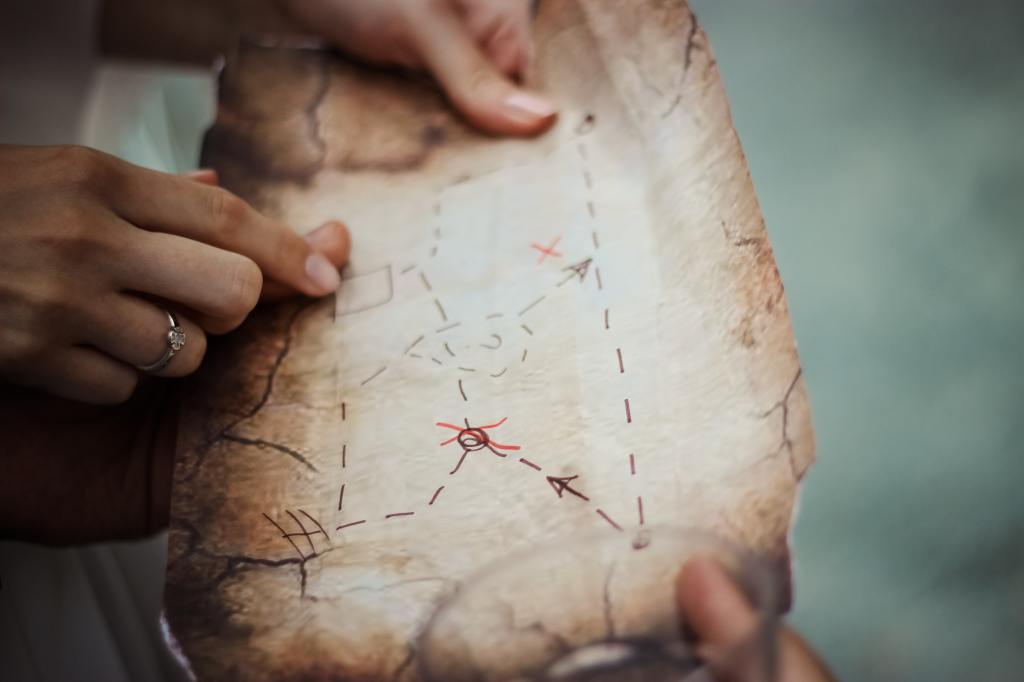
A few days later a real human answered, and suggested that I email someone else. Two days later I was sent a reply with a picture of a map of the cemetery with a highlighted area within which the baby had been buried. I printed out the map and our counsellor rushed out to deliver the information package to the couple. Time was of the essence as our patient was deteriorating rapidly and was in danger of losing consciousness and clarity.

Two days later our patient died peacefully at home with her gathered family, her distress had settled down once she was told that Mary had been found. The bereaved husband’s were red and swollen, but he smiled when he told us that his wife knew where to find their long-lost baby and could pick her up on their way to heaven.