Delirium: Why we should (palliative) care

In palliative care, delirium is everyone’s business. Anyone can get delirium if they are seriously ill. It is a distressing symptom – for the person with delirium, their loved ones and the professionals who care for them. Although it is common, potentially preventable and may be reversible, it is often missed, misdiagnosed and mismanaged despite our best intentions.

This 5-minute video is an excellent resource for the public and health professionals alike, (and seems to cover everything that it takes me 45 minutes to teach to nurses or doctors!). I discovered it via its co-creator, Delirium Champion Dr MS Krishnan.

This week, I am taking over Palliverse to share posts about delirium in palliative care – from conferences to clinical standards to a heart-wrenching personal story. Continue reading
The changing landscape of palliative care: #ANZSPM16 conference Sept 2016 Perth

Getting excited about heading to the Australian New Zealand Society for Palliative Medicine conference in September in Perth. With Melbourne’s frigid weather, the thought of a flight to sunny warm Perth in Spring has to be attractive. But more than that, the topic of how palliative care is changing in the 21st century is fascinating.

Continue reading

Planning care for people with dementia

CjRDzR9UUAQ9woR.jpg-large

Two new resources are now available to help with planning care for people with dementia. Palliverse talked to driving force Prof Meera Agar about the ‘whys’, ‘hows’ and ‘whats’.

Q: Why develop care planning resources just for dementia?

A: People with dementia face unique challenges and decisions related to their care and health care needs as their illness progresses; and supporting their choices is made more complex as they become less able to communicate their needs and articulate decisions about what they want from care. While good intentioned, many health professionals in aged care and other settings may not understand the course of dementia, and there may not always be good communication, involving the person with dementia whenever possible and their families,  and also between the different health professional involved in the persons care.

Q: So how do the new resources help?

A: The two new resources are a website offering practical support for family case conferencing and a report providing guidance on critical recommendations to improve advance care planning. Continue reading

Modern dying from a doctor’s perspective


A thoughtful article regarding our modern attitudes to dying by Dr Craig Bowron, an internist (i.e. physician in internal medicine for us Down Under, or general medicine consultant)

Opting to try all forms of medical treatment and procedures to assuage this guilt is also emotional life insurance: When their loved one does die, family members can tell themselves, “We did everything we could for Mom.”

In my experience, this is a stronger inclination than the equally valid (and perhaps more honest) admission that “we sure put Dad through the wringer those last few months.”

I agree with Dr Bowron, that sometimes we may not consider the cost to the person (not the financial cost, other costs) of being able to say, “We did everything we could.”

What do you think? Does this apply where you are?

Regards, Sonia

PS Thanks to Tegan, a social worker I work with, for pointing me to this article.

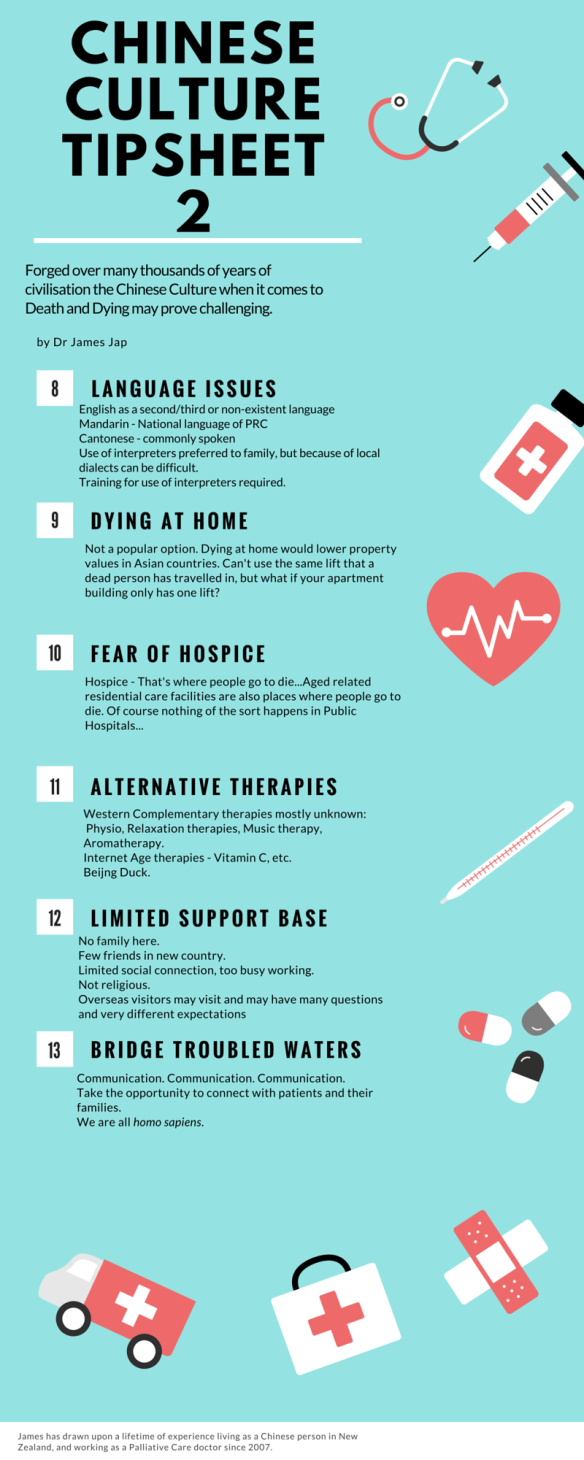
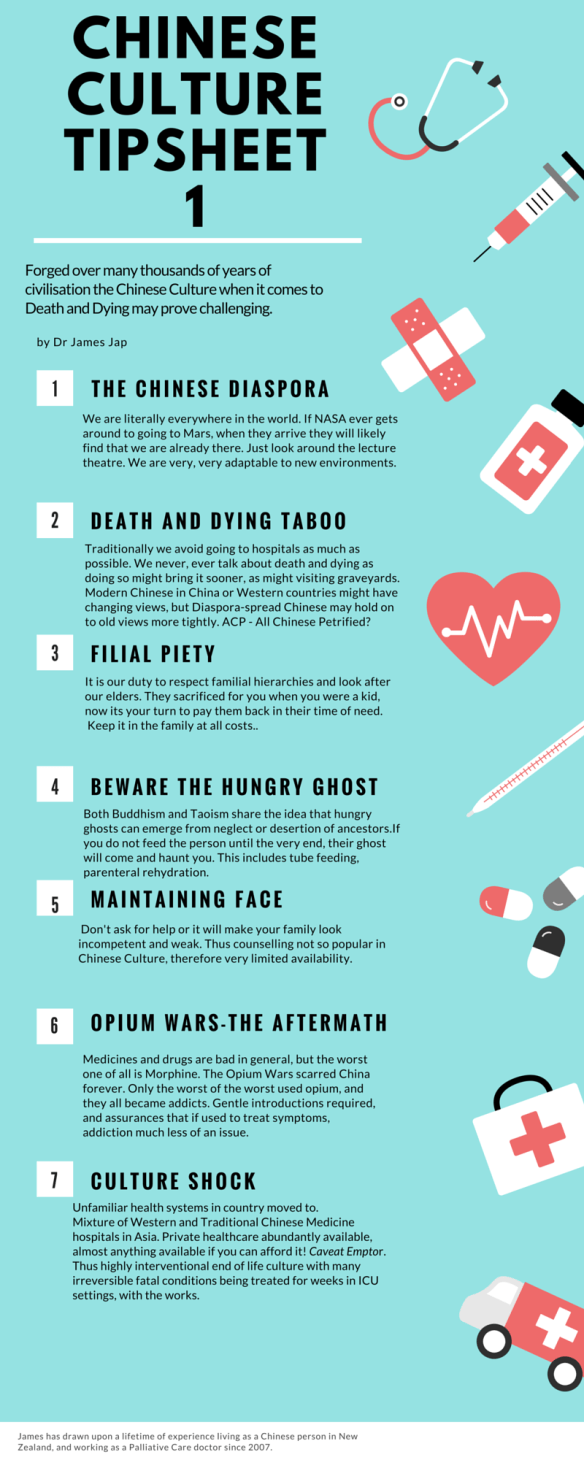
I think therefore I am? – Palliative Care for Chinese People: An insider’s look

Hiya folks,

I’m presenting at Grand Round tomorrow on the above subject.

Pasted below are the Tipsheets I prepared as a take-away for the presentation.

At the bottom is a link for printable PDF versions.

Enjoy, James.

1

2Chinese Culture Tipsheet PDF Version

Bisphosphonates and denosumab good for bone pain…. right?

BCKnMetb40


Wrong!

The folk from Cochrane asked this question. ‘In adult patients with metastatic bone pain, what is the evidence that bisphosphonates and denosumab are effective and safe in controlling pain?’

http://www.ncbi.nlm.nih.gov/pubmed/27006430

They found that evidence to support an analgesic role for bisphosphonates and denosumab is weak. Bisphosphonates and denosumab appear to be beneficial in preventing pain by delaying the onset of bone pain rather than by producing an analgesic effect per se.

Sonia


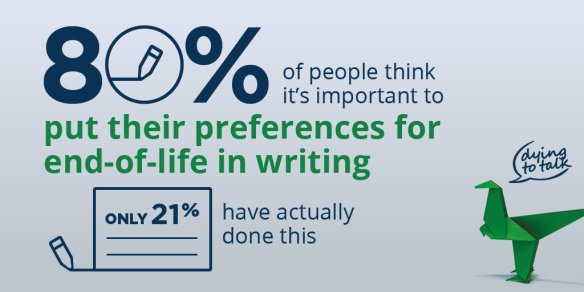
Enhancing Palliative Care for GPs: Clinical audit on end-of-life care

Ed: Thank you David and Caresearch for allowing us to share this post focusing on ways to enhance primary palliative care for general practitioners.  We at Palliverse agree that dialogue around the GPs role in palliative care is timely and important.  We would welcome further contributions on this topic.


Banksy Dr and Heart

Banksy Hits San Fransisco (mod). Thomas Hawk via Flickr. CC BY 4.0


Hi everybody. I am a GP of 25 years’ experience. I deal a lot with aged care and palliative care. I recently completed a Clinical Audit on end-of-life care through Decision Assist. I wrote a short piece for Caresearch about doing the Audit for Decision Assist as I found the process of reflecting on my practice and looking at changes very worthwhile. Here is what I wrote.

Continue reading

NICE guidelines for end of life care

The National Institute for Health and Care Excellence (NICE) provides national guidance and advice to improve health and social care in the UK.

In response to the Neuberger report and the demise of the Liverpool Care Pathway, new evidence based guidelines have been developed.

This guideline includes recommendations on:

In my state, Victoria Australia, the VEC (Victorian End of life Coordinating Program) is undertaking similar work, and plans to release a Victorian end of life care plan soon.

In Australia, we have not had the negative stories and experiences seen in the UK; because the LCP was implemented in a better way? The stories coming out of the Neuberger report were shocking: I cannot imagine any patient being denied a drink when requested “because she is on the LCP”. However the LCP has also been withdrawn locally in response to the negative findings delivered in the UK.

I will be participating in a pilot of the new end of life care plans which will replace the LCP locally. I am looking forward to seeing the final version.

Thoughts, dear reader, about the terminal care of the LCP?


Review article concerning hospital end of life care in NEJM

Not the traditional festive season article perhaps, but this review article by Dr Blinderman and the late Dr Billings provides a good summary in a very reputable and widely read journal concerning end of life care in hospitals in the United States.

Is end of life care in hospital in the US different?

The article reports that 29% of deaths take place in hospitals in America, a bit lower than I would have expected. In Australia, 54% die in hospital but this includes inpatient palliative care deaths which are excluded from the US figure of 29%.

According to AIHW, 42% of the Australians who died in hospital had some involvement from palliative care  (42% of 54% in hospital deaths is 23%) About a third of patients who died as an admitted patient in hospital (a third of 54% is about 15%) died in inpatient palliative care. That still leaves us behind the US, with around 36% dying in a non palliative inpatient Australian hospital bed compared to 29% in the USA.

Interestingly the NEJM article does not refer to subcutaneous medications which are the mainstay of terminal care medication administration in Australia, New Zealand and the UK. Do US practitioners use less SC medication?

Personally I don’t find that cough and nausea are so troubling at the end of life, and we would promote meticulous mouth care for dry mouth ahead of pharmacological management.

The article also advises us to avoid benzodiazepines for delirium including at the end of life, which I found surprising.

Dear reader, do you have any thoughts? What is end of life care like in hospitals in your neck of the woods?


On games and end-of-life care

Calling all nurses (and even non-nurses) with an interest in end-of-life care… Get your game face on and check out this innovative approach to online learning and continuing professional development. Continue reading