Palace of Care – It ain’t easy being green

Photo by Georgia de Lotz on Unsplash

She had been told that she would die soon, twice before, but she continued to outlive her prognosis. Stress levels were high, as this time she felt more unwell. Pain was worse and even her lifesaver wasn’t covering her symptoms.

She had complete faith in it, and often credited it as having saved her life. Before she had discovered it she had tried many legal medications but none of them had worked, or had produced intolerable side effects. She had never liked going to the doctor and preferred to have plant-based treatments from her naturopath. The green stuff had calmed her down, with minimal side effects. It had allowed her to go back to work, and she was able to be a mother again.

Being diagnosed with metastatic cancer had really been challenging, but extra doses of the natural product had helped to keep things calm. In recent weeks she had been admitted to hospital twice and was told that she was about to die twice of something called DIC (Disseminated Intravascular Coagulation.) The doctors had explained this as her clotting system going crazy, causing blood clots in her blood vessels, which were painful as blood supply was cut off to affected areas. A dangerous situation as clotting factors ran out, it meant that she was at great risk of bleeding. Caused by her cancer, and with no cure, hence she had been written off by her doctors twice before, and now it was third time lucky.

Continue reading

I think therefore I am? – In-between

Photo by Rohan Reddy on Unsplash

Palliative Care lies in between the usual medical culture of active treatment and the culture of death and dying. Was that what attracted me to Palliative Care, having lived as an in-betweener for most of my life? Growing up between two cultures; Chinese at home and mostly Eurocentric outside of home. This continued for me in University being part of the local Chinese Group but also being part of the newer Asian immigrant group. A bridge is needed between the two groups as the two different cultures can be different in many ways, and may think that they have little in common.

Standard healthcare is directed at saving life, curing disease, fixing things which are broken. Death is looked upon as the great enemy, something to be fought against, railed against until the dying of the light. People have to go to battle against their diseases, go to war, but when it comes to your own bodies the collateral damage may be too much too handle.

Continue reading

Bedside Lessons – 12. Zero Degrees Kelvin

Photo by Long Ma on Unsplash

Times of crisis can bring out the best or the worst in people. This is a tale from the dark side.

Before she became ill everything seemed to be perfect. Happily married to the love of her life, they were proud of their three adult children. The eldest already married and had produced the perfect grandchild. Second child a beautiful daughter who was talented, and about to enter the workforce. Youngest son, mummy’s boy, had started university and was on his way to doing something useful with his life. The family portrait was beautiful, three generations of the family all dressed in white shirts and blue denim jeans. What a beautiful family, united in their faith and religion. Stalwarts of the church, the example that the congregation all worked towards becoming. The golden family.

Illness arrived and caused major distress. The mother had always had alternative views to healthcare, had wanted naturally based treatments or no treatments at all. Unfortunately due to metastatic cancer she had to consider many different treatments, and many different medications to treat her symptoms. This soon became a torment for her, challenging her core beliefs. She tried to handle her pain as much as she could but it was so deep, so pervasive, so severe that even her iron will started to rust, to bend beyond it’s inherent structural integrity.

She was admitted in a pain crisis, having not slept for 10 days, woken by pain, exhausted with her family at their wit’s end as well. A highly distressing situation for them all. The facade of perfection had also started to crumble.

Continue reading

Bedside Lessons – 11. Is healing possible at the end of life?

Photo by Tyler Nix on Unsplash

She was unwell, and needed to come in for symptom control. She had been sick for many months but the pain had worsened to the point of intolerability. This was one tough lady, and she liked to show just how tough she was by being in your face. This is how I am, and who I am, and if you don’t like it, go to hell. That’s what her outer shell showed anyway, when she arrived she was feeling too unwell to put up her usual shields. She had always had trouble letting people in, and it took a bit of work in order for us to establish an useful rapport with her. Once we did we were able to help with her physical symptoms but no matter what we tried we could not penetrate her deep sadness and her feeling of being unloved.

She had moved thousands of miles from her birthplace, away from her blood family members. She had made a new life for herself over the 20 years that she had lived in New Zealand, but it was away from her family of origin. There seemed to be something from her past that kept on hurting her, even more than her end-stage cancer was able to. Physical pain we managed to get on top of, but her emotional pain we weren’t able to shift at all. Our counsellors, social workers and spiritual care advisor all tried their best but something was held back, which she could not share. Some things just hurt too much to be revealed, even to total strangers.

Continue reading

Palace of Care – What’s in a word?

Photo by Brett Jordan on Unsplash

It was the second admission for our patient and it was going to be his last one.

He had been beautifully cared for by his family over many months, but the last week had been terrible. He was agitated, restless, and did not know what to do with himself. His wife wanted him to come back into hospice for end of life care.

On admission he was only semi-conscious, agitated and not able to talk clearly. His body was so unwell that his mind was no longer able to be lucid. Although he tried so hard to be there, it looked as if he was in-between two worlds. His family reported that he was seeing ancestors that had died previously.

I didn’t mince words and tried to be as clear to them as possible. No surprises!

He is so unwell, so exhausted. He is dying.

I purposefully used the word dying at least five times during the 15 minutes of my visit.

Continue reading

Palace of Care – The Show Must Not Go On

Photo by Annie Spratt on Unsplash

Hey, welcome to our hospice.

I know that you put on the show for your friends and social media, but you don’t need to do that with us. You don’t have to be all right when you are feeling anything but.

We need to see the real you in order to be able to really help you.

We know how strong and tough you are.

Please don’t use up your precious energy telling us what you think we want to hear.

I will be honest with you but I want you to ask for help when you need it.

We will always use as little medication as we can, but we do not want you to put up with discomfort, we don’t want you to struggle.

We are really keen to help you, if you’ll let us.

Can you do that?

What would make this place feel less like a hospital for you?

Please bring in your own stuff to decorate the walls.

You have made brave decisions recently to stop treatment, which I fully support.

I’d be happy to explain things to your partner when they come in.

Listen to your body, don’t push yourself. Rest when you need to, think of it as a recharge. Ask for help when you need to.

Save your energy for nicer things, more important activities, like spending time with your partner.

If there is anything you disagree with, please let us know.

We’d like to give you back some control of your situation, completing the advance care plan will help.

We are on your side and will be guided by what you want, or don’t want.

Thanks for giving us a go.

Bedside Lessons – 10. Freedom to Choose

Photo by Deleece Cook on Unsplash

Working in the community palliative care team I don’t meet in person most of the patients that are under our team’s care. I often have to provide advice for people that I have never met and have to count on my staff members’ assessments as the basis of knowledge of each patient. This is how our specialist support is provided from a distance, this allows me to have about 380 patients under my consultant remote control supervision at any time. Often I will provide advice which will be conveyed to the patient and their family doctor to be actioned.

This is the story of someone I never actually met but whom I provided advice on, an elderly Jewish lady who was a Holocaust survivor. I never found out which concentration camp she had lived through but somehow she had stayed alive when many had not. When she was young all control of her life had been taken away from her. Separated from her family whom she never saw again, made to endure hellish conditions, tattooed and emotionally scarred for life, she some how made it through her ordeal. She moved to New Zealand, married a local man, had children and grand-children and a rich and rewarding family life.

Recently her health had taken a turn for the worse and she was diagnosed with metastatic cancer with spread to her brain, causing headaches, and seizures. Despite having had radiotherapy treatment and high dose corticosteroid treatment her symptoms worsened. She was still clear in her thinking but was at risk of this deteriorating soon.

Continue reading

Bedside Lessons – 8. Forequarter Amputation

Photo by Fausto Marqués on Unsplash

He was found on the floor after having fallen down while walking back from his bathroom. A human arm should not have been able to bend at the odd angle that his arm was in. He was in terrible agony and an ambulance was called to take him to hospital.

I met him the next morning on the post-acute ward round. Overnight he had his fractured arm operated on, and screws and plates had been installed in order to fix the broken limb. He needed help with toileting and needed help with feeding. His other limb had been affected by cancer some years ago and had been removed along with his shoulder in an operation called forequarter amputation. It was terrible luck that his remaining arm had been badly injured.

Continue reading

Bedside Lessons – 7. DNA

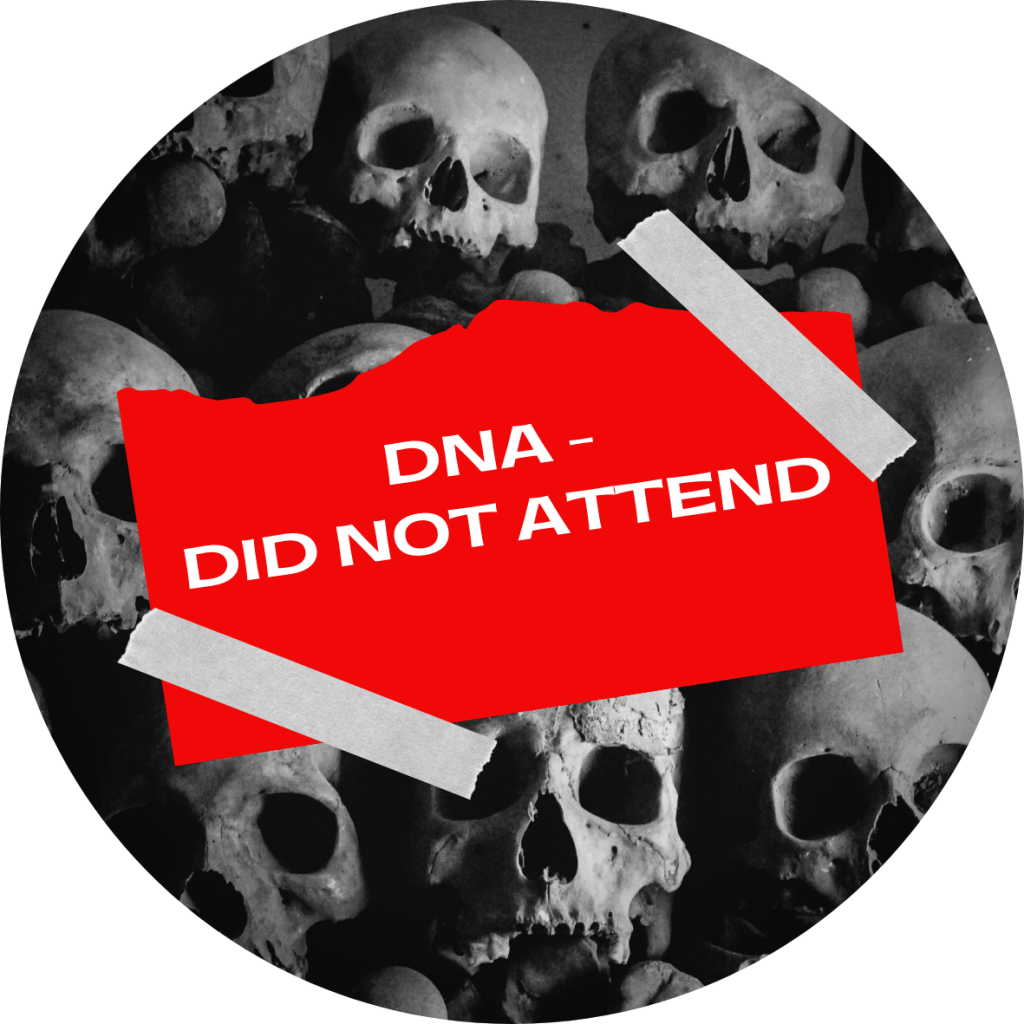
Labels are easily applied to people but are not always appropriate. DNA – Did not attend is one of the commonest labels that can be given to patients and often no attempt to check their actual circumstances is actually made. DNA is a label that sticks to someone and can bias clinicians against patients without allowing them a chance to explain themselves.

Here’s a story about a patient that I met on a home visit many years ago which changed my thinking about the DNA label and labeling in general.

Continue reading

Palace of Care – Unfinished Business

Photo by Firmbee.com on Unsplash

I don’t feel well. I’m having trouble breathing. I feel so tired, but all I do is sleep. I’m feeling too weak to walk to the toilet, I almost fell over last night.

The nurses told me that you’ve had bad pain, but that you didn’t want to take pain relief.

I need to finish sorting out my legal affairs, I don’t want to leave too much for my friend to have to deal with.

Our social worker can help you with that stuff, she can talk to your friend. What else is bothering you? You look worried.

Doctor, I think I don’t have much time left, I feel so terrible, I don’t even have energy to talk to my sisters back home. Why do I feel so bad?

You’re getting worse, it’s the cancer, your body can’t handle it anymore. I think you are dying, and you might only have days left to live.

I thought so, I just need to sort my stuff out…

Then you’d be able to let go?

Yes, I don’t think I can hold on for much longer.

I think I can make you more comfortable, putting up with pain will use up your energy even faster, and make you more tired. Can I increase your pain relief a bit? It might make you less tired.

Okay, if you think it will help.

We’re going to get you through this, and even if you fall asleep we will continue to try to make you comfortable. We’re going to get you through this. This is our social worker, she can help you with your stuff.

Thank you doctor.

Please let us know if there is anything else we can help you with. I’ll see you later.

[Wave goodbye]