Palace of Care – Checking In

Photo by Sangharsh Lohakare on Unsplash

“I’m just checking in with you. How are you today?”

“I’m too tired to fight today.”

“Me too, you really made me work hard yesterday.”

“I would really like a massage. Healthcare has under-utilised the benefits of therapeutic massage.”

“I’d agree with that. It is one of the alternative therapies that has been proven to make people feel better. A lot of the Pasifika cultures use massage as part of their healthcare systems.”

Nod.

“Us humans require physical contact. We don’t hug each other enough.”

His long arms tried to stretch outwards, but they could only move centimetres towards me due to weakness.

My arms went around what felt like a skeleton’s back. Sarcopenia is the medical term for the muscle wasting I felt.

A gentle embrace was shared. He was too weak to hug me tighter. I didn’t want to hurt him.

Followed by a firm handshake, our left hands surrounding each others’ right hands. All four hands shaking together.

The smiles in our eyes met each other. Retinae looked directly at retinae. A human connection was maintained but it was destined to be disconnected soon.

Our kindred bedside manner DNA started to unwind. One strand would come to an end soon, whilst the other would continue on.

He thanked me for the care provided.

I thanked him for his time and for the fun memories of our playing and joking together.

We shared a smile before we waved ‘see you later’ to each other.

Would we ever meet again?
I think therefore I am? – Final Farewells?

Photo by Markus Spiske on Unsplash

Life can be full of uncertainty and the same is true for dying. When will it occur? The doctors don’t really know, they can only give their best guess. The ones who give an exact time are likely out of their depth and answer with false confidence. Three weeks. Three days. Three hours. Medical science is not that exact yet. Maybe someday there will be a test that will tell people exactly how long they have left to live. Not available yet.

Sometimes people will say their goodbyes too soon. They carefully choose their words as it might be the last time they ever see each other again. Could it be the final farewell? Yes, it could be. We’d better say what we really need to say just in case it is the last chance we ever get. A final chance to connect with a loved one. A final chance to heal or to hurt. A final chance to say what a person means to you. A chance to wish them all the best for the future you won’t be a part of. A final chance to share one last rendition of a long-standing private joke. One last hug. At least you had a chance to see them before it was too late. Not everyone makes it in time, which has been particularly painful in these COVID-affected years. So close, but yet so far. So much suffering.

Why do we leave things unsaid until we know a person is dying? Could we have told them the truth earlier when we were both fit and healthy? All of us who live will at some stage die. It could happen to any of us, not everyone gets the chance to say goodbye to the important people in their lives. Sudden deaths can happen without any warning. Accidents happen all of the time through no fault of anyone. What would you regret not telling someone today, if you were to die tomorrow? Death could happen to any one of us, at any time.

If you both can still see each other the next day, consider it a bonus.

Palace of Care – Come Fly With Me

Photo by Max Bender on Unsplash

Monday

You are still the pilot Captain.

I will listen to what you want and don’t want.

I’m your navigation system.

I’m here to guide you on your journey.

I’ll point out any areas of turbulence up ahead.

I’m here to identify any dangers in your way.

I’ve guided many people.

I want to make your journey as smooth as possible.

I will deal with any baggage issues you may have.

Wednesday

Captain, you are approaching your final destination.

You have started your descent.

Your fuel tanks are running low.

You went through some turbulence overnight and I am going to make some changes in order to avoid further problems.

I know you are tired so you can keep your seat in the reclined position.

Keep your seatbelt on as the landing might be rough.

We’ll be arriving very soon.

Sit back and relax. If you need anything please let us know.

Thank you for flying with Hospice Airways.

Palace of Care – En Garde!

Photo by Elliot Wilkinson on Unsplash

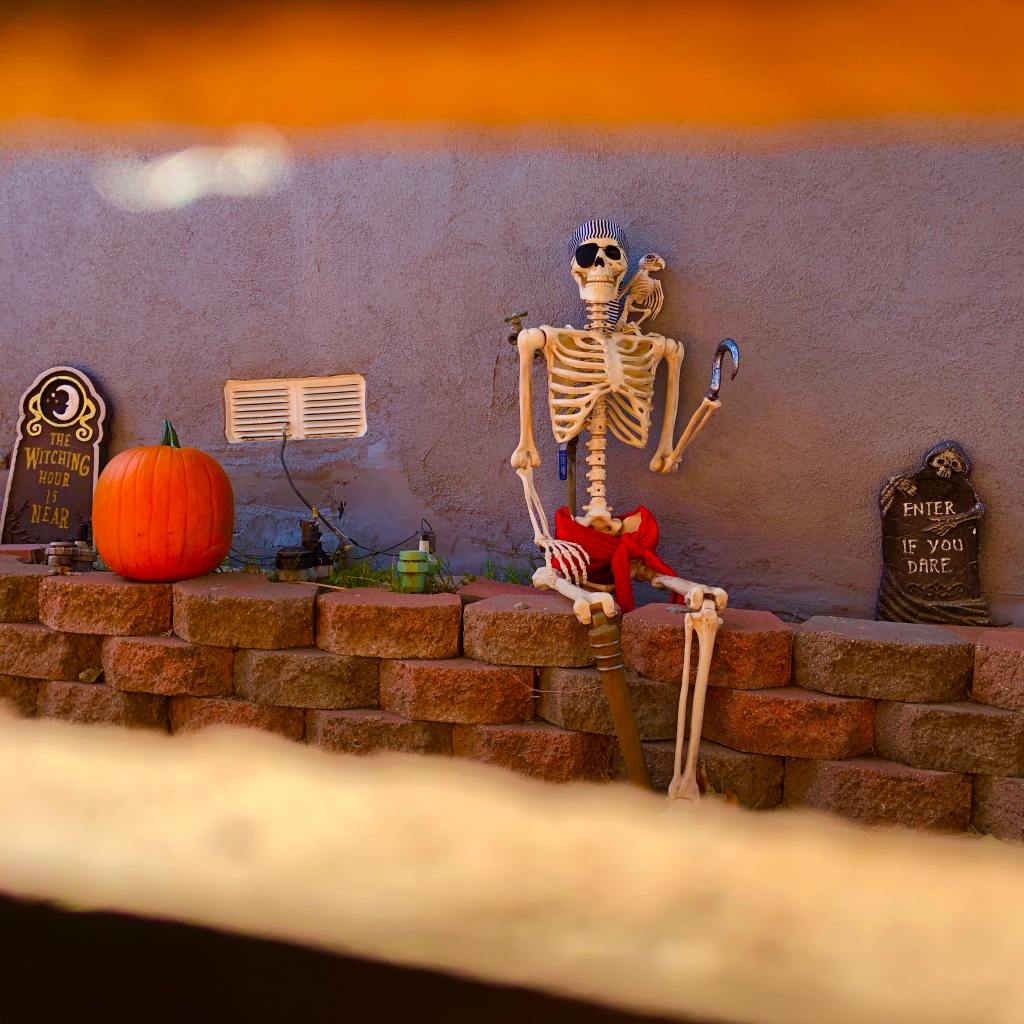
I hadn’t seen the pirate for two days. What would he be like now? Would he be more unwell? Would he still be able to talk to me? Would we get another chance to share a few laughs?

I knocked on the door and loudly said, “Good morning.”

I peered around the corner and he did look different.

Covering his left eye was a piece of gauze and covering the gauze was a black pirate-style eyepatch which his family had brought him. He looked to have lost weight, it had only been 48 hours since I had last seen him. What was that in his hand?

He was holding onto something with a shiny handle. It had grooves in it to make it more ergonomic and so it would fit in the hand well. The hilt piece was curved both upwards and downwards. A skull and crossbones adorned the hilt. My eyes followed the curve of the blade upwards. He beckoned me towards him with his cutlass, he wanted to fight.

He instructed me to prepare my weapon.

I motioned to one of my trusty assistants who rushed out of the room to bring me my weapon of choice.

Within seconds my bright yellow electric bug zapping tennis racquet was in my hand.

En Garde!

We slashed at each other, in slow motion.

I tried to hit him, he parried my blows.

He tried to hit me, and I dove out of the way.

We kept fighting, neither of us wanting to give in.

Seconds felt like minutes, the minutes felt like hours.

Finally, he feinted left and with a deft flick of his wrist, I was disarmed.

My yellow racquet clattered on the floor. Useless. I was done for.

His sword sliced upwards towards my head, and I was given my second haircut of the New Year.

Following our mighty battle he complained of a sore throat.

My differential diagnosis – sore throat caused by too much laughing.

I wanted to confirm my suspicions and examined his throat.

I asked him to open his mouth.

“Can you say, Ar, Ar, Ar please?”

Palace of Care – Catching Up

Photo by linda wartenweiler on Unsplash

I had double vision last night. The nurses made me an eyepatch.

Did it help?

Yes, it did.

I know you started off as a builder, then you became a doctor. Now you’re a pirate. I’ll ask them to colour your eyepatch black later.

Thanks.

If you wanted, I could prepare a wooden peg leg for you, but I’m not much of a surgeon. I heard on the news that there is a missing parrot flying around, maybe he could help too.

We talked about the surgeon that we both know in common at the last clinic. My son thinks he hasn’t seen him for 51 years.

I last saw him 23 years, four months, 13 days, and four hours ago. He made a strong impression on me.

How was your trip overseas?

It was good until the airline cancelled our return flights. My arms are still tired from swimming home.

Were you affected by the floods?

No, luckily not. I visited a friend of ours and their driveway wall had a brown watermark on it five feet high. They were flooded twice in one week.

I’ve been coughing up mucopurulent sputum. Some antibiotic treatment might be required.

I’m not sure if it would the right thing to do for you. You’ve got a bowel obstruction which is causing bad symptoms, which are likely to get worse. If I successfully treated a possible chest infection I might be prolonging your suffering. That’s something I don’t want to do. But if you really wanted to have antibiotics I would listen to you.

No, I’ll leave it to you to decide. I’m in good hands.

Let me shake your hand. It’s good to see you again.

I enjoyed your visit too.

I think therefore I am? – On Losses

Photo by Matt Seymour on Unsplash

Being able to do whatever you want is something that we take for granted. Even simple things like walking would be greatly missed if we can no longer do them. Taking out the trash can be a burdensome chore, but you’d likely miss doing it if you couldn’t do it anymore. Wanting to go home but not being able to is something I have learned about over the past week. A cancelled flight was the cause of my homesickness. Patients may be too unwell to go home or anywhere else. Staying in hospice for end-of-life care. A trip outside to the garden can be in the too-hard basket. To be able to mow the lawn again would be a luxury for some people. To be able to wash and feed themselves would be a treat.

The loss of independence and assault on a person’s dignity. The heartbreaking moment when they realised that they cannot toilet themselves without assistance. The losses accumulate as the illness worsens. Every loss is grieved for, some for longer than others. Not being able to do what you want to, not being able to be who you want to be. Most of us have no idea of what real loss is. Quality of life is defined by each person themselves. People can get to the point when they no longer wish to live their current life. When they have had enough and are ready to die. This has usually been after a long period of consideration. They desperately wish to escape their current confinement, the prison of their own body. Each person has a limit, a point at which they can no longer tolerate the suffering of their situation. You can always tap out in Brazilian Jiu Jitsu training but in real life, it is not that simple.

I think therefore I am? – Homonyms and Other Words

Photo by Jackson Simmer on Unsplash

In the Chinese languages the word for the number 4 sounds like the word for death. Thus it is avoided as much as possible. In Chinese-dominated countries, buildings will have missing 4th, 14th, 24th floors, etc. On hotel room floors there will be missing rooms 4, 14, 24, etc. Such is the danger of the word that it must not be mentioned if at all possible. This can also occur in non-Chinese countries where members of the Chinese Diaspora have settled. Through a laborious application through the local city council, the former number 224 is now known as 222a.

To mention death is to welcome it. Don’t talk about it and you can avoid it. Keep away from hospitals if you don’t want to get sick. Don’t go to graveyards or the deadly malaise will be caught. Advance care planning can be a difficult subject to raise for members of such cultural/ethnic groups. Funeral insurance may be a hard sell. Death is not discussed and people become unfamiliar with it. What you don’t know about becomes a scary monster. Something to be feared.

Not many visitors want to take the tour of the local hospice. “What do you do for a job?” “Oh…you must be so…special,” whilst clutching a bulb of garlic in one hand and in the other prayer beads. Holy water, buy now before stocks run out.

The Palliative Care trainee greeted the Renal trainee, “How you doing?”

The Renal trainee replied, “I’m saving lives.”

The Palliative Care trainee thought to himself, “Sure you are, while I am saving quality of life.”

If people have trouble even talking about dying, how will they be when it comes to looking after dying people? How will the dying patient be treated? Will they be treated as a failure in life? Are they worthy of our care and attention? They can wait, they’re dying anyway. As if they had any say in the matter.

As medical technology has improved throughout the world, societies are less accepting that death is a fact of life. Death-denying cultures are on the rise at the detriment of some of the most vulnerable people on Earth, those who are dying. That doesn’t sound right to me. Maybe I’d better be careful in my choice of words.

I think therefore I am? – Waiting

Photo by Johen Redman on Unsplash

Some people feel like they are all packed up and ready to go. They are already at the bus stop waiting for the bus to come and pick them up. They don’t have a guide as to when the bus will be coming. They ask us when the bus is coming, and we say we’re not sure but likely within hours to days. This can be frustrating for the questioner. They want to know how long they have to wait. They would prefer to be gone already. Their current location is no longer joyful, in fact, it may have become a place of suffering. They are ready to move on to the next destination. The preparation for the journey may have been difficult. They have had to pay more than they wanted to for the ticket.

The ones who have been used to being in control the most may be the most frustrated at their lack of control. They feel like they are no longer in the driver’s seat any more. They are at the whim of another force greater than they are. The sense of powerlessness and the inability to choose their own path must be hard to bear. They repeatedly ask when the bus will be coming.

Maybe they are waiting at the bus stop, but it is a train that is actually coming to pick them up. They are at the wrong station.

Palace of Care – The Deluge

Photo by Chris Gallagher on Unsplash

It had already been one of the wettest summers in years. Grey skies outnumbered blue skies by many times. There was no risk of the grass turning yellow this summer. The weeds were having a good time with flowers abundant. Hayfever victims spent a lot of money on tissue paper this season as pollen was often in the air between bouts of rain. Allergic coughs could be heard amongst the populace with many people swearing it wasn’t COVID. “My eyes are itchy as well!”

The forecasts had warned of heavy rainstorms a number of times in the past month. This had led to severe flooding in a lot of areas around the country. Residents hadn’t completed the clean-up from the previous storms before the new ones battered them again. It had gotten so bad that locals stopped wearing business suits and wore wetsuits instead. The gumboot and raincoat store celebrated record sales.

The big city had been prepared for the cyclone to hit, but it had decided to wreak havoc elsewhere. It had gotten off lightly. The sun came out and everyone let their guard down. When the meteorological prophets warned of heavy rainstorms people heard “wolf,” cried too many times and didn’t pay much attention. Though they had been warned to expect the deterioration in the next hours to days. People were still surprised when the downpour started.

Light rain turned to heavy rain within minutes. The noise of the precipitation became louder on the rooftops. Water started to seep in through the gaps under the doors. Water streamed down the walls, and leaked from ceilings. Water, water everywhere but not a drop clean enough to drink. Supermarkets became swimming pools, local parks became lakes and buses became submarines. The power of nature had made its presence felt.

A family farewelled their loved one for the last time.

I think therefore I am? – A Long Time Between Goodbyes

Photo by DDP on Unsplash

Before I left for my holiday I turned on the automatic replies. Correspondents needed to know that I would be away on leave for a fortnight. Not a long break but enough to recharge and unwind. It takes at least a week to really start relaxing. In the past, I had been used to pushing hard and living on adrenaline that if I relaxed too deeply my immune system would crash and I’d catch a cold. These days I make sure I have something to do each day, a task of some sort that needs to be done. Nothing too stressful but something to keep me from relaxing completely. The tightrope balancing act of modern-day life. Rest but not too much too fast.

It had been a while since I’d been on leave. Also been a while since I’ve had to say goodbye to patients that I thought I wouldn’t ever see again. People who I thought would no longer be alive by the time I returned. Some of them I’d only just met in the last few weeks, others I had known for many months. Some of the recipients knew what I meant without me having to say anything more. Others had different ideas about their situation and believed they would still be alive to see in the New Year 2024, let alone the current one. I also said goodbye to the patients’ family members as well.

Goodbyes in palliative care are usually final. Most of the time you will never see the patient or their family members ever again. In fact, each interaction you have with people you deal with may be the very last time you see them. You have to make sure you don’t leave things in a bad way, as you may never get the chance to sort things out. You don’t want what may be one of the final interactions for the other human being to be a poor one.