Guest Post – Naomi’s Notes – Offering

It was a week before Christmas, a special birthday celebration and instead of just a few candles we offered 1000 butterlamps.  These were lit before the start of the ceremony which concluded with the traditional Happy Birthday song for Rinpoche.  

After our shared lunch I walked slowly up the stairs to the Temple.  From the bottom of the stairs in the distance I saw a young woman  with her two children aged 6 and 8. I greeted her on arrival and she asked if she could light some butter  lamps.  She looked close to tears, and I asked her, “What’s the matter?”

“I need some help, my son died last week and I need some kind of spiritual help that’s why I came here. Is there a Lama here? I need to talk to someone.” Then the floodgate of tears was unleashed.  I put my arm around her and let her cry. Her two young children looked worried. I had some home baking upstairs and asked them to bring it down for a cup of tea. 

When we were alone she shared  that her 23 year old son had committed suicide.  His siblings were told their brother had died.  They were too young to understand and she didn’t want to burden them with it. As the children came bounding down the stairs I offered them something to eat and suggested they play outside on the grass where they could still see us whilst I talked with mum.   They appeared to be relieved to have  another adult to talk to their mum. 
Continue reading

Palace of Care – Terroir

Photo by Rusty Watson on Unsplash

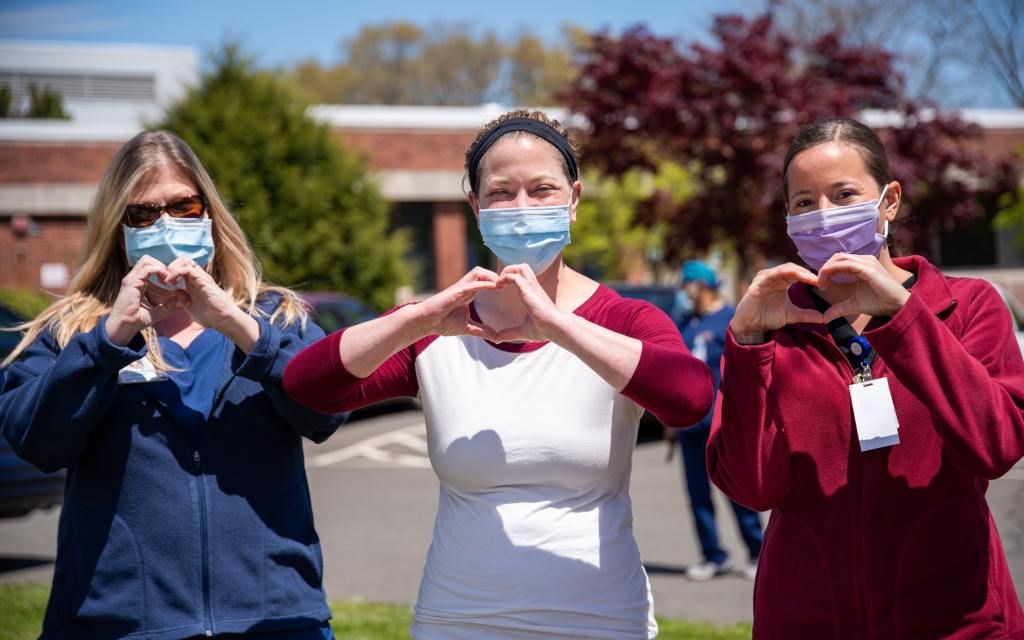
We celebrated International Nurses Day last Thursday with a special breakfast with lots of goodies for all. Nurses are a crucial part of any palliative care and hospice team and it was great to celebrate them with some special treats. Individual paper hats were made available each adorned with little red Superman style shields, thanking them for being heroic in the jobs that they do. Special little bags of sweets were prepared and handed out to all of our staff.

There was a buzz of mirth and fun throughout our inpatient unit and this was noticed by the patients and their families too. One couple commented on it being nice to hear raucous laughter happening outside of their room. It was nice to be staying in a healthcare institution where people were enjoying each other’s company at work. This couple had stayed in many different healthcare institutions over the past years and thus spoke from experience.

Continue reading

Guest Post – Naomi’s Notes – Making Friends

Photo by Jason Pofahl on Unsplash

The sound of the skipping rope whirring as it hit the ground meant their father was up.  He used to skip every day before he went to work.  

He taught his children resilience, to never give up when learning something new no matter how difficult it was. “You just gotta make friends with it”, he used to say.  

He loved his children and would try and spoil them when he could.   

He fancied himself as a mechanic and would often diagnose the car trouble as needing new spark plugs.  When asked if he had fixed the car he nodded and said  it didn’t need the key to start it, you just had to stand at the front step and clap your hands and it would come.

He was of that generation where you didn’t tell your kids you loved them but you showed them.  When his children told him they loved him it was met by an embarrassed silence.

The removal of his gall bladder heralded the start of his decline. He became increasingly ill and grumpy and as the days moved on he became less communicative.  He was always very direct in his communication. When his children spoke to him on the phone he never said hello or goodbye. He said their name and at the end just hung up.

Continue reading

Guest Post – Naomi’s Notes – Cushion

Photo by Wonderlane on Unsplash

They met at a seven-year meditation/philosophy course, which required participants to travel to India each year for the 1st week in April for instruction. It was taught by  H E Tai Situ Rinpoche one of the great Meditation Masters.

The seating was cushioning on the floor, he sat in front of her.  He was from Germany with limited English and she was from New Zealand (NZ) with limited German but they were able to communicate.   They formed a group with the Spanish man that sat next to him and the Taiwanese woman that sat next to her.  The group exchanged email addresses and from time to time corresponded. When in India they would all have breakfast together.

After year three of the course, he wrote to say he had to drop out of the course as his 88-year-old mother was sick and he needed to care for her.  He wrote about his newly acquired knowledge in gynaecology, breast cancer, podiatry, and dentistry gained from having accompanied his mother to all of her appointments.

She wrote back and gave him some moral support.   She also sent a gift from the NZ sheep, woollen socks for both his mother and him. 

Continue reading

Palace of Care – Best Laid Plans

Photo by Pedro Miranda on Unsplash

Advance Care Planning (ACP) is recommended for everyone. It allows people to convey what is important to them. It can guide loved ones and health professionals as to what your wishes are in the case of you becoming incapable of expressing yourself. Such a situation is possible for anyone and thus it is recommended to be completed whilst you are well. Although it can be hard to imagine how you would feel or act in the event of severe illness or disability. ACP allows people to take some control of the end of their lives. This is what I want, this is want I don’t want. This is who I want around me. This is how I define what is quality of life for me. This is where I draw the line. It can be a confronting and difficult exercise to complete with your loved ones but it maybe a crucial method to communicate what you really want.

My patient had been diagnosed with MND (Motor Neurone Disease) over a year ago, and after attending the second clinic appointment they had introduced him to ACP. He read through the booklet with his wife, and it appealed to his organised nature. He always had a monthly, yearly and five-yearly plan in action. The doctor had said that most people would die of MND 18 months after diagnosis. This can mean time is running out, and this is not aided by diagnostic delay. All other illness have to be excluded before the diagnosis of MND is confirmed, for most people it is still a death sentence.

Continue reading

Guest Post – Naomi’s Notes – Contribution

Photo by Jarritos Mexican Soda on Unsplash

When we are born we come with nothing and we go with nothing. In between we try to make a contribution to our family, community and the world around us.

The transition to becoming a caregiver is difficult, the biggest challenge is going from having lots of time for yourself and an ability to make plans, to having no time.  Much like a mother I guess. I was given a ringside seat into old age and death.  Watching the decline, you are forced to confront the mortality of your loved one as well as your own.

High dependency needs mean that no matter how much you love the one you are caring for you get very tired.  The forced isolation can be lonely for a lot of people. My experience wasn’t so much the loneliness but more the loss of “me” time.  Early in the caregiving role when I was able to go out for a couple of hours I would joke with my friends that my visa was up and I had to get home before my visa was cancelled.

Continue reading

Pause Program for Carers – Matisse Alive

Matisse Alive

This program has been developed specifically for those who are supporting a person receiving palliative care.

You’re invited to take some time out for a mindful journey through the Matisse Alive exhibition, where you can explore guided slow-looking techniques and discuss observations and insights in a paced experience.

It’s an opportunity to engage with art and with your own feelings in a supported environment; share experiences with like-minded people; acknowledge your identity apart from your caring role; and enjoy ‘in-the-moment’ pleasure. You’ll also discover how mindful activities can support self-care, and learn skills and strategies that can be transferred to the care environment.

The experience is facilitated by artist and researcher Dr Gail Kenning and Danielle Gullotta, senior access programs producer at the Art Gallery of New South Wales.

The program is a partnership between the Art Gallery, Palliative Care NSW and the University of the University of Technology Sydney.

Saturday 12 March 2022, 9.30am – 11:00am

Art Gallery of NSW, Art Gallery Road, Sydney NSW 2000

Entry is free, bookings required

Guest Post – Naomi’s Notes – Acceptance

Photo by Markus Winkler on Unsplash

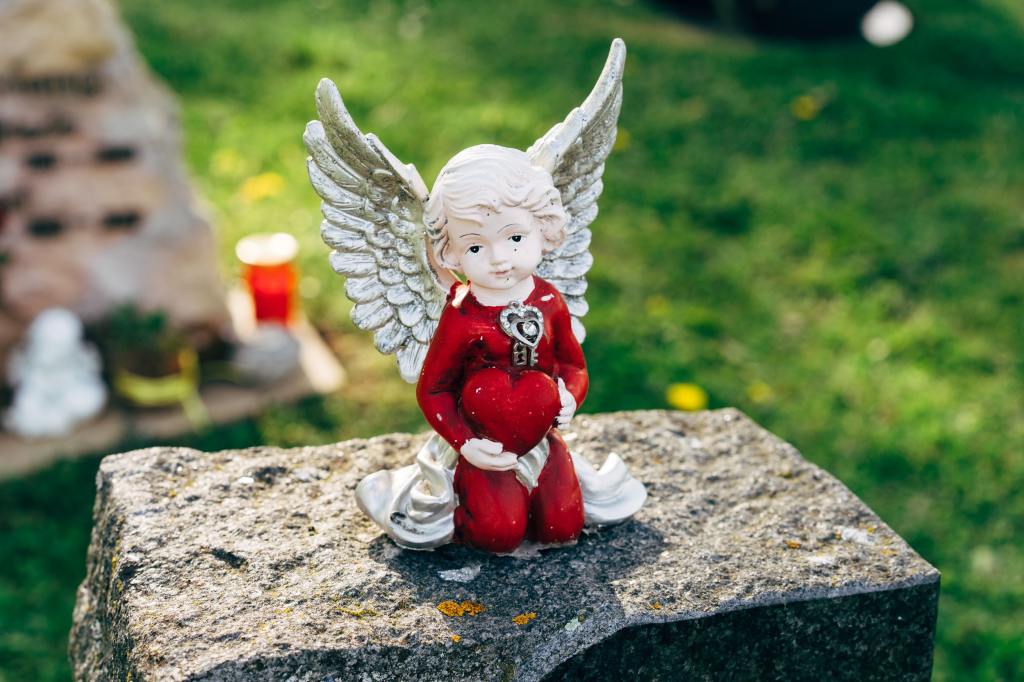
It had been one week since her husband passed away when she went to the cemetery to visit him. She wanted to go earlier but she had been too unwell.  She was tired from the effort of walking and was grateful she could rest on the seat of her walker.  She made her way slowly to her husband’s grave.  In the distance, she could hear the sound of someone sobbing.

She sat looking at the headstone and replayed in her mind memories of when they were together.  It was not her first experience of death, having lost her two year old daughter many years ago.

She recalled many weeks spent at the cemetery mourning her loss.   But then one night she had a dream of angels in a line descending from the sky, each one bearing a candle in their hand.   Then she saw her daughter but her candle was not alight. She rushed towards her daughter when she heard a voice telling her that it was her tears that kept her daughter’s candle from burning.

Continue reading

Palace of Care – Welcome to Hospice – Part 1

Photo by Belinda Fewings on Unsplash

When the hospice nurse had suggested an admission into hospice she really had to think about it. Did this mean that she was about to die? Was that why she had suggested I go in, because they thought that I was about to die? They denied it, and said that they wanted me to go in to help control my breathing and distress. I asked my family and they were scared as well, but knew that I needed help. We decided to give them a go, but man we were still nervous about it.

Turns out we didn’t have to worry, the people were friendly and nothing seemed too difficult. The doctors and nurses started working on my breathlessness, and by the next morning I started to feel better. I met a number of the team members before I headed home a few days later. We had been worried that when you’re admitted into hospice that there is only one way out, being wheeled out by the undertaker. When it was time for me to go home, I walked out the front door.

Continue reading

Guest Post – Naomi’s Notes – Change

Photo by Markus Spiske on Unsplash

She was 80 years old, terminally ill and had loved gardening all her life. She filled her yard with beautiful flowers and an abundance of vegetables.  She enjoyed the peace and satisfaction it gave her.  Only using what was needed, she usually gave away the vegetables to family members or visitors.  

When I told her I had a job as a part-time Backyard Garden Coordinator, she suggested that it might be nice to have a vegetable garden.   When I reminded her of the promise I made to myself when I was 10, about never being a gardener when I grew up, she said to me,  “darling things change, that was then and this is now.” 

Continue reading