I think therefore I am? – Why Can’t We All Just Get Along?

Photo by Husna Miskandar on Unsplash

Hospice/Palliative Care people have a reputation for being nice to patients and patients’ families. We try and treat people with respect and kindness. We try to be compassionate in our dealings with people who are extremely unwell, people who are dying and their loved ones. When time is short we want to deal with people in a calm fashion. We try to take as much stress out of their lives as possible. We work on the individual’s quality of life which is defined by them. We try our best to relieve what they think of as suffering. I’ve been working in Palliative Care for almost 16 years and I’ve often wondered why Hospice/Palliative Care teams are not always so nice to their own team members.

We don’t always treat our own team members well. Is it because we have used up all our kindness in dealing with our patients and their families? By the end of the day has the milk of human kindness been out for too long? Does it return back to base soured? Our faces may not be so cheerful. Our patience levels running on empty as we have worked on patients for hours. Why so glum chum? Have we shone our lights of external kindness so brightly that when we return back to base, the shadows we cast are that much darker?

We might not always like our patients, but we have a duty to treat them with respect. I can’t get angry with my patients so I look for other people to take it out on. Does this lead to us saving up our bad behaviour for our own people? External facing angelic beings, but the wings become whinges when we look inwards at our own people? It doesn’t have to be this way. What can we do to change Hospice/Palliative Care? Do we need to do a complete re-haul? Start all over again and involve patients and their families as co-designers. Can we encourage our team members to behave better towards each other? Can we create a more understanding, respectful and resilient workplace culture?


I think therefore I am? – In Between

Photo by Wai Siew on Unsplash

I am a child of immigrants and I grew up in a small city in New Zealand. I looked different to everyone else, at home I spoke a different language and ate different food compared to my classmates. Because of these differences, I always felt I was not as Kiwi as they were. We learned exactly the same things at school but our home lives were dissimilar.

When I was seven years old I had heard from my classmates about the tooth fairy. They told me that if your tooth comes out put it in an envelope and place it under your bed. The tooth fairy will take your tooth away and exchange it for money. I thought it would be a good swap as I didn’t need the tooth any more. I popped the tooth into the envelope, and addressed it, “To the Tooth Fairy.” I placed the little package under my bed, stirring up lots of dust which made me sneeze. For the next week, I checked on the little package every day after school. I opened it up expecting to find some cash, but all I could see each time was the same old tooth. After seven times and many sneezy afternoons with itchy eyes, I gave up on the tooth fairy. She was added to my list of fakes along with Father Christmas and the Easter Bunny.

Each afternoon when I arrived home I would have to take my shoes off and put on indoor slippers. I was expected to speak to my parents and brother in Mandarin Chinese. We would always have rice for dinner and it would be Chinese food. My parents had lived in New Zealand for a while by this time but they still did not like the local food. Back in those days if they wanted to eat things like steamed buns they would have to make them from scratch. They learned how to make their own egg noodles and wonton wrappers. Once a year we would all go on a road trip to one of the bigger cities to buy Chinese groceries that were not available in my home town. Pantry staples such as soya sauce, peanut oil, short-grained rice and canned foods. My parents seemed to have different ideas and values compared to my classmates’ parents. They often talked about how different it was for them when they were children. Despite my best efforts I could never be as Chinese as my parents were. I often found myself having to be a bridge between the two worlds.

I ended up growing up in between the local Kiwi culture and my parents’ more traditional Chinese culture. I was constantly reminded about how incompletely I fit into neither culture. At times I felt different and misunderstood by everyone. In between two worlds and searching for a world of my own. Maybe this influenced my career choice. Palliative care operates in the space between the usual healthcare world of saving lives and death. I find myself being the bridge between two healthcare cultures, not fully feeling like I belong in either camp. What’s new?

Palace of Care – Familial Protection

Photo by Mark Koch on Unsplash

The family were trying to protect our patient. They knew that his time would be short, that he would die soon. They didn’t want him to know this as the last time he had been given such bad news he had reacted poorly. They said he had been in tears for two days after the hospital doctors had told him bluntly that he could die at any time. They didn’t want a repeat of what had happened. If he only had a short time left they wanted him to enjoy it as much as possible. This was what his life partner wanted, the person who knew him better than anyone else. The love of his life.

Did he know what was going on? Probably. He had said he thought things were bad. We had not denied this. He was the one feeling every single discomfort. He was the one who was exhausted from lying in bed doing nothing. He was the one whose body continued deteriorating on an almost daily basis. He was the one who had asked to be admitted. He was worried about how his family were coping with looking after him at home. He had been told weeks prior to this admission that he possibly only had days left to live. When we asked him if there was anything he still needed to do, any unfinished business, the reply was,” No. I’ve done everything I can. I’ve done well. I have no regrets. I have a good family. We raised our children well.”

Our duty of care is to our patients. “First do no harm“ is the first principle we follow. Would telling him what he probably already knew be of benefit or would it cause harm? It was unclear as we didn’t know him well enough. For some people knowing they might only have a few days left could provide relief. They might be thankful that their suffering would not go on for much longer. For others, the short time left would provoke anxiety and distress. They would be upset by the thought of having to leave their family for the final time. If he were to directly ask us, we could not lie to him. But if he never asked we would not raise the question ourselves. His partner had made the decision. The survivors of his death had to be given the opportunity to do what was right for their family. No matter what would happen, we promised that we would try our best to keep him comfortable in what time remained.

I think therefore I am? – Greetings

Photo by Katie Moum on Unsplash

I work in one of the most ethnically diverse areas in the southern hemisphere, South Auckland. There are people from many different places who now call this area home. English may well be a second, third or even fourth language to many of my patients and their families. Many different native languages are spoken and on any given day our inpatient unit may be full of people representing many different groups.

I make an effort to learn how to say simple common greetings in the native language of my patients. Over many years I have gathered a list of these greetings. If I don’t know the standard greeting I will resort to an internet search for the appropriate greeting before I meet the patient. A simple “hello” in their native language is usually appreciated and is the first step in building rapport. If I know more words in their language I’ll make use of as many as I can during the rest of the consultation. When trying to make a connection you usually only have one shot, make it a good one.

Palace of Care – A Different Question

Photo by Brett Jordan on Unsplash

What do I need to know about you to be able to look after you better?

Nothing much. I just want to be able to go out for a smoke. I asked them about it in the hospital but no one wanted to help. They didn’t want to listen to me. I didn’t even miss the smoking so much. I just wanted to go outside.

It’s important for me to listen to you, isn’t it?

Yeah, it means a lot to me that you guys will listen to me.

I feel more comfortable today. I don’t remember everything about yesterday but I was feeling bad. The pain was bad.

I’d like to work on your pain some more and try to get you comfortable.

Okay Doc, thank you.

I’ll see you later.

SCM – Daily Dose of Suffering

Photo by Chandler Cruttenden on Unsplash

Four years ago I went on a Wellness Retreat. Some of my colleagues laughed at me once I had returned and discussed some of the activities I had paid a lot of money for. During the retreat, I ate much smaller meals than usual. I woke up earlier than usual to do yoga, followed by a tiny breakfast and then hours of hiking. Another activity was fasting for 36 hours, 24 hours of which were spent in total silence. The activities were interesting to try but I have not continued with most of them. I also learned about thermotherapy, with exposure to heat in the form of a 90-degree Celsius sauna followed by ice baths. The cold water exposure is something I have continued to this day.

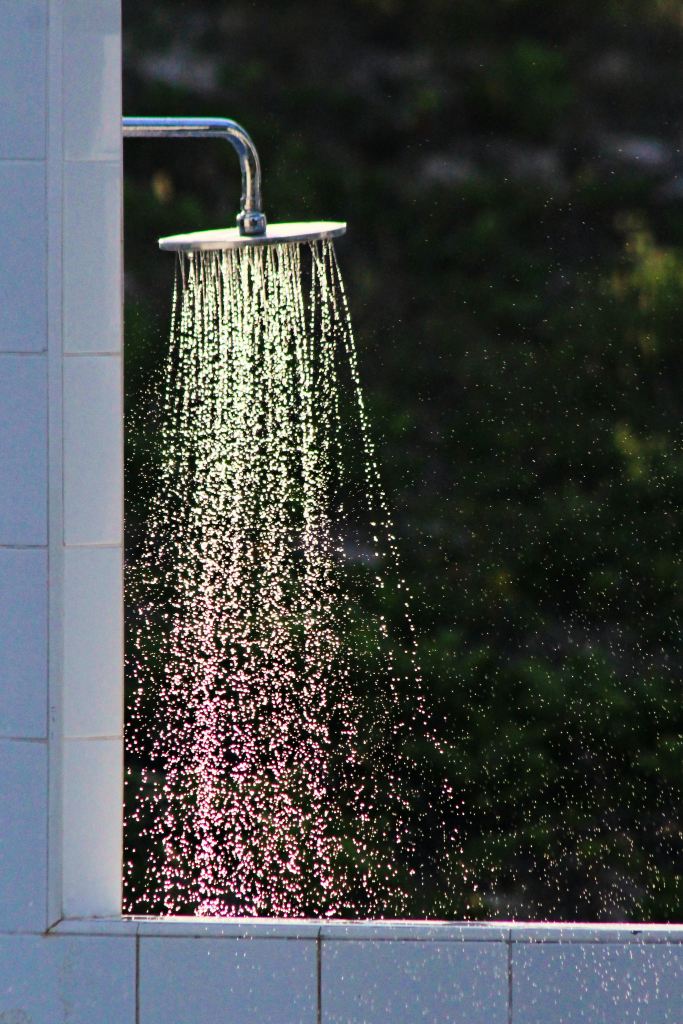
I shower as usual using warm-hot water. At the end of each shower, I turn the water temperature to total cold. This feels awful for the first 10 seconds and my mammalian dive reflex is triggered, with much deeper breathing. During the winter months the water is extra cold. The next 10 seconds are less unpleasant. By the time I have reached 30 seconds, I can tolerate it, and my hands and feet have become cold at which point I turn the water off. As soon as the water stops a warm feeling surges through my body and I sure do feel alive.

The cold showers are my daily dose of suffering and I feel they have built up my resilience over the years. I will continue BBRRRRRRR.

Palace of Care – Plot Twist

Photo by Annette Sousa on Unsplash

Some lives are difficult, relationships do not always go smoothly. Every person has problems, every couple has problems. Some couples have more problems than others. People are not always at their best and might have limited support available. Many people cope by self-medicating with drugs and alcohol. The use of substances worsened their relationship over the years. Her family had never approved of him, and let him know it.

Everything changed when she became unwell. When she really needed his support and love he showed up. He stopped using substances, and the large poultry was cooled rapidly. He was there for her at the clinic appointments. He was there during the hospital admissions. He was there for her for her hospice admission. They were surprised, given the circumstances, that they were so happy. They had privacy, they could spend time together, just the two of them.

She told us that their time spent in hospice had been the best weeks of their entire marriage.

SCM – Take a Break

Photo by Karim Mansour on Unsplash

Some interactions in palliative care with patients and their families can be hard to handle. e.g. breaking bad news to younger people. Some conversations are intense and emotionally draining. In any hospice inpatient unit (IPU) the staff may need to have a number of such conversations with different patients during any given ward round. Often the team may be about to visit the next patient and may still have remnants of the previous case on their mind. This is when I would lead everyone away for a short break.

It might be heading upstairs for a hot drink and a quick snack. A short walk outside for fresh air and a dose of sunshine or it might be heading out into the rain. A reset /restart button is activated. The team is led away from the site of upset feeling for five minutes of self and team care. A brief respite from the frontline. Good role modelling, leading by example.

We might only have been away for a short period of time but on our return we feel better and more open to tuning into the next patient’s problems with our full attention.

If you are a clinician why don’t you try adding small breaks into your schedule after intense patient encounters? Do they work for you?

I think therefore I am? – Do Not Disturb

Photo by visuals on Unsplash

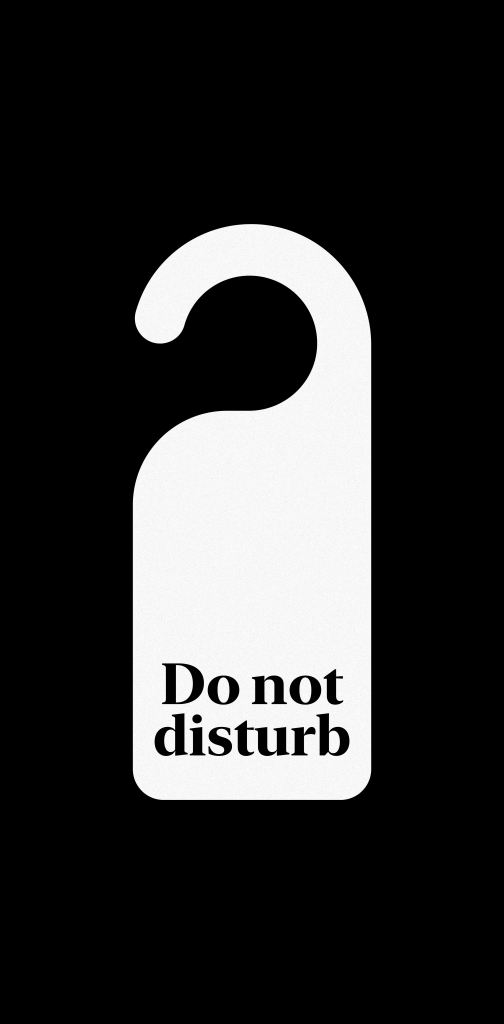
Most hospice inpatient units will have do-not-disturb signs available on each patient’s door. It can be hung out by the healthcare team when a patient is being assessed or if something is being done, e.g. patient bathing. It is used to indicate to other people not to come in as the healthcare team is busy with the patient. This is in contrast to most hospital settings I have worked in that do not have these signs available for use. Closed curtains around a bed do not stop people from barging in. Privacy can become a distant memory.

Are do-not-disturb signs patient-centric or staff-centric tools? Could a patient and their family be empowered to use the signs when they want some privacy? Intimacy is not encouraged in clinical spaces but may be something which is deeply missed. Could a more patient-focused do-not-disturb sign be created? A time-out-please sign. The patient might want to have an important conversation with a loved one. They might want some time to themselves away from the healthcare staff. They might want to do things that represent normality to them. When time is running out it becomes precious and I would like people to spend their time in whatever way they choose.

SCM – Self Care Microdoses – A walk in the garden

Photo by Drew Coffman on Unsplash

I have had to focus on self care this year as it has been challenging at times. I’ve had to shift my focus away from saving up all my self care for a holiday as I need more regular doses of self care. In fact if I had not done self care activities on at least a daily basis I would be in much worse condition than I am at present.

I’ve been working on microdoses of self care. This might be as short and simple as a five minute walk in the hospice garden. This is a combination of leaving my usual seated in front of a computer working position and going outside. Five minutes of fresh air and occasional sunshine in between the recurrent episodes of heavy rain we have experienced in Auckland this year. A small dose of exercise for my body which is at risk of pressure injury from prolonged sitting. A chance for my eyes to focus on objects which are further away than the screens I look at while doing computer based work. To feel the wind through my hair. To smell the flowers and the trees.

There is a slightly more shaded area of the garden path I spend a bit more time in. If you stop at the right spot and close your eyes you feel almost transported into a forest. You hear the wind rustling through the trees. There is birdsong from nectar feeders who have had plenty to eat in recent weeks. I walk around the garden and I might bump into some of the many volunteers who keep the garden looking its best. I try to stop and chat to the volunteers as often as I can. To thank them for what they do for our organisation.

Five minutes, 500 steps. A short workout for my otherwise sedentary body. A couple of times per day on a good day. It all adds up, every little bit counts.

What self care activities have you done for yourself today? What can you do for yourself that will take five minutes?