Palace of Care – A Self-Sufficient Family

Photo by Jay Wennington on Unsplash

One of the cruellest consequences of COVID lockdowns was the restriction that we had to place on visitor numbers. We were generous in that we would allow each of our patients up to four named visitors, but this still fell short when it came to families with more than four members. We acted with humanity and compassion, thinking to ourselves how would we feel if it was us in their situation? But what do you do when someone has 15 children? It is difficult for a family to choose who gets to come in, and who has to stay out. Video chat technology allowed for virtual visits but they were no replacement for in-person visits.

Our patient was a man in his 50s who had six children, the two eldest lived out of town. The four younger children were keen to spend time with their Dad, and their Mum struggled to choose who would be the nominated ones for any given day. The family had always been close and the parents had home-schooled their children. They had always done things in their way. Having Dad critically unwell and away from home added to the overall disruption of their family life. Our team’s opinion was that our patient only had limited time left to live. Given the circumstances, we flexed our approach and allowed the four younger children to visit alongside their mother.

Continue reading

Palace of Care – A Warm Welcome

Photo by Jen Gunter on Unsplash

I had never met her before but I had been told she was originally from the Netherlands. I wanted to make her feel welcome to our place and I had selected an orange face mask to wear. I was told of her arrival and asked my Dutch colleague how to greet and welcome her in Dutch.

A faded washed out looking lady sat in her wheelchair, accompanied by her daughter, son and his wife. Her skin looked translucent and had a slight grey tinge to it. I bent down so that our eyes were level and said.

Hoi daar (Hello there)
Welkom (Welcome)

She looked up at me with her dull eyes and there was the slightest hint of a smile in the corners of her mouth.

We wheeled her into the bedroom and with great effort and assistance from her son she was able to climb into bed.

I asked what she had done for work, her son could see his mother was too weak and tired to answer and said, “Mum was a nurse, in the last half of her career she worked in mental health.”

She needed a line inserted into her arm, this had been difficult before the chemotherapy had made the veins hide even more.

To put her at ease I talked about my first job after graduation. Psychiatric house officer, where I had to take care of the physical needs of over 40 inpatients. A busy job because a lot of the patients had many physical ailments and were overall people who did not take care of themselves well.

I recounted the first patient I ever examined. A man who was naked and stood in the centre of his bed with his arms outstretched in the crucifix position. He couldn’t follow my instructions as at the time he was incapable of conversing in any of the languages of the Planet Earth.

My next task was to take blood from a patient with suspected Neuroleptic Malignant Syndrome. This is a rare but potentially lethal condition that can occur in unlucky patients who are on anti-psychotic medications. Blood tests are needed to confirm the diagnosis. The problem I was faced with was the patient had been in a catatonic state for over a week. He was cast on his bed in the foetal position with both of his arms flexed towards his chest. I wasn’t able to access the veins of his arms at all. The first blood test I ever took as a new doctor was from the patient’s right foot.

These stories elicited a quiet chuckle and another wisp of a smile from my patient, who said, “My patients were always up to many antics. I can see you’ve been up to some yourself.”

I smiled and winked at her as I left her to spend some time with her family.

Guest Post – Naomi’s Notes – Offering

It was a week before Christmas, a special birthday celebration and instead of just a few candles we offered 1000 butterlamps.  These were lit before the start of the ceremony which concluded with the traditional Happy Birthday song for Rinpoche.  

After our shared lunch I walked slowly up the stairs to the Temple.  From the bottom of the stairs in the distance I saw a young woman  with her two children aged 6 and 8. I greeted her on arrival and she asked if she could light some butter  lamps.  She looked close to tears, and I asked her, “What’s the matter?”

“I need some help, my son died last week and I need some kind of spiritual help that’s why I came here. Is there a Lama here? I need to talk to someone.” Then the floodgate of tears was unleashed.  I put my arm around her and let her cry. Her two young children looked worried. I had some home baking upstairs and asked them to bring it down for a cup of tea. 

When we were alone she shared  that her 23 year old son had committed suicide.  His siblings were told their brother had died.  They were too young to understand and she didn’t want to burden them with it. As the children came bounding down the stairs I offered them something to eat and suggested they play outside on the grass where they could still see us whilst I talked with mum.   They appeared to be relieved to have  another adult to talk to their mum. 

Continue reading

I think therefore I am? – SEP

Photo by NASA on Unsplash


Ford Prefect says, “An SEP is something we can’t see, or don’t see, or our brain doesn’t let us see, because we think that it’s somebody else’s problem. That’s what SEP means. Somebody Else’s Problem. The brain just edits it out, it’s like a blind spot.”

The Somebody Else’s Problem field… relies on people’s natural predisposition not to see anything they don’t want to, weren’t expecting, or can’t explain.

From Douglas Adams’ Life, The Universe and Everything 1982

The SEP field generator is an incredible thing, where-ever you shine the beam, like an amazing piece of magic, suddenly the problem disappears and becomes someone else’s problem.

Sound familiar when you think of palliative care patients and their problems?

Other specialities do this to us all of the time, they leave work unfinished or not even attempted. They somehow know that us good-natured folks will make sure that things are sorted.

This isn’t really fair to us, but especially unfair to the patient. Where is the patient in all of this? Certainly not in the centre of attention.

Continue reading

Guest Post – Naomi’s Notes – Cushion

Photo by Wonderlane on Unsplash

They met at a seven-year meditation/philosophy course, which required participants to travel to India each year for the 1st week in April for instruction. It was taught by  H E Tai Situ Rinpoche one of the great Meditation Masters.

The seating was cushioning on the floor, he sat in front of her.  He was from Germany with limited English and she was from New Zealand (NZ) with limited German but they were able to communicate.   They formed a group with the Spanish man that sat next to him and the Taiwanese woman that sat next to her.  The group exchanged email addresses and from time to time corresponded. When in India they would all have breakfast together.

After year three of the course, he wrote to say he had to drop out of the course as his 88-year-old mother was sick and he needed to care for her.  He wrote about his newly acquired knowledge in gynaecology, breast cancer, podiatry, and dentistry gained from having accompanied his mother to all of her appointments.

She wrote back and gave him some moral support.   She also sent a gift from the NZ sheep, woollen socks for both his mother and him. 

Continue reading

I think therefore I am? – Yearning for connection

Photo by Toa Heftiba on Unsplash

What this palliative care doctor thinks:

It’s not just about language, that’s why Google translate can’t replace human interpreters at the moment. It might be able to translate the words literally from one language to another but it doesn’t yet have the cultural context of where the words came from. The history of the language has not been programmed into it. Take English for example a lot of the words we use are derived from French and other Latin-based languages. You don’t ask for sheep meat, you ask for mutton from the French mouton. Similarly beef, not cow meat, from the French boeuf. A translator program is not the same as an interpreter program. Google Interpret would have to be much more sophisticated and would need cultural programming as well as linguistic programming.

A person may be speaking Chinese, but they are also living Chinese. The food that they eat, the clothes that they wear. Rituals that they follow to celebrate life, and how they deal with death and dying are the missing parts of a person’s identity that cannot be easily translated.
The most important tool I have as a palliative care doctor is my ability to communicate. I make a point of greeting my patients in their native language as much as possible. My accented version of their language is my attempt at providing them with a hint of familiarity. In the area I work in people come from all over the world, from lots of different cultures, with over 200 different languages spoken in our area. I certainly do not know all the greetings that are available but a quick Google search can provide me with at least a few words of greeting. A little demonstration of respect that I have made the effort to try to connect with another human being. It may have taken me ten seconds to type in my query but it can often bring a smile to a weary sufferer, whose illness has taken over their body. Someone for whom English may be a second or third language. A little snippet of home, can make a real difference.

Continue reading

Guest Post – Naomi’s Notes – Precious

Part 1

Photo by charlesdeluvio on Unsplash

At school two little six year olds had an argument.  They were both very upset when I called them over to talk to me.

I asked the first one what the problem was.

Pointing at the other girl with a quivering finger she said, amongst sobs, “she called me a F F F FAT BANANA. Why are you laughing?”

“Well,” I said, “are you a banana?”

“No.”

“Are you fat?”

“No.”

“Is it true?”

“No?”

Softly I said to her, “so darling if it were true it would be serious, but it’s not true so it’s funny isn’t it?”

I asked the other girl, “why did you say that?”

“I wanted her to be my friend but she didn’t want to,  so I called her a FAT BANANA…  Naomi,  I really love bananas.”

I smiled and said to her, “darling if you want someone to be your friend, that’s not the way to do it. First you  have to  help them if they need help, be kind to them and laugh at their jokes.   Then they will want to be your friend because they can see that you are a kind and caring  person.” 

Continue reading

Palace of Care – What’s in a name?

Photo by Tim Mossholder on Unsplash

She was transferred from hospital into hospice at the end of her life and only had days left to live. End-stage cancer had taken complete control of her body. We were handed over that it was important that we respect her wishes especially when it came to calling her by her proper name. It was a name that she had to fight for, that she had won for herself, but at great cost.

Not everyone understood her wishes. When her relatives came to see her they brought old family photos, and called her by a different name. She looked different in the photos, much younger, and dressed in different clothes. We were all young once. She was becoming less responsive as each day passed and her family talked about someone who sounded different to the patient that we had only a short time to get to know.

Continue reading

Palliverse’s Greatest Hits from Oct 2014 – #getjakbak revisited – Part 2

Photo by Jonathan Kemper on Unsplash

At 3pm on Friday afternoon, 18 hours before our departure time, I received bad news. The promised community raised funds had not come through. Was the trip to be cancelled because of a deficit of $3320?

I finished the phone call and took a quick walk around our inpatient unit, and talked to some of the staff about the funding problem. One of the nurses asked me what I was going to do. I really had no idea but for some unknown reason I replied to her, “Magic.”

I had 120 minutes to come up with $3320, at a rate of $27.67/min. What to do? What could I do? What was on the line was a dying man’s wish to return home to see his family. This was his final chance to try to get home, he had been trying to get home ever since he had arrived here months ago.

Who could help? Maybe a virtually community of practice? I went online and decided to launch my first ever crowd-funding campaign, asking people to pledge money towards the trip deficit. The original post can be read here. I emailed a link to it to everyone that I knew.

17 minutes later the first pledge came in, then another, then another. Drip by drip the pledges came in. $20, $40, $100, $200. Palliative Care people were keen to help including healthcare staff, administration staff. People from around New Zealand and Australia came to our aid. One of the other patients on the ward caught wind of what was happening and pledged $200 to help his fellow patient get home.

With only five minutes to spare we reached our goal, the trip was going to happen! I went to see our patient and his wife and told them that I would be seeing them early tomorrow morning for our trip back to the Islands.

Island-Man: Far From Home

Bedside Lessons – 7. DNA

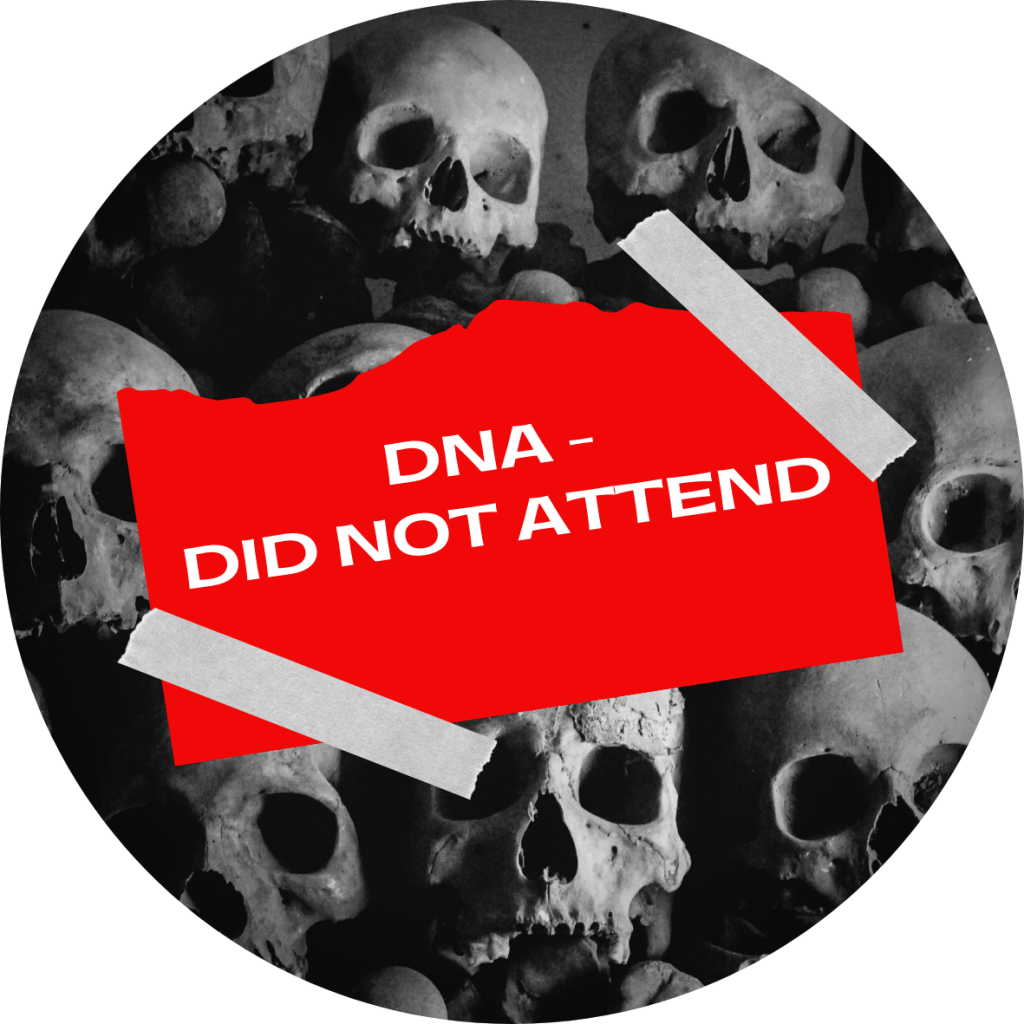
Labels are easily applied to people but are not always appropriate. DNA – Did not attend is one of the commonest labels that can be given to patients and often no attempt to check their actual circumstances is actually made. DNA is a label that sticks to someone and can bias clinicians against patients without allowing them a chance to explain themselves.

Here’s a story about a patient that I met on a home visit many years ago which changed my thinking about the DNA label and labeling in general.

Continue reading