Palace of Care – Family Meal Deal

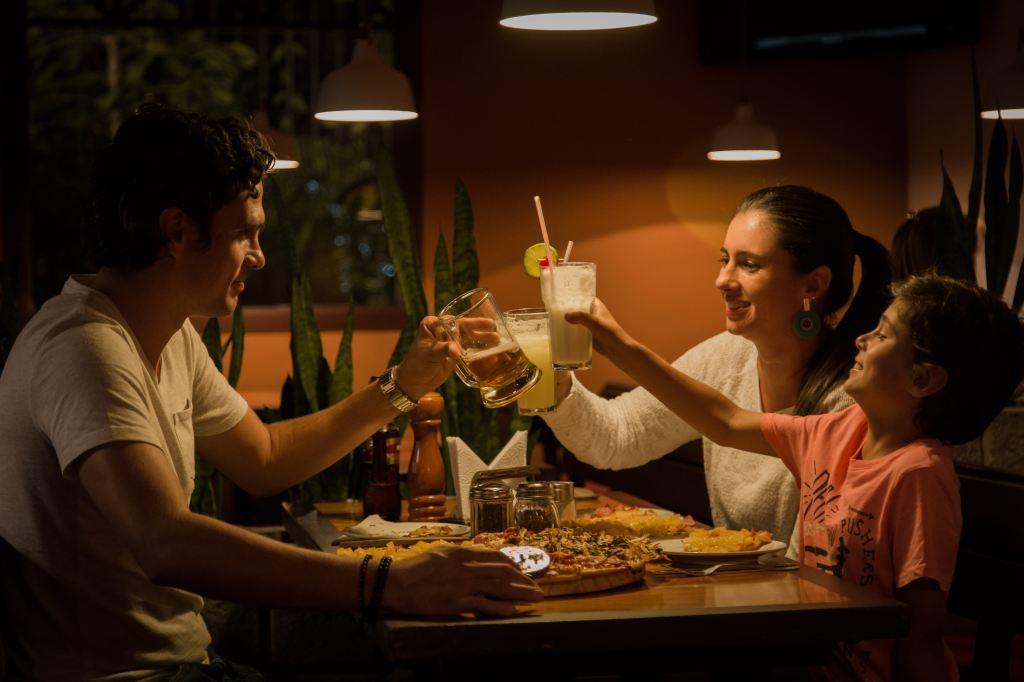
Photo by Pablo Merchán Montes on Unsplash

Our patient was dying, earlier in the day his wife had asked how long he had left to live. I had told her I wasn’t sure, but it was likely he only had hours to short days left to live. It usually is hard to tell but in his case it was even harder as our team were surprised that he was still alive. We had expected him to die two days ago. He was a strong young man who didn’t want to die. He continued to hold on. I talked about no matter how much time was left that we would try our best to keep him calm, to keep him comfortable. We’re going to get you through this.

His daughter was just outside of the room. She was cutting out pictures from magazines and she was assembling a collage. There was a picture of a beach. Someone had a straw hat on and holding a fishing rod. There was some pictures of indoor furniture. I think there might’ve been a fluffy toy bunny in another picture. She had a glue stick in her other hand and she was rearranging the images on the blank sheet of paper in front of her. She had seen her father become more unwell over the past month, increasingly so in the past week.

It’s not standard practice for us to provide meals to family members but we do make exceptions at times. We arranged for meals for both of his children and their mother, catered for by our hospice kitchen. The children were given the choice of ordering either the fish and chips, or the chicken nuggets and chips. This was extra exciting for them, they would have their own tray of food, including dessert. What a treat. They could eat together with their mother who had her own tray. Father had been too unwell to swallow anything for the past week, and had slept most of the last three days.

A happy half hour that they shared together doing something normal. There had been too little of that in recent weeks. Long days and nights in hospital had been stressful. The children didn’t get much time with their parents together. The time was precious for them, and hopefully it allowed for a nicer memory to be formed.

Our patient died peacefully later on that same night. The room became crowded as many other family members came in to pay their respects.

The next day his wife asked us how much the bill was. When the interpreter told her that there was no charge, she burst into tears.

Palace of Care – Orbital Crossover

Left – pyjama pants, Right – neck pillow hoodie

Her pyjama pants were brightly coloured. They had repeated patterns printed on them. I didn’t have my glasses on and I had walk closer towards her to see what they actually were. The fuzzy, blurry lines sharpened. The shapes were dogs, lots of different breeds. Each of the dogs was holding an item of food. It reminded me of one of my own favourite work items. My hooded neck pillow with pictures of all the health food groups. French fries, hot dogs, pizzas, hamburgers and more. The greasier the better. Guaranteed to line your arteries within minutes of ingestion. I promised to visit again.

We hadn’t seen each other for many months. Things had not gone so smoothly the last time we had met. We had both changed. Lives had carried on. Holidays had been spent in distant locales. We had both ventured away from the familiar comforts of home. We had both talked in front of many different audiences. I had a two week break from work. Two weeks ago she had taken her final break from work. I had started exercising more and having more fights (Brazilian Jiu Jitsu). She had become less active and had given up on her fight. My life was becoming busier. Her life was slowing down. My world continues to expand as her world shrinks down.

We weren’t sure if we would meet again but here we are. I will try my best to make her more comfortable. We both know that her time is running out. We will try to make the most of the time she has left. I will make changes to her medications to try and relieve her suffering. I can’t take away her existential suffering. I cannot make whole what is falling apart at her centre. She could handle all the changes but the illness has made her mouth shrink, her dentures don’t fit any more, and she can’t smile her usual smile. That’s what hurts, that she can’t be who she always has been. She doesn’t feel like herself any more. I know she is an actor and I told her she doesn’t need to act in front of me. I need to know what is really going on in order to help her. I need her to be herself. Her deteriorating self. She can accept that death is approaching. What’s difficult is the dying process.

Grief doesn’t just occur when someone dies, it starts much sooner than that. People grieve as soon as they start losing things. Having to let go of something you have pursued with passion for a life time. Having to say goodbye to a job that was a vocation. Having to handover the mission to someone else. The school would never be the same again, but she wants it to move on without her. To keep on growing and developing young people. Igniting the spark of self-discovery. Feeding the nascent self-confidence. Inspiring youth to aim for the stars. To believe in themselves, to push themselves, to become somebody. “If you want to be a teacher, you have to love kids.” No-one loved the kids more than she did. And look where they have ended up. Starring in shows of their own. All because one of their high school teachers believed in them, twenty years ago. I can think of worse legacies to leave behind.

Palace of Care – Still my favourite thing

After almost 24 years of being a doctor my favourite part of the job remains interacting with the patients and their families. It’s true in hospice we have many serious conversations about topics that don’t get more serious than death and dying. I think there is still a place for light-heartedness and whimsy during the inpatient ward round.

A conversation about a common favourite colour of patients (purple) somehow led to the topic of wigs.

What colour is your wig?

Every colour, even purple. I’ll come back and show it to you later.

Really?

Yeah, I’m not just making it up, I’ll come back and show you my wig.

I didn’t know you were into Cosplay.

Only for selected patients.

An hour later…

Knock knock Hello.

Hello. Who is it? Oh, it’s you doctor. Do you mind coming back in again. I didn’t have my camera ready.

Sure.

Take 2

Knock, knock. Hello.

Oh, hello, who is it? Oh, it’s you doctor. You look a bit different.

Yeah every time I pick up my magic wand I feel different. Are you ready for me to cast my spell?

You’re too late, I’ve already been to the toilet.

Okay, umm, I’d better find someone else to use my wand on as it is fully charged up. Maybe a staff member.

I think therefore I am? – Greetings

Photo by Katie Moum on Unsplash

I work in one of the most ethnically diverse areas in the southern hemisphere, South Auckland. There are people from many different places who now call this area home. English may well be a second, third or even fourth language to many of my patients and their families. Many different native languages are spoken and on any given day our inpatient unit may be full of people representing many different groups.

I make an effort to learn how to say simple common greetings in the native language of my patients. Over many years I have gathered a list of these greetings. If I don’t know the standard greeting I will resort to an internet search for the appropriate greeting before I meet the patient. A simple “hello” in their native language is usually appreciated and is the first step in building rapport. If I know more words in their language I’ll make use of as many as I can during the rest of the consultation. When trying to make a connection you usually only have one shot, make it a good one.

Palace of Care – A Different Question

Photo by Brett Jordan on Unsplash

What do I need to know about you to be able to look after you better?

Nothing much. I just want to be able to go out for a smoke. I asked them about it in the hospital but no one wanted to help. They didn’t want to listen to me. I didn’t even miss the smoking so much. I just wanted to go outside.

It’s important for me to listen to you, isn’t it?

Yeah, it means a lot to me that you guys will listen to me.

I feel more comfortable today. I don’t remember everything about yesterday but I was feeling bad. The pain was bad.

I’d like to work on your pain some more and try to get you comfortable.

Okay Doc, thank you.

I’ll see you later.

I think therefore I am? – Do Not Disturb

Photo by visuals on Unsplash

Most hospice inpatient units will have do-not-disturb signs available on each patient’s door. It can be hung out by the healthcare team when a patient is being assessed or if something is being done, e.g. patient bathing. It is used to indicate to other people not to come in as the healthcare team is busy with the patient. This is in contrast to most hospital settings I have worked in that do not have these signs available for use. Closed curtains around a bed do not stop people from barging in. Privacy can become a distant memory.

Are do-not-disturb signs patient-centric or staff-centric tools? Could a patient and their family be empowered to use the signs when they want some privacy? Intimacy is not encouraged in clinical spaces but may be something which is deeply missed. Could a more patient-focused do-not-disturb sign be created? A time-out-please sign. The patient might want to have an important conversation with a loved one. They might want some time to themselves away from the healthcare staff. They might want to do things that represent normality to them. When time is running out it becomes precious and I would like people to spend their time in whatever way they choose.

Palace of Care – No Surprises

Photo by Taha Raef on Unsplash

The blood tests were all deranged and matched what I had found on examination. She was dying. I maintain a no surprises policy. I don’t want my patient or their loved ones to be surprised by sudden deteriorations which could lead to death. They needed to know. I had to tell my patient and her gathered family what I feared was happening.

“I’m worried that everything is getting worse. If this continues I think there might not be much time left, maybe only days. I’m sorry to have to discuss this. I think you are dying. I’m going to try my best to keep you comfortable. We haven’t tried the steroid treatment before. I’m hoping that it will help you feel more comfortable.”

My patient was too weak to talk, her face was covered by a towel. Her family said they understood and thanked me for telling them what was happening.

“I’m sorry this is happening, I wish I could stop it.”

I was surprised when my patient reached her hand out to grasp mine.

She said, “It’s okay. Thank you for helping me.”

I swallowed hard and promised I would keep on trying to make her comfortable.

As soon as I left the room the family made arrangements for her child to come in from school. They had to prepare him for what would happen.

She died less than 12 hours later.

I think therefore I am? – Speed Dating

Photo by Christina @ wocintechchat.com on Unsplash

Recently I was at a research meeting in my role as a clinical advisor. In the gathering were a number of kaumatua (Māori elders.) We were all asked to share our pepeha, our introduction. Each member of the group was given time to talk about themselves. Where they were from. Who their family of origin was. How did they get to Aotearoa New Zealand. Which mountain and river they are connected to. The kaumatua in the room listened intently to each person’s story and they were actively trying to find connections with their personal stories. It was almost like speed-dating, trying to build rapport, to build connections between previous strangers. The Māori call it whanaungatanga – getting to know each other. Something that is really important for people who are planning to work together. 

Again this makes me think about how we do things in the clinical realm. When we first meet our patients and their whānau/family each party are strangers to the other. In Western medicine the getting to know each other is usually one-sided. We want to know as much about the patient as possible without giving away much about ourselves. What would it be like if we introduced ourselves through a pepeha? Would it lead to more opportunities for human to human connection? Could the establishment of rapport possibly lead to the establishment of trust? You know what? I’m going to give it a go. I’ll let you know what I find out in a future post.

I think therefore I am? – Why Should They Trust Us?

Photo by Nikola Johnny Mirkovic on Unsplash

The patient arrived and looked as unwell as she had sounded on paper. Advanced end-stage illness, worse for wear after many weeks in hospital. Poor sleep night after night. Recurrent bad news relayed, unclear if understanding had been checked on or not. The standard restaurant question, “how’s your meal going?” is not asked in most clinical settings. I was told they appeared wary and slightly suspicious of what we had to offer. They had just met our team, they did not know us, we did not know them. They were assessing us as much as we were assessing them. We were not there to be opponents or combatants. We needed to connect in order to work together on the same team. If it wasn’t for the patient, none of us would be in the same room as each other. We were strangers who needed to try to collaborate with each other.

First impressions count. I relaxed my control of my Kiwi accent and let my inner hometown boy speak. I slipped in as many indigenous words as I knew to make it clear that their culture and traditions were welcome here in our hospice. I mentioned that a Chinese dude would be leading the singing practice the following morning, songs written in their language. “Please join me, I need all the help I can get. I’m tone deaf, I don’t understand what musical keys are, but I am loud. I once had singing lessons, but my wife asked me to ask the teacher for a refund.” The sound of our shared laughter was the background music to our rapport building project.

“We’re going to take things one day a time. We’ll get to know you. You’ll get to know us. We’ll all work together to get our patient/family member more comfortable.”

Trust has to be earned, one interaction at a time. We may only get one chance to connect. Give it your best shot.

Palace of Care – Good Enough?

Photo by Nik on Unsplash

We thought she still had weeks left to live. We didn’t know it would only be hours. She died suddenly and the family asked the nurses to perform CPR – cardiopulmonary resuscitation. The nurses calmly and gently refused. They knew it wouldn’t work, she had been too unwell. It would only cause her further harm with no possibility of benefit. Her distraught family’s tears flowed freely.

When we were informed of the sudden death we were surprised but not shocked. We knew she was dying but had not thought it would be so fast. There was nothing more we could do for our patient. She had died. The care package needed to be directed towards the survivors, her family members. We came in to talk to them, to try to explain what we thought had happened. We wanted to try to calm their distress, to try to prevent complicated grief.

We expressed how sorry we were for their loss. We told them we didn’t know exactly what had happened. We thought it was due to overwhelming disease. Nature could not be controlled by us mere humans. It was too much for even the strongest of women to handle, even with the greatest level of loving family support. She had tried her best to hold on to life, but it was not to be. The family accepted our explanations and uncertainty. They did not want her to have any further investigations. There had been too many over the last months.

They said she had loved it in our inpatient unit. She had felt well looked after. She knew we were all trying our best to help her out, and the family too. They laughed when they recounted a story about their loved one’s ultra direct communication style. They hugged us as they thanked us for the care provided. We wished we could’ve done more.

They asked if they could all stay with her overnight. They needed to look after her as per their cultural traditions. They needed to look after each other as a family. It had likely been a long time since the siblings had all stayed the night together with their mother. It was their last chance to all be together as a complete family, as tomorrow she would rest in her final bed. We made a compassionate exception as the family needed to do their duty. They also needed to start their healing process. Bedding and more space were prepared by our staff, as if by magic.

It can never be perfect in palliative care, if it was perfect she wouldn’t have been sick, she wouldn’t have died. Had we done enough? We were trying to do our best to make her comfortable before she died, and we were never going to stop trying. We had listened to her and her family regarding what she wanted and didn’t want. She had died suddenly but peacefully. The family were sad, but they were not destroyed. Life would go on. We had done what we could. We had done good enough.