After almost 24 years of being a doctor my favourite part of the job remains interacting with the patients and their families. It’s true in hospice we have many serious conversations about topics that don’t get more serious than death and dying. I think there is still a place for light-heartedness and whimsy during the inpatient ward round.
A conversation about a common favourite colour of patients (purple) somehow led to the topic of wigs.
What colour is your wig?
Every colour, even purple. I’ll come back and show it to you later.
Really?
Yeah, I’m not just making it up, I’ll come back and show you my wig.
I didn’t know you were into Cosplay.
Only for selected patients.
An hour later…
Knock knock Hello.
Hello. Who is it? Oh, it’s you doctor. Do you mind coming back in again. I didn’t have my camera ready.
Sure.
Take 2
Knock, knock. Hello.
Oh, hello, who is it? Oh, it’s you doctor. You look a bit different.
Yeah every time I pick up my magic wand I feel different. Are you ready for me to cast my spell?
You’re too late, I’ve already been to the toilet.
Okay, umm, I’d better find someone else to use my wand on as it is fully charged up. Maybe a staff member.
I’ve attended regular professional supervision sessions, at least once a month, for over 13 years. I’ve worked full-time in palliative care for almost 16 years and it was recommended that I attend these sessions early in my training. The rest of the team attended sessions and it was expected that I attend them myself. I was recommended a psychologist/psychotherapist who supervised a number of my specialist colleagues at the time.
I wasn’t sure what to expect for the first session. For New Zealand men talking about your feelings is still a foreign concept even in this day let alone 16 years ago. I gave it a go and the first session was spent with my supervisor and I getting to know each other. The sessions were limited to one hour and I was encouraged to talk about any situations that had invoked feelings in me. At the time I talked about clinical situations I was dealing with. Helping patients and their families deal with their death and dying on a full-time, daily basis did take a toll on me. I found myself taking some of the cases part of the way home with me. I was witnessing tragic events a number of times a day and the raw emotions needed to be discussed. Professional supervision was an outlet for this necessary release to happen. Trust in the process developed over the next months and more feelings were shared.
This first supervision relationship lasted for six months. It was initially helpful and thus I continued. Following the penultimate session, things had changed and I found myself feeling upset for the following month. This was not how it was supposed to work. I was supposed to feel better after these sessions, not worse. First, do no harm was the principle that had been taught to us early in medical school. This was not right. I brought it up with my supervisor at the next session. He said he would address it, but I left that session feeling even worse. I decided to fire him. I became disillusioned and did not attend any further sessions for the next 18 months.
In my final year of specialist training, I was encouraged to give supervision another go, with another practitioner. This worked out much better and was much more helpful. It felt safe to discuss some of the situations which had triggered various emotions when dealing with patients and their families. Sometimes people reminded me of my own family members. Other times situations felt a bit too close to my own. An example was when I had to look after someone who had a similar background to me. I didn’t know him but we had gone to the same medical school, and we had become medical registrars at the same time. I was study buddies with some of his classmates. We passed the physician exams at the same time and started our specialist jobs in the same year. The biggest difference between us was he was dying of cancer and I wasn’t.
I’ve had many supervision sessions in the intervening years and they have kept me well. The subject matter changed as my role and responsibility changed over time. With growing experience, the clinical situations did not affect me as much as they did when I started. I have developed resilience and maintain firm boundaries to protect myself and those I care for professionally. When I had to take on managerial and leadership roles this was initially stressful. As specialist doctors, we undergo a long training process lasting at least 13 years. In our curricula, there are no sessions on management, leadership or education. These are all aspects of a specialist’s job and can be a source of stress. My supervision sessions have allowed me to look at things from other points of view and to reflect on my practice. Some months have been particularly tough and I may have needed more than one session in those months.
Overall the sessions have been of great value to me and remain one of the important self-care activities I do regularly to keep myself professionally healthy. I would recommend these sessions to anyone who wants to have a long-term career in palliative care. To anyone considering doing them, I would encourage you to give it a go. The raw emotional work of palliative care can make you feel like you are in a pressure cooker at times. We could all use a release valve to let off some steam and to stop the contents from burning (out). I’ve needed to focus more on self-care this year and professional supervision remains one of the anchors of my self-care practice. I believe that if I take care of myself better, I will be better able to take care of patients and their families.
Hospice began as a radical social movement for the purpose of caring for dying cancer patients. The philosophy has spread to many areas of the world and hospice has become institutionalised in many countries. Hospice has become part of mainstream healthcare with all the benefits and drawbacks that come with it. It has come at a cost. Hospices seem to have lost their mojo, their drive to be agents of change. They have become maintainers of not the status quo but of the stasis quo. We don’t want to change at all, some staff and volunteers may in fact wish for the good old days. When the services were small, the patient selection criteria were restricted, and life was simpler.
Has the hospice movement ground to a halt? Does the philosophy behind it need to be reassessed and redesigned? Are we brave enough to accept that we are not the experts on everything? Our populations are ageing and there will be more elderly people around than ever before. There will be more people with dementia and end-stage frailty who will need palliative care input. A huge amount of need requires our urgent attention. Our care will need to be truly patient-centric, even if the patients are unable to thank you for the care provided. We need to be reminded that we work in healthcare to help people. Our jobs exist because of patients. We need to remember it is not the other way around.
What can we do to resuscitate the hospice movement? Fresh ideas, reaching out to other groups and asking the consumers what they want. Co-design of our services needs to be done more than tokenistically. It’s time to come down off our pedestals and mix with the hoi polloi, time to get in touch with reality. Welcome back to the rest of the world. Time to wake up from our dreams and ground ourselves in practicality. We are not that special. What can one person do? Open your mind to new ideas. Listen to what your patients actually want. Remind yourself what a privilege it is to be involved in their lives. It’s not about you, it’s about them. It’s their life. What’s next?
Hospice/Palliative Care people have a reputation for being nice to patients and patients’ families. We try and treat people with respect and kindness. We try to be compassionate in our dealings with people who are extremely unwell, people who are dying and their loved ones. When time is short we want to deal with people in a calm fashion. We try to take as much stress out of their lives as possible. We work on the individual’s quality of life which is defined by them. We try our best to relieve what they think of as suffering. I’ve been working in Palliative Care for almost 16 years and I’ve often wondered why Hospice/Palliative Care teams are not always so nice to their own team members.
We don’t always treat our own team members well. Is it because we have used up all our kindness in dealing with our patients and their families? By the end of the day has the milk of human kindness been out for too long? Does it return back to base soured? Our faces may not be so cheerful. Our patience levels running on empty as we have worked on patients for hours. Why so glum chum? Have we shone our lights of external kindness so brightly that when we return back to base, the shadows we cast are that much darker?
We might not always like our patients, but we have a duty to treat them with respect. I can’t get angry with my patients so I look for other people to take it out on. Does this lead to us saving up our bad behaviour for our own people? External facing angelic beings, but the wings become whinges when we look inwards at our own people? It doesn’t have to be this way. What can we do to change Hospice/Palliative Care? Do we need to do a complete re-haul? Start all over again and involve patients and their families as co-designers. Can we encourage our team members to behave better towards each other? Can we create a more understanding, respectful and resilient workplace culture?
I am a child of immigrants and I grew up in a small city in New Zealand. I looked different to everyone else, at home I spoke a different language and ate different food compared to my classmates. Because of these differences, I always felt I was not as Kiwi as they were. We learned exactly the same things at school but our home lives were dissimilar.
When I was seven years old I had heard from my classmates about the tooth fairy. They told me that if your tooth comes out put it in an envelope and place it under your bed. The tooth fairy will take your tooth away and exchange it for money. I thought it would be a good swap as I didn’t need the tooth any more. I popped the tooth into the envelope, and addressed it, “To the Tooth Fairy.” I placed the little package under my bed, stirring up lots of dust which made me sneeze. For the next week, I checked on the little package every day after school. I opened it up expecting to find some cash, but all I could see each time was the same old tooth. After seven times and many sneezy afternoons with itchy eyes, I gave up on the tooth fairy. She was added to my list of fakes along with Father Christmas and the Easter Bunny.
Each afternoon when I arrived home I would have to take my shoes off and put on indoor slippers. I was expected to speak to my parents and brother in Mandarin Chinese. We would always have rice for dinner and it would be Chinese food. My parents had lived in New Zealand for a while by this time but they still did not like the local food. Back in those days if they wanted to eat things like steamed buns they would have to make them from scratch. They learned how to make their own egg noodles and wonton wrappers. Once a year we would all go on a road trip to one of the bigger cities to buy Chinese groceries that were not available in my home town. Pantry staples such as soya sauce, peanut oil, short-grained rice and canned foods. My parents seemed to have different ideas and values compared to my classmates’ parents. They often talked about how different it was for them when they were children. Despite my best efforts I could never be as Chinese as my parents were. I often found myself having to be a bridge between the two worlds.
I ended up growing up in between the local Kiwi culture and my parents’ more traditional Chinese culture. I was constantly reminded about how incompletely I fit into neither culture. At times I felt different and misunderstood by everyone. In between two worlds and searching for a world of my own. Maybe this influenced my career choice. Palliative care operates in the space between the usual healthcare world of saving lives and death. I find myself being the bridge between two healthcare cultures, not fully feeling like I belong in either camp. What’s new?
The family were trying to protect our patient. They knew that his time would be short, that he would die soon. They didn’t want him to know this as the last time he had been given such bad news he had reacted poorly. They said he had been in tears for two days after the hospital doctors had told him bluntly that he could die at any time. They didn’t want a repeat of what had happened. If he only had a short time left they wanted him to enjoy it as much as possible. This was what his life partner wanted, the person who knew him better than anyone else. The love of his life.
Did he know what was going on? Probably. He had said he thought things were bad. We had not denied this. He was the one feeling every single discomfort. He was the one who was exhausted from lying in bed doing nothing. He was the one whose body continued deteriorating on an almost daily basis. He was the one who had asked to be admitted. He was worried about how his family were coping with looking after him at home. He had been told weeks prior to this admission that he possibly only had days left to live. When we asked him if there was anything he still needed to do, any unfinished business, the reply was,” No. I’ve done everything I can. I’ve done well. I have no regrets. I have a good family. We raised our children well.”
Our duty of care is to our patients. “First do no harm“ is the first principle we follow. Would telling him what he probably already knew be of benefit or would it cause harm? It was unclear as we didn’t know him well enough. For some people knowing they might only have a few days left could provide relief. They might be thankful that their suffering would not go on for much longer. For others, the short time left would provoke anxiety and distress. They would be upset by the thought of having to leave their family for the final time. If he were to directly ask us, we could not lie to him. But if he never asked we would not raise the question ourselves. His partner had made the decision. The survivors of his death had to be given the opportunity to do what was right for their family. No matter what would happen, we promised that we would try our best to keep him comfortable in what time remained.
I work in one of the most ethnically diverse areas in the southern hemisphere, South Auckland. There are people from many different places who now call this area home. English may well be a second, third or even fourth language to many of my patients and their families. Many different native languages are spoken and on any given day our inpatient unit may be full of people representing many different groups.
I make an effort to learn how to say simple common greetings in the native language of my patients. Over many years I have gathered a list of these greetings. If I don’t know the standard greeting I will resort to an internet search for the appropriate greeting before I meet the patient. A simple “hello” in their native language is usually appreciated and is the first step in building rapport. If I know more words in their language I’ll make use of as many as I can during the rest of the consultation. When trying to make a connection you usually only have one shot, make it a good one.
What do I need to know about you to be able to look after you better?
Nothing much. I just want to be able to go out for a smoke. I asked them about it in the hospital but no one wanted to help. They didn’t want to listen to me. I didn’t even miss the smoking so much. I just wanted to go outside.
It’s important for me to listen to you, isn’t it?
Yeah, it means a lot to me that you guys will listen to me.
I feel more comfortable today. I don’t remember everything about yesterday but I was feeling bad. The pain was bad.
I’d like to work on your pain some more and try to get you comfortable.
Four years ago I went on a Wellness Retreat. Some of my colleagues laughed at me once I had returned and discussed some of the activities I had paid a lot of money for. During the retreat, I ate much smaller meals than usual. I woke up earlier than usual to do yoga, followed by a tiny breakfast and then hours of hiking. Another activity was fasting for 36 hours, 24 hours of which were spent in total silence. The activities were interesting to try but I have not continued with most of them. I also learned about thermotherapy, with exposure to heat in the form of a 90-degree Celsius sauna followed by ice baths. The cold water exposure is something I have continued to this day.
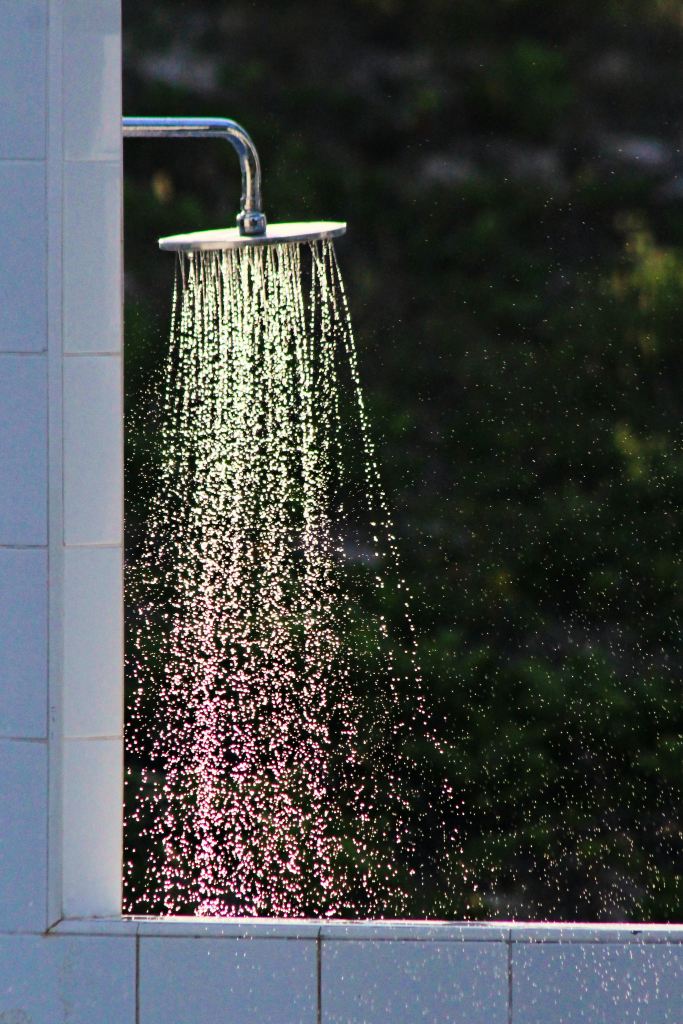
I shower as usual using warm-hot water. At the end of each shower, I turn the water temperature to total cold. This feels awful for the first 10 seconds and my mammalian dive reflex is triggered, with much deeper breathing. During the winter months the water is extra cold. The next 10 seconds are less unpleasant. By the time I have reached 30 seconds, I can tolerate it, and my hands and feet have become cold at which point I turn the water off. As soon as the water stops a warm feeling surges through my body and I sure do feel alive.
The cold showers are my daily dose of suffering and I feel they have built up my resilience over the years. I will continue BBRRRRRRR.
Some lives are difficult, relationships do not always go smoothly. Every person has problems, every couple has problems. Some couples have more problems than others. People are not always at their best and might have limited support available. Many people cope by self-medicating with drugs and alcohol. The use of substances worsened their relationship over the years. Her family had never approved of him, and let him know it.
Everything changed when she became unwell. When she really needed his support and love he showed up. He stopped using substances, and the large poultry was cooled rapidly. He was there for her at the clinic appointments. He was there during the hospital admissions. He was there for her for her hospice admission. They were surprised, given the circumstances, that they were so happy. They had privacy, they could spend time together, just the two of them.
She told us that their time spent in hospice had been the best weeks of their entire marriage.







 palliverse.com