We had to remind ourselves every day when driving down the hospice driveway to be careful when entering the car park. The pickup truck was always parked in the first parking space. A long vehicle anyway but the driver would always have it parked so the back part of the truck would be sticking out into the main thoroughfare. Everyone else who wanted to park in the hospice car park would have to make sure that they didn’t hit the back of the pickup truck. It had gotten to the point that local authorities were considering installing a specific traffic light to warn other drivers of the potential danger. No matter what time of the day or night it was the pickup truck was always there, for months on end. It was an almost constant presence that we could tell time by the shadows cast by the sun shining on it – a Japanese assembly-line manufactured sundial weighing over a tonne. Local mosses tried to grow on it with limited success. If you looked up the hospice campus on Google Maps the truck would appear on the provided image. It was always there, for months.
The truck belonged to the father of one of our younger patients. A shy young man who was very private and did not want anyone but his father to help him with showering. A devoted father who doted on his ailing son. He had attended every specialist appointment with his son. He wanted to be involved in every treatment discussion and decision. He tried to do his best to keep his son alive, and it worked to some extent. He was ever vigilant on behalf of his boy, as at the start of the son’s illness it had taken a while for him to be diagnosed. The son’s plight was reflective of the health disparities that affect some members of our population. The reality of institutional racism throughout our health system meant that the son’s story about abdominal pain and weight loss was discounted for six months. By the time his terminal cancer diagnosis was finally made, the cancer had spread to many parts of his body, causing a lot of pain.
The father and son had both been scared of hospice when they were first referred. Their oncologist had to persuade them to give us a go. Our staff assessed his pain control which was poor and asked him to consider admission into our inpatient unit for pain control. It took many conversations and for the pain to become unbearable before they were admitted. Everything needed to be discussed with the father, he couldn’t trust the healthcare system because of the way they had treated his son in the past. Given New Zealand’s track record, I couldn’t blame him for his lack of trust. On the first admission, we were able to bring the pain under control quickly, and days later he went home.
Over the next months, our patient would be re-admitted several times. His father would be there with him most days, and hence the pickup truck became part of our car park again. Our patient’s health slowly deteriorated over many weeks. The father and son who had been so wary in regards to coming into hospice were now too scared to leave. They felt safer in our place than in their place. In the last weeks of his stay, there were several times when we thought our patient was about to die, that he was parked too close to the edge of the clifftop and was falling over. Somehow he would reverse his way back to the edge again. Less than a week later it looked like this was it, half of the chassis was over the cliff edge. Some incredible inner strength would pull him back again. The doctors stopped trying to prognosticate, we kept getting it wrong. Anyone else would have died weeks or months ago.
It came as a shock to all of us when we didn’t have to take a wider berth when navigating our car park. The pickup truck which had been there for almost half a year was gone. The father did not need to stay in the hospice any more. His son had been taken away in another long vehicle by another exit for his final journey. After many months together with them, most of us didn’t get the chance to say goodbye, to the son or the father. That’s the way it goes sometimes, we don’t always get a chance to partake in the closure that we need. Goodbye. We wish you safe travels, both of you.
A situation familiar to many modern parents. Making their way through rush hour traffic to pick up their children who possibly attend a number of different schools spread throughout busy cities. The GPS recommended fastest route would only work if your car could sprout wings and fly over traffic. Another of the more stressful times of the day, the morning school drop-off being the first one. You finally arrive at the school gate and then the stress levels increase even more. Hundreds of similar parents vying for a small number of legal car parking spaces. Scanning the roads surrounding the school for a hint of a place to stop. Trying your best not to run anyone over, having to make your way around cars that have double or triple-parked. You make your way onto the grass berm next to the road. You pull your handbrake to immobilise vehicle staking your claim to this treasured location. You rush out of your car and sprint towards the school gate as if you are about to complete a marathon. Exhausted, about to collapse, running on sheer willpower alone. Next up for this sporting event is trying to find your child in a sea of other children wearing completely the same clothing. The good old bastion of conformity the school uniform. A blur of green and blue as children walk, run, skip on their way out of school. Is that my daughter? Is that my son? No, that kid just looks like them. No, that’s one of the more vertically challenged teachers. There’s my precious. As time is running out you haul them over your shoulders in a fireman’s carry and race to your car. Buckling them into their car seat as if it was straitjacket. Only three more to pick up….
Stressful enough on any standard school day, the school pick-up becomes even more stressful when the other parent is dying in the local hospice inpatient unit. At 4pm every afternoon the children of two different families would arrive to see their unwell parent. Typical Kiwi kids wearing a number of different school uniforms. Various lengths of hair, various ages and stages, brought together for the same purpose. Trying to spend as much time as possible with a parent who might not be around for much longer. A heart-warming sight but at the same time heart-breaking. In the future these school aged children would likely remember visiting their parent at the local hospice. I hope that their memories aren’t too bad. I hope it wasn’t a scary place for them. I hope that they felt welcomed. I hope their family tells them later on how meaningful their visits were for their late parent. I hope they are told how much their parent loved them and had tried their best to stay alive as long as possible, much longer than most people did. How their parent held on for their birthdays, their first day of school, or for their graduation and other important milestones. I hope they can remember the happier times when one of their parents wasn’t dying and they always did things as a family.
Every birthday from now on, there will be someone missing from the celebration. Christmas and New Year will not feel the same any more. Life will go on but it will be different. Who will take the kids fishing for eels? Who will teach the kids how to drive? Or how to cook? Or how to sew clothing? Someone will be missing when they turn 21. If they get married, someone else will walk them down the aisle. The youngest kids might not remember much about their parent at all.
Please make the most of each day. Time with children and family is so darn precious.
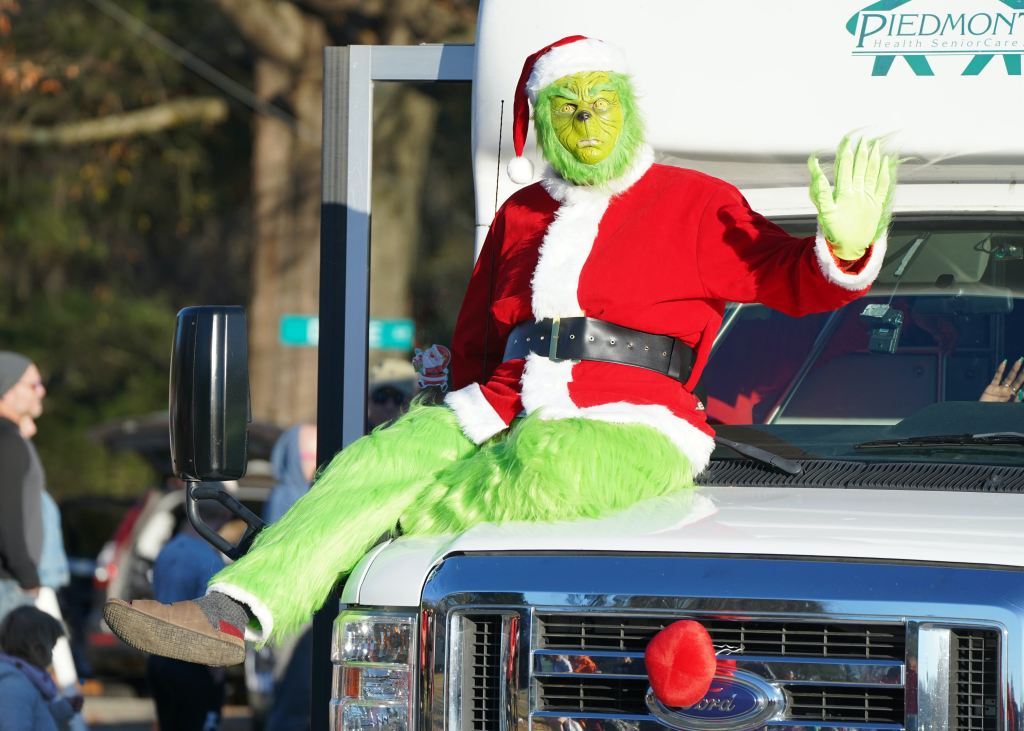
Last Christmas I felt like the Grinch, which was a shame as apart from birthdays, Christmas is the only event I usually get into. My kids have no lived experience of Easter or Guy Fawkes Day or Hallowe’en as I am against the rampant commercialisation involved in those days. All restraints are thrown away for Christmas. Last year I just could not find the Christmas spirit at all. “Bah Humbug,” had become my anthem for 2023, due to various reasons.
Christmas has always been a family time for us and last year it made me think about all the people we had lost over the past 15 years. Christmas was the time when we would gather and share a whole day together. As we became older we had further to travel to make it back home, and we didn’t always make it back. Christmas had become a four generations event, and then too quickly it had become three generations again. That’s life, you live, you die. Life goes on, but it’s different, and that’s okay.
Filial piety wouldn’t allow me not to drag my family south for Christmas for a four day trip. At the end of the journey we were all relieved to be back in our own home again, even the dog. There is no place like home but home changes over time. Our lives are like movies, not snapshots. Nothing is frozen in place forever, things keep on changing, for better or worse, till death do us part.
A new year and new beginnings. A chance to review all that happened in the past 12 months. The highlights, the lowlights and everything in between. The successes and failures can be replayed to consolidate what was learned. Despite many attempts, I couldn’t slow down 2023, it raced away from me.
Children grew taller, new life was welcomed into the world. There were many goodbyes and many missing people from family feasting tables. Thanksgiving, Christmas, Hanukah, Eid and birthdays, all had empty spaces. Voids that are never to be filled as these people cannot be replaced. People learn to live with the differences, as their lives go on to varying degrees.
Looking back to the past to inform our future. Time well spent?
I find myself at the end of 15 weeks of academyEX’s Digital and Collaborative Teaching and Learning micro-credential. I am also in the tenth year of running the Palliverse virtual community of practice which has been one of my longest-running educational endeavours. It is time to reflect on all that has come before. Time to look ahead as to what could be as I find myself asking in this blog post, “What’s Next?”
Her pyjama pants were brightly coloured. They had repeated patterns printed on them. I didn’t have my glasses on and I had walk closer towards her to see what they actually were. The fuzzy, blurry lines sharpened. The shapes were dogs, lots of different breeds. Each of the dogs was holding an item of food. It reminded me of one of my own favourite work items. My hooded neck pillow with pictures of all the health food groups. French fries, hot dogs, pizzas, hamburgers and more. The greasier the better. Guaranteed to line your arteries within minutes of ingestion. I promised to visit again.
We hadn’t seen each other for many months. Things had not gone so smoothly the last time we had met. We had both changed. Lives had carried on. Holidays had been spent in distant locales. We had both ventured away from the familiar comforts of home. We had both talked in front of many different audiences. I had a two week break from work. Two weeks ago she had taken her final break from work. I had started exercising more and having more fights (Brazilian Jiu Jitsu). She had become less active and had given up on her fight. My life was becoming busier. Her life was slowing down. My world continues to expand as her world shrinks down.
We weren’t sure if we would meet again but here we are. I will try my best to make her more comfortable. We both know that her time is running out. We will try to make the most of the time she has left. I will make changes to her medications to try and relieve her suffering. I can’t take away her existential suffering. I cannot make whole what is falling apart at her centre. She could handle all the changes but the illness has made her mouth shrink, her dentures don’t fit any more, and she can’t smile her usual smile. That’s what hurts, that she can’t be who she always has been. She doesn’t feel like herself any more. I know she is an actor and I told her she doesn’t need to act in front of me. I need to know what is really going on in order to help her. I need her to be herself. Her deteriorating self. She can accept that death is approaching. What’s difficult is the dying process.
Grief doesn’t just occur when someone dies, it starts much sooner than that. People grieve as soon as they start losing things. Having to let go of something you have pursued with passion for a life time. Having to say goodbye to a job that was a vocation. Having to handover the mission to someone else. The school would never be the same again, but she wants it to move on without her. To keep on growing and developing young people. Igniting the spark of self-discovery. Feeding the nascent self-confidence. Inspiring youth to aim for the stars. To believe in themselves, to push themselves, to become somebody. “If you want to be a teacher, you have to love kids.” No-one loved the kids more than she did. And look where they have ended up. Starring in shows of their own. All because one of their high school teachers believed in them, twenty years ago. I can think of worse legacies to leave behind.
I found myself having to really question myself as to what I was doing. Professionally I was promoting self-care to everyone at work, and to the audiences at the lectures I was presenting. I felt like a fraud at times as I wasn’t practising what I was preaching myself. I had to do what it said on my packet I had to stop and have a break for myself. That meant a stop to the blogging and the daily writing. It was supposed to only be for a few weeks but it ended up being three months, and it was okay. I’ve restarted things again but at a smaller scale. I started timing myself for ten minutes a day. I would write for a minimum of ten minutes a day and what would appear would appear and we would see how it all went.
I was back again, writing daily, posting to the blog daily and it felt good. I hadn’t realised how much I had missed the therapeutic aspects of the writing. Also the writing community engagement had been missing over the three month period. I was back in the swing of things again and it was good to feel more like myself again. Some of the pieces of writing ended up being work pieces or parts of assignments I was doing for online courses. Things started feeling too stretched last week and I had to release the pressure again. People all around me in the different parts of my life were struck down by non-Covid viral illnesses and I wasn’t keen to join them. Instead of writing I went to bed. Instead of doing 15 minutes of Duolingo Spanish I only did the bare minimum to maintain my run streak. No-one was going to reward me with a badge for least amount of sleep had in a week. Gamification of my own health wasn’t worth it, in the real world it’s not so easy to spawn yourself back.
I’ve had another short break from the writing and I haven’t beaten myself up too badly over it. I am back again today and will be back again tomorrow. It’s the accumulated efforts over time that add up. What am I writing? My dailies which will become blog posts, which will become who knows? And that is okay. I just need to use the writing muscles again. To reactivate the nerve pathways. To gather up my energy again and make something with it. Daylight savings, travelling between time zones in the past week, and general life stuff have affected how I lived my life in the past fortnight. Other things out of my control have happened and have had to be dealt with. It will all be okay. All we can do is keep on going. One foot in front of the other. One word in front of another. We’ll see where we end up. We’ll see what comes of it all. Take it easy on yourself. There’s a lot going on. Be gentle and kind to yourself.
It is important for me to do the right thing for my patients. In order to do this I need to know them well enough to know what the right thing for them is. I have my own ideas but they might be completely wrong or completely against what they think is right for them. I have to be careful not to fall into the trap of thinking that I know better than the person themselves. They are the expert when it comes to themselves not me. They are the owners of their own lives and have been making decisions for themselves for the whole of their lives. They were not born yesterday, but in the case of palliative care patients, they might die tomorrow.
I look after patients but that does not mean I own them. They own themselves. Prior to meeting me they were fully grown adults, living their own lives, making their own choices, choosing their own destinies. My job is not to tell people what to do. My job is to find out what people need and to try to help them with it. If my set of professional and personal skills can help them meet their need then I can help them. If I don’t possess the skills they need from me then I will refer on to someone who does have those skills. It’s not about me, it’s about them.
It is disrespectful to treat people as if they are children when they are fully grown adults. I worry about some people who work in palliative care doing that, treating people as if they were babies. Incapable of making their own decisions, needing us to make decisions for them. This is the wrong thing. Taking on the role of a parent, but we are not our patient’s parents. How would we feel if we were treated like that? Disempowered, disrespected, dismissed?
Working in palliative care you would think that we all live our lives without regrets. We all live each day to the fullest and try to make the most of all our relationships. Living as if it’s your last day. But, no, we don’t. It’s not happening to us, even though we know it could happen to any of us at any time.
Is it because we become desensitized to all the suffering that we witness? In people who are burnt out or suffering from compassion fatigue they may be less able to empathize with the people they are caring for. You can’t allow yourself to become enmeshed in each case you deal with. Too strong a connection, too strong an identification and each death will be felt tragically. You can only handle so many tragic events, and certainly not on a daily basis.
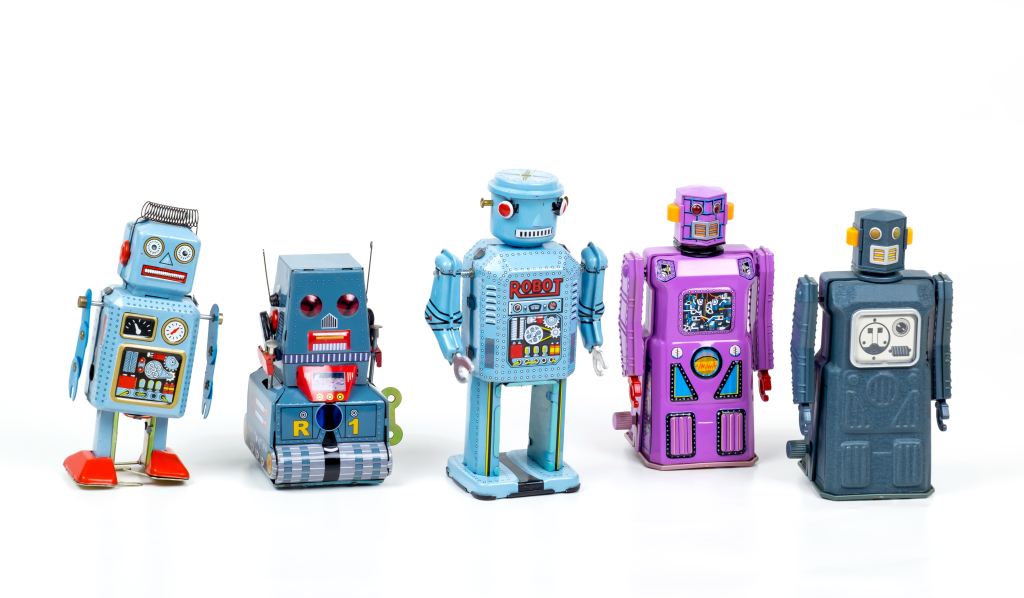
The opposite can occur, in which clinicians become too detached from their patients. They are unable to connect with a fellow human being who suffers. Patients feel like they are being looked after by a robot. Would more consistent care be delivered by robotic helpers? What is it that is so special about human clinicians? Could a robot ever be a replacement?
In the past seven weeks, I have been studying academyEX’s Digital and Collaborative Teaching and Learning micro-credential. In this blog post, I will critically analyse contemporary thinking in education. I will then critically analyse the role of digital and collaborative learning in contemporary education. In the second half, I will evaluate my practice against digital and collaborative learning and teaching. Finally, I will evaluate my practice against relevant aspects of sustainability.
Contemporary Thinking in Education
Behaviourism was the main learning theory utilised in my medical training and is reflected in the way I provide teaching as a doctor. Extrinsic motivation was provided by medical school through the set curriculum. I felt like a passive recipient of knowledge and I was tested on my ability to repeat the vast content provided over many years. This continued in the setting of medical specialist training where even more information was memorised and regurgitated during exams. A lot of knowledge is acquired but is not otherwise utilised, thus retention is poor. Learning was shallow and given the time spent it remains unclear if the return on investment is of high enough value. Other theories of learning need to be considered.
Constructivism takes a learner-centred approach. People are not completely blank slates when they arrive in medical school and may have come from various backgrounds. Some of us may bring skills and knowledge from our previous work and life experiences. The role of the mentor is to assess our prior knowledge and guide the extension of our development.
Constructionism theory involves the students creating new knowledge structures. Social products are created, and learning is by making and can be aided by technological tools such as the Google Suite and many other apps. Students are encouraged to own their learning and to make it more engaging for themselves.
The medical school shifted to experiential learning in the clinical years when we started seeing patients. I learned by dealing directly with patients and their families. Learning was by doing we were provided with hands-on opportunities. It was more engaging when I was given a chance to assess patients and come up with my own management plans. I practised doing interventions with the use of patient simulators and actors. Time for reflection was provided when I presented my findings to tutors and this also involved review of video footage of assessments. This allowed for the practice of clinical skills in simulated situations.
The role of digital and collaborative learning in contemporary education
Older education approaches may have taken a cooperative approach in which group members would be assigned various parts of a learning task to do themselves. They would all come back together to present their information to each other. This is similar to a potluck dinner in which the meal that you eat together may be a random collection of dishes which may or may not work together well.
Contemporary education requires a collaborative approach in which students come together and discuss how they will learn together, utilising a horizontal division of labour. An analogy is when people gather to cook a meal with each other. New skills and knowledge can be learned together. Everyone has a role in putting together the meal and there is a more cohesive outcome. This also helps to model how doctors could work together in collaboration with others. Garnering opinions and information from team members rather than all working completely independently. Complex wicked problems demand input from all team members who each have their individual roles to play. Everyone has a role to play in the learning situation and it models good future behaviour. Collaborating with other doctors or other services is considered good healthcare practice.
How can digital tools be incorporated into this learning? The potential audience of any digital artifacts could be vast, we don’t need to limit ourselves to face-to-face teaching any more. In 2013, when I engaged with online learning companies I was quoted $ 100,000 for the production of four 15-minute modules. In 2023 I can create my own using readily accessible apps, at low or no cost apart from my own labour.
Evaluation of my educational practice against digital and collaborative learning and teaching
The Covid-19 pandemic forced medical education to try new ways of engaging. The traditional face-to-face tuition could not be done during the many Aotearoa/New Zealand lockdowns we experienced from 2020 onwards. We learned how to do virtual assessments including home visits, clinic sessions and joint visits via the use of video-calling technologies. Joint visits allow different members of the multidisciplinary team to assess a patient together, with each member assessing the situation from their own point of view. One or more members of the team could be present either in person or virtually in a more collaborative approach.
In medical training, experiential learning is via doing with real cases being worked on together. Standard medical assessments involve assessing patients face-to-face. This assessment formulates a problem list and differential diagnoses are considered. A management plan is then drafted to treat the problems identified. Online resources could be checked to assist with any of the prior steps. The case is then presented to the clinical supervisor(s) and together a joint management plan is finalised. As the trainee becomes more experienced their level of supervision decreases until they can work independently. In the future sophisticated patient simulations could be created and could involve various team members assessing the simulated patient at the same time. As artificial intelligence improves, these scenarios could become more and more realistic. Virtual reality technology could allow virtual face-to-face interactions between clinicians and patients regardless of distance. Wearable devices could allow remote physical examination of patients. Communication between clinicians, patients and families could be improved with technology.
Evaluation of my educational practice against relevant aspects of sustainability
My educational practice involves teaching various clinicians, patients and their families about palliative care. Western medicine including palliative care has historically been a white person’s medicine and one size has never fit all. Extra effort has been required to take into account people’s cultural origins and particular emphasis has been placed on becoming culturally competent practitioners, to make our environment feel safer for all. Bilingual signage and the use of Te Reo Maori in daily conversations are now part of my workplace. We want our staff/volunteers/students to learn by immersion.
I work in a healthcare training institution but we are also citizens of the world and must play our part when it comes to climate change. Our organisation has focused on place-based learning. We have removed individual rubbish bins, have centralised waste collection and only have bins available at certain sites on our campus. We want people to actively think about where their waste will end up. What can be composted is put in the appropriate bin as is recyclable material, with an overall effort to reduce what goes to landfill. Upgrading of equipment to more energy-efficient versions continues to be done. Shifting our fleet from a fossil fuel one to an electric vehicle fleet has begun. Simple things such as providing our staff members with reusable cups and water bottles are part of the subtle encouragement of environmental sustainability.
In terms of educational sustainability, we have switched from paper-based materials to the use of digital artifacts. Short video tutorials are available on our intranet and internet sites where educational material has been curated. There is a lot of great content out there already and we encourage our staff and students to create content. We foster a culture of ongoing life-long learning. Our students are encouraged to learn how to find information rather than commit it to memory. They are encouraged to think for themselves on important issues especially how we can prepare for the future. Open questions are asked to stimulate the exploration of topics in a deeper fashion.
Conclusion
I have worked as a medical doctor for almost 24 years. When I graduated it was the start of my life-long learning. Over time, without any training, I have also become a teacher. My teaching style has been behaviourism-based as that was how I was taught. AcademyEX’s digital and collaborative teaching and learning micro-credential has exposed me to contemporary learning theories including online tools to aid teaching. It has made me ponder much about sustainability in all of its forms. It has further opened my mind to new possibilities for student engagement and to consider that my teaching needs a wider audience than people who work in the hospice. People have all sorts of preconceptions about things especially if they don’t know about them. Many people are still afraid of hospice. How can I use the skills and knowledge I have learned to make hospice/palliative care more widely known? Maybe I’ll write some more blog posts…
References
Olsen, M. & Hergenhahn, B. (2013). An Introduction to Theories of Learning (9th ed.) Pearson.
Cashman et al. (2005). Teachers Discovering Computers: Integrating Technology and Digital Media in the Classroom (4th Ed.) Course Technology.
Kolb, D.A. (1984). Experiential learning: experience as the source of learning and development. Prentice Hall.
Liu, C. H. & Matthews, R. (2005). Vygotsky’s Philosophy: Constructivism and Its Criticisms Examined. International Education Journal, 6(3), 386-399.
Papert, S. & Harel, I. (1991). Constructionism. Ablex Publishing




 palliverse.com