Breaking Chain

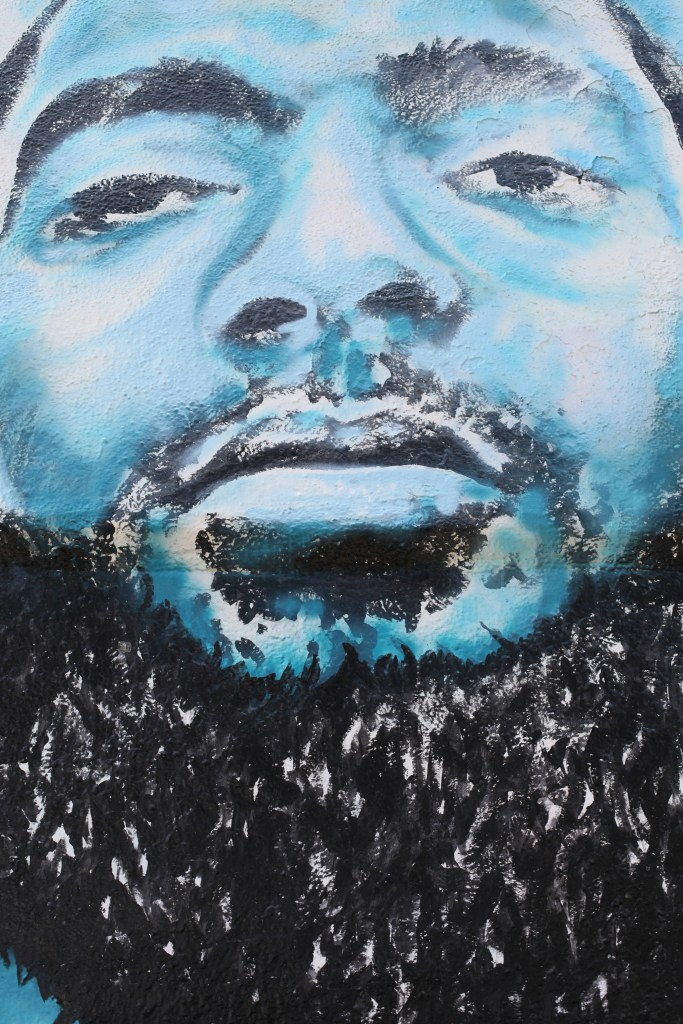
This is an edited transcript of a conversation I had with Cheyne McClung, three days ago. The views and feelings expressed are Cheyne’s and he has given me permission to publish his words and photo.

The diagnosis of MND (Motor Neuron Disease). Was a death sentence. It snuck up on me. It took away things. Previously taken for granted. My ability to walk. My ability to work. Can’t hold my baby. Can’t breathe. Need BiPAP. 24/7. Hard to talk.

What did I do. To deserve this? Everyone said, “Nothing.” “It’s bad luck.” I know it’s. Not my fault. But I didn’t expect. Cruel and unusual. Punishment. MND has taken. So much. The worst is. I can’t go home. That’s where I. Want to be.

They ask me. About treatments. What if I get? Infections. What do I want? I want to live. As long as possible. To be with my. Little girl. She needs special care. Birth injury. I’m missing out. On too much. Her smiles. Trying to crawl. Chances to connect. Running out.

They decided. I can’t go home. Need too much care. They decided I need. Care facility. Hope it is. Close to home. They haven’t found one. It’s been weeks. No-one wants me. My case too. Complicated. I know that. People can do BiPAP. Without healthcare training.

They discriminate against me. I’m 37. MND doesn’t care. How old I am. Would they take me? If I was 65? Don’t get it. Care needs the same. Regardless of age. I’m paralysed. Can only move. My neck a bit. No place wants me. Hospices admitted me. For three weeks. Only. Then what? Give me hope. Then take it away. The uncertainty. Is too much. No one wants me. I’m trapped in. Too hard basket. Solitary confinement. In body shell.

Need escape plans. I don’t want to. Die. But if no. Quality of life. Then better off. Dead. I could stop eating. Not treat infections. My lung specialist. Said he could. Make me comfortable. Then stop BiPAP. All over. All done. Gone. Not yet. Only if. No quality of life.

Will anyone listen? Does anyone care? “Please. I just want. To spend time. With my baby girl. Closer to home. Can anyone help me? Please. Don’t make me beg.”
Palace of Care – Why Me?

Photo by BP Miller on Unsplash

J: Hey man, I’m sorry for your loss. Do you have a few minutes brother?

X: Yeah.

J: Let’s go in there again. [Points to the right] You asked me why your Dad would only talk about it in your presence. I think he knew you would be able to handle it.

X: [Nod]

J: The family meeting the other afternoon was tough. Your Dad told everyone how he felt and what he wanted but the family weren’t able to listen, especially Aunty.

X: [Nod]

J: Even with all the voices raised, I heard what you said, how you advocated strongly on your Dad’s behalf. He heard it as well. You had his back, that’s why he said it in front of you first. You were really there for your him when he needed support the most, that’s something to be proud of. That impressed me, you’re a good man.

X: Thanks Doc.

J: Dad didn’t get exactly what he wanted but the gods heard his cry for help and responded.

X: [Nod]

J: You take care brother.

X: [Handshake]

I think therefore I am? – Rise of the Machines

Photo by Alec Favale on Unsplash

I haven’t written for a while. Is it even worth writing any more now that the large language models are improving their writing? Their use of grammar and sentence structure is improving and their prose is becoming more prosaic. How can I compete with the supercomputers? I’d still like to think that us humans can still tap into things that the machines don’t have, at least for now. I write to teach, I write to think. I write to help me sort out ideas in my own head and heart. That’s not something that AI can do, for now.

Lately at work we have been exploring the use of generative AI in many aspects of our operation. If it can help us to do our jobs better and can free up some time for real face to face patient care, why not? Time has become precious when we all do not have enough of it. If we can free up time by delegating some of the less interesting tasks to the machine, isn’t this a good thing?

Take education for instance. 12 years ago we had explored delivering education via online modules. At the time we were quoted $50000 to develop four 15 minute e-learning modules. Way out of our price range at the time. Now we can create our own e-learning modules for a fraction of the cost. Some clever folks at work have been developing OLLI our Organisational Linked Learning Interface where we have available online modules. We’ve even started a blog on the site and I have written an article which you can read here.

While you have a look at the site and have a read of the blog post, I’ll keep on writing.

I think therefore I am? – Doing the right thing

Photo by Malcolm Lightbody on Unsplash

I’ve been time travelling in my own head in recent weeks. Why is it so important to do the right thing for me? This follows a busy month with a number of conference presentations which led to a roller-coaster of emotions. The highs of being with like-minded individuals and being accepted by my new tribe. The lows of being iced by some members of my old tribe. A time to reflect on my experience of being ‘the other’. Children do not choose where they are born or to which family they belong to. They have no choice in the matter. The process of conception is close to miraculous, two tiny collections of DNA are joined together and become an unique recipe for a potential human being. Nine months of incubation later and the accident of birth occurs.

Continue reading

Palace of Care – No Surprises

Photo by uzumaki anam on Unsplash

When I first met him he was still trying to be as independent as possible. He could’ve rung the bell and asked for water but instead, he walked to the family kitchen area to get the water himself. He refused to use the walker deigning to use only a simple cane. It took him 20 minutes to walk outside for cigarettes but the nicotine and his willpower continued to push him along. This was despite severe pain which was worsened by movement. He was determined to do things his way, the way he had always done things. Why should he change just because he had a terminal illness? He knew he was unwell and time might be short, he wanted to continue fighting as long as he could. He knew he might die but he would try his best not to. He was more worried about his partner. He had been trying to persuade her to see the counsellors but she was reluctant and wanted to concentrate on work. He was worried that she wasn’t aware of how unwell he was. He was still trying to look after her and wanted to prepare her for all possible outcomes, even the ones where he wasn’t around.

When I next reviewed him, two days later, he looked terrible. His pain had worsened, he had developed a bad headache, he was having fevers and couldn’t catch his breath. I was worried about him and I wasn’t sure if he would recover from this major deterioration. There seemed to be too much going on at once. Everything pointed towards worsened progressive disease. I talked about my concerns and that I would treat all of his symptoms aggressively. I told him that I would try my best to reverse things as much as possible but no matter what happened I would aim to make him comfortable. I offered to talk to his partner and I needed her to come in.

When she arrived I talked about what had led to his admission into hospice and updated her on his worsening situation. “Things keep on changing, the illness continues to worsen. I will try to reverse what is going on but I am worried that things might not improve. If things continue to deteriorate there might only be days to weeks left for him to live. We always work on a no surprises policy here.” He reached out his hands as he looked into her eyes and said, “I’m sorry love.” They hugged each other and the tears flowed.

I was asked back later when their closest family members came in. I met each of their siblings and their siblings-in-law. Their core support team throughout his whole illness. I shared the bad news with all six of them together. They asked about the rest of the family, some of whom were overseas. They asked, “Should we get them to come back as soon as possible?” I replied, “I’d rather people come and see you too early rather than too late. Working in hospice I see too late far too often.” They said they would make some calls.

Palace of Care – Fields of Gold

Photo by Lars Schneider on Unsplash

I heard that he actually had children but there had been a falling out some years ago. I never found out what the details were but it sounded as if there was no way to mend these relationships. It was as if he no longer had children, it was something that we couldn’t talk about. His speech became less easily understood if the topic was raised at all. The closest family he had was his niece. She was devoted to his care and visited regularly, as she had done when he was at home.

Everything had become a struggle before his admission to our inpatient unit. We provided basic nursing care with only a small amount of medical support and he had responded well to being looked after. He accepted he could no longer live alone and his family found him a hospital-level care facility close to where they lived so they could easily visit. On the day he left our hospice for his new home, I wished him well.

Just over a month later he came back for a visit. This time he brought his closest friends and family, including his two children. I’m not sure what had happened but they were all there together. There was warm friendly chattering going on in the lounge. Food was being shared while he held court. He was in fine voice and he enjoyed entertaining everyone who had gathered. Many of his guests said thanks to him for all that he had taught them over many years, in some cases a lifetime.

His daughter had prepared a song, and decided to sing it to him while he could still hear it. She played backing music with her smartphone and sang “Fields of Gold” the Eva Cassidy version. Everyone in the room was moved by her song, as her father sang along. Sometimes healing can occur at the end of life.

Palace of Care – Making the most of it

Photo by Charity Beth Long on Unsplash

After the death of her younger relative, she did not expect to be in the hospice again. She had been impressed by the care provided for the family. She was surprised to be there one month later. This time she was admitted as a patient for end-of-life care. She accepted this with no fear, she had been unwell for three years with her heart and lung issues. A previous gut issue had recurred and could not be overcome. She knew that she was dying and in some ways, it was an escape from her years of struggle and further suffering.

Returning to the same hospice, with the same family members less one member. Not the same as the last time she had been there. The perspective on the other side of the bed was different. She accepted her situation, she had been expecting that something like this would happen soon. In some ways, she had already prepared herself. Her world had been shrinking for some months because of her physical frailty. She was glad she had deteriorated whilst she was still visiting and staying with her family. If this had happened at her own home, she would have been alone, and far away from her support network. Instead, she had spent weeks with her favourite and most loved family members.

The lunch she was served was the best thing she had eaten all month. The hospital food and service just couldn’t compare. She asked if some of her family could stay with her overnight. This would be no problem at all. She fully intended to enjoy the next few days recounting family stories and looking through photos together. A chance to say goodbye before the inevitable happened. She was going to make the most of it.

I think therefore I am? – Natural Order

Photo by Tolga Ulkan on Unsplash

Her first experience of the hospice was when she came to visit a younger family member. Someone important enough to travel over 1000km to see, despite her poor health. Her life had become a struggle over the last three years. Her lung failure had caused heart failure. Shortness of breath made even walking difficult. Leg swelling caused leg heaviness which made walking torturous at times. Over the years she had collected health problems but managed to continue with her life. Her relative had only been unwell once, and the illness was taking her life away. A sad time for the entire family, especially the elders. It is against the natural order of life for a child to die before a parent, but when you are elderly already it must be so much worse.

Palace of Care – No place like home

Photo by Kinga Howard on Unsplash

The trip home was great. He enjoyed it a lot. I was happy that I could help make it happen. He had not been home for weeks. Spending a few hours at home meant so much to him. He kept his eyes open the whole time, enjoying things as much as he could. Being able to see our home again was so important to him and to our children. When we came back to hospice he was exhausted but kept on smiling.

A lot has happened this week, he only stopped working on Monday. He had to tell his boss that he couldn’t work anymore. A big deal for him as he dedicated so much of his life to work. If he didn’t work he just didn’t feel like himself, it was the cause of a lot of our disagreements.

Yes, our church father did visit and anointed him. He can be contacted at any time. How much time do you think he has left? Only a few days? That’s what I thought. Please keep him comfortable, that’s all we want at this stage of his life.

Thank you.

Palace of Care – Travel Plans

Photo by Joseph Corl on Unsplash

A few days before discharge he told us he wanted to go back to his hometown, many thousands of kilometres away. He wanted to see his relatives and friends one last time. He said that if he didn’t do this he would die with everlasting regret. A final visit to where he had grown up, a chance to taste his favourite foods again, in his favourite eating places. We thought he had a window of opportunity to successfully make the trip back home. We estimated that in the next months, he would become too unwell to travel. We encouraged him to make travel plans as soon as possible and offered to talk to his son. He declined our offer and wanted to discuss it with his son personally.

He said he would have to convince his son. His son wanted him to have further treatment as soon as possible. Our patient wasn’t convinced that the therapy would be effective, but he had tried for the sake of his family. The treatments had been hard to handle, with lots of side effects. If it was up to him, he wouldn’t want any further treatments, but his son still needed his support after a relationship break-up.

Over the next months, our patient didn’t go home but had more cycles of treatment. As his overall condition worsened he still talked about making his big trip home. Eventually, long-distance travel stopped being an option. The window of opportunity had slammed shut and even car trips around the country seemed too risky.

We received the news that our patient had been on a trip to another city when he suddenly deteriorated. He ended up dying in the local hospital, far from home. Making the return trip back of hundreds of kilometres would not have been easy for his family.

We wish him safe travels on his next journey.