Palace of Care – Lil’ Smiley

Photo by Ryan Franco on Unsplash

When we first met her she was only four months old. She didn’t have much hair. She had bright eyes which were interested in everything around her. If you looked at her and tried to interact with her she would give you a big smile. During her dad’s first admission, we saw her almost every day during the weeks she was there with her family. They all went home when her dad’s pain was controlled.

I next saw her a few weeks later. She had put on weight, her cheeks were chubby. Her little arms and legs looked bigger. She had been feeding well. When she smiled two dimples would appear. Her dad wasn’t doing so well, he didn’t feel like eating. When we entered the main corridor of the house I didn’t realise that he was doubled over on the floor, his forehead on the flat part of the armchair. He looked pale and his arms had lost muscle, his cheekbones had become more noticeable. Especially when he grimaced in pain. We made some adjustments to try and make him more comfortable. He was keen to stay at home as much as possible. She gave us another huge smile when we waved goodbye to her.

One month later she had grown. She had started to vocalise and her smile would be accompanied by the cute noises she would make when we interacted with her. Her dad looked beyond exhausted, he spoke softly and at times we couldn’t understand what he was saying. He looked sad, and his face seemed to be stuck in a frown. She had started eating solids and the family told us that she had been given a pork rib which worked better than any of the pacifiers they had tried. Her dad ate less and less. He couldn’t handle much solid food. He preferred to drink liquids, only small amounts.

Her older siblings would come in after school and the children would all play together. The little girl would laugh and babble as brothers and sisters played with her. They enjoyed that she had become more fun to play with than when she was younger. Their dad was more and more sleepy. Less and less interactive. He tried his best to be awake when all the children were there. It was a struggle as he was so weak and tired. Talking had become difficult, so he started using hand signals, his sign language. Lil’ Smiley continued becoming more lively, as her dad became less lively. He needed help to cradle her in his arms as he didn’t have the strength to do it by himself any more.

After her final visit, she was placed in her baby capsule, before heading out the front door to the family car. Those deep dimples appeared again as our staff waved goodbye. Her dad had already left via our back door. He had been laid down in a different kind of capsule, and he was going to travel in a stranger’s long vehicle. We hoped that wherever he had gone, that he could smile again as his suffering had ended.

Palace of Care – The Pickup Truck

Photo by Erik Mclean on Unsplash

We had to remind ourselves every day when driving down the hospice driveway to be careful when entering the car park. The pickup truck was always parked in the first parking space. A long vehicle anyway but the driver would always have it parked so the back part of the truck would be sticking out into the main thoroughfare. Everyone else who wanted to park in the hospice car park would have to make sure that they didn’t hit the back of the pickup truck. It had gotten to the point that local authorities were considering installing a specific traffic light to warn other drivers of the potential danger. No matter what time of the day or night it was the pickup truck was always there, for months on end. It was an almost constant presence that we could tell time by the shadows cast by the sun shining on it – a Japanese assembly-line manufactured sundial weighing over a tonne. Local mosses tried to grow on it with limited success. If you looked up the hospice campus on Google Maps the truck would appear on the provided image. It was always there, for months.

The truck belonged to the father of one of our younger patients. A shy young man who was very private and did not want anyone but his father to help him with showering. A devoted father who doted on his ailing son. He had attended every specialist appointment with his son. He wanted to be involved in every treatment discussion and decision. He tried to do his best to keep his son alive, and it worked to some extent. He was ever vigilant on behalf of his boy, as at the start of the son’s illness it had taken a while for him to be diagnosed. The son’s plight was reflective of the health disparities that affect some members of our population. The reality of institutional racism throughout our health system meant that the son’s story about abdominal pain and weight loss was discounted for six months. By the time his terminal cancer diagnosis was finally made, the cancer had spread to many parts of his body, causing a lot of pain.

The father and son had both been scared of hospice when they were first referred. Their oncologist had to persuade them to give us a go. Our staff assessed his pain control which was poor and asked him to consider admission into our inpatient unit for pain control. It took many conversations and for the pain to become unbearable before they were admitted. Everything needed to be discussed with the father, he couldn’t trust the healthcare system because of the way they had treated his son in the past. Given New Zealand’s track record, I couldn’t blame him for his lack of trust. On the first admission, we were able to bring the pain under control quickly, and days later he went home.

Over the next months, our patient would be re-admitted several times. His father would be there with him most days, and hence the pickup truck became part of our car park again. Our patient’s health slowly deteriorated over many weeks. The father and son who had been so wary in regards to coming into hospice were now too scared to leave. They felt safer in our place than in their place. In the last weeks of his stay, there were several times when we thought our patient was about to die, that he was parked too close to the edge of the clifftop and was falling over. Somehow he would reverse his way back to the edge again. Less than a week later it looked like this was it, half of the chassis was over the cliff edge. Some incredible inner strength would pull him back again. The doctors stopped trying to prognosticate, we kept getting it wrong. Anyone else would have died weeks or months ago.

It came as a shock to all of us when we didn’t have to take a wider berth when navigating our car park. The pickup truck which had been there for almost half a year was gone. The father did not need to stay in the hospice any more. His son had been taken away in another long vehicle by another exit for his final journey. After many months together with them, most of us didn’t get the chance to say goodbye, to the son or the father. That’s the way it goes sometimes, we don’t always get a chance to partake in the closure that we need. Goodbye. We wish you safe travels, both of you.

Palace of Care – Orbital Crossover

Left – pyjama pants, Right – neck pillow hoodie

Her pyjama pants were brightly coloured. They had repeated patterns printed on them. I didn’t have my glasses on and I had walk closer towards her to see what they actually were. The fuzzy, blurry lines sharpened. The shapes were dogs, lots of different breeds. Each of the dogs was holding an item of food. It reminded me of one of my own favourite work items. My hooded neck pillow with pictures of all the health food groups. French fries, hot dogs, pizzas, hamburgers and more. The greasier the better. Guaranteed to line your arteries within minutes of ingestion. I promised to visit again.

We hadn’t seen each other for many months. Things had not gone so smoothly the last time we had met. We had both changed. Lives had carried on. Holidays had been spent in distant locales. We had both ventured away from the familiar comforts of home. We had both talked in front of many different audiences. I had a two week break from work. Two weeks ago she had taken her final break from work. I had started exercising more and having more fights (Brazilian Jiu Jitsu). She had become less active and had given up on her fight. My life was becoming busier. Her life was slowing down. My world continues to expand as her world shrinks down.

We weren’t sure if we would meet again but here we are. I will try my best to make her more comfortable. We both know that her time is running out. We will try to make the most of the time she has left. I will make changes to her medications to try and relieve her suffering. I can’t take away her existential suffering. I cannot make whole what is falling apart at her centre. She could handle all the changes but the illness has made her mouth shrink, her dentures don’t fit any more, and she can’t smile her usual smile. That’s what hurts, that she can’t be who she always has been. She doesn’t feel like herself any more. I know she is an actor and I told her she doesn’t need to act in front of me. I need to know what is really going on in order to help her. I need her to be herself. Her deteriorating self. She can accept that death is approaching. What’s difficult is the dying process.

Grief doesn’t just occur when someone dies, it starts much sooner than that. People grieve as soon as they start losing things. Having to let go of something you have pursued with passion for a life time. Having to say goodbye to a job that was a vocation. Having to handover the mission to someone else. The school would never be the same again, but she wants it to move on without her. To keep on growing and developing young people. Igniting the spark of self-discovery. Feeding the nascent self-confidence. Inspiring youth to aim for the stars. To believe in themselves, to push themselves, to become somebody. “If you want to be a teacher, you have to love kids.” No-one loved the kids more than she did. And look where they have ended up. Starring in shows of their own. All because one of their high school teachers believed in them, twenty years ago. I can think of worse legacies to leave behind.

Palace of Care – Still my favourite thing

After almost 24 years of being a doctor my favourite part of the job remains interacting with the patients and their families. It’s true in hospice we have many serious conversations about topics that don’t get more serious than death and dying. I think there is still a place for light-heartedness and whimsy during the inpatient ward round.

A conversation about a common favourite colour of patients (purple) somehow led to the topic of wigs.

What colour is your wig?

Every colour, even purple. I’ll come back and show it to you later.

Really?

Yeah, I’m not just making it up, I’ll come back and show you my wig.

I didn’t know you were into Cosplay.

Only for selected patients.

An hour later…

Knock knock Hello.

Hello. Who is it? Oh, it’s you doctor. Do you mind coming back in again. I didn’t have my camera ready.

Sure.

Take 2

Knock, knock. Hello.

Oh, hello, who is it? Oh, it’s you doctor. You look a bit different.

Yeah every time I pick up my magic wand I feel different. Are you ready for me to cast my spell?

You’re too late, I’ve already been to the toilet.

Okay, umm, I’d better find someone else to use my wand on as it is fully charged up. Maybe a staff member.

I think therefore I am? – Professional Supervision

Photo by Bruno van der Kraan on Unsplash

I’ve attended regular professional supervision sessions, at least once a month, for over 13 years. I’ve worked full-time in palliative care for almost 16 years and it was recommended that I attend these sessions early in my training. The rest of the team attended sessions and it was expected that I attend them myself. I was recommended a psychologist/psychotherapist who supervised a number of my specialist colleagues at the time.

I wasn’t sure what to expect for the first session. For New Zealand men talking about your feelings is still a foreign concept even in this day let alone 16 years ago. I gave it a go and the first session was spent with my supervisor and I getting to know each other. The sessions were limited to one hour and I was encouraged to talk about any situations that had invoked feelings in me. At the time I talked about clinical situations I was dealing with. Helping patients and their families deal with their death and dying on a full-time, daily basis did take a toll on me. I found myself taking some of the cases part of the way home with me. I was witnessing tragic events a number of times a day and the raw emotions needed to be discussed. Professional supervision was an outlet for this necessary release to happen. Trust in the process developed over the next months and more feelings were shared.

This first supervision relationship lasted for six months. It was initially helpful and thus I continued. Following the penultimate session, things had changed and I found myself feeling upset for the following month. This was not how it was supposed to work. I was supposed to feel better after these sessions, not worse. First, do no harm was the principle that had been taught to us early in medical school. This was not right. I brought it up with my supervisor at the next session. He said he would address it, but I left that session feeling even worse. I decided to fire him. I became disillusioned and did not attend any further sessions for the next 18 months.

In my final year of specialist training, I was encouraged to give supervision another go, with another practitioner. This worked out much better and was much more helpful. It felt safe to discuss some of the situations which had triggered various emotions when dealing with patients and their families. Sometimes people reminded me of my own family members. Other times situations felt a bit too close to my own. An example was when I had to look after someone who had a similar background to me. I didn’t know him but we had gone to the same medical school, and we had become medical registrars at the same time. I was study buddies with some of his classmates. We passed the physician exams at the same time and started our specialist jobs in the same year. The biggest difference between us was he was dying of cancer and I wasn’t.

I’ve had many supervision sessions in the intervening years and they have kept me well. The subject matter changed as my role and responsibility changed over time. With growing experience, the clinical situations did not affect me as much as they did when I started. I have developed resilience and maintain firm boundaries to protect myself and those I care for professionally. When I had to take on managerial and leadership roles this was initially stressful. As specialist doctors, we undergo a long training process lasting at least 13 years. In our curricula, there are no sessions on management, leadership or education. These are all aspects of a specialist’s job and can be a source of stress. My supervision sessions have allowed me to look at things from other points of view and to reflect on my practice. Some months have been particularly tough and I may have needed more than one session in those months.

Overall the sessions have been of great value to me and remain one of the important self-care activities I do regularly to keep myself professionally healthy. I would recommend these sessions to anyone who wants to have a long-term career in palliative care. To anyone considering doing them, I would encourage you to give it a go. The raw emotional work of palliative care can make you feel like you are in a pressure cooker at times. We could all use a release valve to let off some steam and to stop the contents from burning (out). I’ve needed to focus more on self-care this year and professional supervision remains one of the anchors of my self-care practice. I believe that if I take care of myself better, I will be better able to take care of patients and their families.

Palace of Care – Familial Protection

Photo by Mark Koch on Unsplash

The family were trying to protect our patient. They knew that his time would be short, that he would die soon. They didn’t want him to know this as the last time he had been given such bad news he had reacted poorly. They said he had been in tears for two days after the hospital doctors had told him bluntly that he could die at any time. They didn’t want a repeat of what had happened. If he only had a short time left they wanted him to enjoy it as much as possible. This was what his life partner wanted, the person who knew him better than anyone else. The love of his life.

Did he know what was going on? Probably. He had said he thought things were bad. We had not denied this. He was the one feeling every single discomfort. He was the one who was exhausted from lying in bed doing nothing. He was the one whose body continued deteriorating on an almost daily basis. He was the one who had asked to be admitted. He was worried about how his family were coping with looking after him at home. He had been told weeks prior to this admission that he possibly only had days left to live. When we asked him if there was anything he still needed to do, any unfinished business, the reply was,” No. I’ve done everything I can. I’ve done well. I have no regrets. I have a good family. We raised our children well.”

Our duty of care is to our patients. “First do no harm“ is the first principle we follow. Would telling him what he probably already knew be of benefit or would it cause harm? It was unclear as we didn’t know him well enough. For some people knowing they might only have a few days left could provide relief. They might be thankful that their suffering would not go on for much longer. For others, the short time left would provoke anxiety and distress. They would be upset by the thought of having to leave their family for the final time. If he were to directly ask us, we could not lie to him. But if he never asked we would not raise the question ourselves. His partner had made the decision. The survivors of his death had to be given the opportunity to do what was right for their family. No matter what would happen, we promised that we would try our best to keep him comfortable in what time remained.

I think therefore I am? – Greetings

Photo by Katie Moum on Unsplash

I work in one of the most ethnically diverse areas in the southern hemisphere, South Auckland. There are people from many different places who now call this area home. English may well be a second, third or even fourth language to many of my patients and their families. Many different native languages are spoken and on any given day our inpatient unit may be full of people representing many different groups.

I make an effort to learn how to say simple common greetings in the native language of my patients. Over many years I have gathered a list of these greetings. If I don’t know the standard greeting I will resort to an internet search for the appropriate greeting before I meet the patient. A simple “hello” in their native language is usually appreciated and is the first step in building rapport. If I know more words in their language I’ll make use of as many as I can during the rest of the consultation. When trying to make a connection you usually only have one shot, make it a good one.

Palace of Care – A Different Question

Photo by Brett Jordan on Unsplash

What do I need to know about you to be able to look after you better?

Nothing much. I just want to be able to go out for a smoke. I asked them about it in the hospital but no one wanted to help. They didn’t want to listen to me. I didn’t even miss the smoking so much. I just wanted to go outside.

It’s important for me to listen to you, isn’t it?

Yeah, it means a lot to me that you guys will listen to me.

I feel more comfortable today. I don’t remember everything about yesterday but I was feeling bad. The pain was bad.

I’d like to work on your pain some more and try to get you comfortable.

Okay Doc, thank you.

I’ll see you later.

SCM – Daily Dose of Suffering

Photo by Chandler Cruttenden on Unsplash

Four years ago I went on a Wellness Retreat. Some of my colleagues laughed at me once I had returned and discussed some of the activities I had paid a lot of money for. During the retreat, I ate much smaller meals than usual. I woke up earlier than usual to do yoga, followed by a tiny breakfast and then hours of hiking. Another activity was fasting for 36 hours, 24 hours of which were spent in total silence. The activities were interesting to try but I have not continued with most of them. I also learned about thermotherapy, with exposure to heat in the form of a 90-degree Celsius sauna followed by ice baths. The cold water exposure is something I have continued to this day.

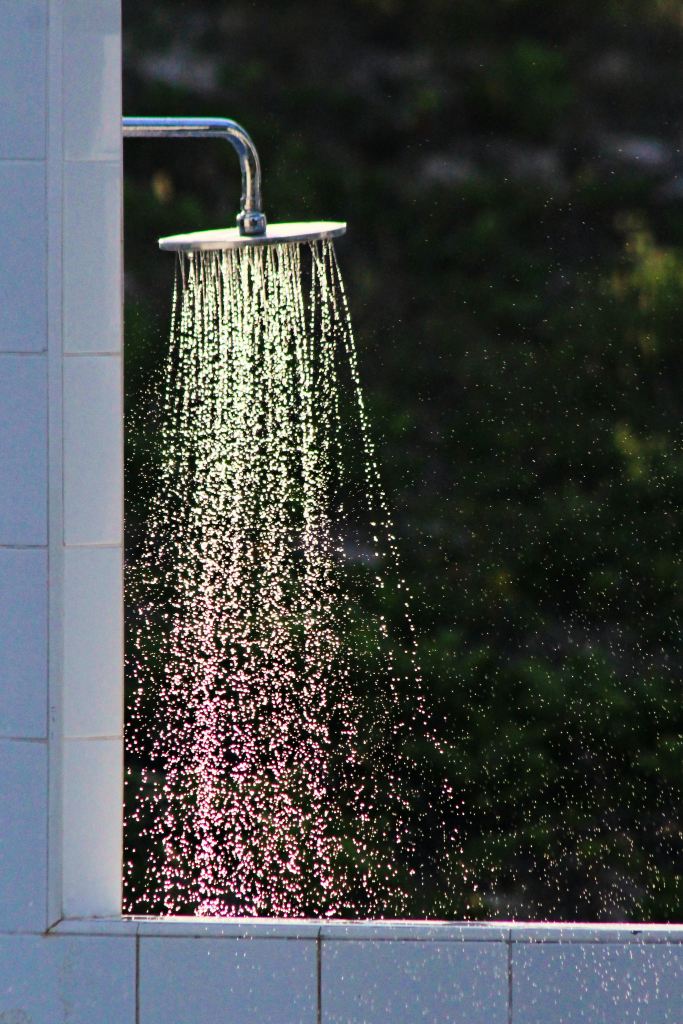
I shower as usual using warm-hot water. At the end of each shower, I turn the water temperature to total cold. This feels awful for the first 10 seconds and my mammalian dive reflex is triggered, with much deeper breathing. During the winter months the water is extra cold. The next 10 seconds are less unpleasant. By the time I have reached 30 seconds, I can tolerate it, and my hands and feet have become cold at which point I turn the water off. As soon as the water stops a warm feeling surges through my body and I sure do feel alive.

The cold showers are my daily dose of suffering and I feel they have built up my resilience over the years. I will continue BBRRRRRRR.

Palace of Care – Plot Twist

Photo by Annette Sousa on Unsplash

Some lives are difficult, relationships do not always go smoothly. Every person has problems, every couple has problems. Some couples have more problems than others. People are not always at their best and might have limited support available. Many people cope by self-medicating with drugs and alcohol. The use of substances worsened their relationship over the years. Her family had never approved of him, and let him know it.

Everything changed when she became unwell. When she really needed his support and love he showed up. He stopped using substances, and the large poultry was cooled rapidly. He was there for her at the clinic appointments. He was there during the hospital admissions. He was there for her for her hospice admission. They were surprised, given the circumstances, that they were so happy. They had privacy, they could spend time together, just the two of them.

She told us that their time spent in hospice had been the best weeks of their entire marriage.