Palace of Care – 5. Down – The Primal Scream

Photo by Nsey Benajah on Unsplash

We talked and he looked to be in pain, not physical but emotional/spiritual/social pain. He wanted to stay at home with his family but he knew that it was becoming too much to handle for them all. The boys are still young, his partner has a significant health issue. He wanted to be at home but was worried that caring for him would put her under too much strain, she had already had a close call.

Usually the fire of anger was what he would allow to erupt, but instead he let out his desolation. His weak voice did not allow him to scream very loudly but he did so for five minutes. A raw primal scream from deep within his soul like a deeply wounded animal. Utter devastation unleashed as a whimper. The disease that had ravaged his body, only allowed a small strangled noise to come out.

We did not try to soothe him, and would’ve been lying to say that it was going to be all right. “Let it all out, you need to let it all out.” Tears were streaming down his face, into his beard, but he no longer had the hand or arm strength to wipe them away. We didn’t move, he needed this moment of catharsis, he needed this time to let out his deeply buried emotion.

He stopped screaming and started apologising, we said that there was no need to. We could see that what he had needed was to let it out, and we had allowed it to happen.

“I feel better.”
“I thought you would.”
“Thanks.”
“No worries bro, we’re good, let’s make a plan to get you home, but you need to have help, otherwise nothing will work. “

Palace of Care – A New Dawn

Photo by Fred Baum on Unsplash

I received an email from someone wanting to undergo an assisted death.

I replied with general advice that was available online on the New Zealand government’s assisted dying website.

The person replied outlining their situation. They had been approved for an assisted death by the national service. Their residential care facility which had been home for the past four months would not allow assisted dying to occur on its premises. Their local hospice had made it clear that they would not be an option.

I explained that we had initially planned to offer our venue for people in our catchment area, but would consider cases from elsewhere. I promised to consult my team, and we agreed that we would be able to provide a venue. An onsite meeting and tour of our facilities was arranged, scheduled for a time when the patient’s family would be available. This would be the first time that we would meet a patient accessing this service, which made us feel nervous.

Continue reading

Palace of Care – What’s in a word?

Photo by Davide Zacchello on Unsplash

It was his second admission. He had been beautifully cared for by his family over many months, but the last week had been terrible. He was agitated, restless, and did not know what to do with himself. His wife wanted him to come back into hospice for end of life care.

On arrival he was semi-conscious, agitated and not able to talk clearly. His body was so unwell that his mind was no longer able to be lucid. Although he tried so hard to be there, it looked as if he was in-between two worlds. His family reported that he had seen dead ancestors.

I didn’t want there to be any surprises: I spoke in a quiet voice and tried to be as clear to them as possible, using simple English.

He is so unwell, so exhausted. He is dying.

I purposefully used the word dying at least five times during the 15 minutes of my visit.

When someone is dying everything inside can become all messed up, like he’s in a storm. He doesn’t know which way is up or down, and it might be really scary for him.

End of life delirium/terminal restlessness.

When someone is dying, they become less clear in their thinking, and sleepier. That is Nature or a higher power’s [palms open being raised towards the ceiling] way of protecting the dying person from having to have the full 3D/HD experience of dying.

He could see that his own distress was causing distress to his family, which caused him further distress.

I will change his medications to relax him. We’re going to calm it all down, and we are going to get him through this. We’re going to get you all through this.

I was caught off guard when he suddenly opened his eyes and reached out to shake my hand in both of his. He thanked me for what I had done for him.

Nek minnit – [I was being hugged and I hugged him back.]

Palace of Care – Polypharmacy Pals

Photo by freestocks on Unsplash

Not Cap’n Crunch cereal but he ate them like lollies, 5 tablets at a time crunched in his mouth like candies. It was strangely fascinating to watch him do it.

Were they really helping him? We didn’t really know, but that’s what his Cardiologist had recommended at their last appointment, and as a model patient he would follow the instructions carefully.

It hadn’t always been like this, two years before life in his small town was normal. Not much to do in the weekends, so like everybody else his age he dabbled in recreational drugs.

Weeks later and his breathing became worse, he thought it was due to a reactivation of his childhood asthma. He didn’t do anything about it but then things worsened and he went to see his doctor. He was prescribed Asthma inhalers but they were ineffective. Back and forth to the doctor he went, with no improvement. A chest x-ray was ordered and surprisingly showed severe heart failure. Further investigations were performed including an echocardiogram. Working diagnosis was of severe cardiomyopathy secondary to methamphetamine abuse. The drugs he used had left his heart permanently damaged.

Continue reading

Palace of Care – Charm Person

Photo by Clint Bustrillos on Unsplash

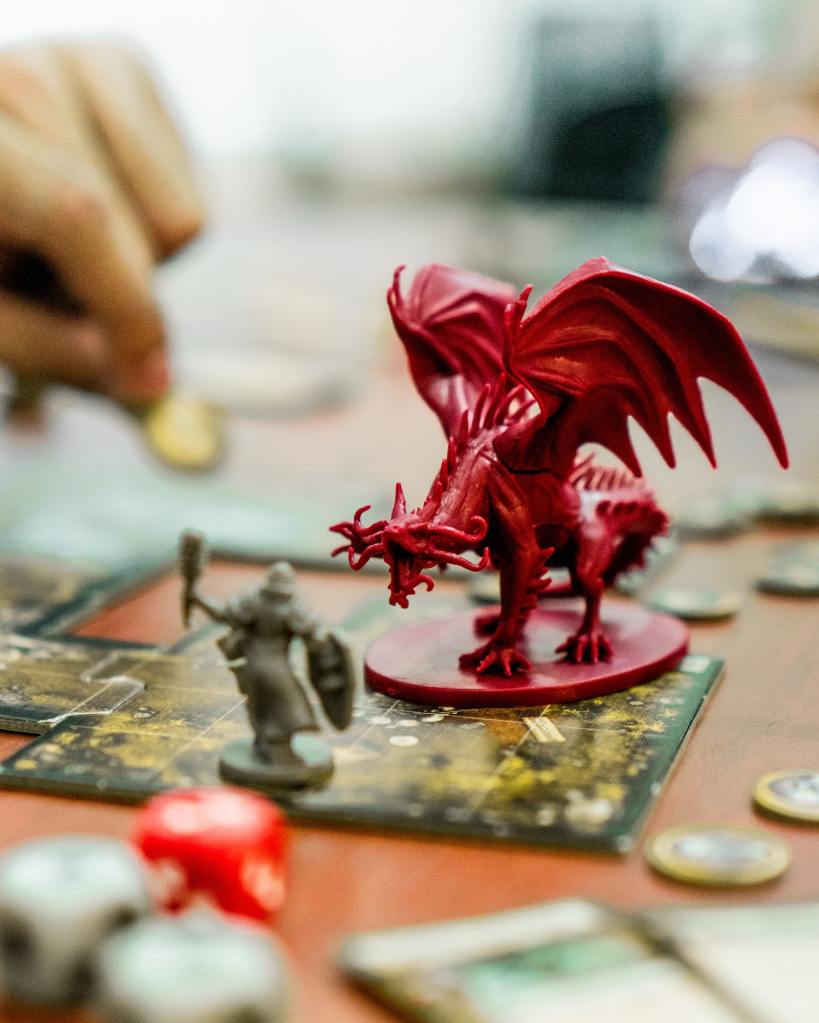
I have only ever played the computerised version of Dungeons and Dragons, the fantasy role-playing game, and the version I played was more of a battle simulator. You went on quests with your band of characters, exploring different places, constantly running into trouble. Fights would involve cold hard steel, and mysterious magical spells. Some spells had obvious intended effects, e.g. Stinking Cloud (now that’s magic that I have understood since I discovered baked beans as a kid,) Hold person. A favourite spell of mine was Charm Person, casting this spell on an enemy could instantly change them into a team-mate.

As I started practising medicine as a junior doctor I often fancifully wished that some of the Dungeons and Dragons spells would work in real life. Over the past 22 years I have searched for Heal Person, Cure wounds, Revivify and have been caught short. If only life was that easy. I often wish that I had a magic wand that could change my patients condition for the better, I really do. Or magic pills or potions that would lead to a cure. Sometimes the best magic I can offer is to soothe suffering, provide comfort, offer support. On occasions I have had to use Charm Person, and sometimes even Charm Monster.

Illness can bring out the worst in people, but some people might not have been all that easy to get along with even when they were physically well. There are no difficult people or patients but at times communicating with humans can prove to be a difficult endeavour.

Continue reading

Guest Post – Naomi’s Notes – Plumb Job

Photo by Ivan Samudra on Unsplash

I had a problem with my hot water cylinder so I phoned a plumber to fix it. In my bathroom were two signs one says, DEATH IS COMING WITH EVERY BREATH and the other, WHAT WOULD I REGRET IF I DIED TODAY?

The plumber was attending to the water cylinder and I was in the kitchen having breakfast. He asked if he could use the bathroom to wash his hands. He went out to his van a couple of times to get some tools and each time, I see him looking at me.  When he finished the job he gave me some instructions and then just stood there looking sheepish.

I drank my tea.

Then he said to me, “that’s very interesting those signs in your bathroom.”  

I  drank my tea

“You know, life is for living, you don’t need to be depressed and think about death all the time,” he said to me. “There is joy out there you just got to go and look for it. If you think about death all the time that’s not good. I am a Christian and we don’t think about death we think about living. Perhaps you should try that.”

Continue reading

Palace of Care – You Are All On My Side

Photo by Sorin Gheorghita on Unsplash

The hospital palliative care nurse called me to refer a lady in her late 80s who prior to admission had lived independently until she started falling over. It was minor slips with minor injuries, then moderate trips with moderate injuries. In the past week she had a major fall, resulting in life-threatening injuries. Hospital tests showed that her chemical balances were all out, that a lot of bones and organ tissue had been replaced by cancer. The reason that she had lost her physical balance was that the cancer had invaded her spine, crushing the spinal cord and rendering her lower body weaker and then paralysed. She could no longer move her legs, but unfortunately could feel pain, and in fact her legs had become hypersensitive to pain. The bundle of nerves that make up the spinal cord do not like being pushed on, and scream out in protest.

During her week in hospital she had almost died twice. Each time, somehow she had recovered. Each time she was left devastated that she had recovered. From being fully independent, she had become fully dependent, a situation that she found impossible to tolerate. She had some stern conversations with The Almighty, she was not happy with what he had chosen for her. Her beloved husband had died over 30 years ago and there wasn’t a day that she didn’t think about him. She wished to be at his side again.

She asked the nice hospital palliative care nurse about the assisted dying service that she had heard about. Printed information was provided which was read and digested, with some difficulty as the pain in her legs and bottom still bothered her despite the pain relief she was given. She thought that she would qualify for assisted dying, having met all of the eligibility criteria and still maintaining her decision making capacity. The palliative care nurse said that no-one in the hospital provided the service, but that a referral could be made to the Ministry of Health in order for them to assign a practitioner to her. A process that would usually take two to six weeks to complete. Her ward team made the referral to the national service.

Continue reading

Guest Post – Naomi’s Notes – Making Friends

Photo by Jason Pofahl on Unsplash

The sound of the skipping rope whirring as it hit the ground meant their father was up.  He used to skip every day before he went to work.  

He taught his children resilience, to never give up when learning something new no matter how difficult it was. “You just gotta make friends with it”, he used to say.  

He loved his children and would try and spoil them when he could.   

He fancied himself as a mechanic and would often diagnose the car trouble as needing new spark plugs.  When asked if he had fixed the car he nodded and said  it didn’t need the key to start it, you just had to stand at the front step and clap your hands and it would come.

He was of that generation where you didn’t tell your kids you loved them but you showed them.  When his children told him they loved him it was met by an embarrassed silence.

The removal of his gall bladder heralded the start of his decline. He became increasingly ill and grumpy and as the days moved on he became less communicative.  He was always very direct in his communication. When his children spoke to him on the phone he never said hello or goodbye. He said their name and at the end just hung up.

Continue reading

I think therefore I am? – Final Human(?) Interaction

Photo by Lewis Roberts on Unsplash

With palliative care/hospice patients and their fragile health status, there is a chance that every time you see them might be the last time they ever have a meaningful connection with a fellow human being. Things can change in an instant, people can lose consciousness or clarity. Keeping this in mind, try to make each interaction as pleasant an encounter as you can for the both of you. The following tells of an unpleasant distressing encounter.

I was asked to see an unwell Oncology patient, who was in a lot of pain, and possibly about to die. There was a language barrier in that he did not speak English, thus an interpreter was organised to facilitate communication. That was the idea anyway, what actually happened was different.

The man in bed looked fragile, he had trouble communicating with his family, as he was lapsing in and out of consciousness. The interpreter arrived, a young man, who looked nervous. He stood at the end of the bed and didn’t greet the patient or his family members. The patient was being prepared for a scan and might need to head downstairs at a moment’s notice, so time was of the essence.

Continue reading

Guest Post – Naomi’s Notes – Cushion

Photo by Wonderlane on Unsplash

They met at a seven-year meditation/philosophy course, which required participants to travel to India each year for the 1st week in April for instruction. It was taught by  H E Tai Situ Rinpoche one of the great Meditation Masters.

The seating was cushioning on the floor, he sat in front of her.  He was from Germany with limited English and she was from New Zealand (NZ) with limited German but they were able to communicate.   They formed a group with the Spanish man that sat next to him and the Taiwanese woman that sat next to her.  The group exchanged email addresses and from time to time corresponded. When in India they would all have breakfast together.

After year three of the course, he wrote to say he had to drop out of the course as his 88-year-old mother was sick and he needed to care for her.  He wrote about his newly acquired knowledge in gynaecology, breast cancer, podiatry, and dentistry gained from having accompanied his mother to all of her appointments.

She wrote back and gave him some moral support.   She also sent a gift from the NZ sheep, woollen socks for both his mother and him. 

Continue reading