I think therefore I am? – Gratitude Exercise

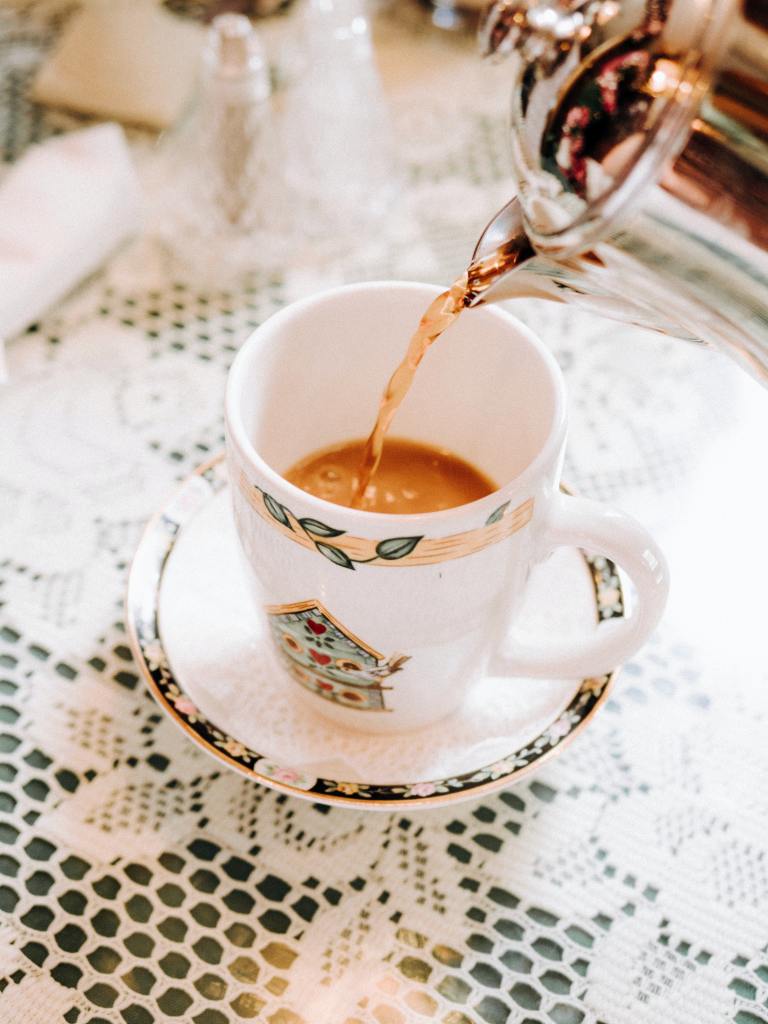
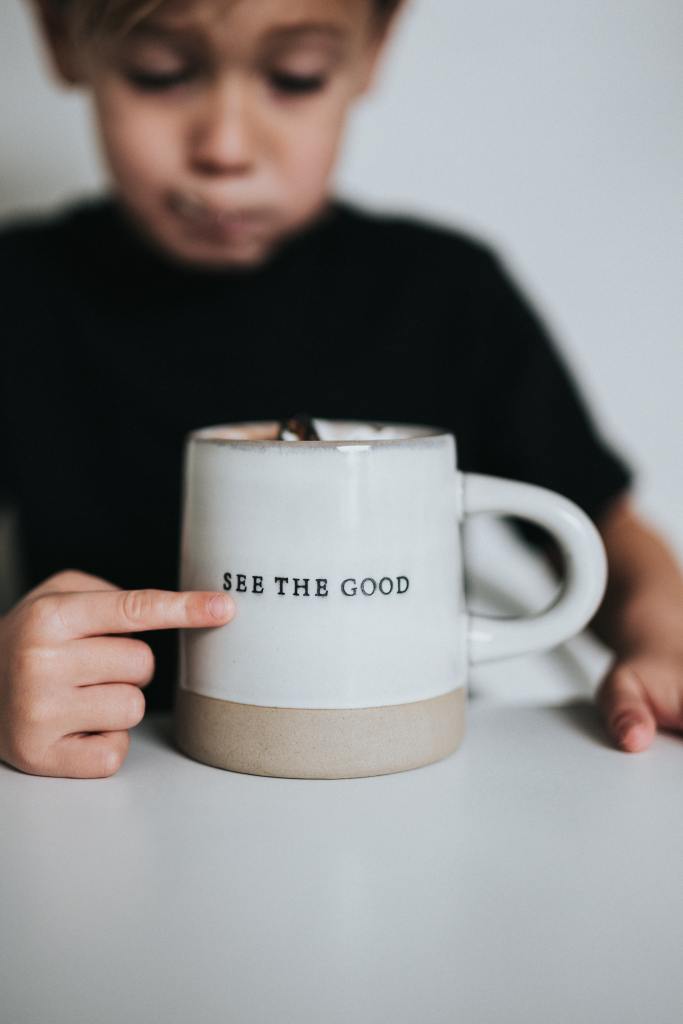
Photo by KT Likes Coffee on Unsplash

Here’s something you could try doing that my writing in community friend Martha shared with me this week:

An assignment that literally changed my students’ lives. Extra credit (optional, and adds points to overall score). Make a list of 50 things you are grateful for in your life. Must use following format:

I am grateful for _________________ because __________________________.

One pt. for each line. Must complete 50. 49 won’t do. Must fill BOTH blanks for each line. You will get 50 points added to your grade.

Example: I am grateful for my grandma, because she makes me breakfast every morning.

I could tell you so many stories about this assignment! Not everyone chooses to do it. And sadly, not everyone is able to think of 50. If not being able to complete the assignment is perceived by the student as a problem, I see that as a good thing. I love coaching them to see things in their life to be grateful for. I can tell when a student has stretched and really starts to “get it.”

At the time I was in Phoenix, AZ, and I often got this response (one of my favorites) included in the list.

I’m grateful for my shoes, because without them I couldn’t walk anywhere when the sidewalk is so hot.

The last question of the assignment: Now that you’ve completed your list, look inside yourself. How do you feel? Has anything shifted?

Once in a while I would get a “no.” But of the 70% who actually answered the last question, almost everyone said that they experienced a shift. Some said they felt happier or more positive, while others said they realized they had so many good things in their lives that they hadn’t actually realized.

Sneak Preview from Bedside Lessons – Chapter 65 – Please Take A Seat

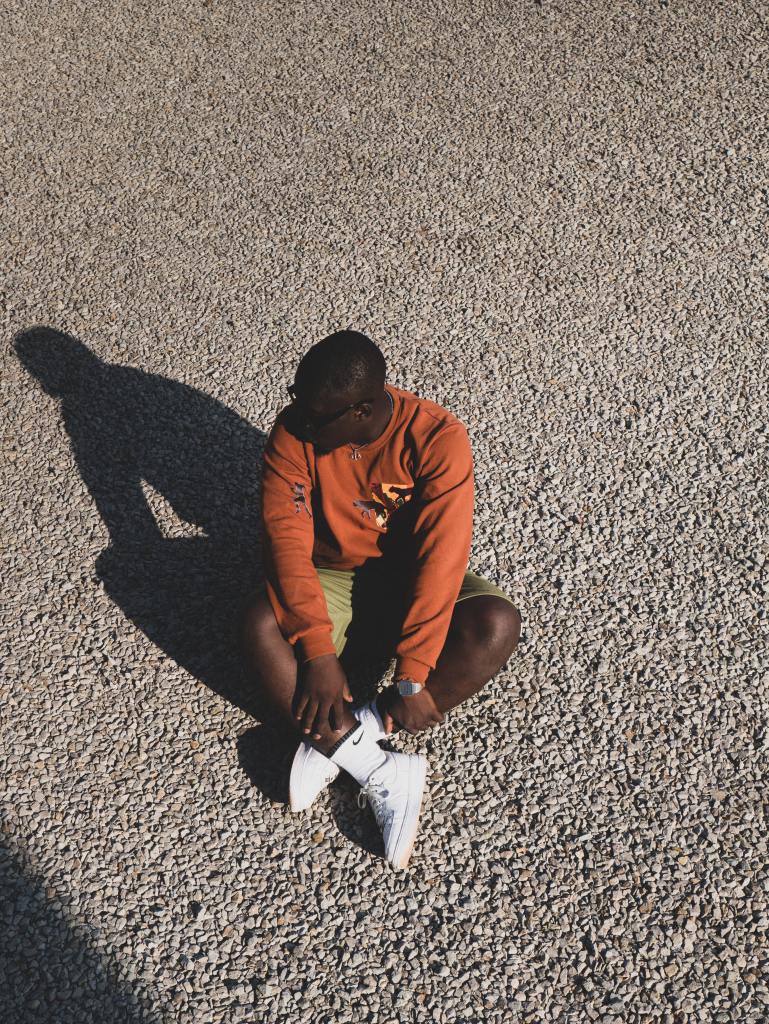
Photo by Stephen Audu on Unsplash

Family meetings are common in healthcare settings and are organised to convey a point of view or to try to bring together disparate points of view. These events may be the first chance that some of the key stakeholders, i.e. the family and the healthcare team, have to meet each other. First impressions, as within any first meeting, are important. As you can only meet for the first time once, you’d better do your best to make sure it goes well. To establish a trusting therapeutic relationship between the patient, their family and the healthcare team, rapport must be established quickly. Every encounter can count, but not everything can be planned for.
“Come in, please take a seat.” Oops not enough seats, I didn’t think there would be so many people joining us. “I’ll get some more chairs.”

“No doctor, it’s okay, we’re Islanders, we’re used to sitting on the floor.” He sat down on the floor in a cross-legged position and the rest of his family followed.
While dropping to the floor and re-arranging my legs into a well-versed pose, “I’m an Islander too, and I’m used to sitting on the floor too.” I was joined by my cross-legged team member. Eyes were in contact and were levelled, as were some of the power differentials. Serious issues were discussed in a different but more trusting fashion.

Continue reading

I think therefore I am? – Gradients

Photo by Annie Spratt on Unsplash

I went to medical school in the previous millennium. Back in the days when the standard dress code was to wear a shirt and tie. To tell the truth, it didn’t matter too much what you wore as it all had to be hidden underneath the doctor’s white coat that we would wear. I probably would’ve gotten away with wearing just a collar and tie underneath my white coat. I would’ve needed to have appropriate pant legs and footwear but probably could’ve gotten away with wearing pyjamas underneath the coat. Of course, this never happened as I was as sheep-like as everyone else and conformed to the standard dress code.

Once I graduated I became braver in terms of dress sense and I started wearing cartoon ties and otherwise quirky ties. I built my collection during my travels. I bought ties in places like Taiwan, Thailand and Kaitaia. Halfway through my first year of work, I went on a clowning trip in China led by Dr Patch Adams. This was followed by a reunion with my childhood friends in South Korea. On my return, I came to a decision. I decided to retire. All of my standard ties. I would only wear my cartoon ones from thence on. Over the next 21 years, I continued to wear Disney characters, Looney Tunes, Superman, Popeye, Fish, and many more.

Continue reading

Palace of Care – White With No Sugar

Photo by Brian Patrick Tagalog on Unsplash

It all started over a cup of tea, that was when they first met. They were at the local dance hall almost 60 years ago. Introductions were made over tea and biscuits and then they danced together for the rest of the evening. He was a gentleman and delivered her safely to her parents’ home. That was the start of their courtship and four years later they were man and wife. They moved overseas and enjoyed the big city life for several years. They toured the whole country and had adventures in many places, even visiting a famous underground city. They made their way home and settled down once the first child was on its way. Followed soon by number two.

They bought a house with a garden in which she planted her favourite camellias. All sorts of colours and she tended the plants with care. Nourishing them with her efforts over many years. The children started school and she could start work again. She worked as a secretary making sure everything ran smoothly in the office, putting her natural organization skills to good work. He organized his workshop well, he liked things to be well planned out. Their strong organizational abilities were another thing they had in common, their children were never late for anything.

English tea was her preferred beverage. There was nothing like a nice hot cuppa to warm you up in Winter. It had always been her favourite drink right from childhood. She wasn’t surprised to find out that tea plants were a type of camellia. She had always wanted to visit a tea plantation to see for herself how similar the plants would be to her camellias, but life was too busy. Everything went according to their plan, their children grew up and left home. Then the grandchildren arrived and the good life improved even more.

The organized couple’s plan worked out well, retirement plans had been worked out long in advance and many days were to be spent in their beloved gardens. The camellias never looked better and responded well to her increased presence. What they hadn’t planned for was for cancer to disrupt their well-considered plans. She became unwell and lost a lot of weight. She needed more help with the gardening as her energy had left her.

Continue reading

I think therefore I am? – GPS

Photo by Erik Mclean on Unsplash

We’re not the driver of the journey. We are more like a GPS. We are here to help them in their travels. The driver is in charge of where they want to go and can indicate which route they would like to take to the destination. We are there to help highlight hazards along the way as this is a journey we help others with all of the time. We can point out obstructions or detours along the way. We can give a head’s up about what may be troublesome up ahead.

We don’t want you to have any surprises, we will advise you which route may be safer. The aim is for a smoother journey. You need to know what is going on and we will be there to help you navigate your way through foreign territory. We can map things out for you and will make useful suggestions. Whatever happens, we will be there for you and will do our best to understand and fulfil your needs.

Tell me what you need and we will strive to make things happen for you. This is an important final excursion that you are taking and we will be alongside you each step of the way. We know what changes to expect as we enter different phases of the trip. We are also there to provide support to the traveller’s loved ones to ensure they are kept up to date with each leg of the journey. To guide them through the transition points as everything continues to change.

All of the above is what you can expect from our self-caring rechargeable battery-powered Gentle Palliative Steadying system.

Palace of Care – Something in Common

Photo by Joshua Fernandez on Unsplash

I was introducing myself to a new patient.

He asked, “Can you speak Mandarin.”

I replied, “Yes, I can.”

“Where are you from?”

“I was born here.”

“What people do you belong to?”

“Hakka.”

“Really? Me too.”

“My family are originally from Guandong Province, Meixian County.”

“Mine too.”

“Wow, we could be cousins. How are you feeling?”

“Not good, I’m short of breath, can’t relax. Pain in my throat, and I’m having trouble swallowing. I keep on choking, even on water.”

“You must be exhausted.”

“Yes, I just want to sleep. I know what is going on, I don’t have much time left. This cancer has been really bad.”

“Yes, it has made you really unwell, I can see your arms are swollen.”

“Yes, that just happened yesterday, everything got worse in the past week, it’s too fast.”

“I’ve prepared my funeral plans, I’m ready to go, I know what is ahead of me.“

“We’re going to get you through this, and we’ll look after your family as well.”

“Do you or your son have any questions?”

“No, not at the moment.”

“You just let me know if you want to talk about anything, or if your family have anything they want to know.”

“Okay, thanks doctor.”

“I’ll adjust your medications now.”

“Thank you, I’ll see you later.”

Our families had originated from the same county and province of China and had then moved to different parts of the world as part of the Chinese Diaspora. Many years later we both met each other in the hospice inpatient unit. Having something in common really helped me to establish rapport.

I think therefore I am? – Different Jurisdictions

Photo by Sandi Benedicta on Unsplash

The Land of Milk and Honey

“NSW  residents will have access to the highest quality care and pain management services at the end of their life, with palliative care and specialist health services to receive a record $743 million funding boost over the next five years.
Premier Dominic Perrottet said the 2022-23 funding boost is on top of the $300 million the NSW Government invests each year in palliative care.”

Quoted from this NSW government press release.

Meanwhile in Aotearoa New Zealand

In Aotearoa New Zealand we have to use milk and honey to make fundraising bake sale items. It is ridiculous that health care institutions have to count on sales of Chocolate Brownies and other baked goods in order to maintain free services to eligible patients in the community they serve. Literally having to sell baked goods in order to try to save staff jobs. We really do need a hand here, as we don’t want good patient care to have to depend on our baking supplies.

“Sorry Mrs Smith I can’t admit you because we have run out of flour. I would like to see you in the outpatient clinic Mr Kim but we can’t find any cocoa.”

Where is the kindness for some of the most vulnerable in our population? Palliative Care is not just about end-of-life care, but the care that is required in the time leading up to death, which might be 6 to 12 months or even longer. It is not just physical care that is required but psychosocial/spiritual/cultural care as well. The dying members of Aotearoa’s population deserve to be treated better.

“Sorry Mrs Ihaka, you can’t come become a hospice patient because we ran out of vanilla essence.”

What if hospices had to reduce services or shut down?

Who would care for all of the patients and families that we help?

Would the already over-stretched hospital sector be able to cope?

What if hospices were allowed to disappear?

Be worried.

It could happen.

Palace of Care – Four Weddings and a Funeral

Photo by The Good Funeral Guide on Unsplash

He was far from home, many kilometres away from his tribal lands. He had come to the big city for cancer treatments and to be closer to the few family members who lived close to our catchment area. The treatments had not worked despite everyone’s best efforts. His condition deteriorated at an increasing pace. The Oncologists thought he was dying, that he only had days left to live and they arranged for him to be transferred to the hospice for symptom control and likely end-of-life care.

We managed to calm down his physical pain and nausea with urgency. When he was more comfortable his appetite improved. Everything was going well, we started making arrangements for where he would go next. Along with his family, he had chosen a hospital-level care facility that would be easy for his out-of-town family to visit.

On the day of his planned transfer, without warning, he collapsed and died. Death inside a hospice is not an unusual event. For Maori folk, after death, the usual preference is for the body to be embalmed and then for it to lie in state at a family home for a few days. Then it will make its final journey to the mana whenua/tribal homeland for burial.

Our patient and his family were all from out of town. They did not have a place of their own they could use to host a small funeral. They asked if it would be okay for his embalmed body to return to hospice for them to hold a tangihana/funeral.

We discussed it as a team and said “Sure, let us know if we can help.”

His family were grateful to be able to farewell him together in their traditional way.

In all my years of working in hospice, there have been more than four weddings on-site, but this was the first funeral.

I think therefore I am? – Good Finding

Photo by Nathan Dumlao on Unsplash

We human beings have a natural tendency to look for the bad in any situation we encounter. This is a protective mechanism as we need to be able to deal with any threats we may come across. In times past this might have been crucial in keeping us alive but the level of threat that we encounter in modern day life is much less than what our ancestors experienced long ago. Can we change our outlook on life and could this be of benefit to other people?

I came across the concept of good finding as an exercise I completed when I was part of Akimbo’s altMBA last year. Each day look out for good things that people in your life are doing and let them know that you have noticed them. Be on the lookout as you will need to find at least three things a day that viewers can choose from. Do it for the next 30 days to establish the habit and then see what happens to the world around you and your view of it.

How does it make you feel?
How does it make the recipient feel?
What other changes do you notice?

Give it a go, who knows, things may never be the same again.

I think therefore I am? – What Did You Do?

Photo by Felicia Buitenwerf on Unsplash

Any medical history is incomplete if the social history is not assessed. An important part of the social history is occupational history. What line of work a person did can tell you a lot about them. What jobs they held and for how long can provide a clearer image of who the person is. It can indicate what level of education they have had. Also, it can provide clues as to how they have done financially. Where did they work, locally or overseas? How important was their job for them? What level of loss has occurred as they are no longer able to work? Is there any unfinished business? Is there anything that needs to be sorted out in relation to work? What has been important to them up until now? Was there a work-life balance or otherwise?

The above information gives you a better idea of the human being that is in front of you and their place in society and the world. What is the best way to communicate with them, and how can you discuss things in terms that they will be able to follow? Talking to an engineer is different to talking to a chef. Talking to someone who has devoted many years to home-schooling their children is different to the conversation you’d have with a truck driver. The conversations are aimed at finding clues about who the person actually is. What analogies would help improve understanding? What kind of language to use or what level of detail to share? What is important to them at this stage of their life? What do they still have to sort out? How can you best build rapport?

How can we connect with them? What do we need to know about them in order to take better care of them? What did they spend a big chunk of their adult life doing? Also what hobbies do they have and how passionate have they been in pursuing those activities. One human trying to get to know another human, trying to connect with them to help them out. Striving to make a connection.

Any medical history is incomplete if the social history is not assessed. An important part of the social history is occupational history. What line of work a person did can tell you a lot about them. What jobs they held and for how long can provide a clearer image of who the person is. It can indicate what level of education they have had. Also it can provide clues as to how they have done financially. Where did they work, locally or overseas? How important was their job for them. What level of loss has occurred as they are no longer able to work? Is there any unfinished business? Is there anything that needs to be sorted out in relation to work? What has been important to them up until now. Was there work-life balance or otherwise?

The above information gives you a better idea of the human being that is in front of you and their place in society and the world. What is the best way to communicate with them, how can you discuss things in terms that they will be able to follow. Talking to an engineer is different to talking to a chef. Talking to someone who has devoted many years to home-schooling their children is different to the conversation you’d have with a truck driver. The conversations are aimed at finding clues of who the person actually is. What analogies would help improve understanding. What kind of language or what level of detail to share? What is important to them at this stage of their life? What do they still have to sort out? How can you best build rapport?

How can we connect with them? What do we need to know about them in order to take better care of them? What did they spend a big chunk of their adult life doing? Also what hobbies do they have and how passionate have they been in pursuing those activities. One human trying to get to know another human, trying to connect with them to help them out. Striving to make a connection.