Palace of Care – No Surprises

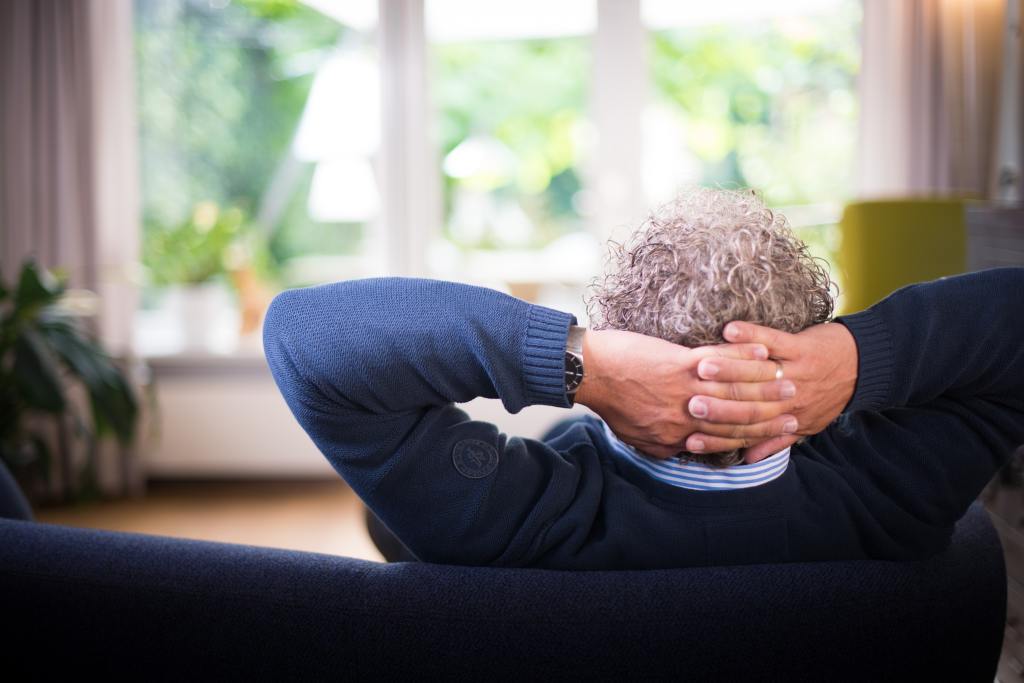
Photo by Bernard Hermant on Unsplash

They’d been unwell with cancer for months and it had led to them becoming bed-bound. Their children had tried to look after them to the best of their abilities. The pain had worsened recently and they’d felt more and more fatigued. The family was not coping well and needed help. When admission to hospice was suggested the family had considered it over a few days before agreeing to it.

On arrival, the patient was in pain but was able to make themselves understood easily. Pain relief was provided with good effect. A family member was rostered to be available all day and all night long. Just in case our patient needed anything overnight.

On review the next morning, the patient needed several extra pain relief doses. We incorporated the extra doses into the syringe driver which was running continuously. We talked to the patient’s son about what was happening. We talked about how worried we were, that she might continue to deteriorate further and that we did not want there to be any surprises.

The next morning and our patient’s pain was controlled but they were no longer speaking clearly. It was difficult to understand their speech, and for them to understand our speech. A marked difference compared to yesterday. More family members had come to visit and we spoke to the eldest son. We brought him up to date with what was happening to his parent. Our patient was dying and possibly had days left to live.

Our patient had a moist cough and was troubled by worsened dyspnoea. We explained that we would not recommend antibiotic treatment if there was a chest infection, given the end-stage cancer our patient was troubled by. We needed to make some changes to their medication mixture. The son appreciated what we were doing, and was going to let the rest of the family know what was going to happen. No surprises.

I think therefore I am? – Everyone is Different

Photo by Thought Catalog on Unsplash

Everyone is different and has different ways of handling suffering. Suffering is a subjective feeling, and the same stimulus applied to different people can lead to different reactions or responses.

When I was in primary school all the children were not keen to see the school dental nurse. I remember going when I was a five-year-old. Back in those days, the dental nurse wasn’t allowed to inject any local anaesthetic, thus any cavities that required treatment would be done so without numbing medications being used. I experienced having my teeth drilled and I was able to put up with the pain by distracting myself. I could almost laugh the pain away in my mind. It was still there but I could frame-shift away from it. Despite many painful encounters with the dental nurse, I was never afraid of going there. A lot of people in my generation developed dental phobias which have persisted into their adult lives.

I can handle physical pain and found myself resorting to my five-year-old self’s tactics when I had my one and only Taiwanese Foot Massage. People willingly pay money for this service. You step into the communal torture chamber on foot. Your feet are first soaked in hot water with pleasant-smelling oils added. Then the masseur dries off your feet before proceeding with their treatment. Around the room, there were groans and screams as people’s foot bones and joints were poked, prodded, compressed and generally abused. The pain was intense and I had to shift my consciousness to my other place.

The physical pain I can handle. Nausea not so much.

Everyone is different and can handle/or not handle different things.

Suffering is defined by the sufferer and the clinician’s role is to observe and adjust the treatment, to try to decrease the suffering.

It is not the clinician’s role to judge a person. Most of us haven’t been to law school or worked as a lawyer. We need to stick with what we have been trained for and do our job as well as we can.

Palace of Care – Hospice Sounds

Photo by Dan Cook on Unsplash

They hadn’t had much to be happy about over the past year. A progressive disease, no longer curable given how far it had spread throughout the body. They were determined to continue their chemotherapy despite the demoralising side effects. Most people would’ve given up after two cycles let alone completing 12 cycles.

A strong-willed person with too much to live for. It was the uncertainty that troubled them the most. They knew death was coming and had tried their best to prepare for it. The loss of control troubled them deeply. They found the advance care planning handbook to be useful in covering the practicalities of this part of life. Funeral arrangements were pre-planned, their will was finalised.

They’d been offered an inpatient admission months ago but they were not ready for it.

“Not yet doctor.”

Some months later they’d become more unwell, wracked with pain and distress in the hospital. They were glad to be admitted to our inpatient unit, and we worked with them to bring their pain under control and they were able to return home.

Over the next month, the rate of deterioration worsened. As per their request, we tried to keep them at home with their partner and their children. They came for an outpatient clinic appointment and ended up needing to stay in as an inpatient.

“How long have I got left?”

“I’m not sure, could be as short as weeks. Could be longer, most people don’t have the level of inner strength you do.”

Once comfortable they were able to relax and even smile. They were on the receiving end of input from the local Dad Joke specialist. Laughter was heard coming out of the room that last week had only witnessed tears. Their laughter was one of my best achievements of the past week.

Palace of Care – A Humbling Day

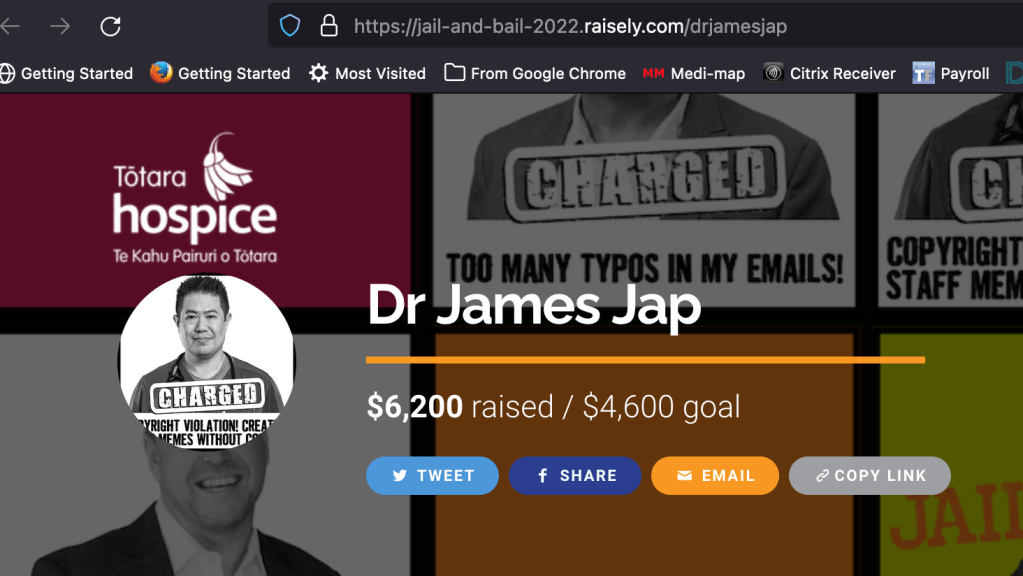
At the start of the Jail and Bail fundraising event finale our guest speaker Marketing Guru Mike Hutcheson shared entertaining stories from his life and career which inspired us all to think differently. Copies of his latest book were auctioned off within minutes. They can be purchased on his website.

I started my thank you speech with one word.

Why?

I asked everyone to reflect on why they were here at our fundraising event. Why had they chosen to take part this week? They could’ve been at work, or spending their time somewhere else but they choose to spend their time raising funds for my hospice. Why are you on this planet?

I gave them 10 seconds to reflect on their Why before I shared my own.

I am here on this planet to make the world a better place for dying people.

I read out the story about Beds that I had shared last night on Palliverse, LinkedIn and my fundraising page for this event.

The finale was a unique event where all of the bailees, myself included, were too busy fundraising to talk to each other. Necks craned over smartphones and laptops. Beavering away to fundraise as much as possible in the remaining two hours of the event. The 12 busy bailees and their supporters volunteered their time to support our cause.

There’s a lot in the world that can jaundice your vision into cynicism but today I saw people in action for a good cause. It was enlivening to witness community spirit in full flight. Together we did this. A bunch of friendly do-gooders used their creativity to help their fellow community members. Inspirational stuff, everyone from many different walks of life united to crowdfund for hospice.

Four beds had been fundraised for by noon.

Throughout the two-hour finale, we had generated enough funds for five beds and were heading towards six.

I checked my dashboard tonight and found:

The total up to this point is $28051, enough to fund six beds.

And it’s not over yet.

A special thank you to Anonymous for making so many donations.

Thank you to my fellow bailees for being such good sports. Thank you to all donors, your contributions will have a positive impact on the patients and families we serve in our community. Also thank you donors for sharing your kind and encouraging words. They mean a lot to our hospice team. Our patients were people just like you and me, trying to make their way in life when severe illness struck and changed their life journey forever. Knowing you care about them means a lot to them.

Thank you all for making a difference.

Thank you all for Making Hospice Happen.

I think therefore I am? – Notes on Beds

My hospice is fundraising for new beds as per the link below:

I’m being jailed for a good cause, and need to be bailed out

Here’s the first draft of a speech I’ll be performing tomorrow at our fundraiser finale event. This story will become a chapter in the second book I’m writing. Working title – More Bedside Lessons.

If a bed could talk, what stories would it tell?

I was there when the life partnership was signed off.

I was there when the twinkle in the eye became something even brighter and shinier. I was there at the start of a new life. People begin in beds.

Nine months later a little human was born on a bed.

I was there when two became three, four, five, including one with four legs and a tail.

Special birthday celebrations began with breakfast cooked by the younger ones.

Beds are where the children sneak into when they are frightened during the night. And also the pets during a thunderstorm or Guy Fawkes Night.

For children the bed can be a trampoline, or a crash mat. The first flip of a budding gymnast. Or the first submarine of a deep sea explorer.

I keep people warm and tucked in.

What stories does the hospice bed have to tell?

I can be a place of safety, a place of refuge, I’ll make you comfortable.

I’ve enabled family members to be together, surrounding their treasured one with love.

I was there when they had their deep and meaningful conversations.

I cheered along with the family as we watched a movie together.

I’ve overheard important conversations. I was there when life-changing decisions were made.

Breakfast in bed can be a nice treat. Lunch and dinner in bed is usually only for when someone is very unwell.

I was there when the doctor helped the family to understand what was happening.

I’ve seen other family members coming to visit, those with four legs and a tail, those with two legs and two wings. All of these visitors have been welcomed even the slow moving tortoise with the wonky leg – Yes he was troubled by a reptile dysfunction.

At times I’ve had to become a toileting facility when my guest is too unwell to get up. I can also provide a comfortable place to have a bath.

The congregation can bring the church service to my guest, I welcome them.

No Joke – The Rabbi, the Imam, and the Lama are all welcome to visit my guests.

When people become more unwell they spend more time on me. I become the final resting place for many people.

In the hospice they often pull up another bed to be alongside me. They may have been together for half a century and have never slept apart. Why does that need to change at the end of life?

I was there when the elderly couple said goodnight to each other for the last time.

Hospice beds are not just a bed.

It’s a coffee date with your best friend.

It’s family meal night.

It’s where I held his hand for the last time.

It’s where we had our final conversation. It all started with a kiss, and it ended with a kiss.

Thank you for your fundraising efforts. We will get many years of service from our new hospice beds.

The beds will be put to good use, ensuring patient comfort and helping to put their loved ones at ease.

Goldilocks would approve of these beds. They are just right.

Let’s make our hospice beds as comfortable and comforting as we can.

Thank you for making a difference.

Thank you for Making Hospice Happen.

Palace of Care – Mixed vs. Clear Messages

Photo by Darius Bashar on Unsplash

I was worried he would die before the day was over. When I first met him he was hunched over in bed, his jaw clenched tight, his upper teeth were grinding into his lower teeth. His breaths short ragged grasps. In extremis, with tears dripping onto the tousled folds of the bedclothes. His family’s faces replaced by masks of terror. The tension in the room was thick, the silence as we all held our breath as the patient grunted in agony. His wet eyes begged me to help him.

“Your pain relief isn’t strong enough. I’ll make some changes to get you more comfortable. I’m very worried about you. You might get much worse. Let’s work on your pain first.”

I headed off to prescribe the higher doses and to ask the nurses to prepare them for our patient. He was another classic haematology patient. His discharge summary had recounted the breaking of bad news the day before. There were no further treatments available to stop the blood cancer. The team recommended no further transfusions as they would not be helpful. The next morning the standard blood tests had been repeated, and no surprise, all the blood counts were low, including a platelet count below 10. This meant the patient was at risk of spontaneous bleeds. The medical teams reaction, was to prescribe a platelet transfusion. The hospice doctors who read the notes were confused by this action. How did the patient and his family feel? The day before they had been told no further transfusions, and then less than 24 hours later, he was being transfused.

Over the weekend we managed to control his pain and he spent some time with his family. The highlight was a visit from his children before they went away for a long weekend trip. I was surprised that his weekend went well. He spent more time with his parents and siblings and other family. He asked our staff what was going on, as he was unsure what the treatment plan was.

Continue reading

I think therefore I am? – Only Human

Photo by Isabella and Zsa Fischer on Unsplash

Last week was a heavy one in terms of clinical need. I was completing the latter half of a 12 day stretch and looking back at last week I realised I didn’t do enough self care. I missed my Brazilian Jiu Jitsu (BJJ) session last Monday as I was still feeling the effects of something dodgy I had eaten for lunch on Sunday. The instant weight loss was accompanied by instant energy loss from 36 hours of food poisoning.

My supervisor has been away for over a month and I am overdue for a professional supervision session, which I usually attend at least monthly. There are some months which are harder going in which I may need two sessions a month, and at times when it is especially severe even weekly sessions. The sessions allow me to reflect on my practice and how it affects me. I learn a lot from the sessions and have been attending regular sessions for the past 12 years. They have helped me become a better practitioner and are an important self-care practice.

Seasonal Affective Disorder isn’t usually a problem for me, but after the wettest Auckland July in many, many years I think I developed Rain Affected Despair. No it’s raining again, and again, and again. The down-pouring clouds have clouded my cognition. The constant humidity has led to this human feeling ‘mid’, as the young folks say. The real issue is I didn’t want my carefully styled hair to get wet after spending hours preparing it each morning. Also less opportunities for sunlight exposure.

I participated in many emotionally heavy conversations with patients and their family members last week. Many tears were shed. There were some tragic cases requiring my skills and some of them were challenging and pushed me to work at the top of my scope of practice. Professionally satisfying but the emotional labour was tiring.

I went without my usual Wednesday BJJ session due to a work commitment. I chose to attend a peer support network session as it only occurs once a quarter. It was good but took out another two hours from my day. I missed the physical aspect of BJJ but also the social aspect of catching up with club-mates.

By Friday, day 12, I was worse for wear and in need of a rest. The perfect storm had blown into my town and reminded me of my mere humanity. I have limits and am not a tireless robot. I will work on my self-care more this week, as I really need to.

I think therefore I am? – Not On My Watch

Photo by Mikell Darling on Unsplash

It distresses me to hear on the grapevine of how patients, who have chosen to have assisted dying, in other palliative care units have been treated by staff. Following the revelation of their wishes I have heard of staff treating the patient differently. Not wanting to engage with them anymore, giving them the ‘cold shoulder,’ because of the choice they have made. Some staff refuse to attend the patient even if they push the call button when they need help.

It’s called discrimination. Treating people differently because they are different. In these cases because they have chosen something the staff do not support. A difference of opinion leads to stigmatisation and a change in the mindset of the caregiver. This does not fit in with my own care philosophy. I will not abandon someone due to the choices they make not fitting with my own beliefs. I am in my role for the sake of the patient and their family. They are not there for the sake of my existence.

Continue reading

I think therefore I am? – How is it going feel?

Photo by Coen Staal on Unsplash

I started preparing for the first conversation years ago. Despite this I still felt nervous prior to the first conversation with a patient who had been approved for Assisted Dying. The End of Life Choice Act 2019 came into effect in Aotearoa New Zealand on 07 November 2021. The first time I met an approved patient was only at the start of this year.

I wasn’t sure how it was going to go. We had been in email contact and I knew their illness had led to speech impairment amongst many other losses. They would be coming with their sibling and sibling-in-law, and their sibling’s child. Coming in a for a pre-visit to our venue, some weeks prior to their scheduled assisted death. They lived in another catchment area and were not a patient of our hospice.

What would it be like talking to someone whose death was scheduled with certainty in two weeks’ time. In every other end of life conversation I had was full of uncertainty. When would it happen was a mystery and there were no solid leads or clues with which to solve it. How would it feel like to talk to someone who knew exactly when they would die?

Continue reading

Palace of Care – No More

Photo by Lance Reis on Unsplash

“I can’t handle this suffering anymore I’ve had enough.”

“Okay. I think I can make you more comfortable. Then you will probably be more relaxed and may fall asleep.”

“That’s good.”

“You’d rather be more comfortable and sleepy than fully alert but in pain?”

“Yes. The doctors in the hospital had asked if I wanted CPR. There is no point bringing me back just so I can suffer more. I said no.”

“I’ll record in our notes that you aren’t for CPR. If you were to have a life threatening infection I would not recommend you to have it treated.

“No treatment of infection please.”

“If you have any important things to do or people to see I’d recommend you do it as soon as possible. I can’t predict what will happen tomorrow let alone next week. I don’t want you to miss out on the opportunities to connect with whomever you want to. I’d rather you do so too early, than too late.”

“Thank you doctor.”

“I think it’s time that you talked to your children about what is likely to happen . Our counsellor can give you some advice as to what to say.”

“Okay, thanks doctor.”

“Remember you need to push the call button if you are in pain. Doing so will help us when it comes to prescribing the right doses of medication.”

“Thanks Doctor. Could I get some pain relief now.”

“Sure.”