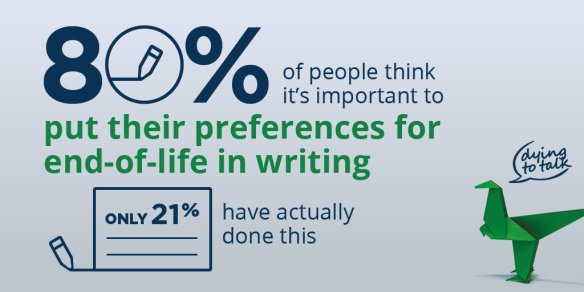
The Victorian government has released the long awaited end of life and palliative care framework. The framework aims to deliver care where and when people require it and ensure people from all walks of life can determine what happens to them at the end of their life. It recognises that palliative care services alone cannot meet the growing demand that our society will require for care in the final stage of life.
Author Archives: soniafullerton
a week. hospitals. tiny needles. too many tiny needles.
Hey palliverse peeps, here is another post by the wonderful Elizabeth…. she is having a torrid time with what she creatively called stomarama, which sounds like No Fun and involved painful scary needles and things.
I think she is pretty amazing….
Sonia
i can’t even clearly remember when i last updated.
though firstly welcome to new readers. there are a lot of you. here are some basic things:
i talk a lot about gross stuff, but try and warn for it.
i do not post comments messaged to me relating to alternative treatments. i have written in the past about about my reasons, and i respect all cancer patients and their own decisions regarding treatment. in return, i like to be afforded the respect of not being offered treatment options for my cancer that are not being suggested or managed by my carefully chosen multiple disciplinary team who, between all of them, have a tremendous amount of experience. i follow this path, i am happy with my decision to do so. i like to make people aware of this so they understand that this is an important thing for me. i appreciate…
View original post 2,136 more words
Planning care for people with dementia

Two new resources are now available to help with planning care for people with dementia. Palliverse talked to driving force Prof Meera Agar about the ‘whys’, ‘hows’ and ‘whats’.
Q: Why develop care planning resources just for dementia?
A: People with dementia face unique challenges and decisions related to their care and health care needs as their illness progresses; and supporting their choices is made more complex as they become less able to communicate their needs and articulate decisions about what they want from care. While good intentioned, many health professionals in aged care and other settings may not understand the course of dementia, and there may not always be good communication, involving the person with dementia whenever possible and their families, and also between the different health professional involved in the persons care.
Q: So how do the new resources help?
A: The two new resources are a website offering practical support for family case conferencing and a report providing guidance on critical recommendations to improve advance care planning. Continue reading
Modern dying from a doctor’s perspective
A thoughtful article regarding our modern attitudes to dying by Dr Craig Bowron, an internist (i.e. physician in internal medicine for us Down Under, or general medicine consultant)
Opting to try all forms of medical treatment and procedures to assuage this guilt is also emotional life insurance: When their loved one does die, family members can tell themselves, “We did everything we could for Mom.”
In my experience, this is a stronger inclination than the equally valid (and perhaps more honest) admission that “we sure put Dad through the wringer those last few months.”
I agree with Dr Bowron, that sometimes we may not consider the cost to the person (not the financial cost, other costs) of being able to say, “We did everything we could.”
What do you think? Does this apply where you are?
Regards, Sonia
PS Thanks to Tegan, a social worker I work with, for pointing me to this article.
“A Stitch in Time: Women’s Journeys Towards Breast Cancer Prevention”
Moonshine Movies has recently launched a crowd funding campaign for “A Stitch in Time: Women’s Journeys Towards Breast Cancer Prevention”
https://australianculturalfund.org.au/projects/a-stitch-in-time/
You may like to take a look if you are interested in the issue preventing women who are at high risk developing breast cancer, and high risk women’s experience of care.
Bisphosphonates and denosumab good for bone pain…. right?

Wrong!
The folk from Cochrane asked this question. ‘In adult patients with metastatic bone pain, what is the evidence that bisphosphonates and denosumab are effective and safe in controlling pain?’
http://www.ncbi.nlm.nih.gov/pubmed/27006430
They found that evidence to support an analgesic role for bisphosphonates and denosumab is weak. Bisphosphonates and denosumab appear to be beneficial in preventing pain by delaying the onset of bone pain rather than by producing an analgesic effect per se.
Sonia
Do we in palliative care know what a “bad death” is?
Hello all!
Spending my weekend doing some auditing as my life is so exciting. Actually, it is really interesting, I am having a look at how people die with metastatic melanoma, and whether that’s been affected by novel agents.
I have volunteered to make an assessment of whether the deceased patients in our cohort had a “bad death”.
I am thinking of things like chemotherapy in last week/month, or death in ICU , or death in a resuscitation (although if the resuscitation and ICU admission were not futile, then that does not necessarily make them bad, does it….)
Are there proposed criteria for a “bad death” and a “good death”?
Thanks for helping me with my homework!
Sonia
Dying well
It’s a couple of years old now, but still good…. Here is the introduction to an article in the Conversation about how Australians need support to die at home. Should be mandatory reading for politicians and health service policy makers!
“The baby boomers are growing old and in the next 25 years the number of Australians who die each year will double. People want to die comfortably at home, supported by family and friends and effective services.
But more than half of Australians die in hospital and about a third die in residential care. Sometimes they have impersonal, lingering and lonely deaths; many feel disempowered.
Grattan Institute’s Dying Well report sets out how we can improve the quality of dying in Australia. With an investment of A$237 million, we can double the number of people who are supported to die at home – and the same amount could be released from institutional care spending to pay for it.”
I’d vote for it!
Read more here
NICE guidelines for end of life care
The National Institute for Health and Care Excellence (NICE) provides national guidance and advice to improve health and social care in the UK.
In response to the Neuberger report and the demise of the Liverpool Care Pathway, new evidence based guidelines have been developed.
This guideline includes recommendations on:
- recognising when people are entering the last few days of life
- communicating and shared decision-making
- clinically assisted hydration
- medicines for managing pain, breathlessness, nausea and vomiting, anxiety, delirium, agitation, and noisy respiratory secretions
- anticipatory prescribing
In my state, Victoria Australia, the VEC (Victorian End of life Coordinating Program) is undertaking similar work, and plans to release a Victorian end of life care plan soon.
In Australia, we have not had the negative stories and experiences seen in the UK; because the LCP was implemented in a better way? The stories coming out of the Neuberger report were shocking: I cannot imagine any patient being denied a drink when requested “because she is on the LCP”. However the LCP has also been withdrawn locally in response to the negative findings delivered in the UK.
I will be participating in a pilot of the new end of life care plans which will replace the LCP locally. I am looking forward to seeing the final version.
Thoughts, dear reader, about the terminal care of the LCP?
Review article concerning hospital end of life care in NEJM
Not the traditional festive season article perhaps, but this review article by Dr Blinderman and the late Dr Billings provides a good summary in a very reputable and widely read journal concerning end of life care in hospitals in the United States.
Is end of life care in hospital in the US different?
The article reports that 29% of deaths take place in hospitals in America, a bit lower than I would have expected. In Australia, 54% die in hospital but this includes inpatient palliative care deaths which are excluded from the US figure of 29%.
According to AIHW, 42% of the Australians who died in hospital had some involvement from palliative care (42% of 54% in hospital deaths is 23%) About a third of patients who died as an admitted patient in hospital (a third of 54% is about 15%) died in inpatient palliative care. That still leaves us behind the US, with around 36% dying in a non palliative inpatient Australian hospital bed compared to 29% in the USA.
Interestingly the NEJM article does not refer to subcutaneous medications which are the mainstay of terminal care medication administration in Australia, New Zealand and the UK. Do US practitioners use less SC medication?
Personally I don’t find that cough and nausea are so troubling at the end of life, and we would promote meticulous mouth care for dry mouth ahead of pharmacological management.
The article also advises us to avoid benzodiazepines for delirium including at the end of life, which I found surprising.
Dear reader, do you have any thoughts? What is end of life care like in hospitals in your neck of the woods?