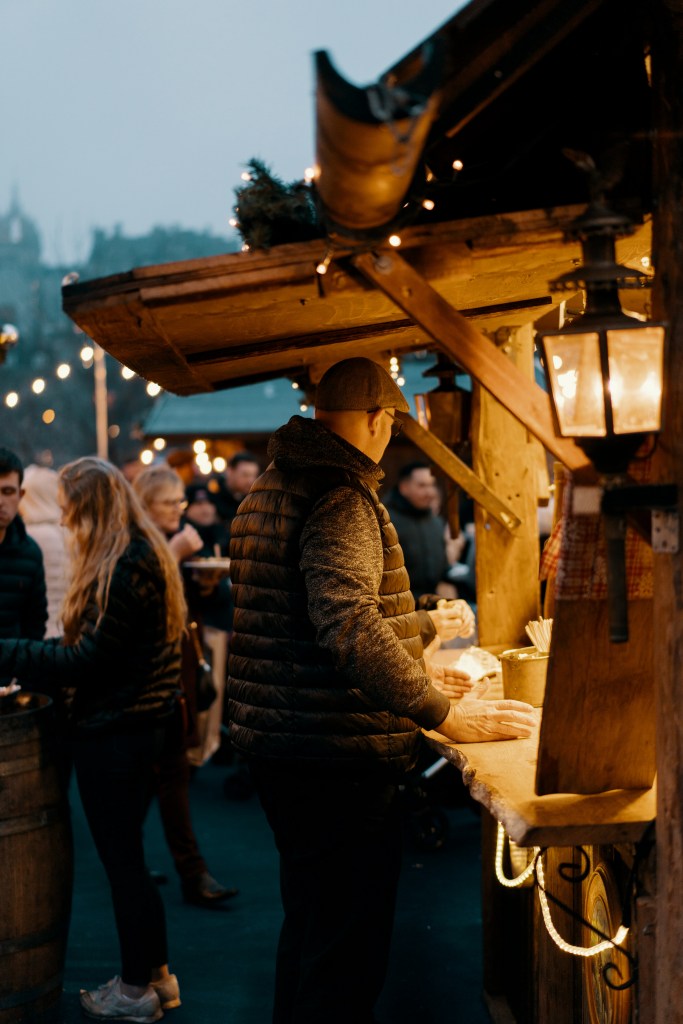
The Christmas Night Markets brought thousands of people to our hospice grounds and stallholders to our basement car park. There was live music courtesy of a guitar-strumming singer who sang Christmas carols that we all knew the words for. It was a family event with many generations represented. I usually only go shopping once a decade, but tonight my inner Ebenezer was silenced and money flew out of my wallet like butterflies searching for sweet nectar.
I usually go with my family but this year my wife was busy, instead my daughter and her friend came along. They were both looking for presents to buy for their mothers. This event was the latest edition of a community engagement project. The aim was to invite people into our hospice grounds, to get to know us a bit better.
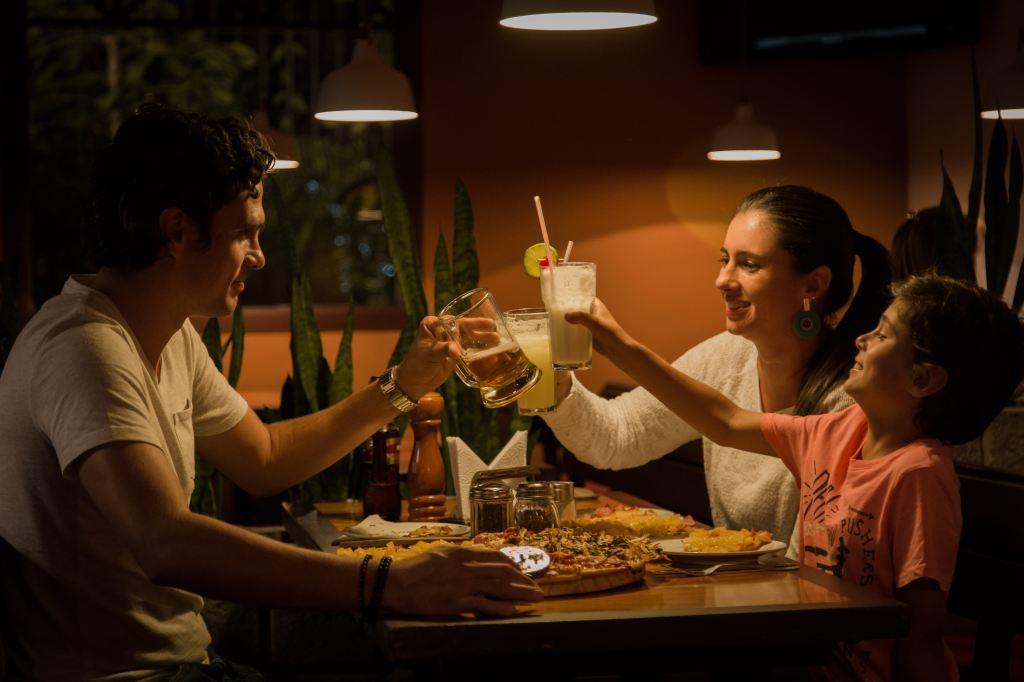
Lots of families attended and shared food. Some of our patients from our inpatient unit came down with their family members. I caught up with three families who had come back. All of them were different in many ways but they all shared something in common. Each of the mothers of the families had died in our care.
A little boy lined up to buy churros with his father who reminded me of Hercule Poirot. The boy’s primary school school had visited a local amusement park the other day. He looked well, had grown a little bit since I’d last seen him and he was as smiley as usual.
A young lady had finished high school for the year. Her father was still as friendly as ever and shared a laugh with us. He’d met my daughter before when he had last visited the hospice. She had introduced herself as the new Director of Nursing.
A local politician introduced me to his friends. He told me that his mother had died almost three years ago. This made his eyes glimmer briefly and he had to blink fast before the surface tension of his tears broke. I realised it had almost been four years for me, which made me gulp down my own emotional response.
Time can fly and life goes on, but it sometimes feels too strange. We all missed our mothers in different ways. After Mum’s death, things had never been the same again for any of us.
I was asked the other day what I did to switch off from my work every day, given the intense interactions that might be part of a normal day at hospice. I do perform a ritual at the end of the day. I take off my ID badge and place it in my drawer. I also put away any equipment I might be carrying, in particular my stethoscope. Back when I used to wear ties I would take my tie off, and undo the collar buttons of my shirt. I’d pack my bag and then prepare for the drive home.
I’d play easy-listening radio on the way home. I used to listen to a news channel, but I found that to be too frustrating given the usual news headlines. Having a mixture of music from lots of different decades is good. There is still something about 80s music that continues to appeal to many in the world, myself included. The commute home is usually through rush hour traffic, thus a drive that takes 20 minutes in the morning, takes at least double that in the afternoon.
Once I arrive home I change my clothing, taking away the last vestiges of the doctor. Again this is ritualistic and marks my return to the rest of my life, and the other roles I hold. Each transition is marked by a slight change of costume. This is to maintain boundaries between my work and the rest of my life.
Most days I can switch off from work by going through the above rituals. Some days might be tougher than others and then extra effort is required, e.g. mindfulness meditation or walking in nature. Choose a ritual for yourself and practise it regularly until it becomes part of your daily life routine.
We had been expecting him but no one had told us that he had arrived. We needed to break some bad news to him. We had been told that he was easily upset. How would we do this? Better just to tell him what we needed to. There was no way of hiding this information from him, and we would not even try. Open disclosure was the way to go, tell him exactly what had happened in as calm a way as possible.
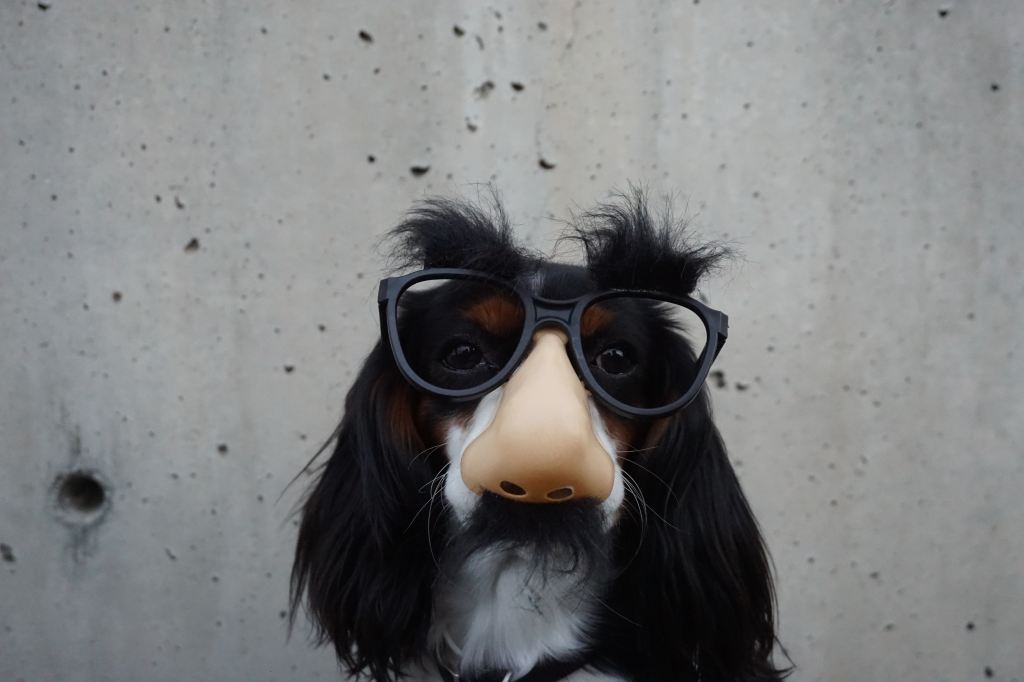
I couldn’t take my eyes off them. They stood out as dark shapes in a sea of pink and white. They didn’t seem to fit in with the image before me. I could not take my eyes away from them. What did he use to make them so black? His hair was as white as snow and was wispy. His face looked to have been affected by a first-degree sunburn, a shocking shade of pink. What I couldn’t stop staring at were what resembled two dark smears of greeny-black poo which were above his eyes. Was he going through an Art Deco phase of his life? His eyebrows had become bas-relief images highlighting the contours of his face. Was he a cartoon character who had escaped from the movie Where’s Roger Rabbit? I tried to look away but my gaze was magnetically drawn back to the poles of his Northern facing eyebrows. I could not stop looking at them, and out of the corner of my vision, I saw the rubbish bin. “No, I can’t take the bag out of the bin and put it over his head. That would not be very professional.” I closed my eyes and seared into my retinae were two burning hot white eyebrows. “Hello, Exxon-Valdez, I’ve think I’ve found the remaining oil that you lost.” “Hello is that Groucho Marx’s grandson? Son, I’ve found two of your grandfather’s missing moustaches.”
I found my right index finger reaching upwards towards his eyebrows, for a taste test. My colleague had to restrain my hand with a Kimora grip for extra resilience. The substance covering his eyebrows looked a lot like Vegemite or Marmite, those (in)famous yeast-based spreads. Nutritious but not particularly good-looking. Spreadable tar. A passing resemblance to every human baby’s first bowel movement – Meconium. I remained entranced, mesmerised, hypnotised by his eyebrows of power. The world started spinning around me…as if dark black eyebrow shapes were swirling around like a gigantic black hole, drawing me closer to their event horizon, taking my very breath away, the curtains started being drawn on the stage of my mind as I became lost in the inky blackness…”the next thing I remember officer was waking up in the hospital bed.”
Our patient was dying, earlier in the day his wife had asked how long he had left to live. I had told her I wasn’t sure, but it was likely he only had hours to short days left to live. It usually is hard to tell but in his case it was even harder as our team were surprised that he was still alive. We had expected him to die two days ago. He was a strong young man who didn’t want to die. He continued to hold on. I talked about no matter how much time was left that we would try our best to keep him calm, to keep him comfortable. We’re going to get you through this.
His daughter was just outside of the room. She was cutting out pictures from magazines and she was assembling a collage. There was a picture of a beach. Someone had a straw hat on and holding a fishing rod. There was some pictures of indoor furniture. I think there might’ve been a fluffy toy bunny in another picture. She had a glue stick in her other hand and she was rearranging the images on the blank sheet of paper in front of her. She had seen her father become more unwell over the past month, increasingly so in the past week.
It’s not standard practice for us to provide meals to family members but we do make exceptions at times. We arranged for meals for both of his children and their mother, catered for by our hospice kitchen. The children were given the choice of ordering either the fish and chips, or the chicken nuggets and chips. This was extra exciting for them, they would have their own tray of food, including dessert. What a treat. They could eat together with their mother who had her own tray. Father had been too unwell to swallow anything for the past week, and had slept most of the last three days.
A happy half hour that they shared together doing something normal. There had been too little of that in recent weeks. Long days and nights in hospital had been stressful. The children didn’t get much time with their parents together. The time was precious for them, and hopefully it allowed for a nicer memory to be formed.
Our patient died peacefully later on that same night. The room became crowded as many other family members came in to pay their respects.
The next day his wife asked us how much the bill was. When the interpreter told her that there was no charge, she burst into tears.
I make an effort to greet patients in their own language as often as I can. Over the years I have learned many different greetings. Some of them are used frequently and I can now pronounce them fluently. Others are used more rarely but a thirty-second internet search can provide me with enough information to say hello. A small effort on my part but a clear statement that I am trying to understand the other person and where they are from. You may be thinking, “So what, what effect does it have?”
I was meeting our patient for the first time. I had been away and the rest of the team had gotten to know her over the past weeks. They all said hello to her and she said hello back with a small smile. It was my turn and I said to her, “Malo e lei lei.” Astonishment swept across her face before her eyes and her face lit up in a sunburst of a smile.
“You know my language?”
“Just a little bit.”
“Oh thank you so much, it was so nice to hear.”
The rest of the conversation went well, rapport was established when I spoke those four words of greeting in her native tongue. The pronunciation doesn’t have to be perfect, it’s the effort expended in trying to use their language that is appreciated. Later in the conversation, I used the word for pain, “mamahi,” and her huge smile was back again.
My late mother had lived in New Zealand for over five decades and spoke English every day in her work life as a shopkeeper. During her hospital admission, she was looked after by a Chinese-speaking nurse and it made such a difference. She felt understood not just linguistically but culturally. She felt safer.
Let’s all make an effort to help our patients feel safer when under our care, even a few words can make a difference.
When we first met her she was only four months old. She didn’t have much hair. She had bright eyes which were interested in everything around her. If you looked at her and tried to interact with her she would give you a big smile. During her dad’s first admission, we saw her almost every day during the weeks she was there with her family. They all went home when her dad’s pain was controlled.
I next saw her a few weeks later. She had put on weight, her cheeks were chubby. Her little arms and legs looked bigger. She had been feeding well. When she smiled two dimples would appear. Her dad wasn’t doing so well, he didn’t feel like eating. When we entered the main corridor of the house I didn’t realise that he was doubled over on the floor, his forehead on the flat part of the armchair. He looked pale and his arms had lost muscle, his cheekbones had become more noticeable. Especially when he grimaced in pain. We made some adjustments to try and make him more comfortable. He was keen to stay at home as much as possible. She gave us another huge smile when we waved goodbye to her.
One month later she had grown. She had started to vocalise and her smile would be accompanied by the cute noises she would make when we interacted with her. Her dad looked beyond exhausted, he spoke softly and at times we couldn’t understand what he was saying. He looked sad, and his face seemed to be stuck in a frown. She had started eating solids and the family told us that she had been given a pork rib which worked better than any of the pacifiers they had tried. Her dad ate less and less. He couldn’t handle much solid food. He preferred to drink liquids, only small amounts.
Her older siblings would come in after school and the children would all play together. The little girl would laugh and babble as brothers and sisters played with her. They enjoyed that she had become more fun to play with than when she was younger. Their dad was more and more sleepy. Less and less interactive. He tried his best to be awake when all the children were there. It was a struggle as he was so weak and tired. Talking had become difficult, so he started using hand signals, his sign language. Lil’ Smiley continued becoming more lively, as her dad became less lively. He needed help to cradle her in his arms as he didn’t have the strength to do it by himself any more.
After her final visit, she was placed in her baby capsule, before heading out the front door to the family car. Those deep dimples appeared again as our staff waved goodbye. Her dad had already left via our back door. He had been laid down in a different kind of capsule, and he was going to travel in a stranger’s long vehicle. We hoped that wherever he had gone, that he could smile again as his suffering had ended.
We had to remind ourselves every day when driving down the hospice driveway to be careful when entering the car park. The pickup truck was always parked in the first parking space. A long vehicle anyway but the driver would always have it parked so the back part of the truck would be sticking out into the main thoroughfare. Everyone else who wanted to park in the hospice car park would have to make sure that they didn’t hit the back of the pickup truck. It had gotten to the point that local authorities were considering installing a specific traffic light to warn other drivers of the potential danger. No matter what time of the day or night it was the pickup truck was always there, for months on end. It was an almost constant presence that we could tell time by the shadows cast by the sun shining on it – a Japanese assembly-line manufactured sundial weighing over a tonne. Local mosses tried to grow on it with limited success. If you looked up the hospice campus on Google Maps the truck would appear on the provided image. It was always there, for months.
The truck belonged to the father of one of our younger patients. A shy young man who was very private and did not want anyone but his father to help him with showering. A devoted father who doted on his ailing son. He had attended every specialist appointment with his son. He wanted to be involved in every treatment discussion and decision. He tried to do his best to keep his son alive, and it worked to some extent. He was ever vigilant on behalf of his boy, as at the start of the son’s illness it had taken a while for him to be diagnosed. The son’s plight was reflective of the health disparities that affect some members of our population. The reality of institutional racism throughout our health system meant that the son’s story about abdominal pain and weight loss was discounted for six months. By the time his terminal cancer diagnosis was finally made, the cancer had spread to many parts of his body, causing a lot of pain.
The father and son had both been scared of hospice when they were first referred. Their oncologist had to persuade them to give us a go. Our staff assessed his pain control which was poor and asked him to consider admission into our inpatient unit for pain control. It took many conversations and for the pain to become unbearable before they were admitted. Everything needed to be discussed with the father, he couldn’t trust the healthcare system because of the way they had treated his son in the past. Given New Zealand’s track record, I couldn’t blame him for his lack of trust. On the first admission, we were able to bring the pain under control quickly, and days later he went home.
Over the next months, our patient would be re-admitted several times. His father would be there with him most days, and hence the pickup truck became part of our car park again. Our patient’s health slowly deteriorated over many weeks. The father and son who had been so wary in regards to coming into hospice were now too scared to leave. They felt safer in our place than in their place. In the last weeks of his stay, there were several times when we thought our patient was about to die, that he was parked too close to the edge of the clifftop and was falling over. Somehow he would reverse his way back to the edge again. Less than a week later it looked like this was it, half of the chassis was over the cliff edge. Some incredible inner strength would pull him back again. The doctors stopped trying to prognosticate, we kept getting it wrong. Anyone else would have died weeks or months ago.
It came as a shock to all of us when we didn’t have to take a wider berth when navigating our car park. The pickup truck which had been there for almost half a year was gone. The father did not need to stay in the hospice any more. His son had been taken away in another long vehicle by another exit for his final journey. After many months together with them, most of us didn’t get the chance to say goodbye, to the son or the father. That’s the way it goes sometimes, we don’t always get a chance to partake in the closure that we need. Goodbye. We wish you safe travels, both of you.
A situation familiar to many modern parents. Making their way through rush hour traffic to pick up their children who possibly attend a number of different schools spread throughout busy cities. The GPS recommended fastest route would only work if your car could sprout wings and fly over traffic. Another of the more stressful times of the day, the morning school drop-off being the first one. You finally arrive at the school gate and then the stress levels increase even more. Hundreds of similar parents vying for a small number of legal car parking spaces. Scanning the roads surrounding the school for a hint of a place to stop. Trying your best not to run anyone over, having to make your way around cars that have double or triple-parked. You make your way onto the grass berm next to the road. You pull your handbrake to immobilise vehicle staking your claim to this treasured location. You rush out of your car and sprint towards the school gate as if you are about to complete a marathon. Exhausted, about to collapse, running on sheer willpower alone. Next up for this sporting event is trying to find your child in a sea of other children wearing completely the same clothing. The good old bastion of conformity the school uniform. A blur of green and blue as children walk, run, skip on their way out of school. Is that my daughter? Is that my son? No, that kid just looks like them. No, that’s one of the more vertically challenged teachers. There’s my precious. As time is running out you haul them over your shoulders in a fireman’s carry and race to your car. Buckling them into their car seat as if it was straitjacket. Only three more to pick up….
Stressful enough on any standard school day, the school pick-up becomes even more stressful when the other parent is dying in the local hospice inpatient unit. At 4pm every afternoon the children of two different families would arrive to see their unwell parent. Typical Kiwi kids wearing a number of different school uniforms. Various lengths of hair, various ages and stages, brought together for the same purpose. Trying to spend as much time as possible with a parent who might not be around for much longer. A heart-warming sight but at the same time heart-breaking. In the future these school aged children would likely remember visiting their parent at the local hospice. I hope that their memories aren’t too bad. I hope it wasn’t a scary place for them. I hope that they felt welcomed. I hope their family tells them later on how meaningful their visits were for their late parent. I hope they are told how much their parent loved them and had tried their best to stay alive as long as possible, much longer than most people did. How their parent held on for their birthdays, their first day of school, or for their graduation and other important milestones. I hope they can remember the happier times when one of their parents wasn’t dying and they always did things as a family.
Every birthday from now on, there will be someone missing from the celebration. Christmas and New Year will not feel the same any more. Life will go on but it will be different. Who will take the kids fishing for eels? Who will teach the kids how to drive? Or how to cook? Or how to sew clothing? Someone will be missing when they turn 21. If they get married, someone else will walk them down the aisle. The youngest kids might not remember much about their parent at all.
Please make the most of each day. Time with children and family is so darn precious.
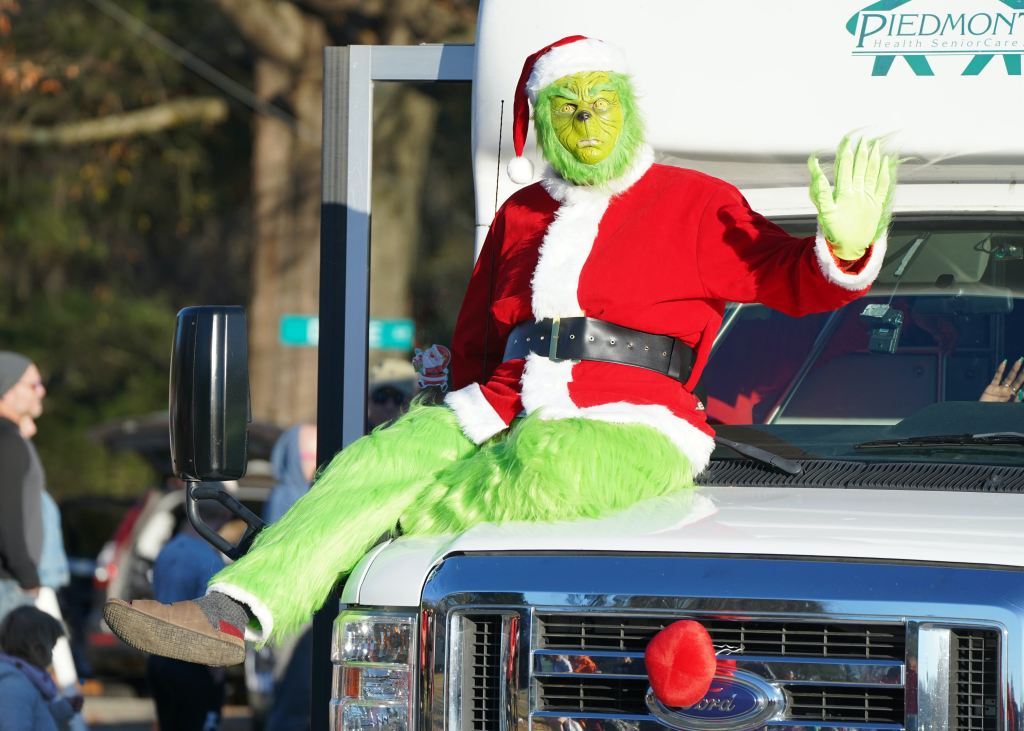
Last Christmas I felt like the Grinch, which was a shame as apart from birthdays, Christmas is the only event I usually get into. My kids have no lived experience of Easter or Guy Fawkes Day or Hallowe’en as I am against the rampant commercialisation involved in those days. All restraints are thrown away for Christmas. Last year I just could not find the Christmas spirit at all. “Bah Humbug,” had become my anthem for 2023, due to various reasons.
Christmas has always been a family time for us and last year it made me think about all the people we had lost over the past 15 years. Christmas was the time when we would gather and share a whole day together. As we became older we had further to travel to make it back home, and we didn’t always make it back. Christmas had become a four generations event, and then too quickly it had become three generations again. That’s life, you live, you die. Life goes on, but it’s different, and that’s okay.
Filial piety wouldn’t allow me not to drag my family south for Christmas for a four day trip. At the end of the journey we were all relieved to be back in our own home again, even the dog. There is no place like home but home changes over time. Our lives are like movies, not snapshots. Nothing is frozen in place forever, things keep on changing, for better or worse, till death do us part.



 palliverse.com