
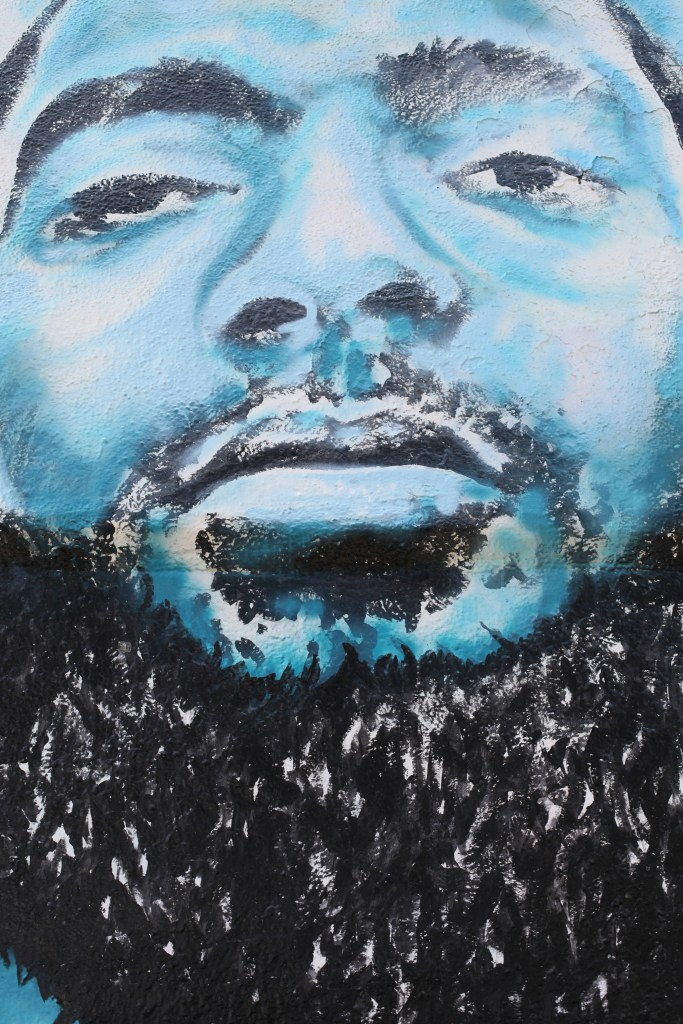
Palace of Care – Why Me?

Photo by BP Miller on Unsplash

J: Hey man, I’m sorry for your loss. Do you have a few minutes brother?

X: Yeah.

J: Let’s go in there again. [Points to the right] You asked me why your Dad would only talk about it in your presence. I think he knew you would be able to handle it.

X: [Nod]

J: The family meeting the other afternoon was tough. Your Dad told everyone how he felt and what he wanted but the family weren’t able to listen, especially Aunty.

X: [Nod]

J: Even with all the voices raised, I heard what you said, how you advocated strongly on your Dad’s behalf. He heard it as well. You had his back, that’s why he said it in front of you first. You were really there for your him when he needed support the most, that’s something to be proud of. That impressed me, you’re a good man.

X: Thanks Doc.

J: Dad didn’t get exactly what he wanted but the gods heard his cry for help and responded.

X: [Nod]

J: You take care brother.

X: [Handshake]

Palace of Care – Connections

Photo by John Barkiple on Unsplash

This afternoon I lectured on Resilient Leadership at a university executive MBA course. I spoke for 50 minutes on the leadership journey I had been on over the past nine years since becoming Medical Director. I talked about the ups and downs I have had to work through and the importance of leadership and resilience. I shared several stories as real-life examples of doing the right thing. Not the easy thing, but the right thing can be very hard at times. Declaring that you are patient-centred cannot just be a fashionable but tokenistic slogan, you have to mean it. You have to prove that you support patients’ right to choose, not just in terms of assisted dying, but other treatments and procedures, which may be invasive or have burdensome side effects. Patients and their families may need our advocacy, and support with decision making.

I allowed for 10 minutes of question time at the end and some thoughtful questions were asked. As I was wrapping up the hour-long session one of the audience members waved and caught my attention. I thought he wanted to ask a question. He didn’t have a question but instead wanted to thank our hospice for providing end-of-life care for his late brother. He said that his mother was especially grateful for the care received. A humbling moment and a reminder that the world can be a small place in which a lot of people are connected in various, often unexpected, ways.

So ends Work Day 20. I think I’ll take the day off tomorrow.

Palace of Care – Welcome to Hospice – Part 2

Photo by Brittani Burns on Unsplash

She had spent her whole life looking like her sister. They were always compared to each other. The older one is taller, the younger one can sing better, the older one can run faster, the younger one is better at Math. Despite all of the comparisons the two sisters had always gotten along fine. Their relationship had started nine months before they were born, they hadn’t just been room-mates growing up, they had actually been womb-mates right from the start. Identical twins who looked the same on the outside but were actually different people. Their life paths had followed each other closely before wildly diverging at the age of 26. The older one became unwell two years ago, the younger one carried on with her life.

The family had been scared of hospice, they didn’t really know what it was all about, but most people associated it with death and dying. Not something that is usually discussed in the Island culture. They resisted the hospital palliative care nurse’s attempts to send them over. What changed the older one’s mind was another patient on the same ward. A Maori lady who had been in hospice before. She had told the family what it was like, that it wasn’t a scary place at all, that on a previous admission, that they had been kind and were willing to do things in the traditional way. This lady was actually going to be heading over to the hospice that afternoon. She convinced the older one and the family that going to hospice to control symptoms would be a good thing.

Continue reading

Bedside Lessons – 6. Week Two – A hard promise to keep

Photo by Oliver Roos on Unsplash

A week later and I had to keep my promise, to prove that they were not just empty words.

Thursday

Im sorry that things are changing so quickly, that you are losing even more control.

Groan.

The reason that you have been vomiting is that the cancer has caused a blockage in your guts, it’s really bad.

Is it going to get better?

We can try a medication which might dry up the vomiting, but I don’t think the blockage will clear. This is a dangerous situation, you probably won’t recover from this.

Could you decrease the pain relief? It’s making me too sleepy. I want to be awake for my son.

Okay, but if your pain gets bad, we might have to go up again.

Continue reading

A death in the family

It was with great sadness that we learnt that Palliverse contributor Elizabeth Caplice had died.

Screen Shot 2016-07-14 at 22.12.09

Screen Shot 2016-07-14 at 22.12.28

Click here to read Ginger Gorman’s report.

Thank you Elizabeth for your contributions to Palliverse, and for your advocacy for Palliative Care.

Thank you for trying to make the world a better place.

We’d like to extend our deepest condolences to Alex and your loved ones.

Rest in peace Elizabeth.

James Jap on behalf of the Palliverse community.