“And I want one at the hospital, one here at the nursing home and one with the GP.” P and I have just been talking about the breathing difficulties that led to him being hospitalized last week. Continue reading
“Where will my plan go?”
2

“And I want one at the hospital, one here at the nursing home and one with the GP.” P and I have just been talking about the breathing difficulties that led to him being hospitalized last week. Continue reading
Trial published in JCO suggests even experienced clinicians benefit from communication skills training… AND so do their patients!
A study by Fujimori and colleagues examined the effects of a person-centred communication skills training program for 30 oncologists who were randomised to either receive the training or not. A total of 1,192 patients who had consultations with participating oncologists reported their psychological distress, satisfaction, and trust in the oncologist. In addition, oncologists were objectively assessed on their performance and confidence in communication using simulated, videotaped consultations. Those oncologists who received the training improved on several communication outcomes. While the training did not significantly impact patient’s satisfaction with their oncologist, patients reported greater trust in their oncologist and less depression. Results suggest experienced clinicians (9.3 – 30.3 years of practice) can benefit from communication skills training, and accordingly, so do their patients.
Have a read: http://jco.ascopubs.org/content/early/2014/06/09/JCO.2013.51.2756.abstract
Study reference: Fujimori M, Shirai Y, Asai M, Kubota K, Katsumata N, Uchitomi Y. The effect of communication skills training program for oncologists based on patient preferences for communication when receiving bad news: A randomized controlled trial. J Clin Oncol 2014, June 9 [Epub ahead of print]
From Cancer Council Western Australia:
From Australian Rotary Health:
From the Australian Research Council
Check out other funding opportunities at CareSearch.
The Bethlehem Griffiths Research Foundation provides funding support to scientists and health professionals undertaking research projects in the areas of palliative care and progressive neurological diseases.
Applications for 2016 project/equipment grants between $20,000 and $50,000 are due in June 2015. Details can be found here.
Applications for 2015 PhD scholarships are due on 6th February, 2015. Details can be found here.
Clinical medicine is informed by a number of traditions: important among these are the learnings drawn from randomized clinical trials. We may surmise that a new treatment will be effective, but the patient is the teacher, and there is an ethical imperative to carefully monitor the effects of a given treatment. But what of trials among terminally ill patients, receiving palliative care? Continue reading
You asked for it. Here it is! Behold the beginning of the Palliverse researchers database!
Please feel free to contact people on the database who share similar research interests to you – that’s the whole point of the database!
Please join us and invite your colleagues to join us! Here’s the invitation.
Email us at Palliverse@gmail.com if you have any questions, want to join the database, or wish to join the Palliverse community!
Love and hugs from the Palliverse Team
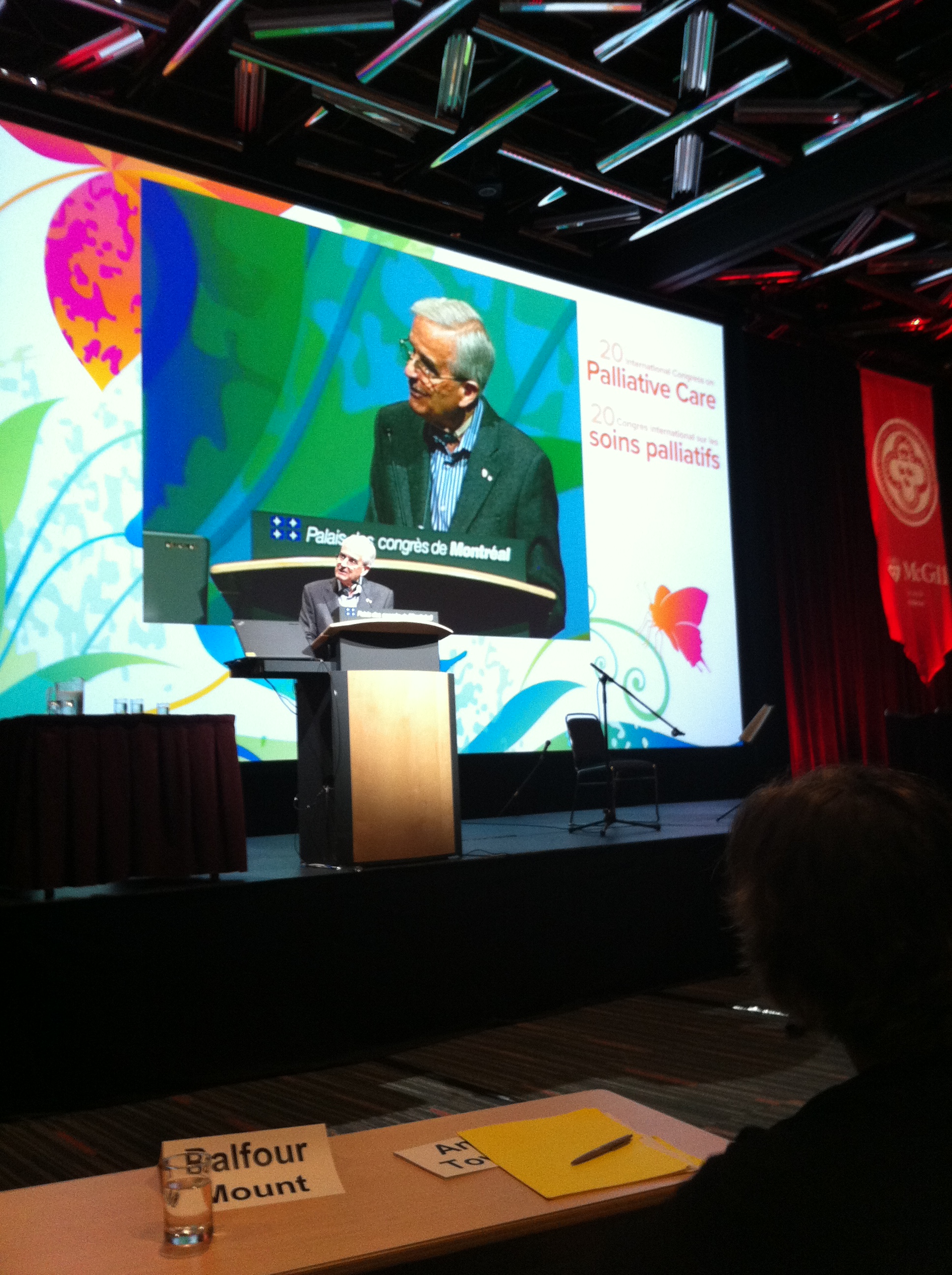
The 20th International Congress on Palliative Care was held in Montreal, Canada between 9-12 September 2014. Overall, it was a wonderful conference with:
… all set in the beautiful city of Montreal, which had a decidedly European feel to it, with all the cobblestoned streets in Old Town, as well as the rapid-fire French in our ears. Continue reading
Researchers from UWA are currently conducting research on factors influencing advance care planning, we would like to invite you to participate in a short online survey.
The survey should take approximately 20 minutes to complete, and your responses will be anonymous. If you are interested in participating, please follow the link below to read the Information Sheet, before responding to the survey items on this website.
Many thanks for your time and thoughtful responses!
Posted by Craig Sinclair @craigbsinclair
Know a talented young palliative researcher? Are a talented young palliative researcher?
The Early Researcher Award (formerly Young Investigator Award) was created as an annual award by the EAPC in 2009. This award is designed to recognise the work of young (novice) scientists and clinicians in the field of palliative care who have recently made, or are currently making an outstanding contribution to research. It aims to highlight their personal career development and their potential for the future.
Applications close end of November 2014 and the winners go to the EAPC congress in Denmark.
The candidate should:
• be at an early stage of his/her research career in palliative care (does not refer to actual age)
• have a strong documented interest and skills in research in palliative care
• hold an academic or clinical position in palliative care
• hold a postgraduate degree (e.g. PhD, MD, Masters)
• be able and willing to give a plenary lecture in English at the 14th EAPC World Congress
The following must be evident in application:
• A strong interest in research in palliative care
• How candidates link research ideas to EAPC research priorities
• Evidence of academic and/or clinical development
• Detailed description of research methods and results and their relevance to palliative care
• A clear work plan showing personal development
• Evidence of post graduate training
• Environment / research group that candidates have worked in
• Evidence of publications and presentation of work at conferences or similar events
• Evidence of scientific awards (if any)
• Evidence of ability to do a presentation in English
Applicants from around the world are welcome. Candidates who already applied for the award in previous congresses are invited to reapply!
Here is the link…..
http://www.eapc-2015.org/Early_Researcher_Award.html
Cheers, Sonia
Attention all Victorian researchers!
The Victorian Cancer Agency is pleased to announce the funding round for 2014 is now open. The following grants are currently available:
Clinical Research Fellowships
Early Career Seed Grants
Olivia Newton-John Cancer and Wellness Centre Supportive Care Research PhD Scholarship
The following grant will be available soon:
2014 Richard Pratt Fellowships for Prostate Cancer Research
This application closing dates for all grants is 7 October 2014.
All grant information is available at: www.victoriancanceragency.org.au/index.php/current-funding-opportunities
Sonia
 palliverse.com