Discharge from a hospice is a good thing. It doesn’t happen often. Most people die under our care. Occasionally there will be some people who actually stabilise and even improve so much that they no longer require our care. Possibly one of their treatments has worked, and their illness has been controlled. We are not sure how long this stable period will last, but they should make the most of it.
We’re happy to provide our services to those who need them, and we are also happy to step back if our services are no longer required. As I said this is rarely the case. It can be a real bonus for the person to do much better than any of us would’ve imagined. It’s a bonus for us as well to have uncommon success stories. If we discharge you from our service maybe we should hand out a commemorative t-shirt or a baseball cap. “I survived hospice!”
In this line of work, you have to remain open-minded and flexible. Almost anything could happen and you have to be able to go with the flow. Nature can be so fickle at times and what is going to happen can’t be predicted. There is an element of chaos in all of our lives. Some people will have a natural tendency to not be neat and tidy. They might not act as predicted. A chaotic life will lead to a person having a chaotic death as well. People stay true to their nature, even in the end.
I had a conversation with our spiritual care advisor today about blessing the room after a patient has died. It would have to be done in a way that would be respectful of people’s belief systems, even if they have a non-belief. Why are we thinking of doing it? A chance for final closure. A way of saying goodbye. Rituals are important in life and this gives us something that we could do in a meaningful fashion. This is part of what we do after someone has died. We remember the person and their loved ones. We give permission for whatever energies have been left in the room to move on. To clear the room out, ready and waiting to help the next person and their family. A time to farewell a patient and their family whom we might never see again.
We want to do things right, in a first do no harm manner, we don’t want to cause any offence. The blessings are not intended to be from any particular belief system. The staff providing the room blessing need to do so in a compassionate manner. They might have a personal spiritual belief of their own, but in this instance I want them to put that aside briefly, to present as their best professional self a generic blessing that would cover things at a bare minimum. People would be trained to give this blessing to allow the room to be put back into use again quickly. This would allow the cleaners to go in and prepare the room for the next person who will occupy the room.
Letting out the sad, angry energy that might still be there. Allowing the person’s spirit to move to where it needs to go. Spiritually resetting the room to be a blank canvas again. To allow the next person and their family to make their imprint on the room. To clean the silk screen before the next print is made. Is there something missing? Someone missing? A chance to air out the room and freshen it up for the next guests. In an acceptable fashion for all. People need to be empowered to do the right thing.
The odds were against him but he wanted to at least try. Even if he died on the way home it would be worth it. As long as he was heading in the direction of his heart. Back to the ancestral home where generations of his family had lived. No matter how far away from there they had gone they still thought of it as home. Even those who had moved overseas many years ago still maintained the connection.
It was the hardest thing he had ever done, but it was the most important thing for him. He left the place he had lived in for most of his adult life to go on his final journey. It would be a long ride in the car. Bumps in the road hurt him the most, and there were many patches of roughness along the way. He held on, he wanted to make it. His family were expecting him and had made preparations. They had organised a bed in one of the rooms. He hadn’t been back for years, life had been too busy.
He felt so tired, he wasn’t sure if there was enough time left. The doctors had told him days ago that there were only days left. He was so tired. He would only let himself rest for a short time. He had to be awake to will himself to his destination. He tried to keep his eyes open, but his eyelids felt too heavy, he just couldn’t keep them up.
He woke with a start. A large truck had been going in the opposite direction and the vibrations from its wake had shaken their small car. They were on a country road, there were no lights around them, and the road was deserted. They drove alongside a stream, that’s where they used to go eeling when they were kids. Around the corner, they turned and he saw a dim light in the distance. They headed up the gravel driveway, and he saw her in the doorway.
The light from the house reflected in the two wet tracks down her cheeks, “Welcome home son.”
He wanted to go home. It wasn’t going to be easy, but that’s what he wanted most of all. To go back to where it had all begun. Back to his ancestral home. He was at risk of dying on the way but it was important that he at least try. It wouldn’t be easy for his family. There was much less formal support available in the small town he was born in. He would have to rely on his family members to look after him.
The practicalities needed to be sorted out. Who could provide equipment and home support? These things can be hard enough to arrange urgently in metropolitan areas let alone in rural New Zealand. The postcode lottery of our health system continues to provide a stark reality check. Healthcare provision levels depend on where you live. If you live in the city, you will likely be well-supported. Outside of our big cities, the local support networks are much more limited. The country mouse and the city mouse have very different quality of living, and also quality of dying.
An exceptional case called for a lot of networking to make the trip home as smooth as possible. What medications would be needed? Where would he get his medications from? What was going to happen overnight? What would happen when he died? Who would fill out the required certificates? We didn’t have all the answers and we needed to make our plans up as we went along.
Most hospice rooms will have do not disturb signs which can be hung on the door handle to indicate that you don’t want people to come in. Who are these signs for? Are they there for the patient or the clinicians? We hang the do not disturb sign on when we see patients as we do not want our clinical assessment to be disturbed and to maintain the patient’s privacy. We put the sign up if a patient is in the bathroom washing, or if a procedure such as a dressing change is being undertaken. Are patients encouraged to use the do not disturb sign for their purposes?
I was asked the other day what I did to switch off from my work every day, given the intense interactions that might be part of a normal day at hospice. I do perform a ritual at the end of the day. I take off my ID badge and place it in my drawer. I also put away any equipment I might be carrying, in particular my stethoscope. Back when I used to wear ties I would take my tie off, and undo the collar buttons of my shirt. I’d pack my bag and then prepare for the drive home.
I’d play easy-listening radio on the way home. I used to listen to a news channel, but I found that to be too frustrating given the usual news headlines. Having a mixture of music from lots of different decades is good. There is still something about 80s music that continues to appeal to many in the world, myself included. The commute home is usually through rush hour traffic, thus a drive that takes 20 minutes in the morning, takes at least double that in the afternoon.
Once I arrive home I change my clothing, taking away the last vestiges of the doctor. Again this is ritualistic and marks my return to the rest of my life, and the other roles I hold. Each transition is marked by a slight change of costume. This is to maintain boundaries between my work and the rest of my life.
Most days I can switch off from work by going through the above rituals. Some days might be tougher than others and then extra effort is required, e.g. mindfulness meditation or walking in nature. Choose a ritual for yourself and practise it regularly until it becomes part of your daily life routine.
We had been expecting him but no one had told us that he had arrived. We needed to break some bad news to him. We had been told that he was easily upset. How would we do this? Better just to tell him what we needed to. There was no way of hiding this information from him, and we would not even try. Open disclosure was the way to go, tell him exactly what had happened in as calm a way as possible.
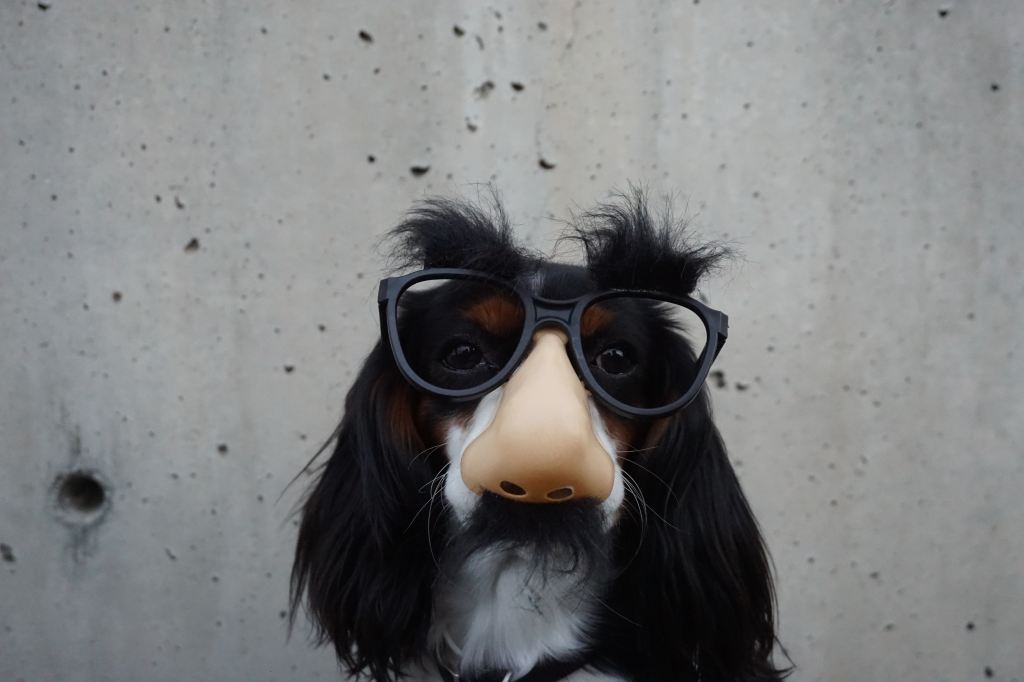
I couldn’t take my eyes off them. They stood out as dark shapes in a sea of pink and white. They didn’t seem to fit in with the image before me. I could not take my eyes away from them. What did he use to make them so black? His hair was as white as snow and was wispy. His face looked to have been affected by a first-degree sunburn, a shocking shade of pink. What I couldn’t stop staring at were what resembled two dark smears of greeny-black poo which were above his eyes. Was he going through an Art Deco phase of his life? His eyebrows had become bas-relief images highlighting the contours of his face. Was he a cartoon character who had escaped from the movie Where’s Roger Rabbit? I tried to look away but my gaze was magnetically drawn back to the poles of his Northern facing eyebrows. I could not stop looking at them, and out of the corner of my vision, I saw the rubbish bin. “No, I can’t take the bag out of the bin and put it over his head. That would not be very professional.” I closed my eyes and seared into my retinae were two burning hot white eyebrows. “Hello, Exxon-Valdez, I’ve think I’ve found the remaining oil that you lost.” “Hello is that Groucho Marx’s grandson? Son, I’ve found two of your grandfather’s missing moustaches.”
I found my right index finger reaching upwards towards his eyebrows, for a taste test. My colleague had to restrain my hand with a Kimora grip for extra resilience. The substance covering his eyebrows looked a lot like Vegemite or Marmite, those (in)famous yeast-based spreads. Nutritious but not particularly good-looking. Spreadable tar. A passing resemblance to every human baby’s first bowel movement – Meconium. I remained entranced, mesmerised, hypnotised by his eyebrows of power. The world started spinning around me…as if dark black eyebrow shapes were swirling around like a gigantic black hole, drawing me closer to their event horizon, taking my very breath away, the curtains started being drawn on the stage of my mind as I became lost in the inky blackness…”the next thing I remember officer was waking up in the hospital bed.”
Our patient was dying, earlier in the day his wife had asked how long he had left to live. I had told her I wasn’t sure, but it was likely he only had hours to short days left to live. It usually is hard to tell but in his case it was even harder as our team were surprised that he was still alive. We had expected him to die two days ago. He was a strong young man who didn’t want to die. He continued to hold on. I talked about no matter how much time was left that we would try our best to keep him calm, to keep him comfortable. We’re going to get you through this.
His daughter was just outside of the room. She was cutting out pictures from magazines and she was assembling a collage. There was a picture of a beach. Someone had a straw hat on and holding a fishing rod. There was some pictures of indoor furniture. I think there might’ve been a fluffy toy bunny in another picture. She had a glue stick in her other hand and she was rearranging the images on the blank sheet of paper in front of her. She had seen her father become more unwell over the past month, increasingly so in the past week.
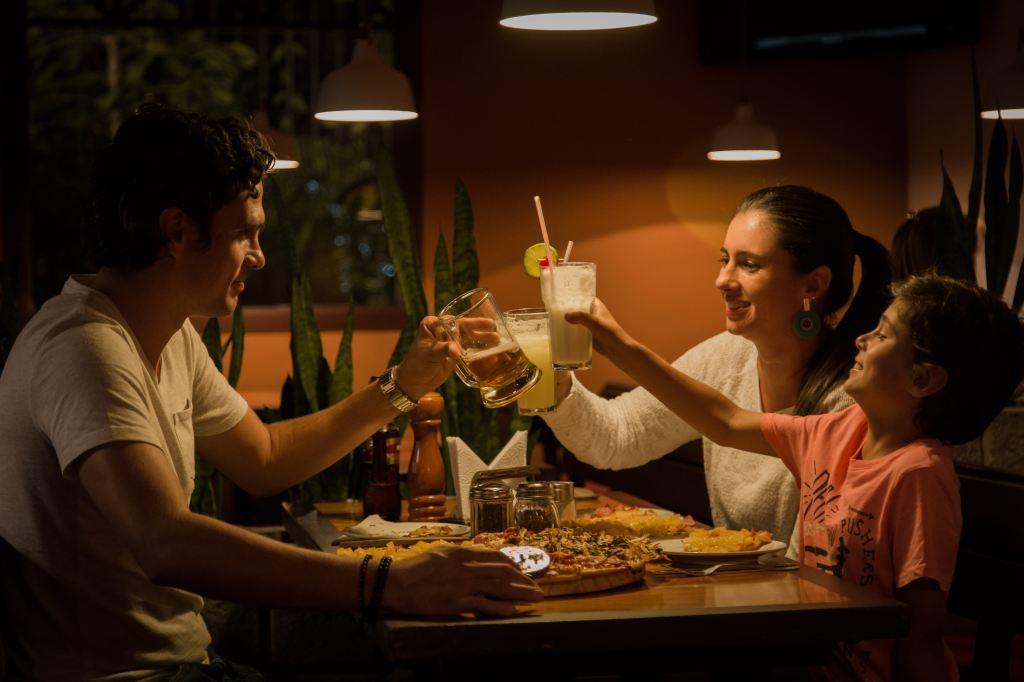
It’s not standard practice for us to provide meals to family members but we do make exceptions at times. We arranged for meals for both of his children and their mother, catered for by our hospice kitchen. The children were given the choice of ordering either the fish and chips, or the chicken nuggets and chips. This was extra exciting for them, they would have their own tray of food, including dessert. What a treat. They could eat together with their mother who had her own tray. Father had been too unwell to swallow anything for the past week, and had slept most of the last three days.
A happy half hour that they shared together doing something normal. There had been too little of that in recent weeks. Long days and nights in hospital had been stressful. The children didn’t get much time with their parents together. The time was precious for them, and hopefully it allowed for a nicer memory to be formed.
Our patient died peacefully later on that same night. The room became crowded as many other family members came in to pay their respects.
The next day his wife asked us how much the bill was. When the interpreter told her that there was no charge, she burst into tears.
I make an effort to greet patients in their own language as often as I can. Over the years I have learned many different greetings. Some of them are used frequently and I can now pronounce them fluently. Others are used more rarely but a thirty-second internet search can provide me with enough information to say hello. A small effort on my part but a clear statement that I am trying to understand the other person and where they are from. You may be thinking, “So what, what effect does it have?”
I was meeting our patient for the first time. I had been away and the rest of the team had gotten to know her over the past weeks. They all said hello to her and she said hello back with a small smile. It was my turn and I said to her, “Malo e lei lei.” Astonishment swept across her face before her eyes and her face lit up in a sunburst of a smile.
“You know my language?”
“Just a little bit.”
“Oh thank you so much, it was so nice to hear.”
The rest of the conversation went well, rapport was established when I spoke those four words of greeting in her native tongue. The pronunciation doesn’t have to be perfect, it’s the effort expended in trying to use their language that is appreciated. Later in the conversation, I used the word for pain, “mamahi,” and her huge smile was back again.
My late mother had lived in New Zealand for over five decades and spoke English every day in her work life as a shopkeeper. During her hospital admission, she was looked after by a Chinese-speaking nurse and it made such a difference. She felt understood not just linguistically but culturally. She felt safer.
Let’s all make an effort to help our patients feel safer when under our care, even a few words can make a difference.
When we first met her she was only four months old. She didn’t have much hair. She had bright eyes which were interested in everything around her. If you looked at her and tried to interact with her she would give you a big smile. During her dad’s first admission, we saw her almost every day during the weeks she was there with her family. They all went home when her dad’s pain was controlled.
I next saw her a few weeks later. She had put on weight, her cheeks were chubby. Her little arms and legs looked bigger. She had been feeding well. When she smiled two dimples would appear. Her dad wasn’t doing so well, he didn’t feel like eating. When we entered the main corridor of the house I didn’t realise that he was doubled over on the floor, his forehead on the flat part of the armchair. He looked pale and his arms had lost muscle, his cheekbones had become more noticeable. Especially when he grimaced in pain. We made some adjustments to try and make him more comfortable. He was keen to stay at home as much as possible. She gave us another huge smile when we waved goodbye to her.
One month later she had grown. She had started to vocalise and her smile would be accompanied by the cute noises she would make when we interacted with her. Her dad looked beyond exhausted, he spoke softly and at times we couldn’t understand what he was saying. He looked sad, and his face seemed to be stuck in a frown. She had started eating solids and the family told us that she had been given a pork rib which worked better than any of the pacifiers they had tried. Her dad ate less and less. He couldn’t handle much solid food. He preferred to drink liquids, only small amounts.
Her older siblings would come in after school and the children would all play together. The little girl would laugh and babble as brothers and sisters played with her. They enjoyed that she had become more fun to play with than when she was younger. Their dad was more and more sleepy. Less and less interactive. He tried his best to be awake when all the children were there. It was a struggle as he was so weak and tired. Talking had become difficult, so he started using hand signals, his sign language. Lil’ Smiley continued becoming more lively, as her dad became less lively. He needed help to cradle her in his arms as he didn’t have the strength to do it by himself any more.
After her final visit, she was placed in her baby capsule, before heading out the front door to the family car. Those deep dimples appeared again as our staff waved goodbye. Her dad had already left via our back door. He had been laid down in a different kind of capsule, and he was going to travel in a stranger’s long vehicle. We hoped that wherever he had gone, that he could smile again as his suffering had ended.




 palliverse.com