
Control & Decision Making

elizabeth

Taken from my hospital room on a good day

I’ve been in hospital for the last three weeks, and have just returned back home (finally!).  It has been both a very difficult physical experience dealing with pain management and a wound, but also a mental journey for me.


A lot of what I read about palliative care, and my own experiences as well, have been about control; the control that palliation gives you over the time you, as an individual, have left, rather than the often more passive involvement of care when engaging in active treatment.  Throughout my treatment, I’ve been eager – possibly to my own mental and emotional detriment – to remain highly active with what has been going on.  I make guesses as to what might be causing pain or discomfort or other symptoms, explaining to my doctor what it must mean as he compassionately and respectfully listens to my ideas that I’ve gotten from my half-hearted reading of an abstract from a medical journal.  Continue reading

The Zen of Freefall

Ed.  Whether it’s the high pitched melody from Tom Petty’s classic; the mellow acoustics of John Mayer’s cover; or that scene from Jerry Maguire – just the idea of free falling can evoke a variety of emotions and sensations in us all.

Here we thank Karen Williamson, a Palliative Care Clinical Nurse Specialist from Auckland, for sharing her experience of and reflections on The Zen of Freefall.

SkyDive Auckland_Image
Photo Copyright / Courtesy of Skydive Auckland 

This week I jumped out of a plane. From 13,000 feet, I fell for 45 seconds at about 195 kilometres per hour towards the earth before the parachute deployed. And it occurred to me, as I was about to tip out of that small aircraft (with, I’m pleased to say, a skydive master strapped to my back), that maybe, just maybe, this is what it’s like to die. Maybe that is why it’s called terminal velocity.

Continue reading

interview – Giovanni Galvis, palliative and oncology fellow from Sweden

Hi Giovanni!

Tell us about yourself . What are you doing in Australia?

Hello, my name is Giovanni Galvis. I was born in Caracas-Venezuela. I studied Medicine in Bogota-Colombia. After my graduation I decided to go to Europe. I have always been fascinated with the history and architecture and of course the good level in research and clinical medicine there. I spent some time in Germany but in 2007 I moved to Sweden where I did research in the beginning and then started my specialty in Clinical Oncology.  I am doing a placement at Peter MacCallum Cancer Centre attending the department of Pain and Palliative Care, the breast clinic and the melanoma clinic.

What is your impression of palliative care and cancer care in Australia? Is it different from that in Sweden? How? Continue reading

Would you like to know a secret?

palliverse (1)

EXTRA! EXTRA! Read all about it!

Never published or told before, James Jap reveals the secret origin of palliative care virtual community of practice – Palliverse!

Please check out James’s guest blog post on the EAPC blog site where he tells all and also introduces our “hot off the press” European Journal of Palliative Care article.

You heard it here first – Palliverse appears in traditional media!

Please let us know what you think.


guest interview – Soula Ganiatsas, Palliative Care Research Network Victoria

Tell us about your job.

I am the program manager for the Palliative Care Research Network Victoria (PCRNV).

What does PCRNV do?

We try to gain funding to conduct clinical and community intervention research. The PCRNV also  provides an opportunity to network and collaborate with other palliative care researchers through PCRNV forums and workshops.

We also help with access to a variety of PCRNV funding schemes including; PhD scholarship, small project and travel grants. There can be support with developing your research idea into a potential project and grant proposals via the PCRNV Concept Development Workshops and also mentoring.

But, it’s not right to do research on people who are dying, is it? 

Continue reading

Reflections on research – Responding to peer review

So your precious paper has been sent for peer review and you’ve been asked to submit some revisions. This is the second post in a series on peer review.  This post has a few of our best tips for responding to the reviewers’ comments.

Continue reading

#PALLANZ tweet chat

Chi's avatar

Tweet chat advertisement

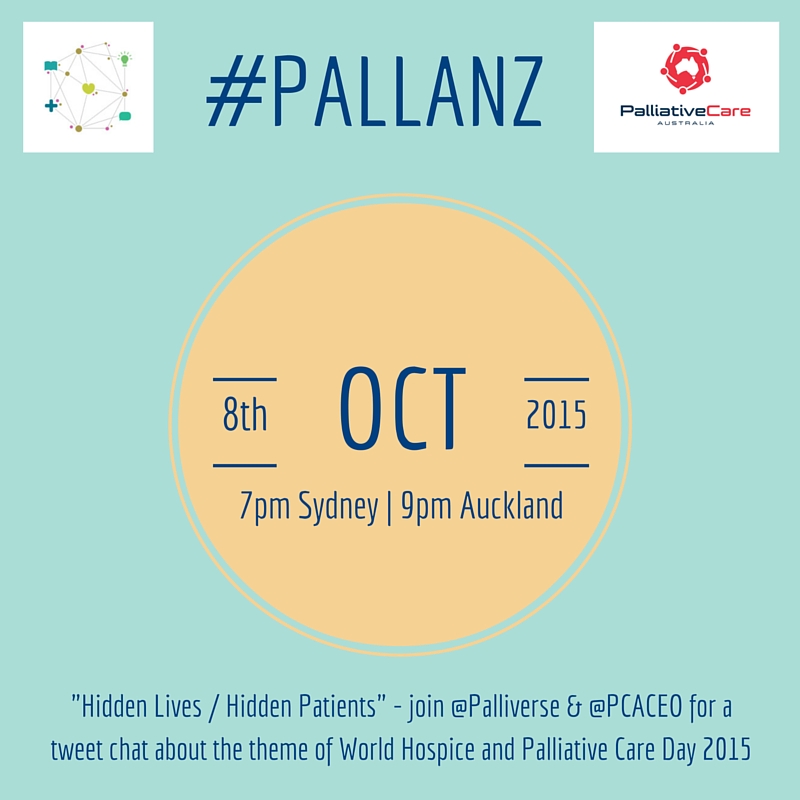
Join team Palliverse (@Palliverse) and Liz Callaghan, CEO of Palliative Care Australia (@PCACEO), for a tweet chat about “Hidden Lives / Hidden Patients” – the theme of World Hospice and Palliative Care Day 2015, focusing on patients living in unique situations who often struggle with access to palliative care, including children, LGBT individuals, prisoners, soldiers and those living in rural areas.

Date: October 8th 2015

  • 7pm AEDT (Canberra, Sydney, Melbourne, Hobart)
  • 6:30pm ACDT (Adelaide)
  • 6pm AEST (Brisbane)
  • 5:30pm ACST (Darwin)
  • 4pm AWST (Perth)
  • 9pm NZDT (Wellington, Auckland, Christchurch)
  • Other time zones London/Dublin 9am, Hong Kong/Singapore 4pm

Spread the word and hope to see you then!

View original post

Reflections on research – Peer review

Dear [____________],

“Thank you for submitting your paper titled [insert title] to [insert journal name]. You will notice that the reviewers had a number of concerns, and we invite you to respond to their comments and re-submit a revised document.”

Hmmm, now what?

Continue reading

Advance care planning may “fit” palliative care but is bigger than any clinical specialty

IMG_1640

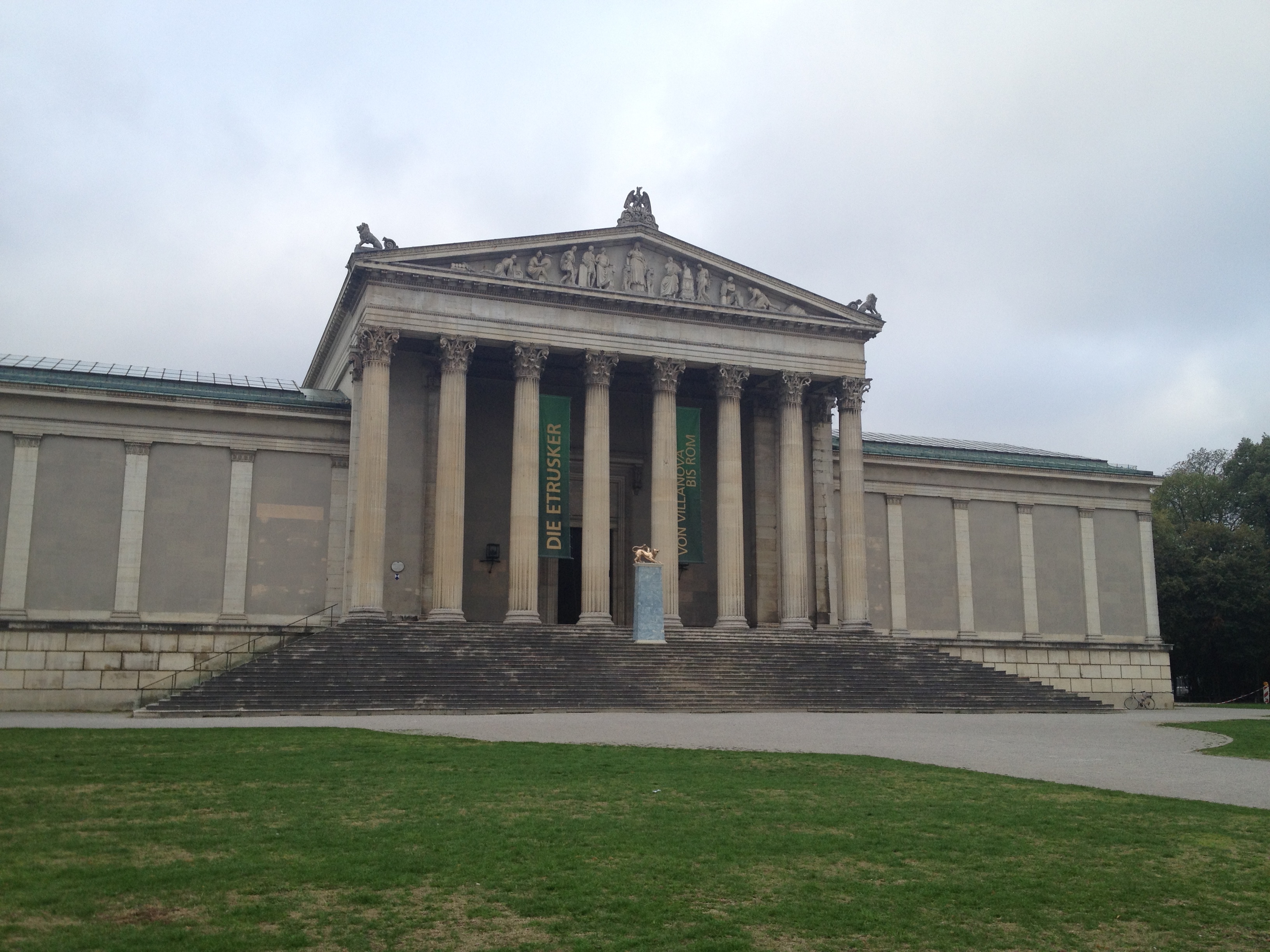
The International Society of Advance Care Planning and End of Life Care (ACPEL) Conference began today, with addresses from leading practitioners and researchers from across the world. Set in Munich, Germany, the opening panel discussion examined factors contributing to successful advance care planning implementation, and discussed how implementation might progress in European countries.

Continue reading

Call for abstracts: 14th National Conference of Emerging Researchers in Ageing

‘Bringing research to life’: 7-8 December 2015, National Ageing Research Institute, Melbourne.

The National Ageing Research Institute is pleased to host the 14th National Emerging Researchers in Ageing Conference in 2015. This is the only national conference in Australia focusing exclusively on the work of higher degree research students undertaking research in ageing across a range of disciplines. The conference presents a unique opportunity for higher degree research students to come together to share their research.

The conference organisers invite the submission of abstracts for oral and poster presentations from PhD, Masters and Professional Doctoral students and other emerging researchers engaged in ageing related research from any discipline.

The call for abstracts is now open and will close on 31 August. A copy of the submission guidelines and abstract template are available on the conference website.